Author: admin

NASA and GE Collaborate on Hybrid-Electric Jet Engines for a Greener Future

The concept of hybrid power, familiar in cars, may soon be soaring into the skies, driving a new era of jet airliners. NASA, in partnership with GE Aerospace, is developing a cutting-edge hybrid-electric jet engine that uses both traditional fuel and electric power to significantly reduce fuel consumption.

This advanced engine design incorporates electric components that assist the fuel-burning core. Electric motors generate power, which is then fed back into the engine, reducing the overall fuel needed to operate. By supplementing fuel combustion with electricity, this innovative approach has the potential to revolutionize air travel, making it more efficient and environmentally friendly.

Continue reading… “NASA and GE Collaborate on Hybrid-Electric Jet Engines for a Greener Future”


Pushing the Boundaries of Computing Speed: How Light Antennas Could Revolutionize Computer Chips

As modern computers approach their physical limits, semiconductor components currently operate at maximum frequencies of just a few gigahertz, performing billions of computing operations per second. To maintain performance, systems often rely on multiple chips to distribute tasks, as the speed of individual chips cannot be further increased. However, a game-changing leap in speed could be achieved if photons (light) were used instead of electrons (electricity) in computer chips, potentially making them up to 1000 times faster.

A promising approach to unlocking this leap in speed is through plasmonic resonators, often called “antennas for light.” These nanometer-sized metal structures allow for interaction between light and electrons, and their performance can vary depending on their geometry. “The challenge,” says Dr. Thorsten Feichtner, a physicist at Julius-Maximilians-Universität (JMU) Würzburg in Germany, “is that plasmonic resonators cannot yet be modulated effectively, unlike transistors in conventional electronics. This limitation prevents the development of fast, light-based switches.”

Continue reading… “Pushing the Boundaries of Computing Speed: How Light Antennas Could Revolutionize Computer Chips”

Electroninks Introduces World’s First Commercial Copper MOD Ink, Revolutionizing Additive Manufacturing

Electroninks, an Austin-based leader in metal organic decomposition (MOD) inks for additive manufacturing (AM) and semiconductor packaging, has unveiled what it claims to be the world’s first commercially available copper MOD ink. This breakthrough ink is generating buzz, particularly for its application in “seed layer printing,” a process where ultra-thin metal layers are deposited onto a substrate, streamlining subsequent plating procedures.

One of the most promising applications for seed layer printing is in solar cells. Electroninks asserts that its copper ink significantly outperforms traditional methods like electroless (e-less) copper plating and physical vapor deposition (PVD), by using far less water and energy. This advancement not only enhances the sustainability of production but also reduces capital expenditures (CAPEX) for manufacturers, making the production of components more efficient and cost-effective.

Continue reading… “Electroninks Introduces World’s First Commercial Copper MOD Ink, Revolutionizing Additive Manufacturing”

Purdue Engineers Explore ChatGPT-Powered Autonomous Vehicles for Improved Passenger Interaction

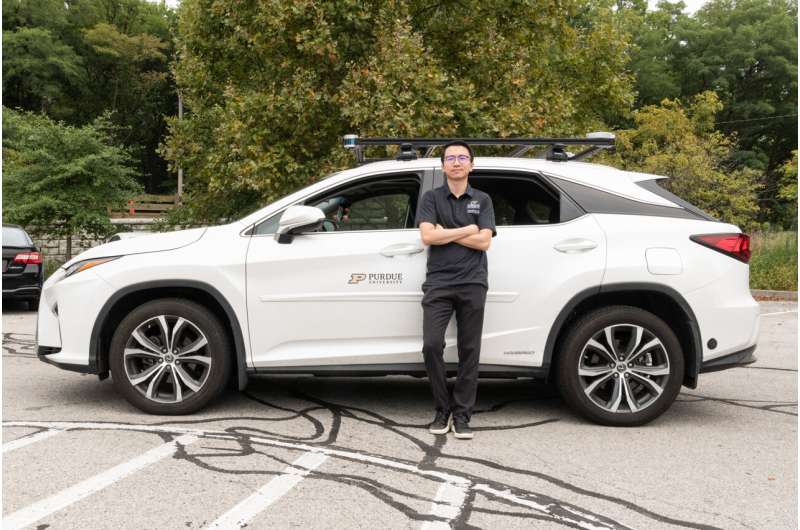
Purdue University engineers have found that autonomous vehicles (AVs) could soon be powered by advanced chatbots like ChatGPT, enabling them to better understand and respond to passengers’ commands. These chatbots are built on large language models (LLMs), a type of artificial intelligence algorithm designed to interpret natural language and continuously learn from vast amounts of data.

This breakthrough study, published on the preprint server arXiv, is set to be presented at the 27th IEEE International Conference on Intelligent Transportation Systems on September 25. It may be one of the first real-world experiments testing how well AVs can use LLMs to understand and act on passenger instructions.

Continue reading… “Purdue Engineers Explore ChatGPT-Powered Autonomous Vehicles for Improved Passenger Interaction”

Hestia Technology Revolutionizes the Culinary Industry with AI-Powered Robotic Kitchens

In response to rising operational costs and labor shortages, Hestia Technology Limited, founded in Hong Kong in 2018 by chemistry professor Chen Guanhua, is transforming restaurant operations with its cutting-edge robotic kitchen systems. The company’s mission is to enhance efficiency and accessibility while delivering traditional Chinese and international cuisine through automation.

Hestia’s fifth-generation robots offer a complete automation solution for restaurant kitchens, handling everything from ingredient retrieval and preparation to serving and cleanup—entirely without human involvement. The system, which consists of a larder, conveyor belt, and multicooker, can replace up to three chefs and prepare more than 200 different dishes, including Chinese regional favorites like Hunan and Sichuan, as well as Italian cuisine.

Continue reading… “Hestia Technology Revolutionizes the Culinary Industry with AI-Powered Robotic Kitchens”

Affordable 3D Bioprinting: Researchers Turn Regular Printers into Tissue Engineering Tools

Until now, printing living tissue constructs required specialized and expensive bioprinters. However, researchers from the Centre for Applied Tissue Engineering and Regenerative Medicine (CANTER) at Munich University of Applied Sciences have found a way to modify a simple, commercially available 3D printer to create biological structures at the touch of a button. This breakthrough opens up the field of bioprinting to smaller laboratories that previously couldn’t afford the specialized equipment.

Benedikt Kaufmann, a research associate at CANTER, led the team that developed this cost-effective solution. By modifying a standard 3D printer, they overcame a significant challenge in bioprinting: maintaining the right conditions for temperature and humidity. Using heating foils and water-soaked cellulose, the team achieved a stable environment of 37°C and over 90% humidity, crucial for printing biomaterials. The process takes place on a translucent glass platform, allowing for detailed microscopic examination of the printed structures.

Continue reading… “Affordable 3D Bioprinting: Researchers Turn Regular Printers into Tissue Engineering Tools”

Mind-Controlled Alexa: A Breakthrough for ALS Patient

A 64-year-old man with amyotrophic lateral sclerosis (ALS), a degenerative nerve disease, has successfully controlled Amazon’s Alexa digital assistant using only his thoughts, thanks to groundbreaking brain-computer interface technology. The company behind the innovation, Synchron, announced on Monday that the patient, named Mark, was able to stream shows, make video calls, control smart home devices, and more using just his mind.

The key to this technological feat is an implant placed in a blood vessel on the surface of Mark’s brain. This implant enables him to mentally “tap” icons on an Amazon Fire tablet, allowing him to command Alexa without using his hands or voice.

Continue reading… “Mind-Controlled Alexa: A Breakthrough for ALS Patient”

Toronto Zoo Launches Eco-Friendly Delivery Robots to Reduce Carbon Footprint

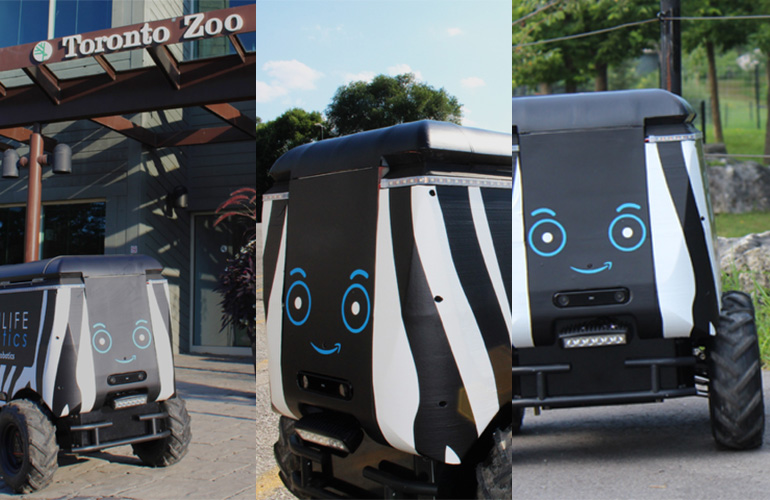
Real Life Robotics Inc. has officially introduced its innovative delivery robot platform, BUBS, as part of a pilot project at the Toronto Zoo. The launch, held on August 15, coincided with the zoo’s 50th-anniversary celebration and is part of its broader goal to become a cutting-edge conservation campus. The program, named “Zoober,” aims to lower the environmental impact of delivering food to animal habitats by replacing traditional fossil fuel-based vehicles with autonomous robots.

The zoo, which covers 500 acres and delivers between 1 and 1.5 tons of food daily, hopes to achieve net-zero emissions by 2030 with the help of BUBS. These robots, designed for last-mile delivery, operate entirely within the zoo’s grounds, transporting meals from the central kitchen to various animal enclosures. Visitors may spot the robots on public trails and behind-the-scenes roads.

Continue reading… “Toronto Zoo Launches Eco-Friendly Delivery Robots to Reduce Carbon Footprint”

Revolutionary Thin Soft Robots to Transform Inspections in Challenging Environments

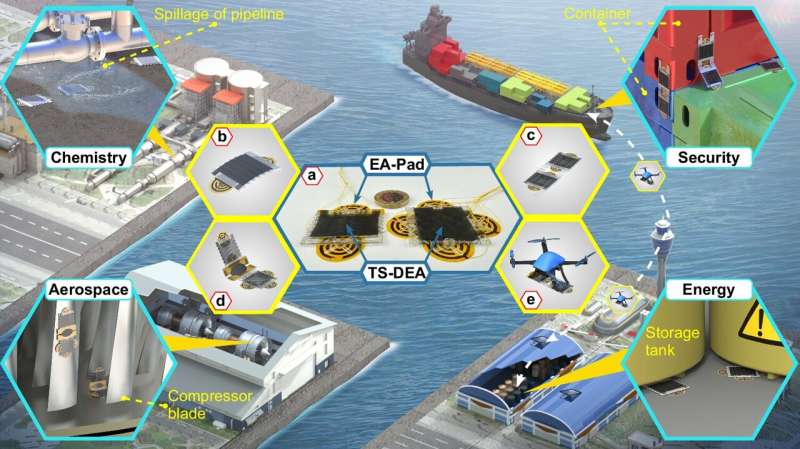
Researchers at the Rolls-Royce University Technology Centre (UTC) in Manufacturing and On-Wing Technology, based at the University of Nottingham, have developed ultra-thin, soft robots capable of navigating narrow and complex spaces. These groundbreaking robots, called Thin Soft Robots (TS-Robots), are set to revolutionize inspections and maintenance in industries like power plants, bridges, and aero engines. The study, published in Nature Communications, highlights their advanced capabilities.

TS-Robots are remarkably thin, measuring only 1.7mm in thickness, allowing them to maneuver through tight spaces such as millimeter-wide gaps under doors or within intricate machinery. Powered by dielectric elastomers, they feature multimodal locomotion, enabling them to crawl, climb, swim, and transition between solid and liquid terrains. This adaptability makes them highly suitable for navigating environments with obstacles like narrow gaps, trenches, walls, and liquids.

Continue reading… “Revolutionary Thin Soft Robots to Transform Inspections in Challenging Environments”

ChatGPT Outperforms Medical Trainees in Diagnosing Complex Respiratory Cases: Study Highlights AI’s Potential in Healthcare

A study presented at the European Respiratory Society (ERS) Congress in Vienna revealed that the chatbot ChatGPT outperformed trainee doctors in assessing complex respiratory diseases, such as cystic fibrosis, asthma, and chest infections. The research also showed that Google’s chatbot Bard performed better than trainees in certain areas, while Microsoft’s Bing chatbot matched the trainees in overall performance.

The findings suggest that large language models (LLMs) like these could help trainee doctors, nurses, and general practitioners in triaging patients more efficiently, potentially easing the strain on healthcare systems. The study was led by Dr. Manjith Narayanan, a consultant in pediatric pulmonology at the Royal Hospital for Children and Young People, Edinburgh, and a senior lecturer at the University of Edinburgh.

Continue reading… “ChatGPT Outperforms Medical Trainees in Diagnosing Complex Respiratory Cases: Study Highlights AI’s Potential in Healthcare”

Boosting Solar Fuel Efficiency: CHASE Researchers Use 3D Silicon to Convert CO2 into Energy

Researchers at the Center for Hybrid Approaches in Solar Energy to Liquid Fuels (CHASE) have made a significant breakthrough in converting carbon dioxide (CO2) into fuel using sunlight. By incorporating three-dimensional silicon scaffolds on photoelectrodes, they have improved the efficiency of this process, offering a promising step toward sustainable energy production.

CHASE, a consortium funded by the U.S. Department of Energy and featuring scientists from top universities such as Princeton and Yale, focuses on developing renewable energy technologies to reduce reliance on fossil fuels. While wind and solar power have successfully met electricity demands, industries like heavy transport still require energy-dense fuels, which cannot rely solely on battery technology. This is where liquid solar fuels come into play.

Continue reading… “Boosting Solar Fuel Efficiency: CHASE Researchers Use 3D Silicon to Convert CO2 into Energy”

Smart Streets: How Utah’s New Tech is Revolutionizing Traffic and Safety

Utah transportation officials have introduced cutting-edge technology that allows vehicles to communicate with traffic lights and each other, a development set to transform traffic flow, reduce congestion, and prevent accidents. This initiative, part of the “Connect the West” project, is supported by a $20 million federal grant and has already begun showing results.

The first milestone of the initiative was achieved by installing radio transmitters in city buses, enabling them to request extended green lights by a few seconds. This small change has already improved traffic flow on these newly designated “smart streets.” These advancements are just the beginning of a series of high-tech upgrades expected to be implemented on U.S. roads in the near future.

Continue reading… “Smart Streets: How Utah’s New Tech is Revolutionizing Traffic and Safety”
Discover the Hidden Patterns of Tomorrow with Futurist Thomas Frey
Unlock Your Potential, Ignite Your Success.

By delving into the futuring techniques of Futurist Thomas Frey, you’ll embark on an enlightening journey.

Learn More about this exciting program.