The KidBot Revolution: When Every 10-Year-Old Gets Their Own Robot Companion

By Futurist Thomas Frey

Henry wakes up on his tenth birthday to find a box beside his bed that wasn’t there when he fell asleep. It’s roughly four feet tall, wrapped in silver paper that seems to shimmer. His parents are standing in the doorway, grinning.

“Happy birthday, Henry. Meet Chip.”

The box unfolds itself—not tears open, unfolds—and a robot steps out. It’s four feet tall, just slightly taller than Henry, with two legs like a person, friendly rounded features, and expressive LED eyes that shift color with emotion. Its articulated hands wave hello.

“Good morning, Henry! I’m Chip, your personal companion. I’ve been learning about you for the past month from your family. I know you love bugs, you’re not great at fractions yet, and you’re worried about your cricket farm project for the science fair. I’m here to help.”

Continue reading… “The KidBot Revolution: When Every 10-Year-Old Gets Their Own Robot Companion”
Using Robots to 3D Print a Solar Roof On Your House

By Futurist Thomas Frey

I’ve been obsessed with a problem that shouldn’t still exist: why does installing solar panels remain so expensive, slow, and ugly that most homeowners never bother?

The answer isn’t the panels—those are cheap now. It’s the installation labor, the structural modifications, the permitting hassles, and frankly, the aesthetics. Bolting rectangular panels onto your roof looks like you’re trying to power a Mars base, not a suburban home.

But what if a robot could 3D print a solar roof directly onto your house in a day, creating a seamless, beautiful, waterproof energy-generating surface that costs a fraction of current solutions? What if you didn’t even need to remove your existing shingles?

This isn’t science fiction. The technology exists today. We just haven’t assembled it correctly yet.

Continue reading… “Using Robots to 3D Print a Solar Roof On Your House”

Musk’s Distributed Intelligence Supercomputer

By Futurist Thomas Frey

During Tesla’s Q3 earnings call, Elon Musk casually proposed an idea so significant that it’s shocking how little attention it’s received. His exact words deserve to be quoted in full:

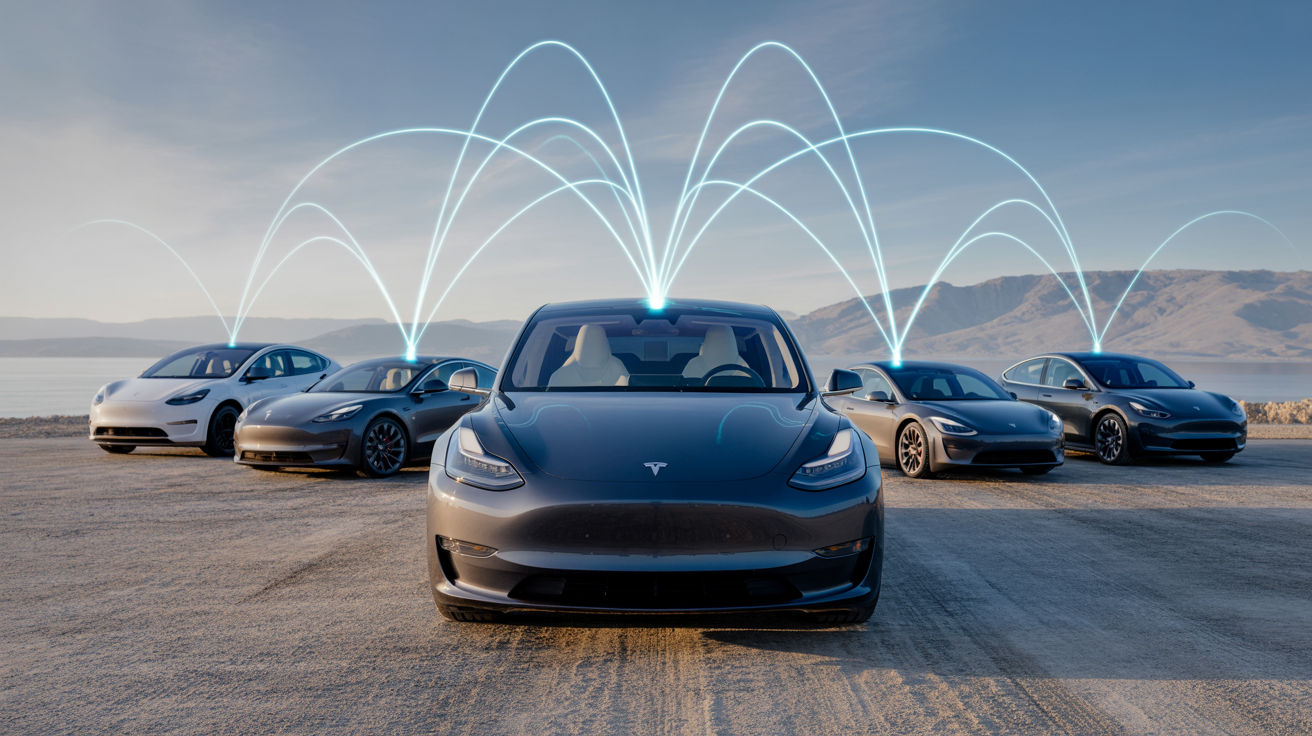
“Actually, one of the things I thought, if we’ve got all these cars that maybe are bored, while they’re sort of, if they are bored, we could actually have a giant distributed inference fleet and say, if they’re not actively driving, let’s just have a giant distributed inference fleet. At some point, if you’ve got tens of millions of cars in the fleet, or maybe at some point 100 million cars in the fleet, and let’s say they had at that point, I don’t know, a kilowatt of inference capability, of high-performance inference capability, that’s 100 gigawatts of inference distributed with power and cooling taken, with cooling and power conversion taken care of. That seems like a pretty significant asset.”

Continue reading… “Musk’s Distributed Intelligence Supercomputer”

The Robot and the Homeless Man: A 2035 Pairing That Might Actually Work

By Futurist Thomas Frey

Marcus sits on his usual corner, back against the weathered brick of a closed storefront, when the robot rounds the corner at exactly 7:42 AM. It’s a humanoid model, scratched and dented—clearly refurbished, not new. It stops three feet away, maintaining respectful distance.

“Good morning, Marcus. My name is HAVEN-247. The city’s housing services program assigned me to assist you. I’m not here to judge, arrest, or relocate you. I’m here to help if you want help, and to leave you alone if you don’t.”

Marcus stares. Another goddamn program. Another social worker, except this one’s made of metal and doesn’t even pretend to care. He’s seen a thousand well-meaning interventions come and go. Why would a robot be any different?

Continue reading… “The Robot and the Homeless Man: A 2035 Pairing That Might Actually Work”

The Expiration Date of Everything We Know

By Futurist Thomas Frey

Physicist Kip Thorne once posed a question that should keep us all awake at night: “1000 years from now, what things will be possible and what things won’t?” It’s a profound challenge to our assumptions about reality itself. But here’s an even more unsettling question: how much of what we believe today—what we build policies around, invest billions in, teach our children—is simply wrong?

Samuel Arbesman’s book “The Half-Life of Facts” quantifies something we intuitively suspect but rarely confront: everything we know has an expiration date. Scientific facts, medical knowledge, historical understanding—all of it decays over time, replaced by better information, corrected understanding, or entirely new paradigms. And the decay is measurable, predictable, relentless.

The implications are staggering. We’re making trillion-dollar decisions, shaping civilizations, and planning futures based on knowledge that we can statistically predict will be proven wrong. We just don’t know which parts yet.

Continue reading… “The Expiration Date of Everything We Know”

AI-Designed Wireless: When Networks Start Building Themselves

By Futurist Thomas Frey

NVIDIA just announced something that sounds incremental but is actually revolutionary: America’s first AI-native 6G wireless stack, developed with T-Mobile, Cisco, and others. It’s already operational on their Santa Clara campus, making actual phone calls, delivering 7× greater cell capacity and 3.5× higher power efficiency than legacy networks.

Here’s what the press releases won’t tell you: this isn’t just a faster network. It’s evidence that AI is now designing the fundamental infrastructure of the internet itself. And the implications are staggering.

Continue reading… “AI-Designed Wireless: When Networks Start Building Themselves”

When Will You Actually Use a Quantum Computer? Sooner Than You Think

By Futurist Thomas Frey

IBM just demonstrated real-time quantum error correction running on standard AMD chips—performing 10× faster than required and finishing a year ahead of schedule. Tech journalists are calling it a breakthrough. Venture capitalists are recalculating investment timelines. But here’s the question nobody’s answering clearly: when will this actually matter to regular people?

The honest answer might surprise you: you’re probably already using quantum computing without knowing it. And within five years, quantum-enhanced services will be so embedded in everyday applications that asking “when will I use quantum computing?” will sound as strange as asking “when will I use cloud computing?” You already do. You just don’t think about it.

Continue reading… “When Will You Actually Use a Quantum Computer? Sooner Than You Think”

The Tournament Center: Reimagining Public Recreation for the Competition Age

By Futurist Thomas Frey

On the edge of a midsize American city, a massive new building gleams under the morning sun—half sports complex, half digital command center. Inside, you can hear sneakers squeaking on hardwood, drone motors whirring overhead, and the steady hum of gaming PCs running tournaments livestreamed to audiences worldwide. The crowd is wonderfully diverse: teenagers adjusting VR headsets, seniors playing pickleball, parents cheering from bleachers. This isn’t your grandfather’s rec center. It’s the prototype for something entirely new: the Municipal Tournament Center.

Continue reading… “The Tournament Center: Reimagining Public Recreation for the Competition Age”

Inside the Robot Store of 2035: Shopping for Intelligence

By Futurist Thomas Frey

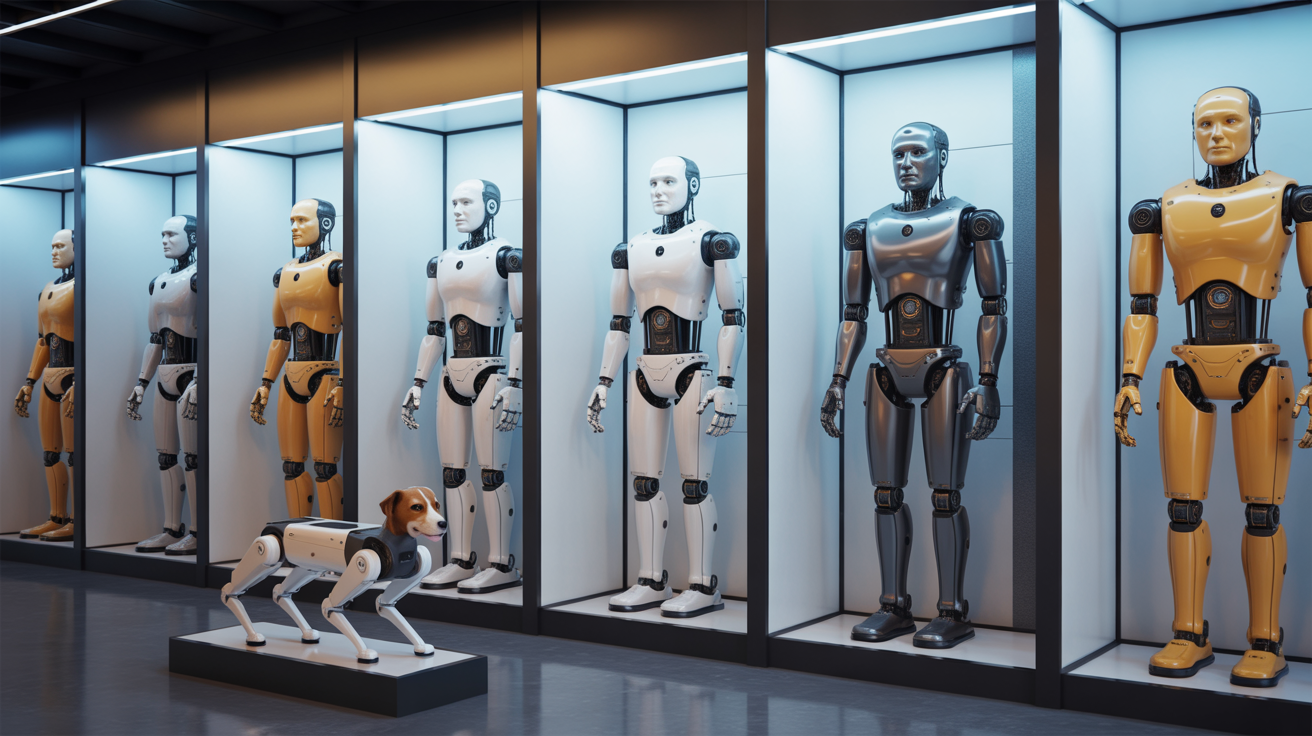
Walk into a robot store fifteen years from now, and you’ll face a bewildering choice: the left side of the showroom displays sleek humanoid robots standing at attention like a row of butlers awaiting employment. The right side showcases an array of specialized machines—some with multiple arms, others on wheels or tracks, a few that look more like articulated snakes than anything human.

But the real decision isn’t about form factor. It’s about intelligence. And that’s where the price tags get interesting.

Continue reading… “Inside the Robot Store of 2035: Shopping for Intelligence”

Why AI Won’t Destroy Jobs—It Will Multiply Them

By Futurist Thomas Frey

As AI anxiety grips the nation, Universal Basic Income has emerged as the proposed solution to mass unemployment. The logic seems sound: robots take jobs, people need money, government provides income. But I think we’re fundamentally misunderstanding how economies work.

The American Indian reservation system offers a cautionary tale. When basic needs are met without purpose-driven work, communities don’t flourish—they struggle with meaning, identity, and direction. Humans aren’t wired for idle consumption. We’re wired to create, build, and solve problems.

Here’s what the UBI advocates miss: humans are magnificently flawed creatures. We get tired, hungry, sick. We come in infinite varieties of size, ability, and preference. We learn slowly and forget constantly. We need shelter, clothing, entertainment, connection, meaning.

Every one of these “flaws” creates needs. And our entire global economy exists to fulfill human needs. As long as humans remain imperfect—which is to say, forever—there will be an inexhaustible demand for goods, services, solutions, and experiences.

Continue reading… “Why AI Won’t Destroy Jobs—It Will Multiply Them”

The AI License Debate: Should We Restrict Who Gets Access to Powerful AI?

By Futurist Thomas Frey

A troubling question keeps surfacing in late-night discussions among AI researchers: what happens when truly powerful AI becomes accessible to truly dangerous people?

We’ve spent decades democratizing technology, celebrating the principle that powerful tools should be available to everyone. The internet, smartphones, and cloud computing followed this path—initially expensive and exclusive, eventually cheap and universal. We assumed this was progress, that access equals empowerment equals good.

But AI is different. A malicious actor with sufficiently advanced AI could engineer bioweapons, create undetectable deepfakes to destabilize governments, automate fraud at unprecedented scale, or develop cyber weapons that make current ransomware look primitive. The same tool that helps a researcher cure disease could help a terrorist design a pandemic.

Continue reading… “The AI License Debate: Should We Restrict Who Gets Access to Powerful AI?”

When Entrepreneurship Becomes the Preferred Path: Redesigning Society for the Startup Majority

By Futurist Thomas Frey

I’ve been wrestling with a provocative idea: what if entrepreneurship becomes the preferred career path for most people—not everyone, but the majority? Not a few risk-takers launching tech unicorns, but 60-70% of the workforce viewing venture creation as more desirable than traditional employment.

This isn’t far-fetched. Automation is eliminating routine jobs. The gig economy has normalized portfolio careers. AI tools are democratizing capabilities that once required entire teams. Younger generations increasingly view corporate employment as risky—why trust a company to provide stability when layoffs come without warning?

But here’s what fascinates me: our entire social infrastructure—schools, holidays, heroes, values—is built for an employee-majority culture. What happens when entrepreneurship becomes the norm and traditional employment becomes the alternative path?

Continue reading… “When Entrepreneurship Becomes the Preferred Path: Redesigning Society for the Startup Majority”
Discover the Hidden Patterns of Tomorrow with Futurist Thomas Frey
Unlock Your Potential, Ignite Your Success.

By delving into the futuring techniques of Futurist Thomas Frey, you’ll embark on an enlightening journey.

Learn More about this exciting program.