
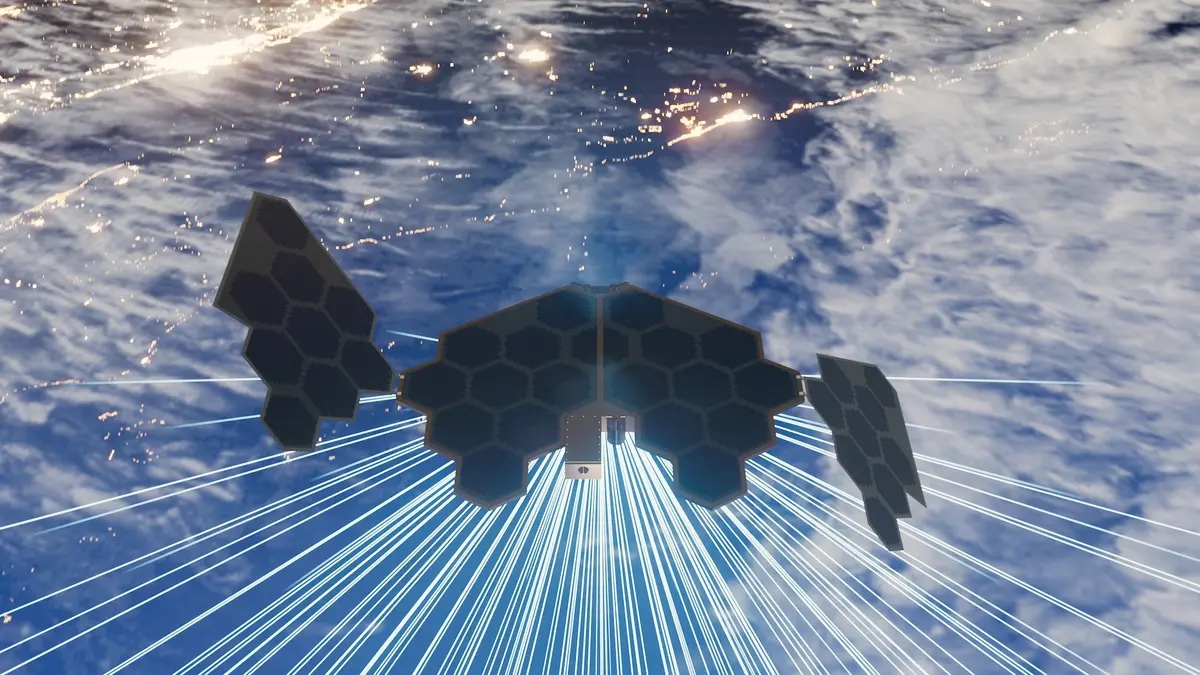
SpinLaunch, the experimental space startup known for its centrifugal satellite launcher, has unveiled bold new plans to create a broadband satellite network called Meridian Space. This next-generation constellation will consist of compact “microsatellites” deployed in massive batches of up to 250 satellites per launch—a move that, if successful, would surpass SpaceX’s 2021 record of 143 satellites on a single flight.
In a surprising twist, SpinLaunch won’t be using its signature kinetic launch system—designed to fling payloads into orbit like a giant slingshot—for the initial satellite deployments. Instead, the company will rely on traditional rocket launchesto begin building out the network.
SpinLaunch has secured $12 million in funding from Kongsberg NanoAvionics to help develop and commercialize the Meridian Space system. The first on-orbit demonstrator is targeted for launch as soon as next year.
According to Kongsberg Defense & Aerospace President Eirik Lie, Meridian will offer “significantly higher broadband capacity” compared to what’s currently available on the market—including SpaceX’s Starlink. SpinLaunch CEO David Wrenn echoed that sentiment, highlighting the reliability of NanoAvionics’ satellite platforms as a key factor in quickly scaling the constellation.
The pivot to conventional rockets has sparked speculation about the readiness of SpinLaunch’s centrifugal launch technology, which has been relatively quiet in recent months. Although the Meridian Space announcement didn’t confirm whether the company’s system will eventually be used to deploy the constellation, Wrenn emphasized that the shift allows SpinLaunch to manage risk and move forward more strategically.
Meanwhile, the company has achieved one significant milestone: in collaboration with Portland State University, it demonstrated that a CubeSat can survive the 10,000 Gs of acceleration required for a kinetic launch. However, open questions remain about how traditional liquid-fueled rocket systems might integrate with such extreme forces.
For now, SpinLaunch appears to be focused on proving its satellite technology in orbit while continuing to develop its ambitious launch platform in the background. If the company can deliver on both fronts—satellite performance and launch innovation—it could redefine the economics and scale of space access.
But for now, the countdown begins with rockets, not centrifuges.
By Impact Lab
