
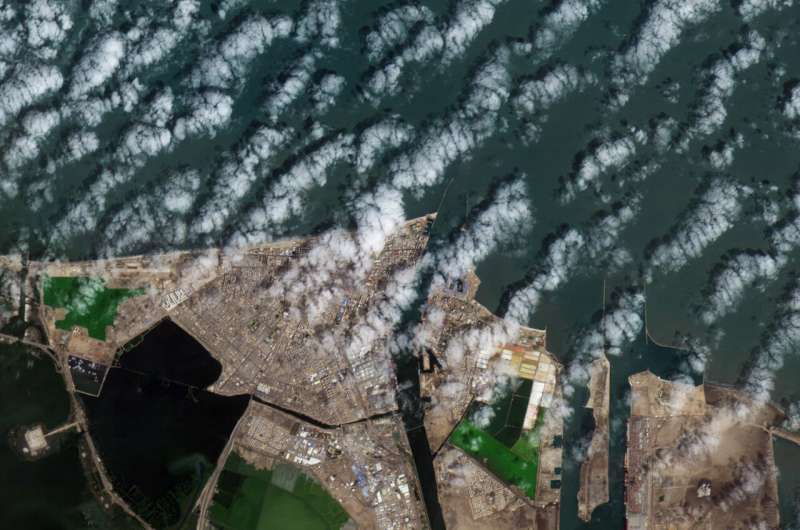
While most satellites dutifully beam raw data back to Earth for humans to analyze, Φsat-2 has a different job: thinking.
Launched in August 2024, this compact cubesat—roughly the size of a shoebox—quietly crossed a major threshold this year. It didn’t just start sending images back to Earth. It began making decisions. Real decisions. About what matters, what doesn’t, and what needs our attention now.
Orbiting 510 kilometers above us, Φsat-2 is equipped with AI powerful enough to sift through cloud-covered landscapes, ignore unusable images, and zero in on wildfire zones, oil spills, marine traffic, and even earthquake aftermath. It doesn’t wait for instructions. It triages. It prioritizes. It edits reality before we even see it.
This isn’t your average Earth-observing satellite. Φsat-2 is a reconnaissance analyst in orbit, blending multispectral vision with edge AI that selects, compresses, and transmits only what’s meaningful. And for emergency responders, defense agencies, and maritime watchdogs, that’s a revolution. A disaster gets flagged while it’s still unfolding. A ship in the wrong waters doesn’t go unnoticed. A path through rubble is mapped before boots hit the ground.
But here’s what makes Φsat-2 a warning shot as much as a technological leap: it’s not just about gathering data anymore—it’s about what gets left out. When satellites begin acting as editorial filters, we enter a world where machines decide what humanity sees from space. And we’ve only just begun testing the boundaries of that power.
For now, Φsat-2 is a “demonstrator,” a polite term for experimental. But make no mistake: it’s a prototype for the autonomous eyes that will soon surround our planet, capturing everything—and choosing what we see. The age of passive satellites is ending. The sky is no longer just watching. It’s thinking.
