
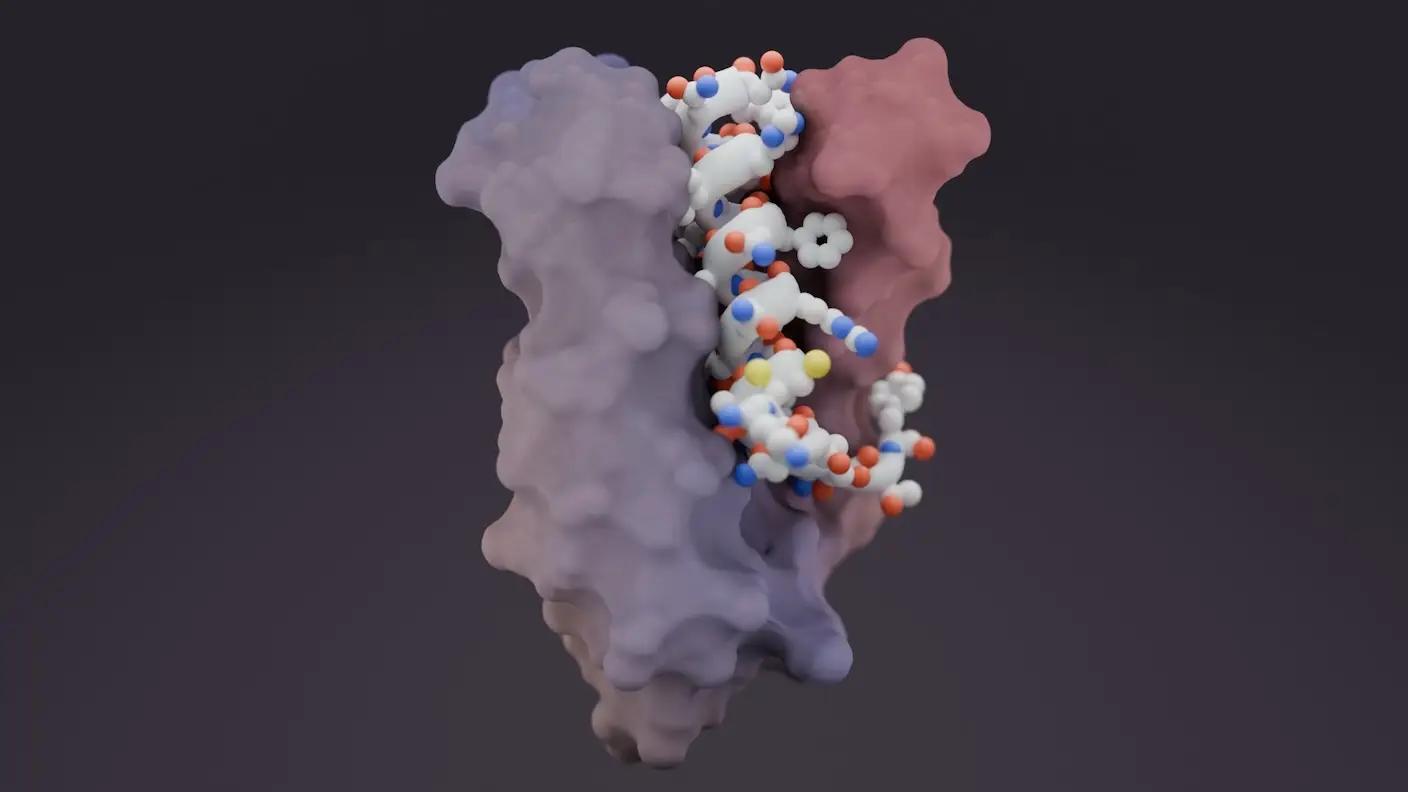
For decades, certain diseases have loomed like unsolvable riddles—cancers that resist every treatment, brain disorders that defy pharmaceutical logic. The reason? Many of the proteins behind them simply can’t be drugged. They’re too chaotic, too slippery, too structurally unstable for anything to stick.
Until now.
Scientists at the University of Washington have just pulled off what many in the biotech world thought impossible: using AI to design protein binders that can target these so-called “undruggable” proteins—shapeshifting molecules at the heart of some of the deadliest diseases we know. Alzheimer’s. Advanced cancers. Chronic pain conditions. All suddenly within reach.
Here’s the breakthrough: proteins aren’t Lego blocks. Many of them behave more like jellyfish—constantly moving, folding, unfolding, and interacting with other molecules in ways that shift by the second. Traditional drugs can’t catch them. Even AI, until recently, has failed to design anything that could.
But this new system is different. It doesn’t just guess where to bind—it invents the docking points. Like engineering a lock and key simultaneously, the AI learns the protein’s motion, then designs a binder to fit it in motion. It’s molecular choreography. And it’s deadly precise.
In one case, researchers used the AI to build a binder for dynorphin A, a brain peptide involved in pain perception. Dynorphin has long tantalized scientists—if you could block or boost it, you could control pain at its biological source. But it’s been off-limits. Too unstable. Too weird.
The new AI binder not only stuck to dynorphin—it beat out its natural protein partners and shut down pain signaling in human cells. This isn’t theoretical. This is real, lab-proven disruption.
What’s emerging is nothing short of a new class of medicine: programmable protein binders that go after targets the pharmaceutical industry wrote off years ago. These aren’t blunt tools. They’re surgical instruments for the molecular age—tools that could be used to disrupt rogue signals, rewire cellular behavior, or even hijack the very machinery of aging.
And the implications go way beyond medicine. Once you can design custom molecules to control disorderly proteins, you’re not just curing disease—you’re gaining influence over the very processes that make life dynamic: memory formation, stress response, immune adaptation, and cellular repair.
AI has already transformed how we think. Now it’s transforming what we can touch. The body’s wildest, weirdest proteins just lost their immunity to intervention. Welcome to the post-undruggable era.
