
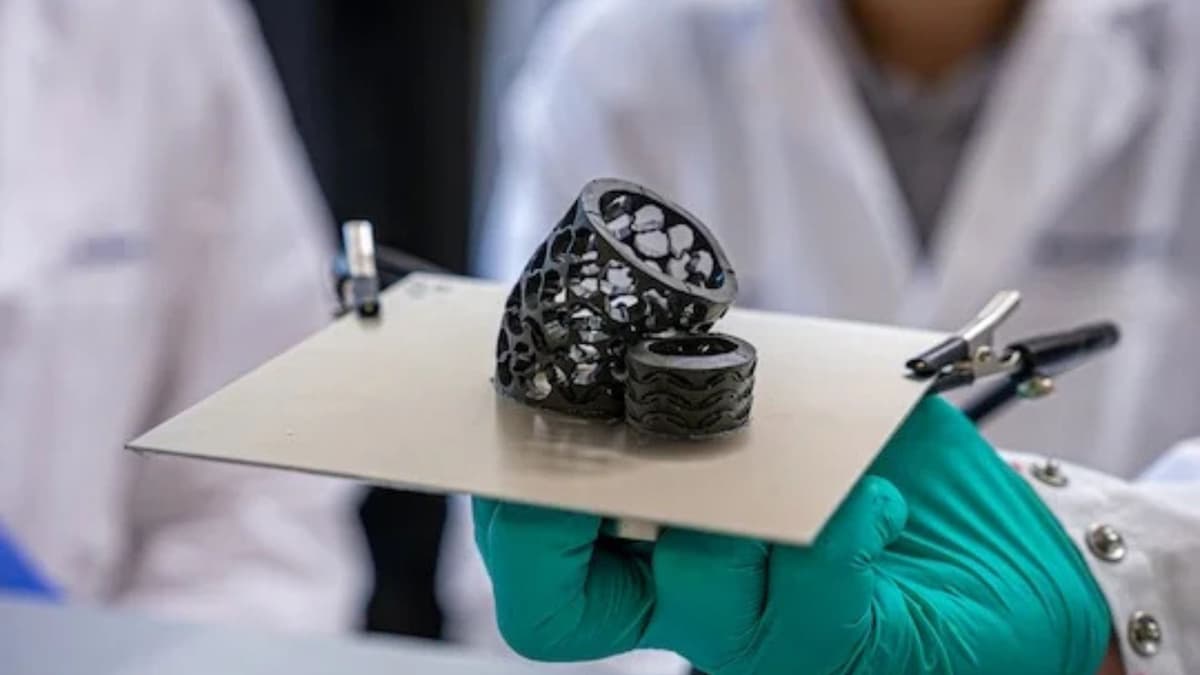
In the quest to reimagine medicine, sometimes the biggest breakthroughs don’t come from new drugs or surgical techniques, but from the materials that surround them. At Rice University, researchers have created a soft metamaterial that bends, twists, and locks into shape on command—all controlled remotely by magnetic fields. It’s a material that remembers, adapts, and survives in conditions that would destroy conventional medical devices.
This may sound like science fiction, but it could soon be saving lives inside the human body.
Beyond Traditional Materials
Traditional medical devices—whether stents, capsules, or implants—are usually rigid, mechanical structures. They must endure hostile environments like the human stomach, where acid corrodes metal and plastic, or the gut, where constant pressure wears down anything that isn’t highly resilient. Unfortunately, rigidity comes with risks: punctures, inflammation, and long-term tissue damage.
Enter Rice University’s breakthrough: a magnet-controlled soft metamaterial that combines unusual flexibility with remarkable strength. Unlike ordinary materials, metamaterials derive their properties from geometry, not chemistry. By designing intricate microarchitectures of beams and supports, the team engineered a material that can both withstand compressive loads more than 10 times its weight and deform into new shapes at will.
Programmed Multistability: The Secret Sauce
The key lies in what the team calls programmed multistability. Trapezoidal supports and reinforced beams allow the material to lock into new shapes, even after the magnetic field is removed. In other words, the material doesn’t just move—it remembers.
This ability gives the material a form of programmable memory. Once shifted, it holds the new configuration until commanded otherwise. It can switch between open and closed states, perform wave-like peristaltic motions, and even carry fluids through controlled channels—all inside environments as harsh as the human digestive tract.
Applications Inside the Body
The potential applications read like a blueprint for the future of medicine:
- Ingestible medical devices that expand or contract once swallowed, delivering drugs precisely where needed before safely dissolving or exiting the body.
- Implantable systems that adjust their shape to fit the body’s changing needs, reducing complications caused by static, rigid devices.
- Obesity treatments that use shape-shifting capsules to regulate appetite by altering stomach volume in real time.
- Targeted mechanical therapies where devices apply controlled forces deep inside the body without invasive surgery.
Because the material survives acid corrosion, extreme heat, and continuous stress, it promises unprecedented durability in places where current devices fail. Surgeons at the Texas Medical Center are already collaborating with the Rice team to explore wireless systems that could deliver fluids or apply forces remotely.
Beyond Humans: A Wider Scope
Interestingly, the researchers are not limiting their vision to human patients. They are also exploring potential applications for marine mammals, demonstrating that these materials could benefit veterinary medicine and conservation as well.
Imagine rehabilitating whales or dolphins with ingestible therapeutic systems, or using shape-shifting implants to aid endangered species. The line between human and animal medicine could blur as materials become adaptable enough to serve across biological boundaries.
The Bigger Picture: Smart Matter for a Smart World
This research fits into a much larger trend: the rise of smart matter. Materials are no longer passive; they are becoming programmable, adaptive, and even intelligent in their responses. Just as microchips transformed information technology, programmable materials are poised to transform medicine, construction, aerospace, and robotics.
Ingestible metamaterials that heal from within are only the beginning. Tomorrow’s hospitals could deploy fleets of soft, shape-shifting devices that move through the body like living organisms—diagnosing, repairing, and restoring without a single incision.
Final Thoughts
The Rice University team has done more than design a clever material. They’ve opened a window into the next age of healthcare—one where devices are no longer rigid intruders but flexible partners, moving in harmony with the human body.
The metamaterials of tomorrow will not only endure extreme conditions; they will thrive in them, adapting their form and function to meet the needs of patients in real time. It is a future where medicine is no longer just about chemistry or biology, but about programmable matter working at the cellular scale.
The future of healing may not come from the next blockbuster drug, but from the quiet revolution of materials that bend, shift, and remember.
Read more on related topics:
