
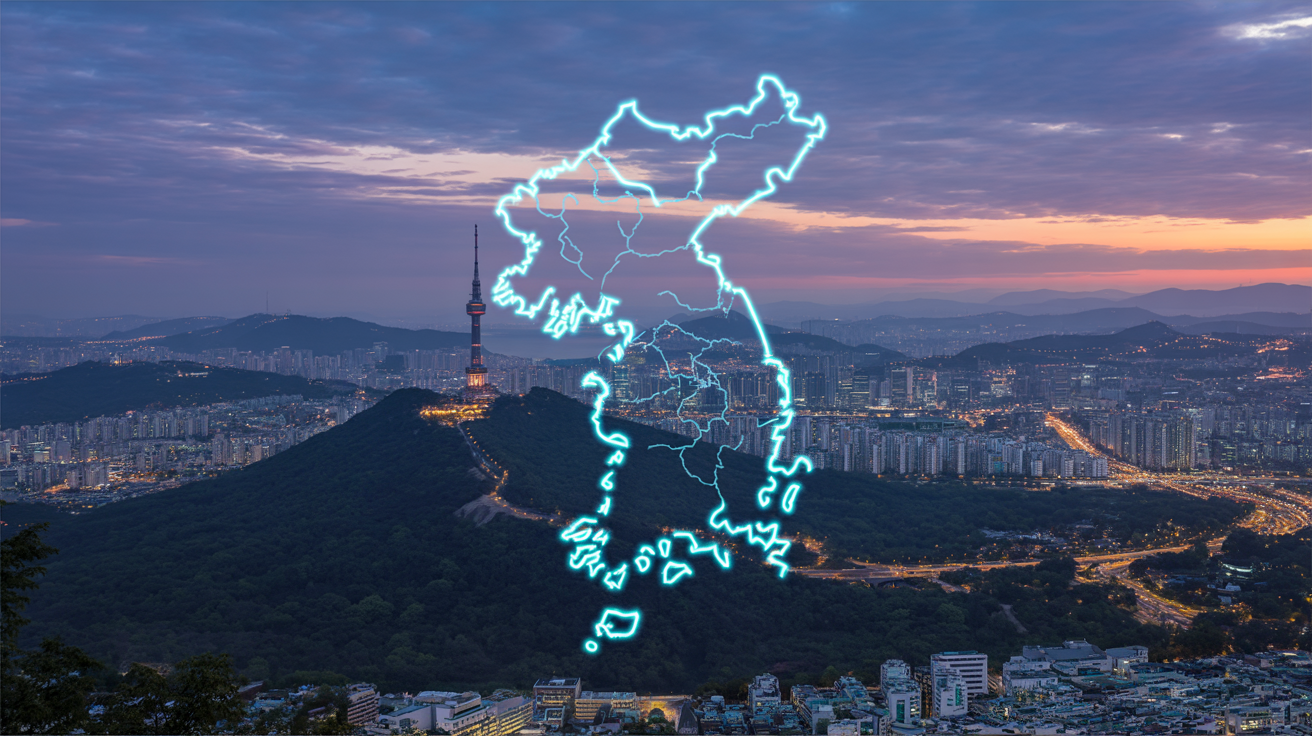
Building an Integrated National Economy Through Systematic Wealth Creation
By Futurist Thomas Frey
For centuries, the engines of civilization were cities—Athens, Rome, London, New York. Each rose as a singular hub of culture, commerce, and political power. But the 21st century has rewritten the map of influence. Today, mega-regions—vast interconnected networks of cities bound by infrastructure, trade, and innovation pipelines—generate most of the world’s wealth. They are the new battlegrounds for global competitiveness.
Mega-regions aren’t simply large cities. They are polycentric clusters where multiple metros fuse into economic super-systems. The BosWash Corridor in the U.S., stretching from Boston through New York to Washington, D.C., powers a disproportionate share of America’s GDP. Europe’s Blue Banana—from London to northern Italy—anchors its industrial base. China’s Pearl River Delta, with over 120 million residents, produces nearly $2 trillion annually. Just 12 mega-regions house less than 20% of the global population yet account for two-thirds of global GDP. Size, integration, and speed now define winners.
South Korea faces a dilemma. On one hand, it is a technological powerhouse—home to Samsung, Hyundai, and a cultural wave that has captured global attention. Its per capita GDP rivals Europe’s wealthiest nations. On the other, its population of 52 million looks small next to China’s mega-regions or Japan’s Tokaido Corridor. Korea risks being outscaled in a world where geography and mass determine advantage.
The problem is compounded by Seoul’s dominance. Over half the nation’s population and more than 80% of its GDP are concentrated in the capital region. This hyper-centralization creates fragility. A single economic or geopolitical shock to Seoul reverberates across the country. Meanwhile, cities like Busan, Daegu, and Gwangju remain under-leveraged, their unique assets overshadowed by the gravitational pull of Seoul.
But here lies Korea’s opportunity. While most mega-regions form through historical accident and geographic sprawl, Korea could become the first nation deliberately engineered to function as a mega-region. Its compact geography, unified culture, and advanced infrastructure give it a chance to prove that a small nation can punch at mega-regional scale.
The Neumann Engine Strategy offers the blueprint. Instead of clustering all innovation in Seoul, Korea would seed “engines” of systematic wealth creation across its cities. These engines would be venture studios, AI-driven entrepreneurship hubs, and fabrication centers—places designed not to recruit companies but to build them from scratch. Each city would specialize: Busan in maritime robotics, Daegu in smart textiles, Gwangju in digital content, Daejeon in biotech and space tech, Seoul in fintech and AI platforms. Linked by high-speed rail, shared data platforms, and coordinated finance, they would form a national innovation grid.
This isn’t decentralization for its own sake—it’s integration at scale. Korea could become the world’s first “One-Hour Nation,” where every major city is within an hour’s reach via upgraded transport corridors. Its digital backbone would extend AI-driven logistics, drone superhighways, and seamless workforce mobility. The result: a country that operates like a single mega-region economy.
The implications are profound. Korea could become the prototype for other small but advanced nations—Singapore, Israel, the Nordic states—showing how to survive in an age dominated by continental-scale economies. The risk, of course, is centralization drift: if Seoul dominates the system, the project collapses. Safeguards such as regional innovation councils and distributed venture funds would be essential. But the reward is enormous: by 2035, Korea could rival California or Germany in GDP, not as a fragmented nation but as a unified mega-region nation.
The message to Korea’s leaders is simple: stop thinking like a small country competing against giants. Start thinking like a mega-region engineered for speed, integration, and entrepreneurship. The Neumann Engine isn’t just a plan for Korea’s future—it’s a model for how the next generation of nations might function.
In the end, the winners of the mega-region era won’t be the biggest—they’ll be the fastest, most connected, and most systematically entrepreneurial. Korea has all the ingredients to lead. The only question is whether it has the will to see itself not just as a nation, but as the world’s first mega-region nation.
For more on related future-shaping strategies, see:
