
By Futurist Thomas Frey
“The next frontier in surveillance may not be cameras watching your face, but sensors reading your body’s electromagnetic signature from space.”
We’ve grown accustomed to being watched. Security cameras track us in stores, facial recognition scans us at airports, and our smartphones know where we are at every moment. But imagine a different kind of surveillance—one that doesn’t need to see your face at all. One that simply reads the unique electromagnetic field your body produces from hundreds of kilometers above Earth.
This isn’t science fiction. It’s a technology already in development, and by 2040, it could become reality.
The Technology: Reading Your Biofield from the Heavens
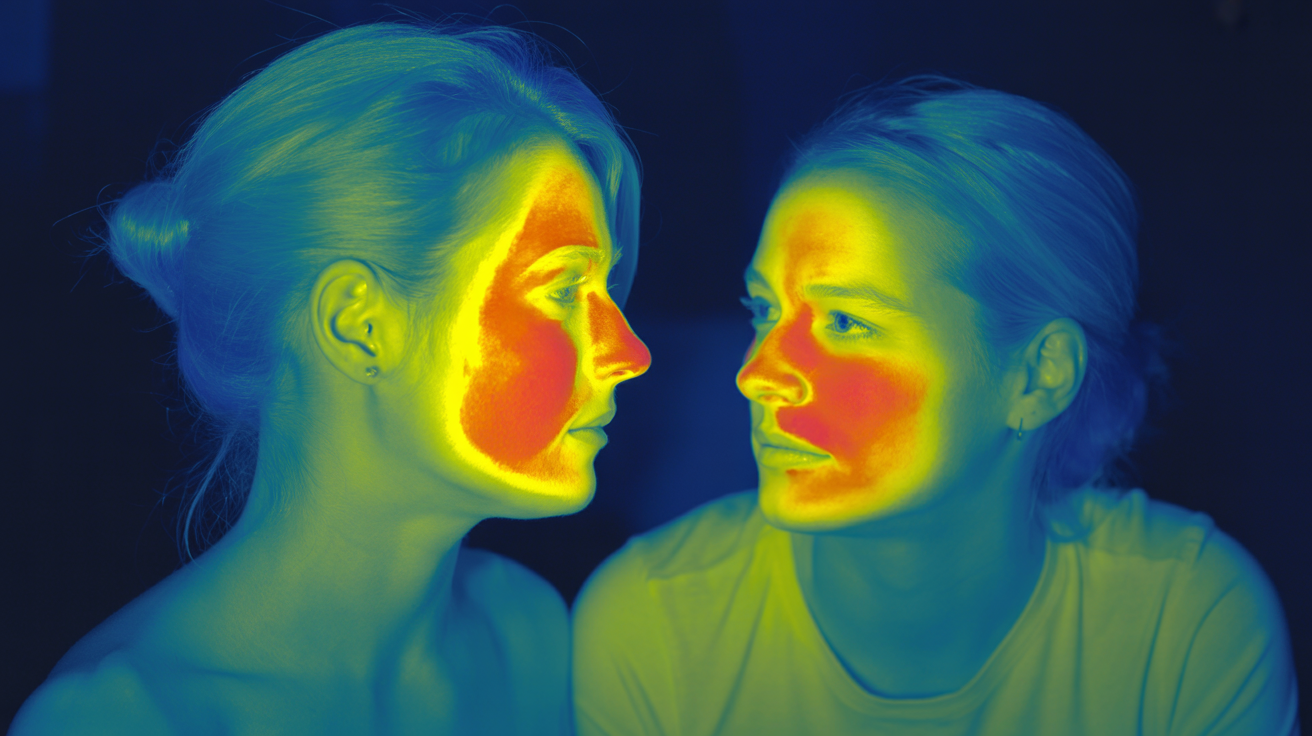
The concept is more sophisticated than simple heat detection: every human body generates a unique electromagnetic field—your biofield—created by the electrical activity of your heart, brain, nervous system, and cellular processes. This electromagnetic signature is more distinctive than your fingerprint, more unique than your facial features, more personal than your DNA sequence.
Military and government solutions like Hu-GPT are already using biofield detection to uniquely identify individuals. The human body’s electromagnetic field extends beyond the skin, radiating outward in patterns that vary based on your physiology, health status, emotional state, and even your thoughts. No two people generate identical biofield signatures, and unlike fingerprints or faces, your biofield is constantly broadcasting, impossible to hide without specialized shielding.
Current space-based technology faces challenges in detecting these subtle electromagnetic signatures from orbit. The Earth’s ionosphere interferes with certain frequencies. Background electromagnetic noise from power lines, electronics, and natural phenomena creates clutter. Distinguishing individual biofields from the electromagnetic chaos of modern civilization requires extraordinary sensor sensitivity and processing power.
But technology advances relentlessly. By 2040, we may see satellites with quantum sensors capable of detecting minute electromagnetic variations. Artificial intelligence could learn to isolate individual biofield signatures from background noise, tracking not just location but identity with certainty. Constellations of satellites providing continuous coverage could monitor biofields globally, creating a surveillance system that makes facial recognition look primitive by comparison.
The question is no longer “if” but “when”—and what we’ll do about it.
The Promise: Lives Saved, Dangers Averted
The potential benefits are compelling, even noble. Consider the possibilities:
Search and rescue operations could be revolutionized. When hikers go missing in wilderness areas, when earthquakes bury survivors under rubble, when boats capsize at sea—biofield detection could identify specific individuals by their unique signatures and guide rescuers directly to them. Not just “there’s someone alive in that rubble,” but “John Smith is specifically located at these coordinates.” Every minute matters in these situations, and electromagnetic detection works through darkness, fog, forest canopy, even building materials.
Disaster response would become dramatically more effective. After hurricanes, floods, or industrial accidents, responders could not only locate survivors but identify them individually—prioritizing those with medical conditions, reuniting families, accounting for every person who was in the affected area. The difference between finding “survivors” and finding “specific identified individuals” is enormous for both rescue efficiency and family notification.
Medical monitoring could save lives. Biofield patterns change with health status. Satellites detecting anomalous biofield signatures could alert emergency services before someone even knows they’re having a heart attack or stroke. Remote populations without access to healthcare could receive monitoring that currently requires expensive medical equipment.
Counter-terrorism and security applications become extraordinarily powerful. Instead of tracking “someone,” agencies could track specific identified individuals anywhere on Earth, continuously, regardless of disguise, location, or attempts to evade surveillance. No more lost suspects. No more uncertainties about who was where.
These aren’t trivial benefits. They represent real lives saved, real suffering prevented, real security enhanced.
The Peril: Identity Privacy Vanishes
But the very features that make this technology promising also make it terrifying in ways that exceed traditional surveillance.
Total identification becomes inescapable. Unlike security cameras, which you can avoid, or facial recognition, which you can evade with masks or makeup, your biofield is constant and unique. Step outside and you’re not just potentially visible—you’re definitively identifiable to anyone operating these satellites. Your backyard barbecue isn’t just observed—the system knows specifically who attended. Your midnight walk isn’t just tracked—the satellite identifies you personally.
This transcends location surveillance to become identity surveillance. The system doesn’t just know “someone” is at a particular location—it knows YOU specifically are there, with the same certainty as a fingerprint match.
No consent, no knowledge, no escape. You’ll never know when a satellite passes overhead. You won’t know who operates it, what they’re looking for, or what they plan to do with your biofield data. And unlike biometric databases that require collecting your fingerprints or face scan, your biofield is already being broadcast. You can’t opt out. You can’t refuse collection. The watchers are invisible, and you’re continuously transmitting your identity to anyone with the sensors to receive it.
Mission creep is guaranteed. Systems deployed for search and rescue will be repurposed for law enforcement. Law enforcement tools will migrate to commercial applications—employers tracking employee locations, insurance companies monitoring health biomarkers, marketing firms analyzing emotional states through biofield patterns. Today’s emergency-only technology becomes tomorrow’s routine identity tracking. History teaches us that surveillance capabilities, once created, expand relentlessly beyond original intentions.
Authoritarian regimes gain unprecedented power. Imagine this technology in the hands of governments that already suppress dissent, track minorities, or punish political opposition. Protesters couldn’t gather without every single individual being identified by their unique biofield. Dissidents couldn’t meet in secret—their electromagnetic signatures would betray them. Refugees couldn’t hide—their biofields remain constant regardless of false documents or changed appearance. The technology doesn’t distinguish between finding an earthquake survivor and finding someone fleeing persecution.
Biofield data creates the ultimate profile. Electromagnetic patterns reveal health conditions, stress levels, emotional states, possibly even cognitive activity. Paired with location data and association analysis, biofield surveillance creates profiles of individuals that are far more invasive than anything possible with cameras or facial recognition. And unlike a password or even a face, you cannot change your biofield signature.
The Gray Areas
Some implications resist easy categorization:
Privacy countermeasures will emerge but remain imperfect. Electromagnetic shielding exists—Faraday cages, specialized fabrics, shielded structures. But constant shielding is impractical for normal life. You can’t live in a Faraday cage. This creates an arms race where privacy becomes a luxury good available only to those who can afford elaborate countermeasures or who can tolerate living as modern hermits.
The medical dimension complicates consent. If satellites can detect biofield anomalies indicating medical emergencies, should they alert authorities without consent? What if someone doesn’t want their health condition known? What if early detection of a condition leads to insurance discrimination or employment consequences? The line between life-saving intervention and privacy violation becomes impossibly blurred.
Definitions matter critically but remain unresolved. What counts as “identifying” someone? Detecting an electromagnetic field? Recognizing that field as specifically human? Matching that field to an individual identity? Tracking that individual over time? Analyzing their biofield for health or emotional information? Each capability represents a different level of intrusion, and we haven’t begun to establish legal or ethical boundaries between them.
International jurisdiction becomes meaningless. A satellite overhead doesn’t respect borders. A sensor in space operates in international territory. Who has authority to regulate biofield surveillance from orbit? Under what laws? Enforced by whom? Current international space treaties never anticipated this. Privacy laws are national; satellites are global.
What We Must Decide
The question isn’t whether we’ll develop the capability to identify people from space by their biofield signatures. The technology already exists in military and government contexts. Commercial and widespread deployment is a matter of engineering refinement and economic incentive. The trajectory is clear.
The question is what rules we’ll create before the satellites proliferate.
Will we require warrants for biofield surveillance, just as we do for wiretaps? Will international agreements limit who can deploy these systems and for what purposes? Will there be oversight, transparency, accountability for biofield data collection and use? Will individuals have any right to know when their biofield has been detected, identified, or analyzed? Or will we sleepwalk into a world where identity privacy outdoors—or even indoors, since electromagnetic fields penetrate most structures—simply no longer exists?
Will we create protected categories where biofield surveillance is prohibited—homes, medical facilities, places of worship? Will we require that biofield detection systems anonymize data unless specific legal thresholds are met? Will there be consequences for misuse, or will this become another technology where violations are routine and penalties are trivial?
The technology itself is neutral. A satellite sensor doesn’t care whether it’s identifying lost hikers or tracking political dissidents. It simply detects electromagnetic fields and matches them to identity databases. What matters is the system we build around it—the laws, the oversight, the limitations, the consequences for abuse.
The Unique Identification Problem
Traditional surveillance at least allows for misidentification, for blending into crowds, for the mercy of anonymity. Biofield surveillance eliminates these final refuges. Your electromagnetic signature is as unique as you are, more distinctive than any physical characteristic. You cannot disguise it. You cannot alter it. You cannot hide it without extreme measures that make normal life impossible.
This represents a qualitative shift in surveillance capability—from observing behavior to tracking identity continuously and inescapably. We’re not just being watched; we’re being identified, specifically and personally, by the very electromagnetic signature our bodies generate to function.
Final Thoughts
We have perhaps fifteen years to get this right. Fifteen years to have difficult conversations about what identity privacy means in an age of orbital biofield surveillance. Fifteen years to build safeguards before the technology outpaces our wisdom. Fifteen years to decide whether some capabilities, however technologically feasible, should remain legally prohibited.
The satellites are coming. The sensors are improving. The algorithms are learning to distinguish your unique biofield from billions of others. The question is whether we’ll shape this future deliberately, with intention and foresight—or whether we’ll simply accept it as inevitable, surrendering our very identity privacy to the demands of security and the momentum of technological progress.
Your body generates an electromagnetic field unique to you alone, constantly broadcasting your identity to anyone with sensors to receive it. Soon, someone in space will almost certainly be detecting that signature. We’d better decide, collectively and urgently, what rules should govern their gaze—and whether there should be any limits at all on identifying individuals by the electromagnetic signatures we cannot help but emit.
The choice we make will determine whether future humans live in a world where anonymity still exists, or whether every person becomes a walking beacon of identity, trackable and identifiable from space at all times, forever.
Related Links:
The Science of Human Biofield Detection
Electromagnetic Surveillance and Privacy Implications
International Space Law and Satellite Surveillance
