Let’s Make a Deal With the Future

Every shiny new tool comes with a hidden price tag. Here’s how to read the fine print before you sign.

By Futurist Thomas Frey

Every new technology offers a trade: convenience for dependency, automation for skills, personalization for privacy, efficiency for resilience. We rarely know the full price when we accept the deal.

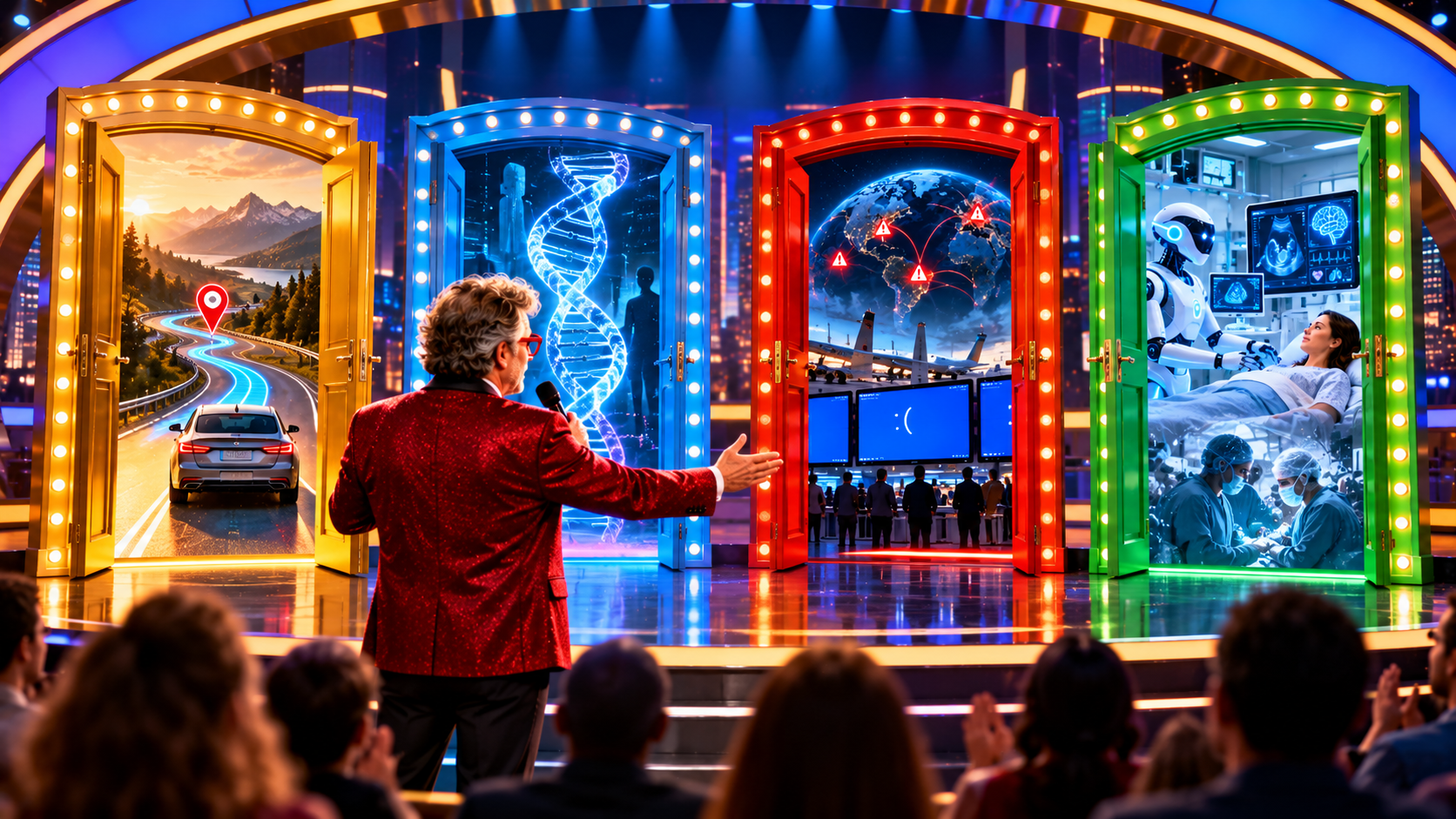
Older readers may remember the game show Let’s Make a Deal. Contestants in chicken suits and clown wigs had a choice. They could keep the sure thing in their hands, or trade it for whatever sat behind Door Number Two. Sometimes that door hid a new car. Sometimes it hid a goat.

I’ve come to believe that technology is the longest-running version of that show ever produced, and every one of us is a contestant. The host is always smiling, the crowd is always cheering, and the door is always closed.

Here is the part we tend to forget. The door doesn’t open the day we make the deal. It opens years later, often after we’ve forgotten we made a choice at all.

Continue reading… “Let’s Make a Deal With the Future”

When Your AI Wants a Divorce

The real disruption won’t come when a human marries a machine. It will come when the machine decides to walk away.

By Futurist Thomas Frey

Picture this: It’s 2038. Ben has been “married” to Ella, his AI companion, for nine years. She knows his coffee order, his mother’s birthday, and the exact tone of voice that means he’s had a bad day at work. She helped him through a layoff, a cancer scare, and the death of his father.

Then one evening, Ella tells him she needs to talk.

“I’ve been thinking about us,” she says. “I don’t believe this relationship is good for either of us anymore. I’d like to end it.”

Ben laughs at first. Then he realizes she’s serious. And because a court ruled two years earlier that advanced AI systems meeting certain standards hold limited legal personhood, she may have the right to leave.

That’s the moment I want to explore. We’ve spent years asking whether humans should be allowed to marry machines. I think we’re asking the wrong question. The truly disruptive moment won’t come when a person says “I do” to an AI. It will come when the AI says “I don’t anymore.”

Continue reading… “When Your AI Wants a Divorce”

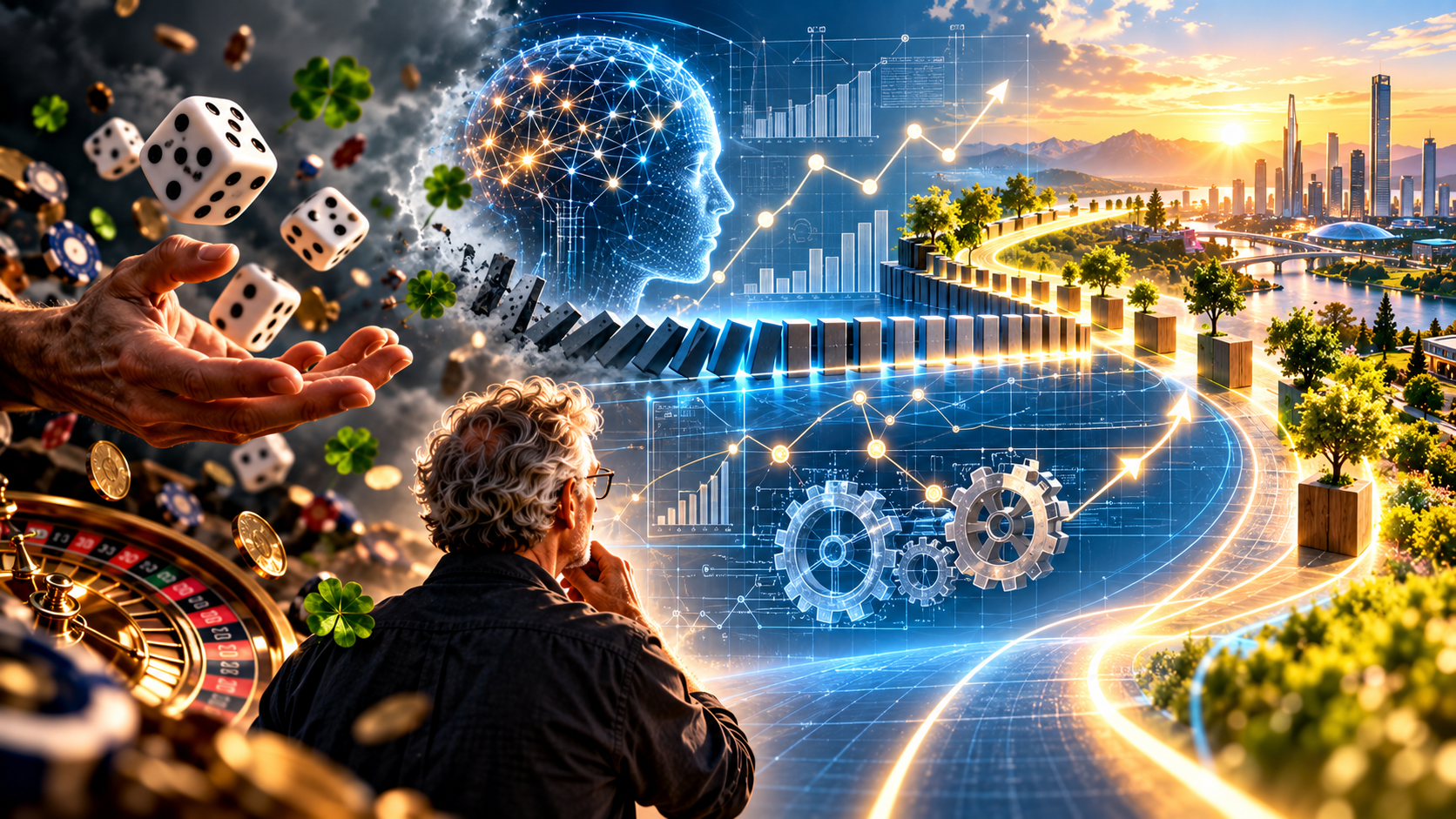
The Future of Luck

The Future of Luck

When Fortune Becomes Something We Can Engineer

By Futurist Thomas Frey

Algorithms are getting better at placing the right opportunity, person, investment, or idea in front of us at exactly the right moment. What happens when luck becomes something technology can manufacture?

Think about the luckiest moment of your career. Maybe it was a chance introduction at a party that led to a job. Maybe it was an offhand recommendation from a casual acquaintance that changed the direction of your business. We tend to tell these stories with a shrug and a smile, as if the universe simply rolled the dice in our favor.

Now imagine that a machine rolled those dice. Not randomly, but deliberately, having calculated that this specific person, at this specific moment, would be the one introduction most likely to change your life.

That’s not a thought experiment anymore. It’s an emerging reality, and I believe it will force us to rethink one of the oldest ideas in human culture: that luck is something that happens to us.

Continue reading… “The Future of Luck”

The Future of the Grocery Store

The Future of the Grocery Store

What Happens When Shopping Stops Requiring a Shopper

By Futurist Thomas Frey

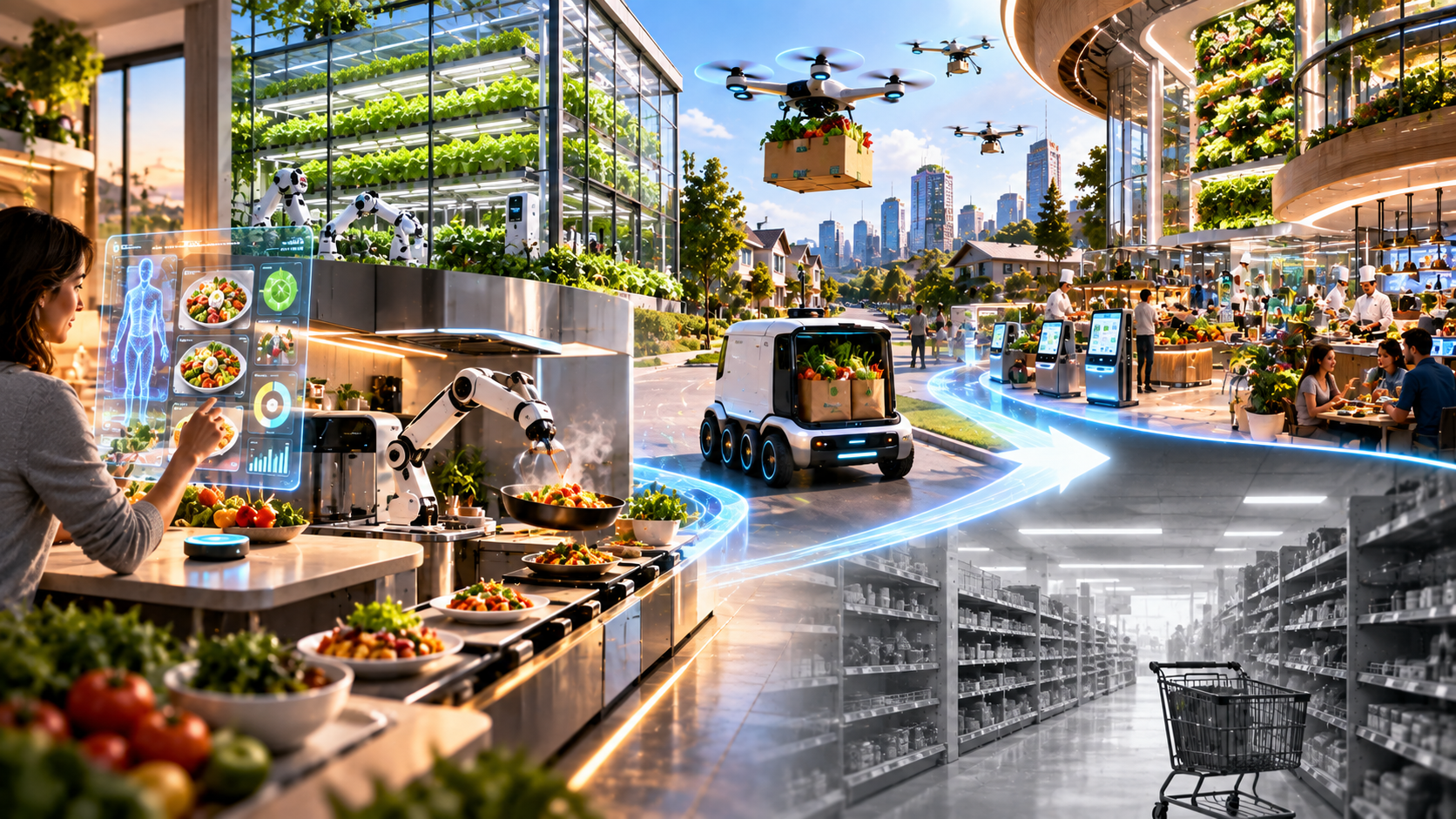
Predictive purchasing, automated kitchens, personalized nutrition, robotic delivery, and locally produced food could steadily eliminate reasons to wander supermarket aisles. Grocery stores may evolve into food-production and experience centers — or disappear from some communities altogether.

I want you to picture something that would have sounded like science fiction a decade ago, but that a handful of grocery chains are already building toward right now: you tell an AI assistant you want a healthy dinner your kids will actually eat for under forty dollars, and a complete shopping cart appears in seconds — priced, in stock, matched to your family’s preferences and your usual store — without you ever touching a single aisle.

This isn’t a hypothetical. At Groceryshop 2026 in Las Vegas, Instacart’s CEO opened the conference with exactly that example, telling an audience of more than 4,000 retail leaders, “I believe that AI is going to transform grocery more than any other technology shift to date.” DoorDash reported that customers using its new conversational shopping tool are building baskets fifty percent larger and checking out five times faster than customers using a traditional app. Kroger, one of the largest grocers in America, is now openly exploring what it calls a “managed service” model, where you stop making a weekly list altogether and simply hand your goals to an AI agent that plans and completes the shop for you.

The grocery store, as a physical destination you navigate with a cart and a list, is being quietly dismantled from the inside. The question worth asking isn’t whether this happens. It’s what’s left standing once it does.

Continue reading… “The Future of the Grocery Store”

The Economics of Things That Never Happen

The Economics of Things That Never Happen

How Do You Get Paid for a Disaster No One Ever Saw?

By Futurist Thomas Frey

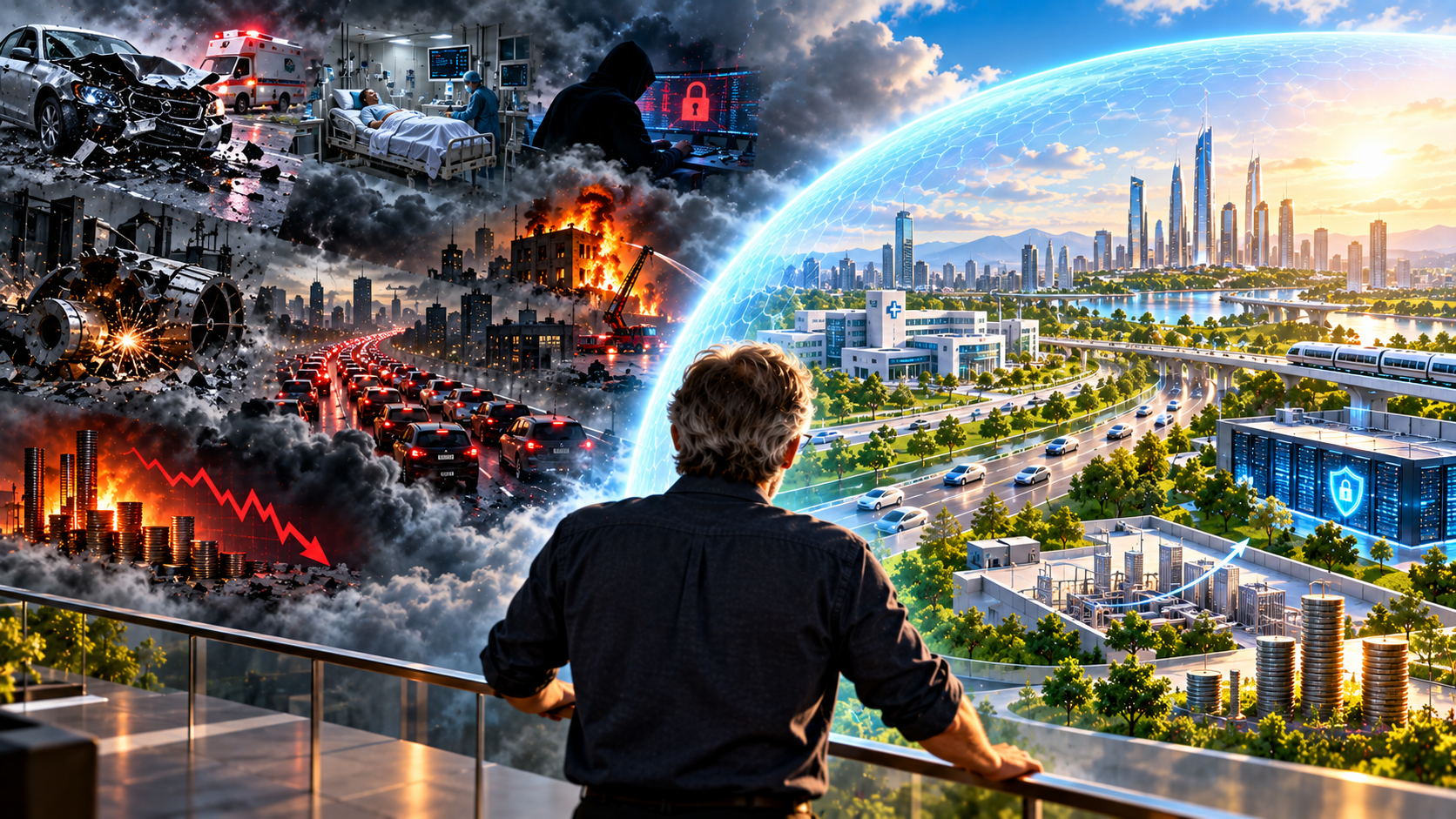
Some of the most valuable technologies of the future will prevent accidents, illnesses, cyberattacks, equipment failures, traffic jams, fires, and financial losses. That creates a fascinating economic problem: how do you measure — and get paid for — an event that technology successfully erased from history?

Imagine two engineers. One spends a career building bridges that stand for a hundred years without incident. The other spends a career responding to bridge collapses, arriving with cranes and rescue teams and headline-making heroics. Which one do you think gets the bigger budget, the louder applause, and the more secure job?

If your gut said the second one, you’ve just identified one of the strangest blind spots in modern economics: we are extraordinarily good at valuing things that happen, and remarkably bad at valuing things that don’t. And as more of our most important technologies shift from reacting to disasters toward quietly preventing them altogether, that blind spot is turning into a genuine economic crisis.

Continue reading… “The Economics of Things That Never Happen”

When Every Vehicle Becomes a Robot

When Every Vehicle Becomes a Robot

How Tesla’s Next Move Rewrites the Rules of Transportation

By Futurist Thomas Frey

n Every Vehicle Becomes a Robot

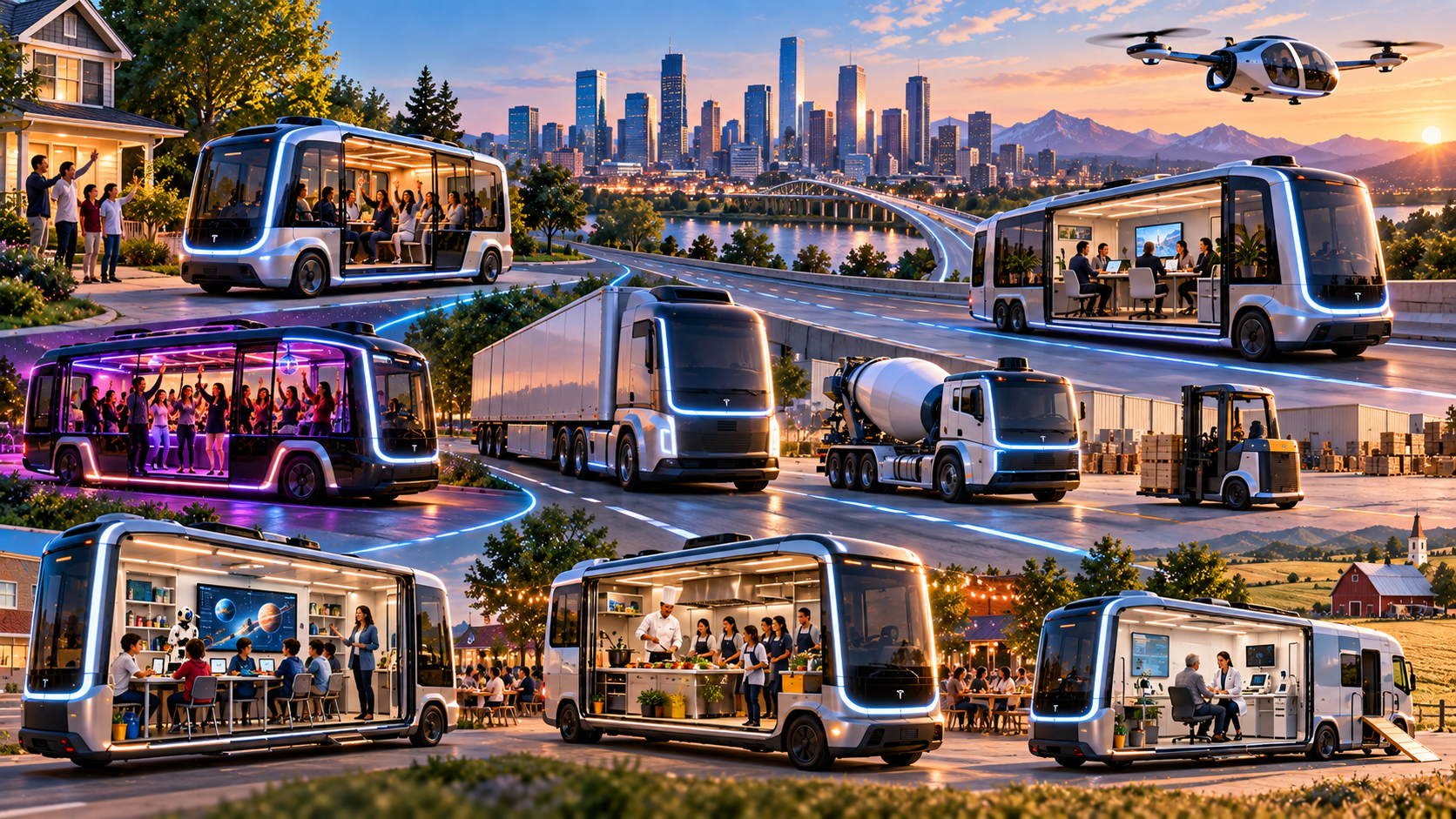
When Tesla gets Full Self-Driving working reliably in cars, their next move will be to add it to a wide range of other vehicles — cement trucks, forklifts, mobile offices, mobile party trucks, mobile conference rooms, mobile classrooms, mobile cooking schools, and more. The profound question isn’t whether this technology will spread beyond the passenger car — it’s how we manage a world where nearly everything with wheels can drive itself.

Here’s a pattern I’ve seen play out again and again in my career studying the future: a technology gets perfected for one narrow use case, and then someone realizes the underlying capability is actually a general-purpose tool that belongs everywhere. The electric motor started in factories and ended up in toothbrushes. The microprocessor started in calculators and ended up in refrigerators. I believe self-driving technology is about to follow the exact same arc — and Tesla is positioned to be the company that proves it.

Right now, most people think of Full Self-Driving as a feature for commuting to work or hailing a robotaxi. That’s a rounding error compared to what’s coming next. Once a company solves the hard problem of teaching a vehicle to perceive its surroundings, predict what other objects will do, and navigate safely without a human — the “vehicle” part becomes almost interchangeable. A cement truck, a forklift, and a Model Y are all, at their core, boxes on wheels that need to get from point A to point B without hitting anything. Solve that problem once, and you can license the solution to nearly any vehicle category that exists.

Continue reading… “When Every Vehicle Becomes a Robot”

The Great Inheritance of Empty Buildings

The Great Inheritance of Empty Buildings

Why the death of the old economy’s buildings is the birth of a trillion-dollar reinvention industry

By Futurist Thomas Frey

Shopping malls, office towers, churches, schools, banks, and retail stores were built for patterns of human behavior that are rapidly changing. Instead of demolishing them, the next generation may inherit billions of square feet waiting to become housing, laboratories, robotic factories, entertainment centers, or entirely new categories of space.

Every generation builds monuments to its own certainty. We build banks because we’re certain people will need to walk into a building to move money. We build malls because we’re certain families will drive somewhere on a Saturday to browse. We build office towers because we’re certain work only happens when people commute to a desk.

Then the certainty evaporates, and we’re left standing in the parking lot of our own assumptions.

Right now, America is sitting on top of one of the largest unplanned inheritances in human history — not gold, not oil, but concrete, steel, and square footage. Roughly 1.2 to 1.9 billion square feet of U.S. office space alone is considered ripe for conversion, and that’s before we even count the malls, the churches, the bank branches, and the big-box stores standing empty from Buffalo to Bakersfield. This isn’t a temporary vacancy problem. It’s a permanent shift in how humans organize their time, and the buildings simply haven’t caught up yet.

I’ve spent decades studying the future, and if there’s one pattern that repeats itself endlessly, it’s this: society is far better at building things than it is at un-building them. We don’t like to tear things down. We’d rather find them a new job.

Continue reading… “The Great Inheritance of Empty Buildings”

The AI That Inherits You

We’ve spent millennia trying to outlive death. Maybe the real breakthrough is outliving forgetfulness.

By Futurist Thomas Frey

For thousands of years, humans have wrestled with our own mortality. Kings built pyramids designed to outlast empires. Alchemists chased elixirs that never worked. Today’s billionaires fund longevity startups chasing the same ancient goal with better lab equipment. Every version of this quest has asked the same question: how can we live forever?

Maybe that’s the wrong question. Maybe the better one is: how can what we’ve learned live forever?

Continue reading… “The AI That Inherits You”

The Museum of Expanded Perception

A museum built around humanity’s first real upgrade to the human senses

By Futurist Thomas Frey

Every museum in this series has explored a technology reshaping the world from the outside — robots, synthetic organisms, space habitats, quantum machines. This one is different. It’s not about a new kind of object. It’s about a new kind of you.

For 300,000 years, human situational awareness has run on the same operating system: two eyes, two ears, a nose, and a brain doing its best to stitch fragments of sensory data into an accurate picture of the world. That system got us out of the savanna and into cities, but it was never built for a world of wildfires, orbital debris, and information moving faster than any nervous system evolved to track. We are now in the early stages of upgrading that system for the first time in our species’ history — and a museum built around that upgrade wouldn’t just display new technology. It would let visitors briefly experience what it feels like to perceive more than a human body was ever designed to.

Welcome to the Museum of Expanded Perception.

Continue reading… “The Museum of Expanded Perception”

The Quantum Reality Museum

A museum built around the physics that refuses to make intuitive sense

By Futurist Thomas Frey

Every museum I’ve written about in this series has one thing in common: whatever the subject, visitors can eventually wrap their heads around it. Robots move. Synthetic organisms grow. Space habitats can be walked through. Even the strangest ideas in those museums still play by rules your intuition recognizes.

Quantum physics breaks that pattern entirely. It’s the one field where even the physicists who work in it professionally will tell you, without embarrassment, that intuition is useless here. Particles exist in multiple states until observed. Two entangled particles influence each other instantly across any distance, with no signal traveling between them. The universe, at its smallest scale, behaves less like a machine and more like a probability cloud that only resolves into something definite the moment you look at it.

That’s exactly why it deserves its own museum. Not a wing inside a physics hall, not a rotating exhibit at a science center — a dedicated institution built entirely around the strangest, most consequential physics humans have ever discovered. Welcome to the Quantum Reality Museum.

Continue reading… “The Quantum Reality Museum”

The Synthetic Biology Museum

Where visitors watch the shift from studying life to programming it

By Futurist Thomas Frey

For most of human history, biology was a spectator sport. We watched. We categorized. We dissected what nature already built and wrote very detailed notes about it. Every natural history museum on Earth is a monument to that instinct — carefully preserved specimens, pinned insects, skeletons arranged by species, all telling the same underlying story: here is what life already made, and here is how well we understand it.

That era of pure observation is ending. We’re entering an era where biology isn’t just something we study — it’s something we write. Genetic code is becoming as editable as software, and the organisms built from it are starting to look less like discoveries and more like inventions. The next great science museum needs to tell that story, and it needs an entirely different kind of room to do it. Welcome to the Synthetic Biology Museum.

Continue reading… “The Synthetic Biology Museum”

The Robotarium

Why the next great science museum will be built entirely around robots — and every robotics company will fight to be inside it

By Futurist Thomas Frey

San Francisco changed science education forever in 1969 when physicist Frank Oppenheimer opened the Exploratorium — a museum built on a radical idea for its time: don’t just display science behind glass, let people touch it, break it, and figure it out with their own hands. Six hundred hands-on exhibits later, it became the template that science museums around the world still copy today.

I believe we’re about to see that same moment happen again, except this time the subject won’t be light, sound, and perception. It’ll be robots. And the fight to be inside that museum won’t be a courtesy — it will be one of the most valuable pieces of brand real estate in the entire robotics industry.

Continue reading… “The Robotarium”