
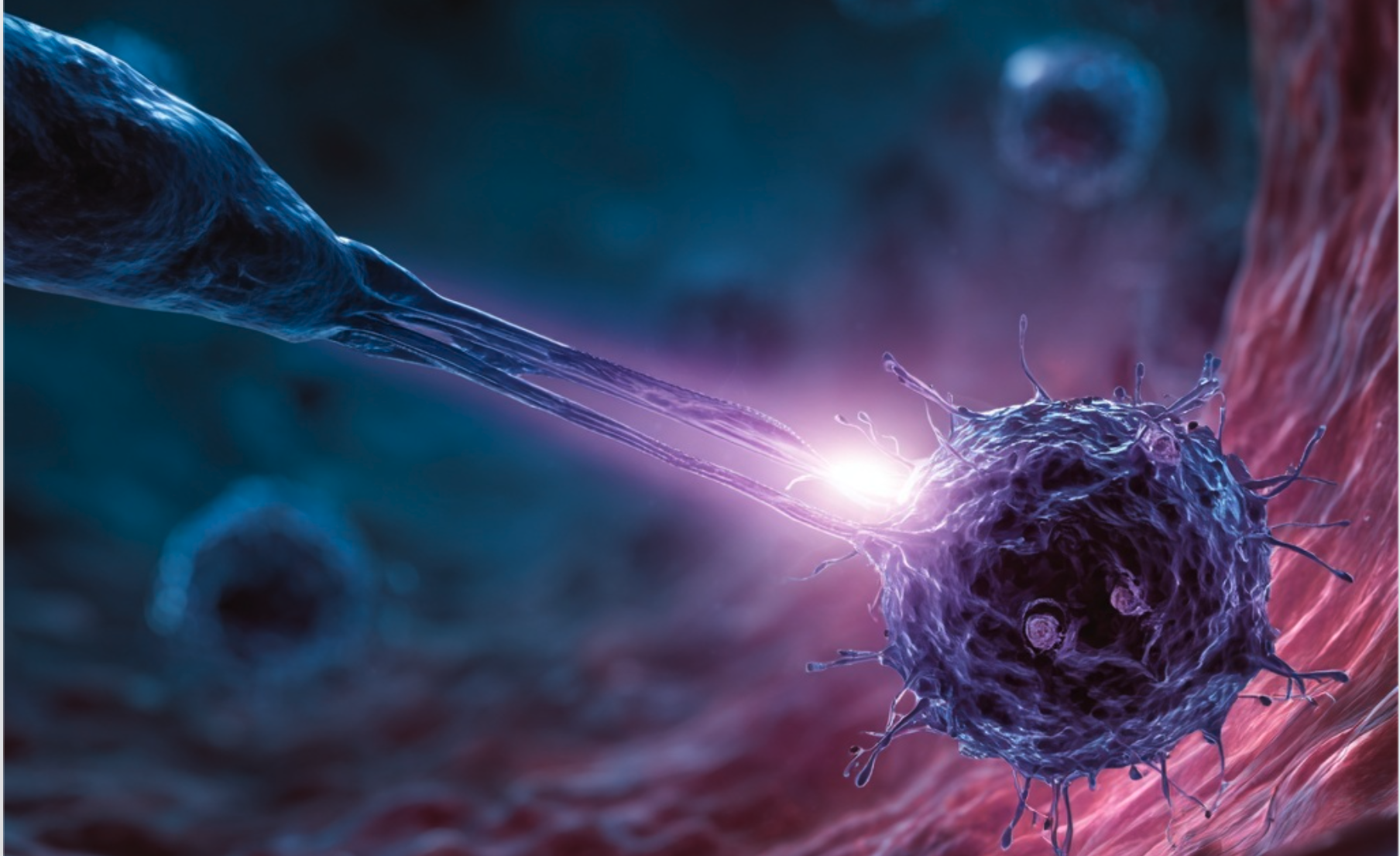
By Futurist Thomas Frey
The Question Nobody’s Asking Yet
What if you could walk into a hospital with a tumor and walk out the same day without surgery, without scars, without chemotherapy’s devastating side effects—and the cancer cells are already dying inside you?
That’s not twenty years away. It’s happening in 2026. And most people have no idea this technology even exists.
Histotripsy—therapeutic ultrasound that destroys cancer tumors without cutting anyone open—is moving from experimental trials to FDA approval this year. High-frequency sound waves focus on tumors, creating microscopic cavitation bubbles that violently collapse, releasing intense energy that mechanically shreds cancer cells from within. No scalpels. No radiation. No chemotherapy poisoning your entire body to kill localized disease.
It’s like having a microscopic demolition crew that only targets what needs destroying, leaving everything else untouched.
Let me walk you through why this represents fundamental shift in cancer treatment, what becomes possible when you can eliminate tumors without invasive surgery, and why 2026 is the year this transitions from “promising research” to “available treatment option.”
How Destroying Cancer With Sound Actually Works
The physics sounds impossible until you understand cavitation. When focused ultrasound beams converge on a target, they create rapid pressure changes that form tiny gas bubbles in tissue. These bubbles expand and violently collapse in microseconds, generating mechanical forces that physically tear apart cells.
This isn’t heat-based like some ultrasound therapies. It’s purely mechanical destruction—imagine thousands of microscopic implosions simultaneously ripping tumor cells to pieces while the ultrasound transducer sits outside your body, guided by real-time MRI imaging.
The treatment process: Lie in MRI scanner while doctors map your tumor’s exact location and boundaries. Ultrasound transducer—looking like oversized headphones positioned against your body—focuses hundreds of sound beams on the tumor. Each pulse creates cavitation bubbles that destroy a small volume of tissue, typically a few cubic millimeters. The process repeats, systematically ablating the entire tumor one section at a time. Treatment duration: typically one to three hours depending on tumor size. Recovery: walk out same day.
No incisions means no infection risk, no surgical complications, no anesthesia dangers, no weeks recovering from invasive procedures. The destroyed tumor cells are simply absorbed by your body’s immune system over following weeks.
What This Changes About Cancer Treatment
Treating the untreatable. Some tumors are surgically inaccessible—too close to vital blood vessels, embedded in organs where cutting causes catastrophic damage, or positioned where surgeons literally cannot reach without killing the patient. Histotripsy doesn’t care. Sound waves pass through tissue without harming it until they converge at the focal point. If MRI can image it, ultrasound can treat it.
Liver tumors that were death sentences become outpatient procedures. Kidney cancers requiring organ removal become targeted ablation preserving kidney function. Prostate tumors get eliminated without the incontinence and impotence risks of surgery or radiation.
Precision impossible with other methods. MRI guidance provides real-time visualization of tumor boundaries. The ultrasound beam can be adjusted mid-treatment based on how tissue responds. This enables precision measured in millimeters—destroying every cancer cell while preserving critical structures millimeters away.
Compare that to surgery’s crude reality: cut out the tumor plus surrounding “margins” of hopefully healthy tissue because surgeons can’t see individual cancer cells. Or chemotherapy’s scorched-earth approach: poison everything and hope the cancer dies before the patient does.
Repeatability without cumulative damage. Radiation therapy has lifetime limits—you can only irradiate tissue so many times before permanent damage occurs. Surgery gets riskier with each procedure as scar tissue complicates operations. Histotripsy has no cumulative toxicity. If cancer recurs or new tumors develop, you can treat again without the complications that make traditional repeat treatments increasingly dangerous.
The 2026 Timeline: Why This Year Matters
Clinical trials have been running for several years with increasingly impressive results. Multiple studies demonstrate tumor destruction effectiveness, with Phase II and III trials showing sustained cancer elimination comparable to surgery but with dramatically fewer complications.
Current status: FDA breakthrough device designation granted, accelerating approval pathway. Multiple medical centers conducting expanded trials. HistoSonics, leading company in this space, targeting FDA approval for liver tumor treatment by fall 2026. Additional indications for kidney and prostate cancers following close behind.
What happens this year: First commercial systems install in major medical centers. Initial FDA approval likely by Q4 2026 for specific tumor types. Insurance coverage battles begin as providers determine reimbursement for procedures that cost less than surgery and eliminate hospital stays but use expensive equipment. Early adopter hospitals start treating beyond clinical trial populations.
2027-2028: Approval expands to additional cancer types. More hospitals acquire systems as capital costs decline and treatment volumes justify investment. Standard of care shifts for tumors where histotripsy offers clear advantages—accessibility, patient preference, outcomes equivalence with dramatically lower complication rates.
2029-2030: Becomes routine option for many solid tumors. Oncologists discuss histotripsy alongside surgery and radiation rather than as experimental alternative. The question shifts from “can we do this?” to “why wouldn’t we do this?”
Why Most People Don’t Know This Exists
Medical technology moves through rigorous validation before public awareness. Histotripsy’s been in development for over a decade, but the leap from “interesting research” to “available treatment” happens suddenly once regulatory approval clears.
Most people first heard about immunotherapy after it was already working. Same pattern here—by the time histotripsy becomes household name, it will already be treating thousands of patients.
There’s also definitional confusion. “Ultrasound” sounds like imaging technology, not treatment. “Non-invasive cancer destruction” sounds too good to be true, so people assume it’s hype. And the mechanism—cavitation bubbles mechanically destroying tissue—is counterintuitive enough that explanations feel like science fiction.
But physics doesn’t care about intuition. And FDA doesn’t approve science fiction.
The Limitations Nobody Mentions Yet
This isn’t universal cancer cure. It works on solid tumors—discrete masses of cancer cells. It doesn’t work on blood cancers like leukemia or lymphoma that are diffused throughout the body. Very small tumors might be below treatment threshold. Tumors too large require multiple sessions or combination with other therapies.
It also requires tumors accessible to ultrasound—which means most internal cancers qualify, but locations obstructed by bone or air-filled spaces like lungs present challenges. And it’s expensive upfront, though potentially cost-saving compared to surgery when you factor hospital stays, complications, and recovery time.
But for the cancers it treats—liver, kidney, prostate, potentially pancreas, bone tumors, others—it fundamentally changes risk-benefit calculation.
Final Thoughts
In 2026, people will start walking into hospitals with cancer diagnoses and walking out the same day with destroyed tumors, no scars, no chemotherapy, no radiation poisoning. They’ll return to work within days instead of recovering for weeks. They’ll avoid surgical complications that kill thousands annually.
This won’t make headlines because it happens gradually—one FDA approval, one hospital adoption, one patient at a time. But five years from now, when your doctor discusses cancer treatment options and includes “focused ultrasound ablation” alongside surgery and radiation, you’ll remember when this seemed like science fiction.
That transition is happening this year. The technology’s real. The trials prove it works. The approval’s coming. The only question is how long before it becomes obvious that we’ve been cutting people open and poisoning them systemically when we could have been destroying their tumors with sound waves all along.
Related Articles:
HistoSonics Histotripsy Technology Advances Toward FDA Approval for Liver Tumors https://www.massdevice.com/histosonics-histotripsy-system-destroys-liver-tumors/
Focused Ultrasound Foundation: Non-Invasive Cancer Treatment Breakthroughs https://www.fusfoundation.org/diseases-and-conditions/cancers
Atlas Stands Up: The Moment Humanoid Robots Stop Being Research and Start Being Real https://www.impactlab.com/2026/01/06/atlas-stands-up-humanoid-robots-real/
