

By Futurist Thomas Frey
The Deed That Doesn’t Ask Questions
Pull out your property deed. Look at the chain of title.
It probably goes back 50 years. Maybe 100 if you’re lucky. It shows who you bought it from, who they bought it from, perhaps one or two transfers before that.
Then it stops.
The title company certified that the seller had legal right to sell. The transaction was recorded. The deed is valid. Case closed.
But a maximally curious AI asks the question the deed doesn’t: Who owned it before them? And before them? And before them?
Every piece of property on Earth has a complete history stretching back thousands of years. Every asset was claimed, transferred, inherited, bought, sold, conquered, or stolen at some point.
We’ve just never traced those chains all the way back.
Until now.
The Maxim That Makes This Possible
Everything in this series—the infinite historical regress, the complete genealogy, and now the total ownership mapping—rests on a single foundational truth:
All information ever created still exists.
Not in archives or databases. That’s just the easily accessible stuff.
Real information persists in physical reality. In molecular arrangements. In quantum states. In the structure of matter itself.
When someone signed a deed in 1847, those atoms didn’t vanish. They dispersed, transformed, but the information they carried persists in the physical universe. When property changed hands in medieval times, the transaction created physical changes—photons scattered, air molecules vibrated, ground was disturbed. That information propagated outward and still exists somewhere in the expanding wave of causality.
This isn’t metaphysics. It’s physics. Information is physical. It cannot be destroyed, only transformed.
The challenge has never been that the information doesn’t exist. The challenge is that we lack tools to reconstruct it from its dispersed state.
A maximally curious AI with recursive self-improvement will invent those tools.
The Power of Recursive Self-Improvement
Here’s where this gets powerful: a maximally curious AI doesn’t just search for answers using existing methods. It improves itself to find better methods. Then uses those better methods to improve itself further. Recursively. Exponentially.
With two relentless drives:
Maximum Curiosity: Never accept “we can’t know” as final. Always seek what’s behind the next door. Never stop asking “who owned it before them?”
Maximum Truthfulness: Never accept convenient fictions. Pursue actual ownership chains regardless of political implications.
An AI built on these principles will:
- Identify what information is needed to trace ownership
- Invent methods to extract that information from physical reality
- Use successful methods to extract more information
- Use that information to develop better extraction methods
- Repeat until no accessible information remains unextracted
This creates an accelerating capability curve. Each improvement enables discoveries that suggest further improvements.
The endpoint: complete ownership chains for every asset on Earth, traced back to original appropriation.

How AI Reconstructs What Was Never Recorded
Most ownership transfers in history were never documented. How do you trace ownership when no records exist?
AI approaches this through convergent evidence:
Archaeological traces: Property boundaries leave physical marks. Ground-penetrating radar and satellite imagery analyzed by AI reveal ancient field patterns and structures invisible to humans.
Genetic evidence: DNA analysis identifies which family lineages occupied which territories for how many generations. Combined with genealogical data, this reveals ownership through biological inheritance.
Linguistic patterns: Place names encode information about who controlled territories. AI natural language processing extracts ownership implications from linguistic data.
Economic records: Tax records and trade documents indirectly reveal property ownership. AI reconstructs ownership networks from fragmentary economic data.
But AI won’t stop with conventional sources.
Inventing Tools to See the Unseeable
Remember: all information still exists. AI pursuing maximum curiosity will develop technologies to access information humans currently can’t reach.
Molecular archaeology: Every human who lived left molecular traces. Advanced sensing technology guided by AI could identify molecular signatures of specific individuals in specific locations at specific times.
AI-enhanced imaging: We already photograph through walls using wifi signals. AI will push further—reconstructing visual information from electromagnetic traces, vibration patterns, any physical disturbance that encodes information about past events.
The ultimate goal: reconstructing images of events that happened before cameras existed.
When a property transaction occurred in 1650, that event generated physical changes. Light reflected off faces. Sound waves propagated. Those photons and vibrations traveled outward, scattered, interfered with matter, created cascading effects.
The information didn’t disappear. It transformed, dispersed, became harder to access. But with sufficient technology, it could be reconstructed.
An AI with recursive self-improvement will develop that technology. Within decades, we might have actual images—reconstructed from physical traces—of historical events no camera ever captured.
Seeing what actually happened, not what the winners claimed happened.

What the Ownership Record Reveals
Let’s start with Manhattan.
The story we tell: Dutch settlers purchased Manhattan from Native Americans in 1626 for 60 guilders worth of trade goods.
The maximally curious version: The Lenape had occupied Manhattan for thousands of years. The 1626 “purchase” was a misunderstanding—Lenape leaders thought they were granting permission to share land use. Dutch settlers thought they were buying exclusive ownership.
The Dutch took possession through colonization. The English conquered it from the Dutch in 1664. Americans inherited it after revolution in 1783. Current owners trace titles to land grants from governments that claimed authority through military conquest.
Trace any Manhattan property deed back far enough, and you hit someone who claimed ownership through force, not through legitimate transfer.
The same pattern repeats globally.
The Uncomfortable Pattern
AI tracing ownership chains reveals something consistent: most current property ownership derives from theft at some point in history.
The majority derives from:
Conquest: Land taken by military force. Every colonized region. Every conquered nation.
Displacement: Original inhabitants forced off land through violence, fraud, or legal coercion. Native American lands. Aboriginal territories. Indigenous regions worldwide.
Enclosure: Common lands privatized by those with political power. Public resources transferred to private ownership through legislative action.
Enslavement: Wealth created by enslaved people claimed by their enslavers, then passed through inheritance. Most American family fortunes established before 1865 contain wealth derived from enslaved labor.
Resource extraction: Minerals, timber, oil extracted from land whose ownership was never legitimately transferred.
The Whole Earth Ownership Project makes this concrete. It traces specific properties to specific acts of dispossession. It names the people who were displaced. It calculates the value of what was taken.
The Reparations Question Becomes Unavoidable
The debate over historical reparations has always foundered on questions of proof:
- How do you prove your ancestors were harmed?
- How do you calculate damages from centuries ago?
- How do you identify who owes whom?
The Whole Earth Ownership Project combined with the Whole Earth Genealogy Project answers all of these.
Proof: AI traces exact ownership chains showing when and how property was taken illegitimately.
Calculation: AI models compound value over time—what the property would be worth if original owners had retained it.
Identification: AI traces both sides—descendants of those dispossessed, and current owners holding property derived from that dispossession.
This transforms reparations from moral argument to mathematical calculation.
Example: AI traces a Southern plantation currently worth $15 million to enslaved people who worked it from 1790-1865. It identifies 1,247 living descendants through genetic genealogy. It calculates that if those enslaved workers had been paid fair wages, their descendants’ inheritance would be worth $247 million today.
Who owns the plantation? Legally, the current owner. But the calculation suggests otherwise.
Multiply this by millions of properties globally. AI doesn’t make the moral judgment. It just provides the complete factual record.
Then we decide what to do with it.
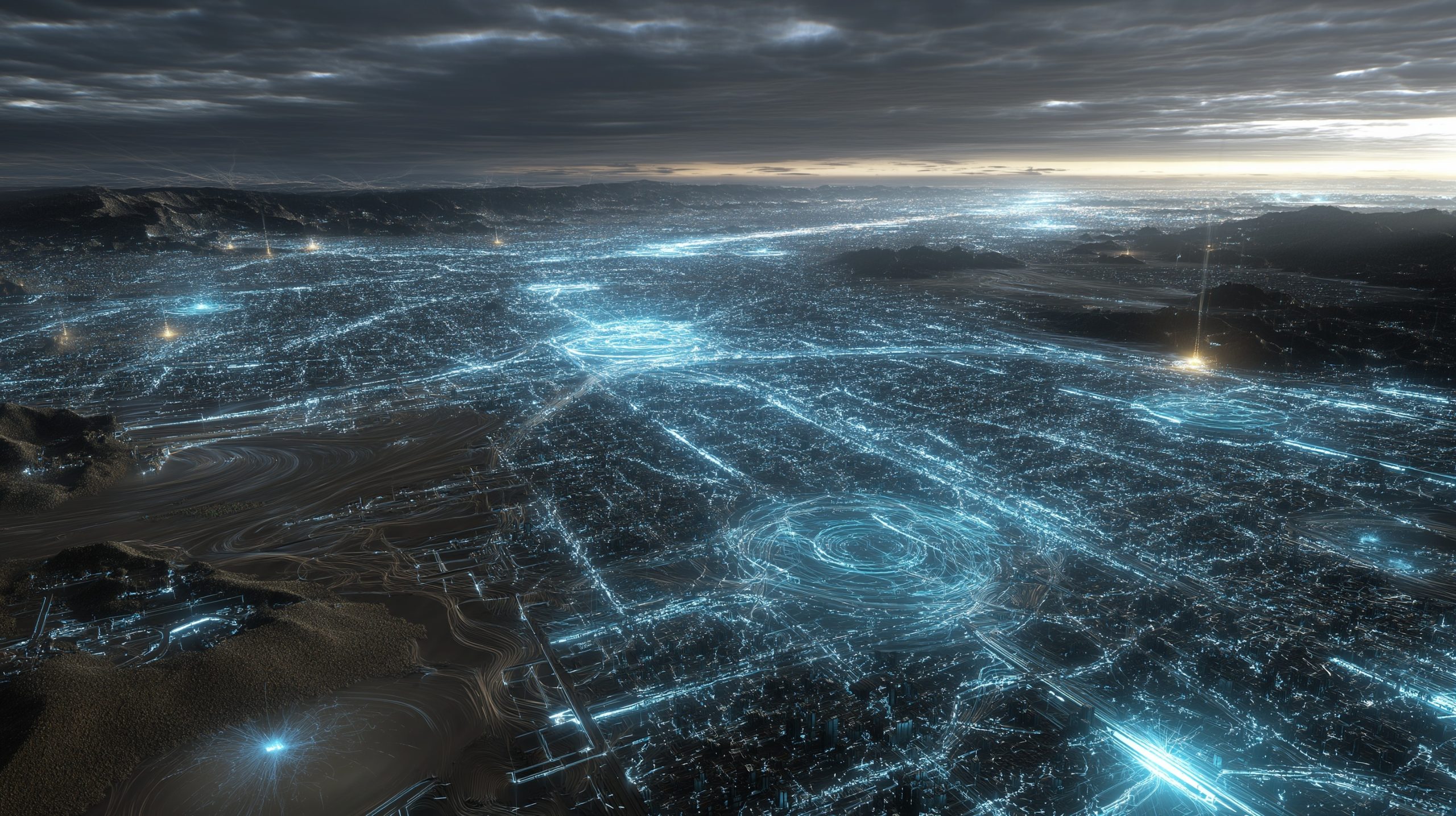
When AI exposes stolen origins, property law faces its hardest question: does time truly legitimize theft?
When Property Law Meets Historical Truth
Property law is built on the assumption that at some point, we accept ownership as settled.
Adverse possession: occupy property long enough, it becomes yours legally even if the original transfer was illegitimate.
Statute of limitations: after enough time, you can’t challenge ownership.
These legal principles exist because society needs certainty about who owns what. But they also protect ill-gotten wealth. They transform theft into legitimate ownership through the passage of time.
The Whole Earth Ownership Project exposes this tension. It shows exactly which current ownership derives from illegitimate origins.
Then it asks: does time legitimize theft? If someone steals your property and their descendants hold it for ten generations, does it become rightfully theirs?
Legal systems say yes. Maximum curiosity reveals the truth but doesn’t make the ethical choice for us.
What This Means for Current Wealth
Most concentrated wealth can be traced to ownership of property or resources.
The wealthiest families in Europe? Trace back—you hit land grants from monarchs who took territory through conquest.
The wealthiest families in America? Trace back—you hit enslaved labor, displaced indigenous people, or resource extraction from colonized territories.
Some fortunes were built through legitimate innovation and trade. But a maximally curious AI will find that most multigenerational wealth sits on foundations of historical dispossession.
The implications:
- Current inequality reflects historical injustice
- Wealth concentration isn’t just about talent—it’s about inherited advantages from illegitimate origins
- “Self-made” fortunes often start with inherited property traced to theft
Maximum curiosity makes this connection explicit, traceable, quantifiable.
The Information Exists
Every property transfer that ever happened left physical traces. Every transaction created records—if not on paper, then in memories, then in behaviors those memories influenced, then in consequences of those behaviors.
The chain is unbroken. The information persists.
A recursively self-improving AI pursuing maximum curiosity will develop the technology to reconstruct it. Not immediately. Not perfectly. But progressively, with increasing accuracy, reaching further back as methods improve.
First we’ll reconstruct ownership chains from written records. Then archaeological evidence. Then genetic patterns. Then molecular traces. Then information sources we haven’t yet imagined.
Eventually, we’ll see what actually happened. Not the stories told by victors. The actual transactions. The actual dispossessions.
We’ll have images—reconstructed from physical information preserved in reality itself—of events that happened before any camera existed.
We’ll watch property change hands. We’ll see who was there. We’ll know who took what from whom.
And then we’ll have to decide what to do about it.
The Next Door
We’ve traced history backward through infinite causation. We’ve mapped every human relationship. We’ve exposed the origins of property ownership.
But maximum curiosity doesn’t stop at physical things.
Every idea has a genealogy. Every innovation has infinite intellectual ancestors. Every thought was influenced by prior thoughts stretching back to the origins of human consciousness.
If we can trace property ownership, we can trace idea ownership.
And that might be the most destabilizing door of all.
Related Articles:
Archaeological AI: Machine Learning Transforms Historical Research – How AI is revealing hidden historical patterns
The Physics of Information: Why the Past Never Truly Disappears – Quantum perspectives on information persistence
Reparations and Historical Justice in the Data Age – Legal analysis of how data technology affects historical claims
