There are 1.2 billion social networking users worldwide.
U.S.-based social networking sites like Facebook and Twitter usually get most of the publicity, but eMarketer predicts that the worldwide social networking phenomenon will encompass nearly 1.5 billion internet users by the end of this year.
Leap seconds are necessary to prevent atomic clocks from speeding ahead of solar time.
Governments are headed for a showdown after ten years of talks as they vote this week on an issue that pits technological precision against nature’s whims. The United States, France and others are pushing for countries at a U.N. telecom meeting to abolish the leap second, which for 40 years has kept computers in sync with the Earth day.
Sex-selective feticide is warping the balance between male and female births and consequently skewing the sex ratios for the rising generation.
The world over the past three decades has come to witness an ominous and entirely new form of gender discrimination: sex-selective feticide. The feticide is implemented through the practice of surgical abortion with the assistance of information gained through prenatal gender determination technology. All around the world, the victims of this new practice are overwhelmingly female and occurs all around the world. In fact is is almost universally female.
50 Global Risks 2012 ncludes risks we don’t think about everyday like cyber neotribalism, the militarization of space, and a volcanic winter.
Risk management is a part of our everyday personal and professional lives. We know to look both ways before crossing the street. We also know that we must diversify our investment portfolios to mitigate the impact of a stock market crash.
All that time off during the holidays paid off for app developers, with a record-breaking 1.2 billion global downloads combined from Apple’s App Store and Android Market, a big bump of 60 percent from early December.
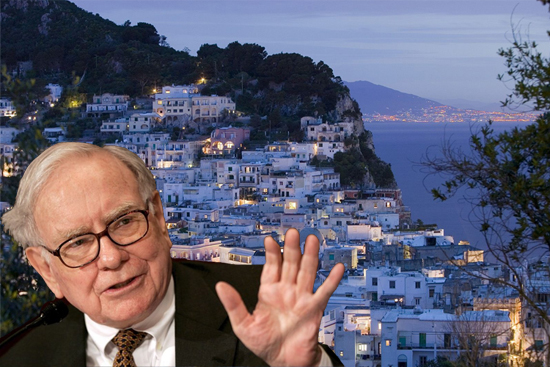
Today’s super-rich are different from yesterday’s: more hardworking and meritocratic, but less connected to the nations that granted them opportunity.
If you were watching television on the first Sunday morning in August last summer, you would have seen something curious on NBC. David Gregory, host of Meet the Press, was interviewing a guest who made a forceful case that the U.S. economy had become “very distorted.” In the wake of the recession, this guest explained, high-income individuals, large banks, and major corporations had experienced a “significant recovery”; the rest of the economy, by contrast—including small businesses and “a very significant amount of the labor force”—was stuck and still struggling. He argued that what we were seeing was not a single economy at all, but rather “fundamentally two separate types of economy,” increasingly distinct and divergent.
Have you seen the Apple commercial showing Santa asking the iPhone’s Siri for guidance? Well, it’s not far off the mark. Seventy-five percent of cellphone users around the globe use their phones for text messaging, in wealthy countries as well as poor ones, according to a new study.
Things just keep getting worse for Chevron. First, a deepwater drilling mishap off the coast of Brazil last month caused thousands of barrels of oil to spill into the Atlantic, which only after some dodging did Chevron take responsibility for, followed by Brazil’s petroleum agency deciding to suspend the company’s drilling rights altogether. And then there are the fines which could end up costing Chevron close to $100 million. But lo, it get’s worst yet. Today, the oil giant admitted that the situation is far from resolved as many had assumed. That’s right, the leak continues, and Chevron’s not sure when it can be stopped…
The United States has fallen further down a global ranking of the world’s most competitive economies. The U.S. has landed at fifth place because of its huge deficits and declining public faith in government, a global economic group said Wednesday.