81% of U.S. adults use the internet for health information.
For Pew Internet’s September 2012 health survey, they explored how U.S. adults are using the internet and digital technology as tools related to health and healthcare. Among the findings:
Educators have known that the online revolution would eventually envelop the physical classroom, but a torrent of near-revolutionary developments in the past month are proving that change is coming quicker than anyone imagined. In just 30 days, the largest school system in the U.S. began offering credit for online courses, a major university began awarding degrees without any class time required, and scores of public universities are moving their courses online. The point at which online higher education becomes mainstream is no longer in some fuzzy hypothetical future; the next president’s Secretary of Education will need an entire department dedicated to the massive transition.
The biggest search engine few people have ever heard of. is probably Yandex. According to Search Engine Watch, the Russian search engine has surpassed Microsoft’s Bing in the world’s top search engine rankings. Search Engine Watch got its data from ComScore.
The New York Times has been under constant attack from Chinese Hackers for four months and they have gone public with the story. The Chinese hackers got wind that the Times was was preparing to reveal that Prime Minister Wen Jiabao’s family acquired $2.7 billion in assets.
There is no black and white answer concerning consumers’ online privacy.
More and more each day the internet infiltrates commerce and social life and consumers are becoming more aware that their personal information is becoming less and less personal. Some websites and apps have transparent sharing policies. Some of them state exactly what information they will use for advertising but others aren’t so clear.
Online education will have an enormous transformative impact on billions of people around the world.
The single most important technological development of the millennium is the advent of massively open online classes (MOOCs). The first reason it is so important is the enormously transformative impact MOOCs can have on literally billions of people in the world. And the second reason is for the equally disruptive effect MOOCs will inevitably have on the global education industry.
A new Pew Internet reporttakes a close look not only at how Americans are using public libraries, but also what sort of services and programming they think libraries should offer — and what they say they would use in the future.
Broadband connections over 10Mbps dubbed high broadband.
The number of broadband connections over 10 Mbps — dubbed “high broadband,” has grown by 73 percent from the third quarter of 2011 to the third quarter of 2012, according to the latest data from Akamai. The U.S. has also see a 20 percent overall increase in average speed to 7.2 Mbps over the past year, but the number of people who have adopted broadband (measured at anything above 4 Mbps) was 62 percent, which puts the U.S. at No. 12 in the worldwide rankings when it comes to adoption and No. 9 when it comes to average speeds.
France proposes an internet tax on American companies collecting personal data.
France is seeking new ways to raise funds. Because of frustration with American technology companies that dominate its digital economy which are largely beyond the reach of fiscal authorities, France has proposed a new levy. They are proposing an internet tax on the collection of personal data.
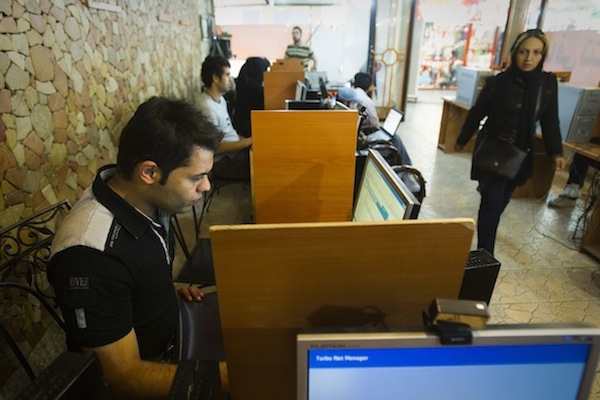
Iran has an intense relationship with the internet. The country has made many attempts to curtail its citizens’ use of social media. Iran’s supreme leader, Ayatollah Ali Khamenei, in May, issued a fatwa against anti-filtering tools that have helped citizens to access blocked material on the Internet. In December, they launched Mehr, its own version of YouTube, which allows users to upload and view content they create, and to watch videos from IRIB, Iran’s national broadcaster. They have also been building a national intranet – a government-run network that would operate “largely isolated” from the rest of the World Wide Web. Reporters Without Borders named Iran to its 2012 “Enemies of the Internet” list with Iran’s intensified online crackdowns, increased digital surveillance of citizens, and the imprisonment of web activists.
Here is one more 2012 year-in review report from Nielsen, which examined how Americans have been consuming content over the course of the past year. Of the 289 million U.S. TV owners, the report found that 119 million own four or more television sets, making TV still the device to beat when it comes to watching and recording programs, among other things.
The Consumer Electronics Show in Las Vegas begins this week and the state of digital consumption is looking good. Consumers are adopting all sorts of smart, web-connected consumer technology and becoming “digital omnivores.”