By Futurist Thomas Frey
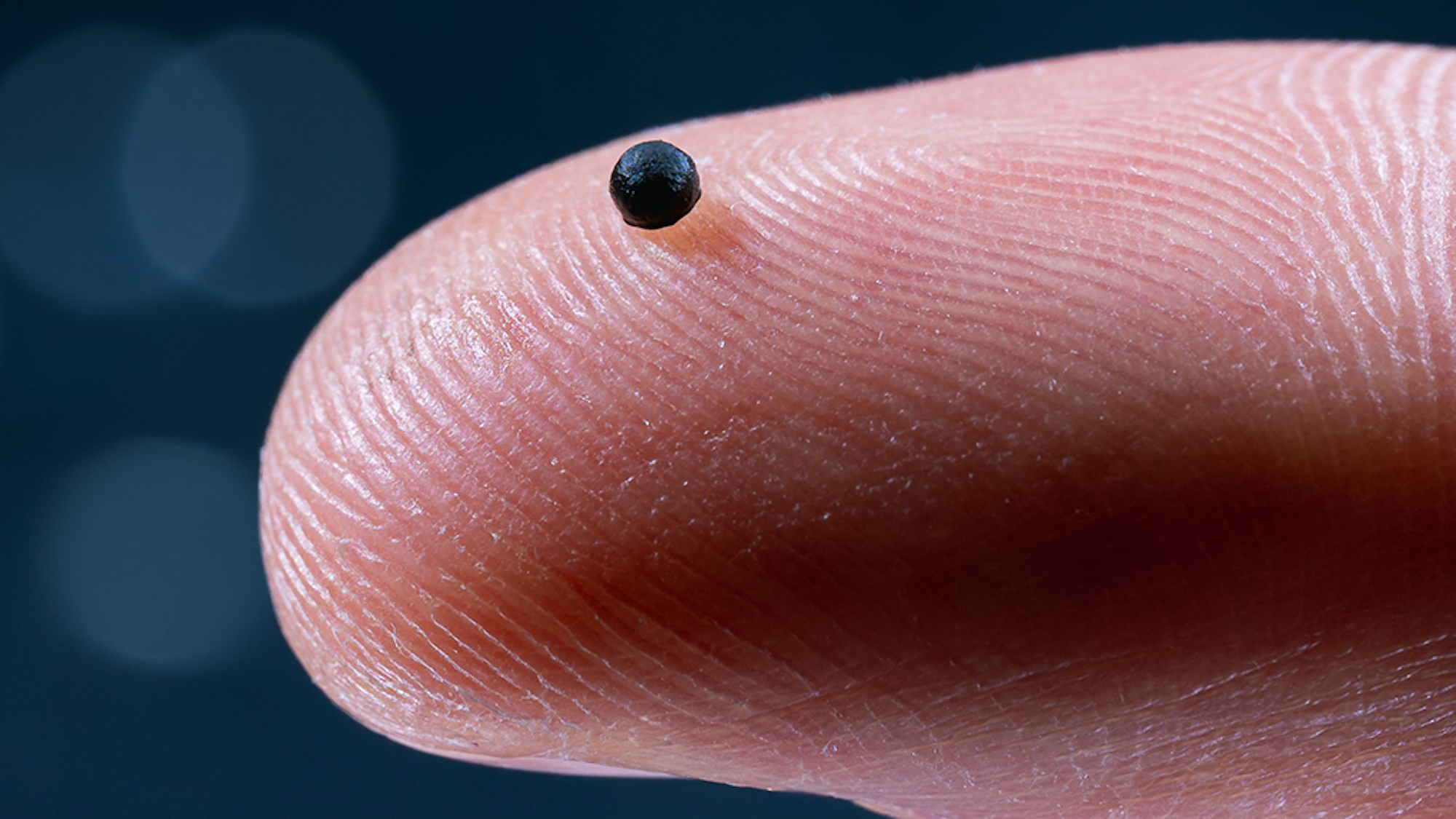
Imagine this: You’re having a stroke. Instead of flooding your entire body with massive doses of clot-busting drugs—which could cause dangerous internal bleeding—doctors inject a microscopic robot smaller than a grain of sand into your bloodstream. Using external magnets, they steer it through your arteries like a tiny submarine, navigating precisely to the blood clot blocking oxygen to your brain. Once there, it releases its medication payload directly at the blockage, dissolving the clot with minimal side effects.
This isn’t science fiction. It’s happening now. Researchers at Switzerland’s ETH Zurich have developed magnetically-guided microrobots that successfully navigate through blood vessels, delivering medication with unprecedented precision. In 95% of test scenarios using pigs, these tiny devices reached their intended destinations, demonstrating that the era of medical microrobots has arrived.
This represents a fundamental shift in how we think about medicine—from systemic treatments affecting the entire body to targeted interventions at cellular and molecular scales. And stroke treatment is just the beginning.
How the Microrobots Actually Work
The ETH Zurich microrobots are marvels of miniaturization and materials science. Each device is a soluble gel capsule—small enough to navigate the tiniest blood vessels in the human brain—packed with iron oxide nanoparticles that make it magnetically responsive.
“Because the vessels in the human brain are so small, there is a limit to how big the capsule can be,” explains robotics researcher Fabian Landers. “The technical challenge is to ensure that a capsule this small also has sufficient magnetic properties.”
The team solved this by incorporating just enough iron nanoparticles to allow magnetic guidance without making the capsule too large. They also added tantalum nanoparticles, which show up on X-rays, allowing doctors to track the microrobot’s journey through the body in real-time.
The delivery system uses a specialized catheter with an internal guidewire connected to a polymer gripper. The gripper opens to release the microrobot into the bloodstream, where external magnetic fields take over navigation.
Here’s where it gets sophisticated: blood flow velocity varies dramatically throughout the circulatory system. Some vessels have slow, gentle flow. Others—like arteries near the heart—have blood rushing at high speeds. A single navigation strategy wouldn’t work.
So the researchers developed three different magnetic guidance techniques:
Rotating magnetic fields allow precise control at speeds up to 4 millimeters per second in slower-flow regions.
Shifting magnetic field gradients pull the device along stronger fields, even against blood flow currents, reaching velocities up to 20 centimeters per second.
Combined approaches adapt in real-time to different arterial environments, ensuring the microrobot can navigate the roughly 360 arteries and veins in the human body.
“It’s remarkable how much blood flows through our vessels and at such high speed,” Landers notes. “Our navigation system must be able to withstand all of that.”
After successful testing in artificial silicone models of blood vessels, the team moved to clinical trials with pigs. The 95% success rate in delivering medication to correct destinations proves the concept works in living systems with real blood flow, pressure variations, and biological complexity.
Tests in sheep cerebrospinal fluid showed the technology works beyond blood vessels, opening possibilities for treating brain and spinal conditions previously considered too risky or impossible to address with targeted therapies.
Why This Changes Everything
Current stroke treatments involve injecting thrombolytic drugs—clot dissolvers—systemically through the bloodstream. Because only a fraction reaches the actual blockage, doctors must use high doses to ensure effectiveness. This creates serious risks: the medication that dissolves the problematic clot can also cause bleeding elsewhere in the body, including dangerous internal hemorrhaging.
It’s a brutal calculation: save the brain by dissolving the clot, but risk killing the patient through bleeding complications.
Microrobots eliminate this trade-off. By delivering medication directly to the clot, doctors can use far lower doses—enough to dissolve the blockage without systemic bleeding risks. The medication goes where it’s needed and nowhere else.
This precision extends beyond strokes. Consider the implications:
Cancer treatment: Instead of chemotherapy poisoning the entire body while trying to kill tumors, microrobots could deliver cytotoxic drugs directly to cancer cells, sparing healthy tissue. The horrific side effects of chemo—nausea, hair loss, immune suppression—could be dramatically reduced or eliminated.
Cardiac interventions: Microrobots could deliver medications directly to damaged heart tissue after heart attacks, clear arterial plaques, or administer anti-clotting drugs precisely where needed without bleeding risks elsewhere.
Brain disorders: Neurological conditions from Alzheimer’s to Parkinson’s could potentially be treated by delivering therapies directly to affected brain regions, crossing the blood-brain barrier that blocks most medications.
Infection treatment: Antibiotic-resistant infections could be attacked with concentrated doses delivered directly to infection sites, using far less medication while being more effective.
Prenatal medicine: Microrobots could potentially deliver treatments to fetuses in utero with unprecedented precision, addressing conditions before birth without risking the mother’s health.
The fundamental shift is from broadcast medicine—flooding the body with drugs and hoping enough reaches the target—to precision delivery where medication goes exactly where it’s needed.
The Technology Trajectory
2025-2028: Continued clinical trials refining stroke treatment. Early human trials for the safest, highest-impact applications. Regulatory pathways established for magnetically-guided medical microrobots.
2028-2032: FDA and international regulatory approval for stroke treatment and select cardiac applications. First commercial deployments in major hospitals. Costs are high but justified for life-threatening conditions.
2032-2037: Expansion to cancer treatment, neurological interventions, and complex surgeries. Costs drop as manufacturing scales. Microrobot navigation becomes standard training for interventional specialists.
2037-2040: Routine use across dozens of applications. Magnetic navigation systems are standard hospital equipment. Patients receive targeted treatments as default rather than systemic drugs as last resort.
By 2040, the idea of flooding your entire body with medication to treat a localized problem will seem as barbaric as medieval bloodletting seems to us now.
The Challenges Ahead
Navigation complexity: Human vasculature is incredibly complex—branching, varying in diameter, with turbulent flow patterns. Perfecting navigation across all patients and anatomies will require extensive AI-assisted control systems and thousands of clinical procedures refining techniques.
Manufacturing precision: Creating billions of identical microrobots with exact specifications for magnetization, medication payload, and dissolution timing requires manufacturing capabilities that don’t fully exist yet.
Real-time imaging: Tracking microrobots through the body requires imaging technology that provides sufficient resolution and speed without radiation exposure that creates new risks.
Biocompatibility: Even soluble gel capsules could trigger immune responses or create complications. Long-term safety data will take years to establish.
Cost and access: Early microrobot treatments will be extraordinarily expensive, available only at specialized centers. Ensuring equitable access will require deliberate policy intervention.
Regulatory frameworks: Current medical device regulations weren’t designed for autonomous or semi-autonomous systems navigating inside bodies. New frameworks will be needed.
What This Means for Medicine
Microrobots represent the convergence of robotics, materials science, magnetic field manipulation, and medical imaging into something fundamentally new—medicine that operates at the scale where disease actually happens.
Bacteria are microscopic. Viruses are nanoscopic. Tumors start as single abnormal cells. Blood clots form in specific locations. Yet we’ve been treating these with systemic therapies affecting the entire body because we lacked tools to target precisely.
That era is ending. The bloodstream is becoming a navigable highway where we can send tiny robots to deliver cargo exactly where needed.
Bradley Nelson, study coauthor and microrobotics pioneer, notes that “magnetic fields and gradients are ideal for minimally invasive procedures because they penetrate deep into the body and—at least at the strengths and frequencies we use—have no detrimental effect on the body.”
This safety profile combined with precision delivery creates a therapeutic window previously impossible—delivering treatments that would be too toxic systemically but are perfectly safe when targeted.
Final Thoughts
The microrobots navigating pig arteries today will be navigating human arteries tomorrow and treating conditions across medicine by decade’s end.
This is the future of medicine: precise, targeted, minimally invasive, and dramatically more effective than the crude systemic approaches we use today.
We’re entering an era where medicine happens at the scale of the disease itself—microrobots fighting microscopic threats in the precise locations where battles need to be fought.
The bloodstream highways are opening. The microrobots are ready. And medicine will never be the same.
Related Stories:
https://www.science.org/doi/10.1126/sciadv.adr8635
https://www.popularmechanics.com/science/health/a62826891/microrobots-blood-vessels/