By Futurist Thomas Frey
The Bold Prediction That Might Be Half Right
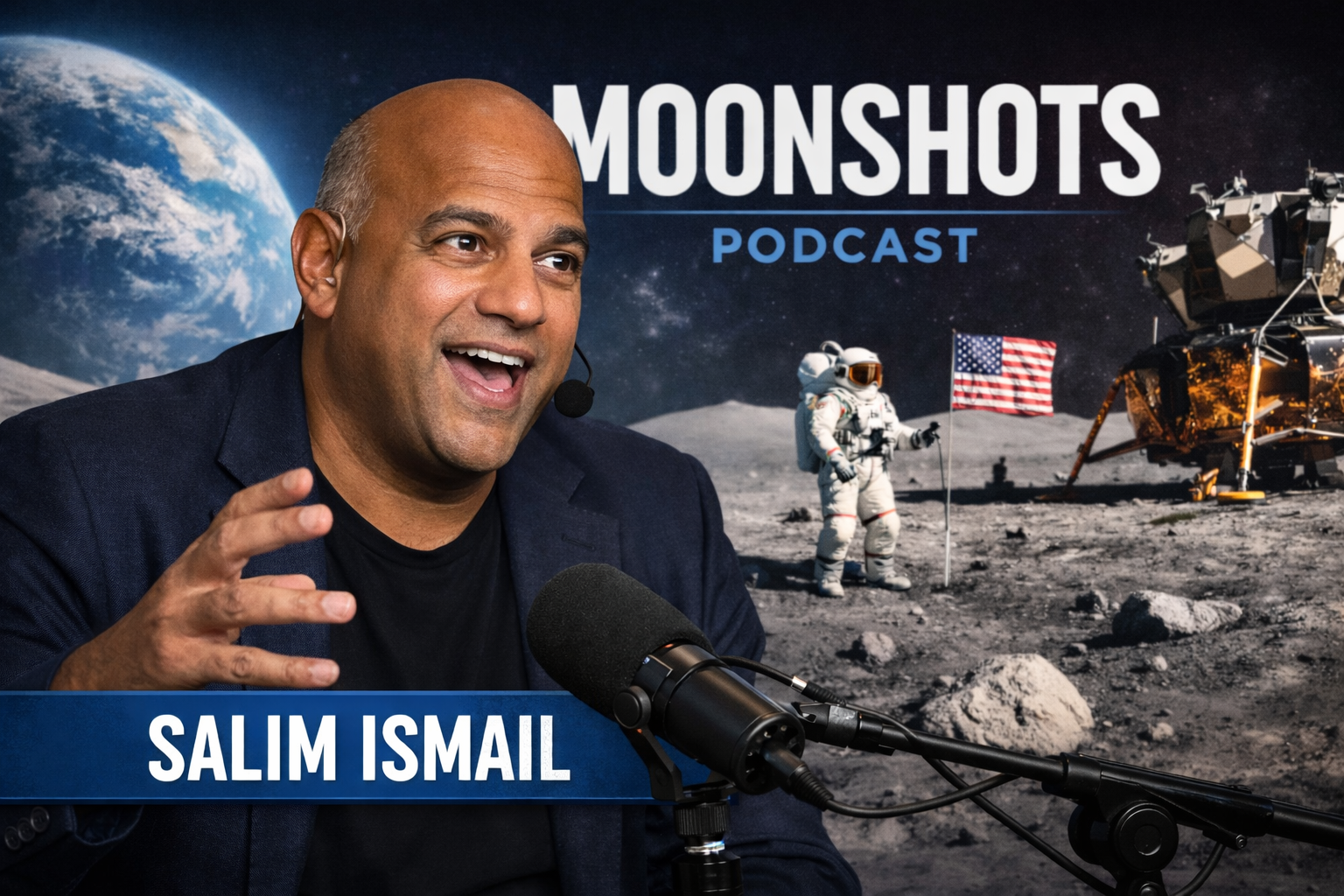
Salim Ismail recently made a stunning prediction on the Moonshots Podcast with Peter Diamandis: “I think 2026 is going to see the biggest collapse of the corporate world in the history of business.”
The context: rapid AI advancements with models like GPT-5.2 automating knowledge work at superhuman speed and low cost, building on 1.1-1.17 million U.S. layoffs announced in 2025—the highest since the 2020 pandemic. Ismail, author of Exponential Organizations, argues companies failing to radically transform by scrapping legacy systems, adopting AI-native approaches, and reskilling workforces will face existential threats as adoption tips into panic mode.
Is he right? Probably not about “biggest collapse ever”—but he might be right about something more important: 2026 is when the gap between AI-adopters and AI-resisters becomes catastrophic.
Why Complete Collapse Is Unlikely
Let’s be clear: mainstream economic outlooks from Vanguard, PwC, Deloitte, Barclays, and Morgan Stanley emphasize AI as a growth driver adding trillions in productivity, cushioning the economy, and prompting wider enterprise adoption—not triggering mass corporate failures.
Forecasts for 2026 highlight risks like trade tensions, fiscal policy, or late-cycle caution, but predict resilient U.S. growth, declining unemployment, and AI-fueled upside. Predictions of severe recessions exist, but they’re not tied to AI-induced corporate Armageddon.
Historical precedent favors gradual change. Major disruptions—the dot-com bust, 2008 crisis—caused pain but not single-year “biggest ever” wipeouts of corporate America. Companies adapt unevenly: leaders thrive (Big Tech stocks surging on AI), laggards decline, but economies absorb shocks over time.
The probability of Ismail’s dramatic prediction? Maybe 10-20% chance of severe widespread disruption, far less for “biggest ever” collapse.
Why He Might Be Half Right (The Important Half)
But here’s what Ismail gets exactly right: 2026 is the inflection point where AI advantage compounds so dramatically that companies behind the curve face irrecoverable competitive disadvantage.
The Divergence Accelerates: Companies adopting AI-native approaches operate at 3-5x the efficiency of traditional competitors. When your competitor produces the same output with 40% fewer employees, 60% lower costs, and 10x faster iteration cycles, you don’t gradually lose market share—you hemorrhage it.
The Layoff Wave Continues: 2025’s 1.1-1.17 million layoffs were companies optimizing with AI. 2026 sees companies desperately cutting costs because they’re losing to competitors who optimized earlier. The difference between strategic efficiency gains and panic layoffs becomes stark.
Legacy Systems Become Millstones: Companies with complex, decades-old IT infrastructure can’t adopt AI without massive transformation. Meanwhile, AI-native startups launch with zero technical debt, full automation, and operational costs traditional companies can’t match. The technology gap becomes insurmountable.
The Talent Inversion: Top talent flees companies resisting AI adoption. Why work somewhere fighting technology when you could work somewhere leveraging it? Brain drain accelerates company decline, creating death spirals where the best people leave, making transformation harder, causing more talent to leave.
The Real 2026 Disruption: Divergence, Not Collapse
The “collapse” won’t be sudden bankruptcy waves. It’ll be the permanent divergence of corporate America into two categories:
AI-Empowered Leaders: Companies that rebuilt operations around AI, automated routine work, freed humans for judgment and creativity, and operate at productivity levels impossible five years ago. These companies grow, hire (different talent), and dominate their sectors.
Legacy Strugglers: Companies that adopted AI superficially—a chatbot here, some automation there—without fundamental transformation. They’re “using AI” but not transformed by AI. They face declining margins, talent exodus, and slow death as AI-native competitors eat their markets.
2026 is when this divergence becomes visible in quarterly earnings, market valuations, and bankruptcy filings. Not sudden collapse—gradual but irreversible decline for those on the wrong side.
The Historical Pattern Ismail Sees
Ismail has long cited Fortune 500 churn: approximately 88% of companies on the 1955 list are gone today. But that happened over 70 years. His argument is AI compresses that timeline—what took 70 years of gradual replacement now happens in 5-10 years.
That’s the real prediction: not that 2026 sees mass bankruptcies, but that 2026 is when the 10-year clock starts for companies refusing transformation. By 2035, the corporate landscape will be unrecognizable—and 2026 is the year we look back on as when the divergence became obvious.
Final Thoughts
Ismail’s prediction of “biggest collapse ever” in 2026 is probably overstated. But his underlying message is exactly right: 2026 is the inflection point where AI adoption separates winners from losers permanently.
Companies transforming now—rebuilding systems, reskilling workforces, adopting AI-native approaches—will thrive. Companies treating AI as just another tool layered onto existing operations will face decline they can’t reverse.
The “collapse” isn’t one dramatic year. It’s the beginning of a decade where companies unprepared for AI-native competition slowly, then suddenly, become obsolete. And 2026 is when the “slowly” phase ends and the “suddenly” phase begins.
Ismail might be wrong about the timeline. But he’s absolutely right about the stakes.
Related Articles:
The Power Structures That Will Fight the AI Future (And Why They’ll Lose Anyway)
2026: The Year Society Realizes What “Systems Running Themselves” Actually Means
The Problems Nobody Sees Coming in 2026: When Systems Become Too Good to Survive Failure