Mastercard Adopts Artificial Intelligence In Fight to Tackle Crypto Crime

Mastercard is launching a system to assess the risk of criminal association with cryptocurrency exchange on its payment network.

By Nicholas Pongratz 

  • Mastercard is now offering crypto risk assessment system Crypto Secure for its bank and card issuers customers.
  • Crypto Secure provides a dashboard that indicates the riskiness of certain crypto merchants using a color-coded system.
  • Powered by CipherTrace, which it acquired last year, Mastercard is launching the system in the face of growing crypto crime.
  • The Crypto Secure platform is powered by artificial intelligence (AI) algorithms, harnessing on-chain data derived from blockchains, among other sources. 

Its intended users are banks and financial institutions, who are presented with a dashboard that provides color-coded ratings representing different levels of suspicious activity, from green meaning “low,” to red indicating “high” risk. 

Crypto Secure provides no other commentary, leaving the decision to accept a prospectively suspicious crypto merchant to the platform’s users.

Continue reading… “Mastercard Adopts Artificial Intelligence In Fight to Tackle Crypto Crime”
Smart helmet for firefighters uses sensors and AI to rescue victims faster

By Oceane Duboust 

Researchers in Scotland have developed a helmet that uses artificial intelligence (AI) to help firefighters find and rescue victims faster.

The team, from the newly opened National Robotarium in Edinburgh, designed the device using sensors, thermal cameras and radar technology.

The equipment aims to help firefighters navigate in a smoke-filled environment, map their surroundings and ultimately rescue victims more quickly.

“Firefighters are heroes. Everyone knows that. But what we are doing is (…) we also want them to have this superhero ability: see through smoke, see through darkness and have this ability to find effective solutions for search and rescue,” said Chris Xiaoxuan Lu, Lecturer in Cyber-Physical Systems at the School of Informatics of the University of Edinburgh.

“It will definitely improve the safety for firefighters from multiple dimensions. We already talk about victim searching. We also talk about navigation together with all the sensor units,” he added.

Continue reading… “Smart helmet for firefighters uses sensors and AI to rescue victims faster”

Intelligent microscope uses AI to capture rare biological events

Intelligent control: The fluorescence microscope at EPFL’s Laboratory of Experimental Biophysics.

By Tami Freeman

Fluorescence microscopy of live cells provides an indispensable tool for studying the dynamics of biological systems. But many biological processes – such as bacterial cell division and mitochondrial division, for example – occur sporadically, making them challenging to capture.

Continually imaging a sample at a high frame rate would ensure that when such divisions do occur, they will definitely be recorded. But excessive fluorescence imaging causes photobleaching and can prematurely destroy living samples. A slower frame rate, meanwhile, risks missing events-of-interest. What’s needed is a way to predict when an event is about to happen and then instruct the microscope to begin high-speed imaging.

Researchers at the Swiss Federal Institute of Technology Lausanne (EPFL) have created just such a system. The team developed an event-driven acquisition (EDA) framework that automates microscope control to image biological events in detail while limiting stress on the sample. Using neural networks to detect subtle precursors of events-of-interest, EDA adapts the acquisition parameters – such as imaging speed or measurement duration – in response.

Continue reading… “Intelligent microscope uses AI to capture rare biological events”

OpenAI’s image generator DALL-E can now edit human faces

The feature was previously off-limits for fears of misuse

By JAMES VINCENT

OpenAI is letting users of its AI art generator program DALL-E edit images with human faces. This feature was previously off-limits due to fears of misuse, but, in a letter sent to DALL-E’s million-plus users, OpenAI says it’s opening up access after improving its filters to remove images that contain “sexual, political, and violent content.” 

The feature will let users edit images in a number of different ways. They can upload a photograph of someone and generate variations of the picture, for example, or they can edit specific features, like changing someone’s clothing or hairstyle. The feature will no doubt be useful to many users in creative industries, from photographers to filmmakers.

“With improvements in our safety system, DALL·E is now ready to support these delightful and important use cases — while minimizing the potential of harm from deepfakes,” said OpenAI in its letter to customers announcing the news. 

Continue reading… “OpenAI’s image generator DALL-E can now edit human faces”

New Buzz Lightyear Toy Includes Conversational AI and Voice Recognition

By ERIC HAL SCHWARTZ

Robot toymaker Robosen has debuted a new Buzz Lightyear toy based on the recent Disney and Pixar film built with conversational AI and voice recognition to interact with children. The robot incorporates natural language understanding to detect when it is addressed and respond like the character from the film, though the AI makes it seem more like the Toy Story action figure that comes to life when no humans are around. The $650 robot is available for pre-order and will arrive next spring (when its price will rise to $800).

Continue reading… “New Buzz Lightyear Toy Includes Conversational AI and Voice Recognition”

New AI Algorithm Could Lead to an Epilepsy Cure

Epilepsy is a neurological condition in which brain nerve cell activity is disturbed, resulting in seizures.

The AI algorithm detects brain abnormalities that cause epileptic seizures.

International researchers working under the direction of University College London have created an artificial intelligence (AI) algorithm that can identify subtle brain abnormalities that cause epileptic seizures.

In order to create the algorithm that reveals where abnormalities occur in instances with drug-resistant focal cortical dysplasia (FCD), a major cause of epilepsy, the Multicentre Epilepsy Lesion Detection project (MELD) analyzed more than 1,000 patient MRI images from 22 international epilepsy centers.

FCDs are brain regions that have developed abnormally and often cause drug-resistant epilepsy. Surgery is typically used to treat it, however, finding the lesions on an MRI is an ongoing problem for physicians since MRI scans for FCDs can appear normal.

The scientists utilized about 300,000 locations throughout the brain to develop the algorithm, which measured cortical features using MRI scans, such as how thick or folded the cortex/brain surface was. After that, based on patterns and characteristics, professional radiologists classified examples as either having FCD or having a healthy brain, which served as the algorithm’s training data.

According to the results, which were published in the journal Brain, the algorithm was successful in identifying the FCD in 67% of cases in the cohort (538 participants).

Continue reading… “New AI Algorithm Could Lead to an Epilepsy Cure”

AI is getting better at generating porn. We might not be prepared for the consequences.

Tech ethicists and sex workers alike brace for impact

By Kyle WiggersAmanda Silberling

A red-headed woman stands on the moon, her face obscured. Her naked body looks like it belongs on a poster you’d find on a hormonal teenager’s bedroom wall — that is, until you reach her torso, where three arms spit out of her shoulders.

AI-powered systems like Stable Diffusion, which translate text prompts into pictures, have been used by brands and artists to create concept images, award-winning (albeit controversial) prints and full-blown marketing campaigns.

But some users, intent on exploring the systems’ murkier side, have been testing them for a different sort of use case: porn.

AI porn is about as unsettling and imperfect as you’d expect (that red-head on the moon was likely not generated by someone with an extra arm fetish). But as the tech continues to improve, it will evoke challenging questions for AI ethicists and sex workers alike.

Pornography created using the latest image-generating systems first arrived on the scene via the discussion boards 4chan and Reddit earlier this month, after a member of 4chan leaked the open source Stable Diffusion system ahead of its official release. Then, last week, what appears to be one of the first websites dedicated to high-fidelity AI porn generation launched.

Continue reading… “AI is getting better at generating porn. We might not be prepared for the consequences.”

MIT’s new AI model can successfully detect Parkinson’s disease

Apart from detecting Parkinson’s, the new model showed promise in detecting the severity of disease.

Written by Sethu Pradeep 

A new artificial intelligence model developed by researchers at MIT shows great promise in detecting Parkinson’s diesease from breathing patterns.

MIT researchers have developed an early-research artificial intelligence model that has demonstrated success in detecting Parkinson’s disease from breathing patterns. The model relies on data collected by a device that detects breathing patterns in a contactless manner using radio waves.

Neurological disorders are some of the leading sources of disability globally and Parkinson’s disease is the fastest-growing neurological disease in the world. Parkinson’s is difficult to diagnose as diagnosis primarily relies on the appearance of symptoms like tremors and slowness but these symptoms usually appear several years after the onset of the disease.

The model also estimated the severity and progression of Parkinson’s, in accordance with the Movement Disorder Society Unified Parkinson’s Disease Rating Scale (MDS-UPDRS), which is the standard rating scale used clinically. The research findings have been published in the journal Nature Medicine.

The researchers trained the model by using nocturnal breathing data (data collected while subjects were asleep) from various hospitals in the US and some public datasets. After training the model, they tested it on a dataset that was not used in training, and discovered it diagnosed Parkinson’s disease with an accuracy of about 90 per cent when it analyses one night’s sleep worth of data from a patient. They found that the model’s accuracy improves to 95 per cent when it analyses sleep data from 12 nights.

The relationship between Parkinson’s and breathing has been known since 1817, as observed by James Parkinson in his research. There has also been previous research into how Parkinson’s patients develop sleep breathing disorders, weakness in the function of respiratory muscles, and degeneration in brainstem areas that control breathing.

Continue reading… “MIT’s new AI model can successfully detect Parkinson’s disease”

The AI Vision System Set to Revolutionize Whole Body Scans

Radiologists have long had the capability to scan entire bodies. But identifying all the body’s many internal structures is much harder. Now an AI system can do it instead. 

Whole body imaging is a technique that scans a person’s insides for the early warning signs of heart disease, cancer and other worrying conditions. There are various ways to make these scans but the most common uses x-ray to create images of body slices. A computer then fits the images back together to create a 3D model of the whole body.

This can be used to plan certain types of surgery but it is also offered as a kind of screening service to provide piece of mind to health-conscious individuals—at least that’s the promise. 

The reality is that whole body CT scans are difficult to analyze, not least because it is hard to identify all the different organs from the mass of tissues that make up the human body. So physicians have turned to computer vision systems to do the job instead. 

The task is to identify the organs, structure and bones, as well as their three-dimensional shape using the data from the scan. However, the current crop of algorithms do not work particularly well, say Jakob Wasserthal and colleagues at the University Hospital Basel in Switzerland. 

Continue reading… “The AI Vision System Set to Revolutionize Whole Body Scans”

Google Just Stepped Up the Game for Text-to-Image AI

Google announced their new text-to-image diffusion model, DreamBooth. This AI-tool can generate a myriad of images of a user’s desired subject in different contexts using the guidance of a text prompt.

“Can you imagine your own dog traveling around the world, or your favorite bag displayed in the most exclusive showroom in Paris? What about your parrot being the main character of an illustrated storybook?”, reads the introduction of the paper.

The key idea for the model is to allow users to create photorealistic renditions of their desired subject instance and bind it with the text-to-image diffusion model. Thus, this tool proves to be effective for synthesising subjects in different contexts.

Google’s DreamBooth takes a moderately different approach when compared to other recently released text-to-image tools like DALL-E2, Stable Diffusion, Imagen, and Midjourney by providing more control of the subject image and then guiding the diffusion model using text based inputs. 

Continue reading… “Google Just Stepped Up the Game for Text-to-Image AI”

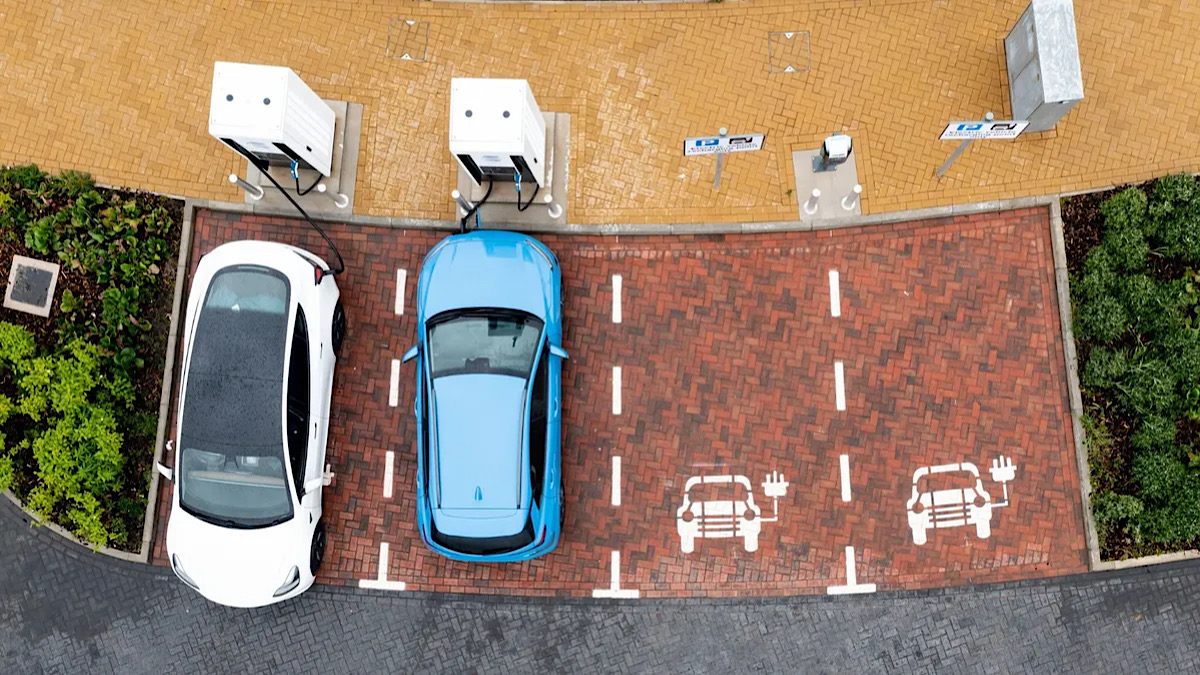
Super-fast EV charging might be possible with AI and machine learning

Battery-specific chargers are on the horizon.

By Can Emir

Researchers from Idaho National Laboratory are using machine learning and other advanced analysis to reduce electric vehicle charging times without damaging the battery, a press release revealed.

Despite the growing popularity of electric vehicles, many consumers hesitate to make the switch. One of the primary reasons is that it takes so much longer to power up an electric car than to gas up a vehicle powered up by an internal combustion engine. This hesitation is a reflection of range anxiety, and the solution for this anxiety is to get yourself a long-range electric vehicle, which can be a bit pricey.

Continue reading… “Super-fast EV charging might be possible with AI and machine learning”

Is your doctor providing the right treatment? This healthcare AI tool can help

By Sean Michael Kerner

How does a medical professional stay aware of the right procedures and treatments for patient ailments in the modern world? While many often rely on experience, there is another way that could have life-saving consequences. The trick is, it relies heavily on the power of artificial intelligence (AI).

New York-based medical startup H1 released a new update to its HCP Universe platform today to inject a dose of healthcare AI into medical intelligence. The HCP Universe platform is currently used by medical affairs teams at life sciences companies, which make sure doctors are aware of and use the latest science and medicine. 

Continue reading… “Is your doctor providing the right treatment? This healthcare AI tool can help”
Discover the Hidden Patterns of Tomorrow with Futurist Thomas Frey
Unlock Your Potential, Ignite Your Success.

By delving into the futuring techniques of Futurist Thomas Frey, you’ll embark on an enlightening journey.

Learn More about this exciting program.