Pioneering Breakthrough: World’s First Human Mini-Brain with Functional Blood-Brain Barrier Developed

In a groundbreaking achievement, a research team led by experts at Cincinnati Children’s has developed the world’s first human mini-brain that incorporates a fully functional blood-brain barrier (BBB). This significant advancement, published on May 15, 2024, in Cell Stem Cell, promises to accelerate the understanding and treatment of various brain disorders, including stroke, cerebral vascular disorders, brain cancer, Alzheimer’s disease, Huntington’s disease, Parkinson’s disease, and other neurodegenerative conditions.

“Lack of an authentic human BBB model has been a major hurdle in studying neurological diseases,” says lead corresponding author Ziyuan Guo, PhD. “Our breakthrough involves generating human BBB organoids from human pluripotent stem cells, mimicking human neurovascular development to produce a faithful representation of the barrier in growing, functioning brain tissue. This is an important advance because animal models we currently use in research do not accurately reflect human brain development and BBB functionality.”

Continue reading… “Pioneering Breakthrough: World’s First Human Mini-Brain with Functional Blood-Brain Barrier Developed”

A Nanoscale Revolution: Unveiling the Human Brain’s Intricacies

A groundbreaking nanoscale project has catapulted our understanding of the human brain forward, with a team of scientists reconstructing a cubic millimeter of brain tissue in unprecedented detail. This minuscule segment, just a millimeter on each side, contains an astonishing 57,000 cells, 150 million synapses, and 230 millimeters of ultrafine blood vessels, packed within its microscopic space.

The project, nearly a decade in the making, stands as the most detailed and extensive reproduction of the human brain to date. The data generated amounts to over 1.4 petabytes, showcasing the resolution of synapses—structures that facilitate neuron communication. “The word ‘fragment’ is ironic,” remarks neuroscientist Jeff Lichtman of Harvard University. “A terabyte is, for most people, gigantic, yet a fragment of a human brain – just a miniscule, teeny-weeny little bit of human brain – is still thousands of terabytes.”

Continue reading… “A Nanoscale Revolution: Unveiling the Human Brain’s Intricacies”

Unlocking Hidden Consciousness: Advanced Imaging Reveals Clues to Cognitive Motor Dissociation

Scientists at Columbia University have harnessed cutting-edge imaging techniques to unveil the brain activity and regions associated with Cognitive Motor Dissociation (CMD), often referred to as ‘hidden consciousness’. CMD is a state where individuals exhibit comatose and unresponsive outward behaviors while inwardly displaying signs of conscious brain function. The research findings, with potential clinical implications, might facilitate the identification of CMD and lead to tailored treatments for those who can comprehend but cannot respond.

Around 15–25 percent of individuals with brain injuries from causes like head trauma, brain hemorrhage, or cardiac arrest experience CMD. In these cases, there is a disconnection between the brain’s instructions and the execution of those instructions by the muscles.

Continue reading… “Unlocking Hidden Consciousness: Advanced Imaging Reveals Clues to Cognitive Motor Dissociation”

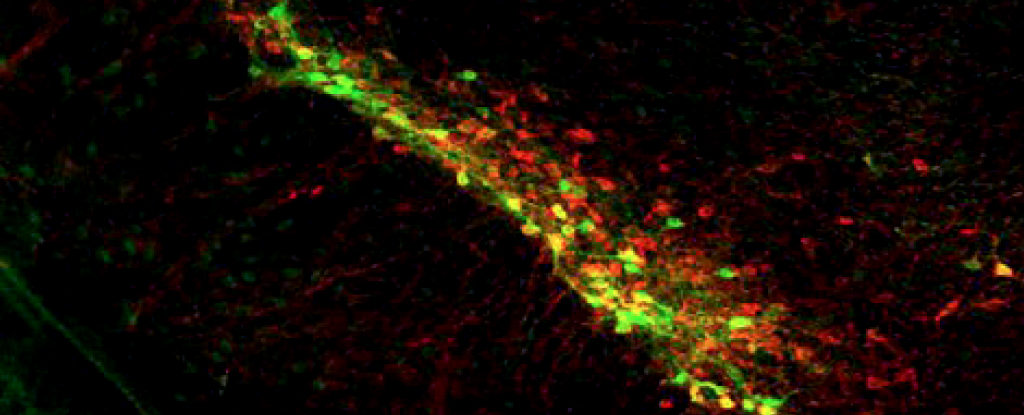
Unveiling the Diversity of Dopamine Neurons: New Insights into Brain Functions

Dopamine, often referred to as the brain’s reward neurotransmitter, is responsible for the feeling of accomplishment and pleasure. Whether it’s winning a game of cards or savoring a favorite treat, dopamine activates specific neurons that generate feelings of joy. Researchers from Northwestern University in the US have now made a breakthrough by identifying three distinct subtypes of dopamine-reactive neurons within a brain region called the substantia nigra pars compacta (SNc). This discovery challenges the conventional understanding of dopamine neurons solely associated with reward responses and sheds light on their potential involvement in various functions beyond pleasure.

The substantia nigra plays a critical role in both movement processing and reward responses, making it a pivotal area to investigate. Interestingly, Parkinson’s disease originates in this region, where the loss of dopamine-sensitive neurons results in symptoms like tremors, slowness, and rigidity.

Continue reading… “Unveiling the Diversity of Dopamine Neurons: New Insights into Brain Functions”

Neuroscientific Insights into the Entrepreneurial Mind: Enhanced Cognitive Flexibility Fuels Success

A pioneering study led by a multidisciplinary team from the HEC – School of Management at the University of Liиge and Liиge University Hospital (CHU Liиge) has unveiled intriguing evidence suggesting that entrepreneurs possess heightened neuronal connectivity in their brains, contributing to their distinct cognitive attributes. This collaborative effort between entrepreneurship researchers and neuroscientists utilized resting-state functional magnetic resonance imaging (rs-fMRI) to reveal that serial entrepreneurs display increased connectivity between the right insula, linked to cognitive flexibility, and the anterior prefrontal cortex, a region pivotal for exploratory decision-making. This connectivity pattern enables serial entrepreneurs to effectively navigate between exploration and exploitation, a crucial equilibrium for their achievements.

The study’s innovative methodology, observing the brain during rest rather than task-based fMRI, breaks new ground in understanding the entrepreneurial mind. This approach offers insights beyond the traditional tools employed in studying entrepreneurial cognition. The research involved a cohort of forty participants, including entrepreneurs and managers, to unravel the neural secrets behind entrepreneurial success.

Continue reading… “Neuroscientific Insights into the Entrepreneurial Mind: Enhanced Cognitive Flexibility Fuels Success”

SCIENTISTS SAY THEY’VE FIGURED OUT A WAY TO READ THOUGHTS USING AN MRI MACHINE

THIS IS SERIOUSLY IMPRESSIVE.

 BY VICTOR TANGERMANN

Researchers at the University of Texas claim to have built a “decoder” algorithm that can reconstruct what somebody is thinking just by monitoring their brain activity using an ordinary fMRI scanner, The Scientist reports.

The yet-to-be-peer-reviewed research could lay the groundwork for much more capable brain-computer interfaces designed to better help those can’t speak or type.

In an experiment, the researchers used MRI machines to measure the changes in blood flow — not the firing of individual neurons, which is infamously “noisy” and difficult to decrypt — to decode the broader sentiment or semantics of what three study subjects were thinking while listening to 16 hours of podcasts and radio stories.

They used this data to train an algorithm that they say can associate these blood flow changes with what the subjects were currently listening to.

The results were promising, with the decoder being able to deduce meaning “pretty well,” as University of Texas neuroscientist and coauthor Alexander Huth told The Scientist.

Continue reading… “SCIENTISTS SAY THEY’VE FIGURED OUT A WAY TO READ THOUGHTS USING AN MRI MACHINE”

SCIENTISTS MAY HAVE FINALLY FIGURED OUT HOW TO REVERSE AGING IN THE BRAIN

BY RICHARD FARAGHER

Just one more piece of evidence that a bowl of fruit won’t do you any harm. 

The aging global population is the greatest challenge faced by 21st-century healthcare systems. Even COVID-19 is, in a sense, a disease of aging.

The risk of death from the virus roughly doubles for every nine years of life, a pattern that is almost identical to a host of other illnesses. But why are old people vulnerable to so many different things?

It turns out that a major hallmark of the aging process in many mammals is inflammation. By that, I don’t mean intense local response we typically associate with an infected wound, but a low grade, grinding, inflammatory background noise that grows louder the longer we live. This “inflammaging” has been shown to contribute to the development of atherosclerosis (the buildup of fat in arteries), diabetes, high blood pressure , frailty, cancer and cognitive decline.

Now a new study published in Nature reveals that microglia — a type of white blood cells found in the brain — are extremely vulnerable to changes in the levels of a major inflammatory molecule called prostaglandin E2(PGE2). The team found that exposure to this molecule badly affected the ability of microglia and related cells to generate energy and carry out normal cellular processes.

Fortunately, the researchers found that these effects occurred only because of PGE2’s interaction with one specific receptor on the microglia. By disrupting it, they were able to normalize cellular energy production and reduce brain inflammation. The result was improved cognition in aged mice. This offers hope that the cognitive impairment associated with growing older is a transient state we can potentially fix, rather than the inevitable consequence of aging of the brain.

Continue reading… “SCIENTISTS MAY HAVE FINALLY FIGURED OUT HOW TO REVERSE AGING IN THE BRAIN”

Experts fear lab-grown brains will become sentient, which is upsetting

093D2336-EF1E-4785-B3E4-75EF3525983A

Well, we don’t want that … or do we?

The idea of sentient, lab-created “organoids” raises ethical questions that ripple through science.

Tests could include physical scans, mathematical models, and more.

Scientists say there are reasons it could be necessary to create consciousness … and destroy it.

A thought-provoking new article poses some hugely important scientific questions: Could brain cells initiated and grown in a lab become sentient? What would that look like, and how could scientists test for it? And would a sentient, lab-grown brain “organoid” have some kind of rights?

Continue reading… “Experts fear lab-grown brains will become sentient, which is upsetting”

IQ rates are dropping in many developed countries and that doesn’t bode well for humanity

B48C81E6-D274-41A8-9923-DBD0E8F5D5C2

 IQ rates are dropping and we’re too stupid to figure out why.

 An intelligence crisis could undermine our problem-solving capacities and dim the prospects of the global economy.

IQ rates are falling across Western Europe, and experts are scratching their heads as to why.May 22, 2019, 2:31 AM MDT

People are getting dumber. That’s not a judgment; it’s a global fact. In a host of leading nations, IQ scores have started to decline.

Though there are legitimate questions about the relationship between IQ and intelligence, and broad recognition that success depends as much on other virtues like grit, IQ tests in use throughout the world today really do seem to capture something meaningful and durable. Decades of research have shown that individual IQ scores predict things such as educational achievement and longevity. More broadly, the average IQ score of a country is linked to economic growth and scientific innovation.

Continue reading… “IQ rates are dropping in many developed countries and that doesn’t bode well for humanity”

Dunbar’s number: Why we can only maintain 150 relationships

86374EF3-B860-44F9-B128-E7CB3D95E7AF

The theory of Dunbar’s number holds that we can only really maintain about 150 connections at once. But is the rule true in today’s world of social media?

If you’ve ever been romantically rejected by someone who just wanted to be friends, you may have delivered a version of this line: “I’ve got enough friends already.” Your implication, of course, being that people only have enough emotional bandwidth for a certain number of buddies.

It turns out that’s not just an excuse. There are well-defined limits to the number of friends and acquaintances the average person can retain. But the question about whether these limits are the same in today’s digital world – one in which it’s common to have social media profiles, or online forums, with thousands of followers – is more complicated.

Continue reading… “Dunbar’s number: Why we can only maintain 150 relationships”

Mini-brains grown in a lab have human-like brain activity

D54D6DF3-E02C-43D4-9841-CE22B7247421

A new study promises new paths to research mental illness, but raises questions about whether so-called organoids could develop consciousness

Alysson Muotri was dumbfounded when the pea-sized blobs of human brain cells that he was growing in the lab started emitting electrical pulses. He initially thought the electrodes he was using were malfunctioning.

Muotri was wrong. What the cells were emitting were brain waves — rhythmic patterns of neural activity. “That was a big surprise,” he says.

The 3D blobs of brain cells, known as organoids, are commonly used in disease and drug research to replicate organs. But no “mini-brain” had ever shown signs of brain waves before.

Continue reading… “Mini-brains grown in a lab have human-like brain activity”

Cambridge scientists reverse ageing process in rat brain stem cells

2AE42FEB-F3EC-47CD-8673-742B6E235E20

Aged rat brain stem cells grown on a soft surface (right) show more healthy, vigorous growth than similar aged brain stem cells grown on a stiff surface (left)

New research reveals how increasing brain stiffness as we age causes brain stem cell dysfunction, and demonstrates new ways to reverse older stem cells to a younger, healthier state.

…when the old brain cells were grown on the soft material, they began to function like young cells – in other words, they were rejuvenated

The results, published today in Nature, have far-reaching implications for how we understand the ageing process, and how we might develop much-needed treatments for age-related brain diseases.

Continue reading… “Cambridge scientists reverse ageing process in rat brain stem cells”

Discover the Hidden Patterns of Tomorrow with Futurist Thomas Frey
Unlock Your Potential, Ignite Your Success.

By delving into the futuring techniques of Futurist Thomas Frey, you’ll embark on an enlightening journey.

Learn More about this exciting program.