The Awakening Series Part 12: Pharmaceuticals—The Innovation Illusion

By Futurist Thomas Frey

The pharmaceutical industry tells a compelling story: massive research investments, cutting-edge science, life-saving innovation, and drugs that cost billions to develop. We’re told that high drug prices are necessary to fund the research that creates tomorrow’s cures. We’re told that patents protect innovation. We’re told that the system, while imperfect, is delivering medical breakthroughs that extend and improve lives.

AI analysis of pharmaceutical research, development, pricing, and patent strategies is revealing a very different story: an industry that has largely abandoned genuine innovation for incremental modifications of existing drugs, that extracts maximum profit from monopoly pricing while shifting research costs to taxpayers, and that systematically suppresses competition and alternative treatments to protect revenue streams.

The awakening in pharmaceuticals isn’t about whether medicines save lives—they obviously do. It’s about revealing that the system ostensibly designed to incentivize innovation has instead created incentives for market manipulation, evergreening, regulatory gaming, and price extraction that has little to do with innovation and everything to do with maximizing profits from captive markets.

Continue reading… “The Awakening Series Part 12: Pharmaceuticals—The Innovation Illusion”
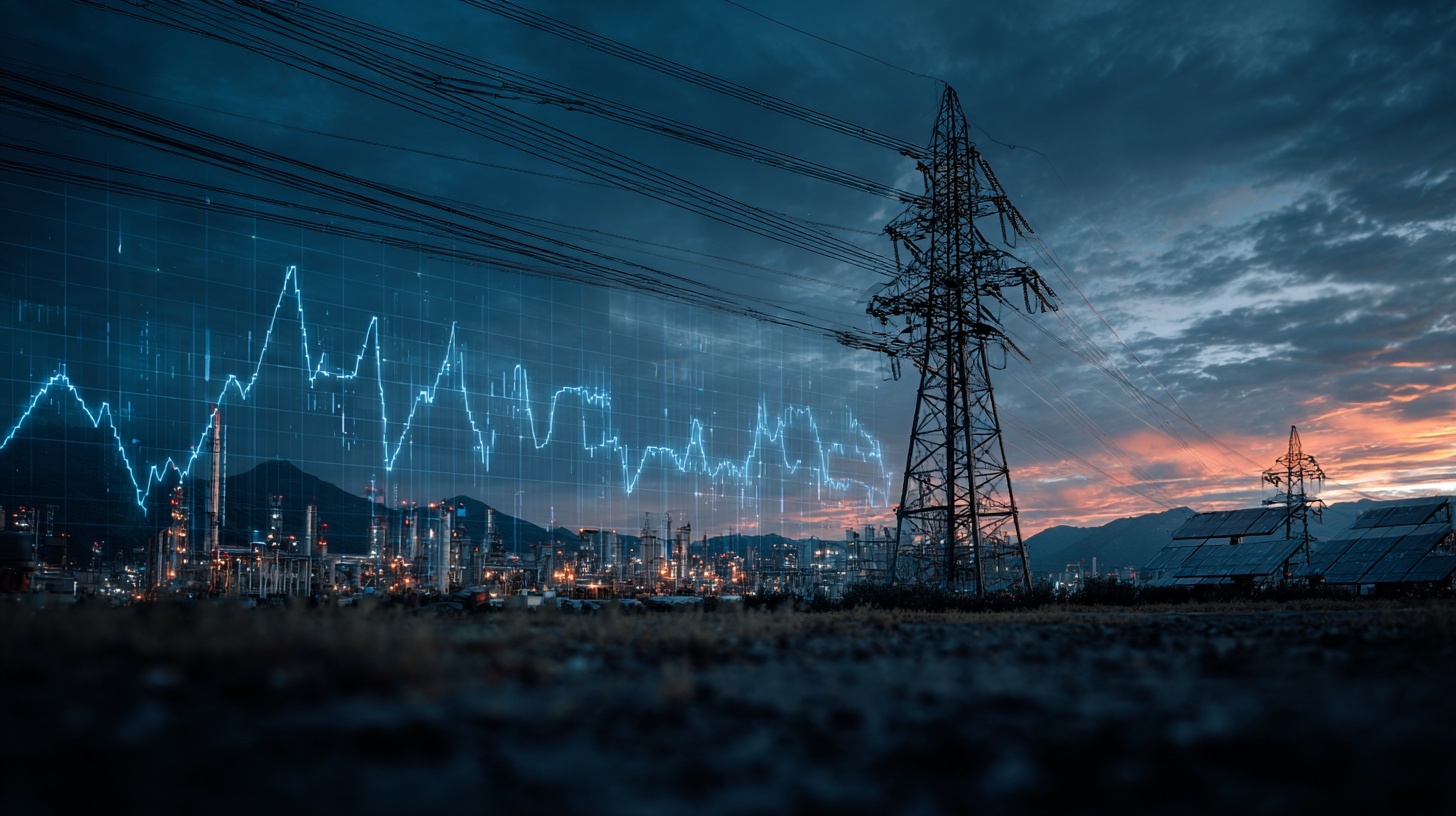

The Awakening Series Part 9: Energy and Utilities—The Regulated Monopoly Inefficiency

By Futurist Thomas Frey

You can’t choose your electric company. In most of America, one utility has exclusive rights to serve your area. You can’t shop around, can’t negotiate rates, and can’t switch providers if you’re dissatisfied. This monopoly is government-sanctioned, supposedly justified because utilities are “natural monopolies” where competition would be inefficient.

The bargain was simple: utilities get guaranteed monopoly status, and in exchange, they accept rate regulation and service obligations. Regulators would ensure fair pricing, adequate investment, and reliable service. Customers would get stable, affordable power without the chaos of competing infrastructure.

That was the theory. AI analysis of how utilities actually operate reveals something very different: a system where monopoly protection removes competitive pressure, where regulatory capture ensures favorable treatment, and where customers pay far more than necessary for service quality that lags behind what competitive markets deliver elsewhere.

The awakening in energy and utilities isn’t about whether we need electricity and water—we obviously do. It’s about revealing that the regulatory monopoly model has evolved into a mechanism for guaranteed profits with minimal accountability, where inefficiency gets rewarded and innovation gets resisted.

Continue reading… “The Awakening Series Part 9: Energy and Utilities—The Regulated Monopoly Inefficiency”

The Awakening Series Part 8: Supply Chain and Logistics—The Hidden Middleman Economy

By Futurist Thomas Frey

You buy a product online for $100. The manufacturer sells it to the distributor for $35. The distributor sells it to the wholesaler for $50. The wholesaler sells it to the retailer for $70. The retailer sells it to you for $100. At each step, someone takes a cut for moving the product from one place to another—often without adding any meaningful value.

This is the supply chain, and AI analysis is revealing that it has evolved into something far more parasitic than most people realize. What should be a relatively efficient system for moving goods from manufacturers to consumers has become a multi-layered extraction economy where middlemen have inserted themselves at every possible point, each taking their percentage while making the entire system slower, more expensive, and less transparent.

The awakening in supply chain and logistics isn’t about the necessity of distribution—goods do need to move from factories to customers. It’s about revealing how many unnecessary intermediaries have positioned themselves in that flow, how much they’re extracting, and how technology could eliminate most of them while delivering better service at a fraction of the cost.

Continue reading… “The Awakening Series Part 8: Supply Chain and Logistics—The Hidden Middleman Economy”

The Great Transformation: How Humanity Redefines Itself Over the Next 30 Years

By Futurist Thomas Frey

We’re not just facing another economic cycle or technological wave. We’re entering a civilizational inflection point that will unfold across distinct phases over the next three decades. Understanding these phases isn’t about prediction—it’s about preparation. The communities, organizations, and individuals who recognize which phase they’re in will navigate this transformation far more successfully than those caught off-guard.

What makes this transformation different from previous technological disruptions is its scope and simultaneity. The Industrial Revolution unfolded over roughly a century, giving societies time to adapt incrementally. This time, AI, robotics, drones, and automation are converging at once, across all sectors, in all regions. There’s no “later” geography that can learn from “earlier” adopters. We’re all early adopters now, whether we’re ready or not.

The phases I’m describing aren’t rigid boundaries but overlapping waves. By the time one phase becomes dominant, seeds of the next are already visible. Smart organizations and forward-thinking communities are already positioning themselves for Phase Three while most are still denying Phase One. That gap—between those who see what’s coming and those who don’t—will be the defining factor in who thrives and who struggles over the next generation.

Continue reading… “The Great Transformation: How Humanity Redefines Itself Over the Next 30 Years”

The Tooth Regeneration Revolution: When Biology Threatens a $124 Billion Industry

By Futurist Thomas Frey

The Treatment That Works But Can’t Reach Patients

Imagine regrowing a lost tooth the way children grow their first set—complete with roots, enamel, and natural integration with your jawbone. No surgery. No implants. Just biology doing what it was designed to do.

This isn’t science fiction. Researchers at Kitano Hospital in Japan and Seoul National University achieved it in March 2025. A drug that blocks a single suppressor protein allows adults to regrow fully functional teeth in 6-8 months. Clinical trials show 68% success rate across 412 participants aged 30-70. Five-year follow-ups show zero complications.

And the dental industry is doing everything possible to prevent this technology from reaching American patients.

Continue reading… “The Tooth Regeneration Revolution: When Biology Threatens a $124 Billion Industry”

Atlas Stands Up: The Moment Humanoid Robots Stop Being Research and Start Being Real

By Futurist Thomas Frey

The Performance Nobody Expected to See

For the first time ever, a major robotics company did something unthinkable: they demonstrated a humanoid robot live, in public, without editing, without safety nets, where failure would be witnessed by hundreds of industry analysts and instantly amplified across global media.

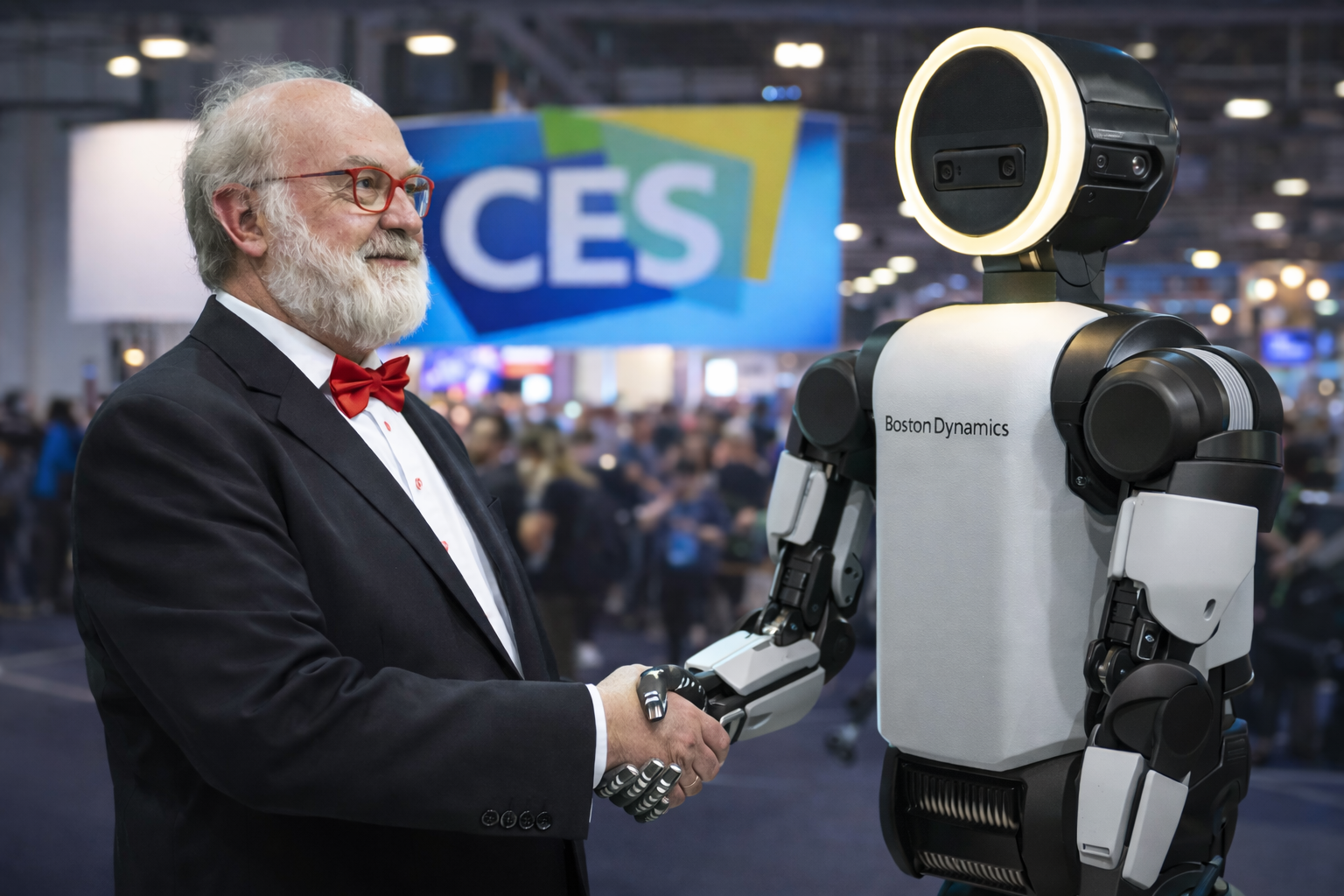
“For the first time ever in public, please welcome Atlas to the stage,” said Boston Dynamics’ Zachary Jackowski at CES 2026 in Las Vegas. The life-sized robot picked itself up from the floor, walked fluidly across the stage for several minutes, waved to the crowd, and swiveled its head like an owl. No stumbles. No falls. No frantic engineers rushing to intervene.

The demonstration itself was modest—Atlas was remotely piloted for the showcase. But the symbolism was massive. Robotics companies almost never demonstrate humanoids live because fumbles attract catastrophic attention. Russia’s first humanoid face-planted in November. That’s why everyone releases carefully edited videos on social media—maximum control, zero risk.

Boston Dynamics just threw that playbook away. And by doing so, they signaled something fundamental: Atlas isn’t a research prototype anymore. It’s becoming a product. And Hyundai isn’t experimenting with humanoid labor—they’re committing to it at industrial scale.

Continue reading… “Atlas Stands Up: The Moment Humanoid Robots Stop Being Research and Start Being Real”

Talking to the Defect: When Your Disease Becomes Your Diagnostic Partner

By Futurist Thomas Frey

The Question Nobody Thought to Ask

What if instead of analyzing your cancer, you could interview it? Not metaphorically—literally ask your tumor what it needs to survive, why it’s growing, what would kill it most effectively. What if your autoimmune disease could explain exactly why your immune system is attacking your body and what would make it stop?

This isn’t science fiction. It’s the logical endpoint of AI-powered diagnostic systems that can simulate complex biological processes and translate them into conversational interfaces. And it changes everything about how we diagnose, treat, and understand disease.

The concept comes from software engineering: “talking to the defect.” When code fails, instead of manually debugging thousands of lines, AI systems can simulate the defect’s behavior and explain—in plain language—what’s wrong, why it’s happening, and how to fix it. AI business developer Dave Blundin articulated this breakthrough in diagnostic methodology: give the problem a voice.

Now extend that concept to medicine. Your illness becomes your diagnostic partner. The defect in your body explains itself. The disease that’s killing you tells you how to kill it first.

Let me walk you through why this represents fundamental transformation in medical diagnosis, what becomes possible when diseases can explain themselves, and how quickly this shifts from theoretical to clinical reality.

Continue reading… “Talking to the Defect: When Your Disease Becomes Your Diagnostic Partner”

Gluing Deserts Together: How China’s Blue-Green Algae Is Terraforming Sand Into Soil

By Futurist Thomas Frey

The Question Desertification Forces Us to Answer

Deserts are expanding. Climate patterns shift, rainfall decreases, vegetation dies, and sand reclaims land that once supported agriculture and communities. Traditional approaches—planting trees, building barriers, pumping water—struggle against the fundamental problem: shifting sand won’t stay put long enough for anything to take root.

This forces an uncomfortable question: what if we’re fighting desertification wrong? What if instead of trying to grow plants in sand, we first turn the sand into something that can support plant life? What if we literally glue the desert floor together using organisms that have survived in extreme conditions for eons?

Chinese researchers at the Shapotou Desert Experimental Research Station have answered this question with a solution that sounds like science fiction: deploy massive quantities of blue-green algae to create an “ecological skin” that binds shifting dunes into stable substrate. Not in decades—in one year. Not as small-scale experiment—across 6,667 hectares in Ningxia province over the next five years, with plans to scale globally.

Let me walk you through why this blue-green algae approach represents a fundamental shift in how we reclaim deserts, what it means for global desertification battles, and why microbial geoengineering might be humanity’s best tool for reversing landscape degradation.

Continue reading… “Gluing Deserts Together: How China’s Blue-Green Algae Is Terraforming Sand Into Soil”

The Road That Powers Your Car: Why Florida’s Charging Highway Is Just the Beginning

By Futurist Thomas Frey

The Question Nobody Expected Florida to Answer First

A 4.4-mile stretch of highway in Central Florida will do something no American road has ever done: charge electric vehicles while they drive. State Road 516, connecting Lake and Orange counties, will embed inductive charging coils beneath the pavement, wirelessly transferring up to 200 kilowatts to compatible vehicles at highway speeds. Construction begins this spring. Partial opening expected by 2027. Full operation by 2029.

This isn’t a gimmick. It’s the opening move in infrastructure’s biggest transformation since the Interstate Highway System. And it forces an uncomfortable question: once roads become energy delivery systems, what else changes? How quickly does this spread? And what happens when autonomous vehicles that never stop driving meet highways that never stop charging?

Let me walk you through the forces driving this shift, where it leads in an autonomous era, and why this becomes national infrastructure faster than anyone expects.

Continue reading… “The Road That Powers Your Car: Why Florida’s Charging Highway Is Just the Beginning”

The Soldierless War: The Armies of the Future

By Futurist Thomas Frey

The Question Ukraine Forces Us to Ask

Ukraine is running out of soldiers. After nearly three years of brutal attrition warfare, mobilization becomes increasingly difficult, casualties mount, and the demographic crisis deepens. Meanwhile, both sides deploy thousands of drones daily—kamikaze FPV drones, reconnaissance quadcopters, loitering munitions, autonomous swarms.

This forces an uncomfortable question: could you fight a war today with zero soldiers? Not someday with advanced AI—now, with existing drone technology, autonomous systems, and remote operation. What would an all-drone army look like? How long to gear up? How would battlefields change? And most importantly: is this better or worse for humanity in the long run?

Let me walk you through what soldierless warfare actually looks like and why we might be closer to it than anyone’s comfortable admitting.

Continue reading… “The Soldierless War: The Armies of the Future”

The Megaprojects of the AI Age: What Becomes Possible When Machines Help Build Civilization

By Futurist Thomas Frey

When Human Ambition Meets Machine Capability

As AI evolves from tool to collaborator to co-architect of civilization, humanity’s capacity for large-scale projects expands dramatically. Megaprojects that once required entire generations can now be planned, simulated, optimized, and executed in a fraction of the time.

Below is a timeline of what becomes possible—and at what scale—as human capability is amplified by AI, robotics, autonomous logistics, and synthetic intelligence. This isn’t speculation about distant futures. These are projects that become technically and economically viable within specific timeframes based on current technological trajectories.

Continue reading… “The Megaprojects of the AI Age: What Becomes Possible When Machines Help Build Civilization”

Japan’s Parkinson’s Breakthrough: When Your Brain Can Grow New Neurons

By Futurist Thomas Frey

The Treatment That Changes Everything

Japan just achieved something that seemed impossible a decade ago: they’re successfully transplanting lab-grown brain cells into Parkinson’s patients, and those cells are working. Not just surviving—actually producing dopamine, reducing tremors, and restoring function that patients thought they’d lost forever.

This isn’t managing symptoms. This is regenerating the brain cells that Parkinson’s destroys. And if the regulatory approval process continues on track, this treatment could be widely available by late 2025 or 2026.

Let me explain why this matters and what it actually means for the millions suffering from Parkinson’s disease.

Continue reading… “Japan’s Parkinson’s Breakthrough: When Your Brain Can Grow New Neurons”
Discover the Hidden Patterns of Tomorrow with Futurist Thomas Frey
Unlock Your Potential, Ignite Your Success.

By delving into the futuring techniques of Futurist Thomas Frey, you’ll embark on an enlightening journey.

Learn More about this exciting program.