The Lab-Grown Dream That Didn’t Happen (Yet): What Went Wrong and Where Cellular Agriculture Is Actually Heading

By Futurist Thomas Frey

When Bold Predictions Meet Stubborn Reality

In 2017, I predicted cultured meat would transform the food industry by 2020-2030, with grocery stores stocking lab-grown beef, traditional ranchers going out of business, and exotic meats from extinct species becoming specialty products. I envisioned thousands of home cultivation farms, designer materials from celebrity cells, and cultured meat becoming the world’s cheapest food by 2025.

Eight years later, none of that happened. Lab-grown meat isn’t in your grocery store. It’s barely in any stores anywhere. The revolution I confidently predicted hasn’t materialized, and it’s worth examining why my optimism crashed into reality’s stubborn barriers.

But here’s the twist: while cultured meat failed to launch, the broader concept of lab-grown materials—what I later called “Our Lab-Grown Future”—is actually progressing in unexpected directions. Lab-grown wood, milk proteins through fermentation, diamonds, and medical materials are advancing while cultured meat stumbles. Understanding why some cellular agriculture succeeds while meat specifically fails reveals important lessons about predicting disruptive technologies.

Continue reading… “The Lab-Grown Dream That Didn’t Happen (Yet): What Went Wrong and Where Cellular Agriculture Is Actually Heading”


When Swarms of Micro-Drones Become Your Personal Army: The Timeline and Terror of Swarmbots

By Futurist Thomas Frey

The Future That Sounds Impossible Until You See the Timeline

Imagine stepping out of the shower and instead of reaching for a towel, thousands of flying micro-drones surround you and dry you off in seconds. The same swarm then shaves you, applies makeup, fixes your hair, and finally assembles itself as your clothing—rearranging into whatever color, style, and fashion fits your day’s activities. When you need to travel, the swarm physically lifts your body and flies you wherever you want to go.

This sounds like science fiction that’s centuries away. It’s not. We’re maybe 20-30 years from early versions of this technology, and the implications—both miraculous and terrifying—are something we need to confront now, not after the technology arrives.

The question isn’t whether swarmbots are coming. The question is how quickly they arrive and whether we’ve built any frameworks for preventing them from becoming the most dangerous technology humans have ever created.

Continue reading… “When Swarms of Micro-Drones Become Your Personal Army: The Timeline and Terror of Swarmbots”

The Digger-Bot Tunnels: How Homes Will Expand Downward by 2040

By Futurist Thomas Frey

By 2040, the most advanced homes won’t expand outward—they’ll expand downward. As robotic businesses become a normal part of residential life, the surface-level home becomes a sanctuary for people, while an entire network of underground tunnels becomes the circulation system for the machines that work nonstop beneath our feet.

This isn’t science fiction. It’s the logical solution to a problem that becomes unavoidable once homes run multiple robot businesses: you don’t want delivery drones buzzing past windows, laundry robots rolling across living rooms, or 3D-printing carriers moving parts through the kitchen while you’re trying to live.

So architects solve the problem the same way cities solved traffic congestion a century earlier: by separating flows. The human world stays above ground—quiet, open, calm. The mechanical world moves underground—efficient, invisible, continuous.

Continue reading… “The Digger-Bot Tunnels: How Homes Will Expand Downward by 2040”

The Robot-Ready Home: Why Your House Needs to Get Bigger by 2040

By Futurist Thomas Frey

In the coming decade, robots won’t just live in our homes—they’ll work in them. And that changes everything about how we design residential space.

As houses become micro-factories, micro-farms, fulfillment hubs, drone ports, tailoring studios, and automated kitchens, the physical footprint of the home will need to grow substantially. The 2040 household won’t resemble the compact, human-only residences we’ve known for generations.

Instead, families will increasingly require homes with built-in robotics zones: rooms for articulated-arm kitchens, basements full of 3D printers, garage-based laundry stations, charging alcoves for mobile service bots, drone landing pads, indoor hydroponic grow bays, and small workshops where maintenance robots repair each other.

This shift means the future of housing is not just about shelter—it’s about workspace. If robots are to operate efficiently, homes must evolve into hybrid living-working ecosystems.

Continue reading… “The Robot-Ready Home: Why Your House Needs to Get Bigger by 2040”

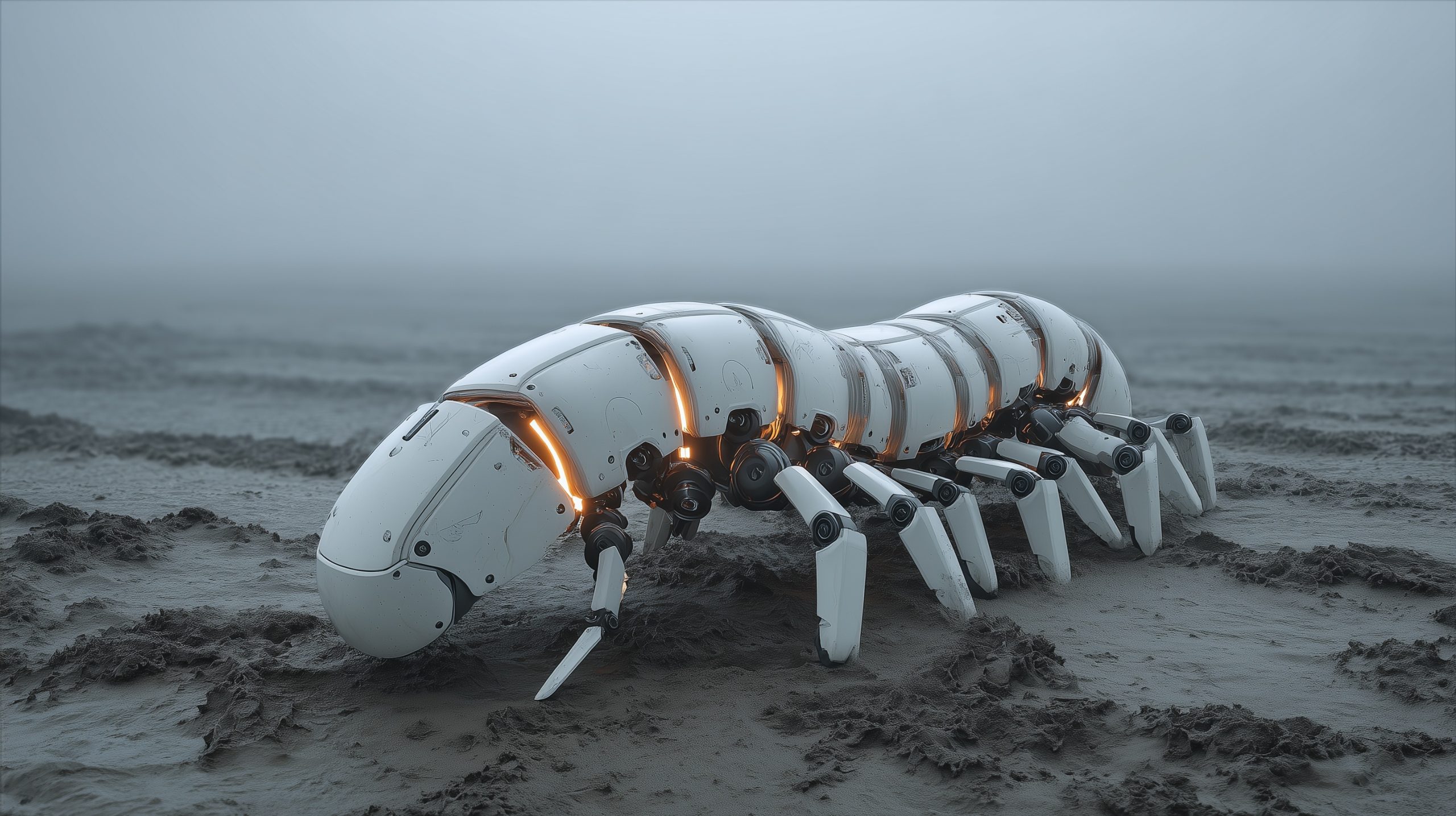
Mining Our Garbage: How Robotic Earthworms Will Turn Landfills Into Gold Mines

By Futurist Thomas Frey

I’ve always thought that our most valuable land in the future will be our landfills—because that’s where we’re burying our most valuable resources.

Think about what we throw away: rare earth metals in electronics, copper in wiring, aluminum in cans, plastics that could be reprocessed, organic matter that could generate energy. We’re essentially creating underground treasure vaults and then forgetting about them, piling more garbage on top year after year.

By 2040, someone will invent what I call robotic earthworms—autonomous mining systems capable of tunneling through landfills, extracting valuable materials, and replacing extracted waste with clean soil. And when that happens, the economics of waste management will invert completely.

Landfills won’t be environmental liabilities we pay to maintain. They’ll be mineral deposits we pay to access.

Continue reading… “Mining Our Garbage: How Robotic Earthworms Will Turn Landfills Into Gold Mines”

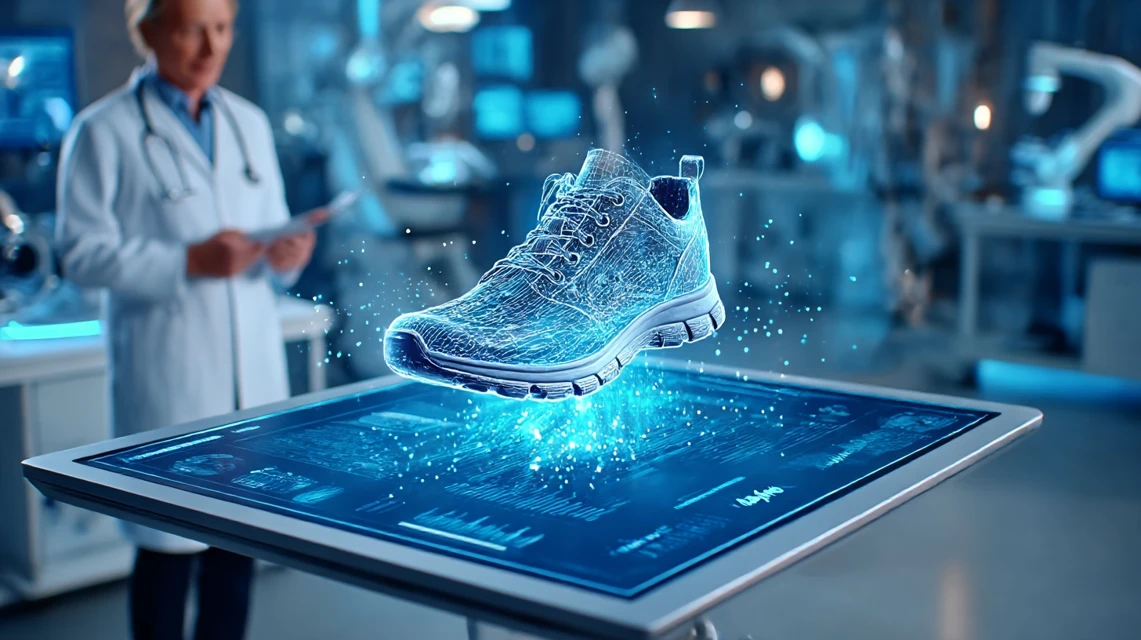
The Future of Shoes: When Footwear Becomes Your Personal Health System

By Futurist Thomas Frey

I personally have a number of foot issues. At age 19, I froze my feet working to repair an accident on our family farm in South Dakota—spending hours in subzero temperatures trying to fix equipment that broke at the worst possible time. I’ve dealt with the consequences ever since—circulation problems, sensitivity to cold, periodic pain that flares up without warning. But I’m not unique. Everyone has foot issues at one time or another—plantar fasciitis, bunions, arch pain, swelling, neuropathy, gait problems that cause knee or back pain. Foot problems are universal, often chronic, and profoundly affect quality of life.

That’s why the most taken-for-granted object in our lives—shoes—is about to become one of the most sophisticated health devices we own.

By 2040, shoes won’t just protect your feet—they’ll actively monitor your health, adjust to your body in real-time, prevent falls before they happen, and fix biomechanical problems that cause pain throughout your body. Footwear is about to go through its biggest transformation in history, evolving from passive protection to active health management.

Continue reading… “The Future of Shoes: When Footwear Becomes Your Personal Health System”

Synthetic Healing: The Next Frontier in Regenerative Medicine

By Futurist Thomas Frey

Healing is about to stop being something your body does and start being something we engineer.

For all of human history, recovery from injury has been a passive process—your body either heals itself or it doesn’t. Medicine could prevent infection, set bones, stitch wounds. But the actual healing? That happened on biology’s timeline, with biology’s limitations, leaving scars, incomplete repairs, and permanent damage.

Synthetic healing changes everything. Instead of waiting for your body to slowly regenerate damaged tissue, we’ll engineer the repair—using lab-grown tissues, programmable molecules, AI-guided nanorobots, and synthetic biological systems that don’t just match natural healing but exceed it.

This is the next frontier in regenerative medicine: making healing faster, more complete, and controllable. By 2040, synthetic healing will transform recovery from something that happens to you into something we design and deploy with precision.

Continue reading… “Synthetic Healing: The Next Frontier in Regenerative Medicine”

The Neumann Engine: Building Self-Replicating Innovation Ecosystems by 2040

By Futurist Thomas Frey

In 2023, I introduced the concept of the Neumann Engine—a self-replicating system for cities to thrive in the AI era by turning economic decline into innovation opportunity. Named after mathematician John von Neumann’s self-replicating machine theories, the Neumann Engine isn’t a single technology or institution. It’s a complete economic operating system that enables cities to generate prosperity through AI-powered entrepreneurship, autonomous coordination, and continuous adaptation.

By 2040, this concept will have evolved into one of the era’s defining megaprojects: The Neumann Engine Mega-Region Initiative—a $1 trillion global fund creating dozens of self-sustaining tech mega-regions across Europe, Asia, and the Americas. Linked AI-driven innovation corridors will connect continents, each designed as a fusion of venture studios, smart logistics, and autonomous governance.

The outcome: cities that don’t just survive AI disruption but use it as fuel for continuous economic reinvention. Self-replicating innovation ecosystems that spread across regions, creating prosperity exactly where traditional manufacturing and service economies are collapsing.

This is how post-industrial cities avoid becoming permanent decline zones—and how the global economy restructures around AI-native innovation rather than trying to preserve jobs that AI makes obsolete.

Continue reading… “The Neumann Engine: Building Self-Replicating Innovation Ecosystems by 2040”

Living Materials: When Your Couch Grows Itself and Your Roof Heals Its Own Damage

By Futurist Thomas Frey

By 2040, the chair you’re sitting on might be alive. Not sentient—but genuinely biological. Grown from fungal mycelium in a matter of weeks rather than manufactured from petroleum-based foam and fabric. The roof over your head could be a living organism that repairs damage automatically, adapts to weather conditions, and produces oxygen as a byproduct. Your clothing could literally grow with you, healing tears and eventually biodegrading safely when you’re done with it.

This isn’t science fiction. It’s synthetic biology meeting materials science, and it’s one of the most underappreciated transformations coming by 2040. We’re moving from manufacturing products to growing them—and the shift will be as profound as the move from handcraft to industrial production.

The Office of the Director of National Intelligence’s forecast on emerging technologies explicitly identifies biotech combined with automation and advanced materials science as enabling major transformations by 2040. Consumer trend analysis from Deloitte identifies sustainability, new materials, and wellness as major market drivers converging precisely where bio-engineered materials deliver value.

We’re not just making products differently. We’re making products that are fundamentally different—living, adaptive, sustainable in ways manufactured goods can never be.

Continue reading… “Living Materials: When Your Couch Grows Itself and Your Roof Heals Its Own Damage”

Quantum Batteries: The Energy Storage Revolution Coming by 2040

By Futurist Thomas Frey

Your smartphone charges fully in 30 seconds. Your electric car goes 2,000 miles on a single charge that takes three minutes. Your home battery powers your entire house for a week from a unit the size of a shoebox. Power tools run for months without recharging. Medical devices operate for years without battery replacement.

This isn’t wishful thinking about incremental lithium-ion improvements. This is the quantum battery revolution—and it’s coming by 2040.

Quantum batteries leverage quantum mechanical effects to store and release energy in ways that classical physics says shouldn’t be possible. They represent a fundamental leap beyond lithium-ion technology the way lithium-ion represented a leap beyond lead-acid batteries. And according to the Office of the Director of National Intelligence’s forecast on emerging technologies, we’re on track to have “materials with previously unobtainable properties” enabling transformative applications by 2040.

Energy storage has been the bottleneck holding back everything from renewable energy grids to electric aviation to portable electronics. Quantum batteries remove that bottleneck—and in doing so, they enable futures we currently consider impossible.

Continue reading… “Quantum Batteries: The Energy Storage Revolution Coming by 2040”

Using Robots to 3D Print a Solar Roof On Your House

By Futurist Thomas Frey

I’ve been obsessed with a problem that shouldn’t still exist: why does installing solar panels remain so expensive, slow, and ugly that most homeowners never bother?

The answer isn’t the panels—those are cheap now. It’s the installation labor, the structural modifications, the permitting hassles, and frankly, the aesthetics. Bolting rectangular panels onto your roof looks like you’re trying to power a Mars base, not a suburban home.

But what if a robot could 3D print a solar roof directly onto your house in a day, creating a seamless, beautiful, waterproof energy-generating surface that costs a fraction of current solutions? What if you didn’t even need to remove your existing shingles?

This isn’t science fiction. The technology exists today. We just haven’t assembled it correctly yet.

Continue reading… “Using Robots to 3D Print a Solar Roof On Your House”

In-Body 3D Printing: The Future of Healing From Within

By Futurist Thomas Frey

The moment we’ve long awaited is here: 3D printers that build tissues inside the body rather than on a bench. The latest innovation—implantable bio-printers that operate in situ within living bodies—marks a rupture in medicine. We are no longer limited to replacing damaged tissues with donor grafts or synthetic implants; we are now capable of growing new structures inside the patient, perfectly integrated with existing biology. With this leap, the boundary between surgery and regeneration collapses.

These internal bio-printing systems use biocompatible inks, stem cell scaffolds, and robotic micro-nozzles guided by imaging and AI to deposit layers of tissue in precise anatomical contours. A surgeon no longer stitches a patch onto a defect; the printer weaves new material layer by layer, cell by cell, within the wound site itself.

Continue reading… “In-Body 3D Printing: The Future of Healing From Within”
Discover the Hidden Patterns of Tomorrow with Futurist Thomas Frey
Unlock Your Potential, Ignite Your Success.

By delving into the futuring techniques of Futurist Thomas Frey, you’ll embark on an enlightening journey.

Learn More about this exciting program.