
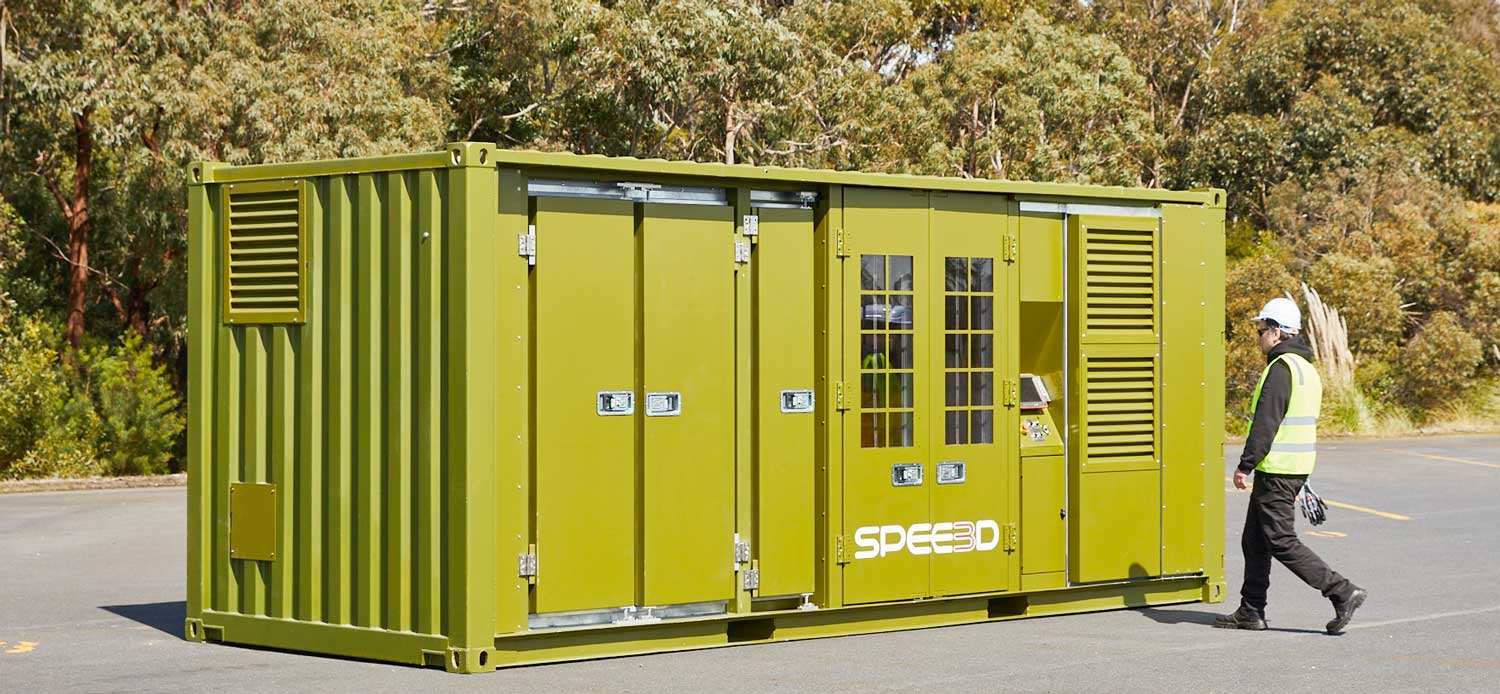
Australian company SPEE3D has successfully proven that its XSPEE3D technology for additive manufacturing of metal parts operates efficiently in extremely cold environments. As part of the U.S. Department of Defense’s “Point of Need Challenge” project, the company demonstrated that metal components produced in sub-arctic temperatures exhibit material properties comparable to those created under standard laboratory conditions.
The project aimed to assess manufacturing technologies capable of producing and repairing large metal parts in extreme climates. SPEE3D’s successful demonstration took place at the U.S. Army’s Cold Regions Research and Engineering Laboratory (CRREL) in Hanover, New Hampshire, at the end of 2023. The initiative was carried out in collaboration with the New Jersey Institute of Technology’s (NJIT) COMET project, Philips Federal, and the LIFT innovation platform in Detroit.
The key goal of the project was to identify systems that could be used in the coldest climate zones for on-site manufacturing of spare parts and critical components. This is especially important in military scenarios, where on-demand production of essential items at remote locations can be a game-changer. SPEE3D’s XSPEE3D technology has now proven its ability to close supply gaps in remote and challenging environments, making it a reliable solution for decentralized production in areas with extreme conditions.
In addition to its military applications, the technology could also have significant value in civilian contexts, including polar and Arctic research, where access to manufacturing facilities is limited. The successful demonstration of XSPEE3D in sub-zero temperatures paves the way for future applications that could transform how critical components are produced in some of the world’s most inhospitable environments.
By Impact Lab
