
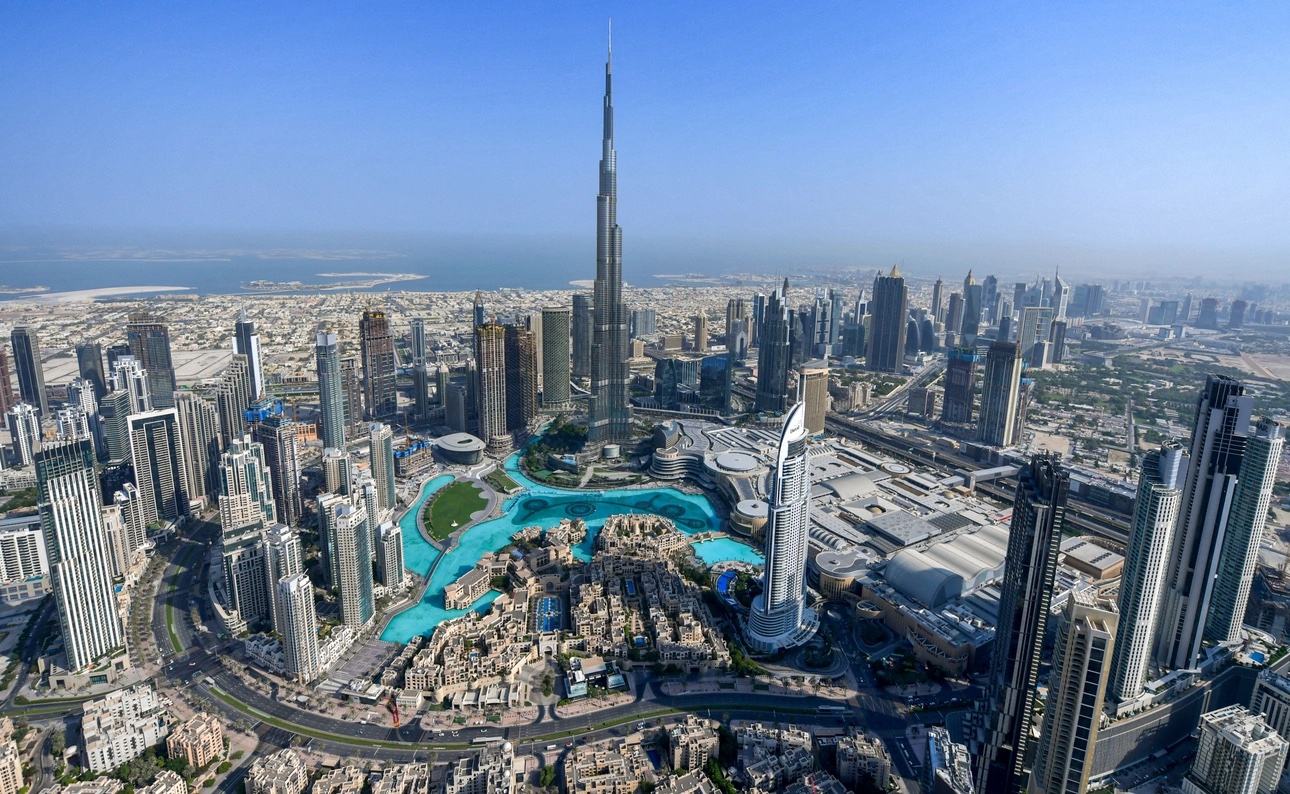
The United Arab Emirates (UAE), an oil-rich Gulf monarchy, has made one of the world’s most ambitious investments in artificial intelligence (AI). While the vast sums allocated to chips, energy, and talent for AI applications may or may not yield long-term returns, the strategic pivot has already led to significant changes in the UAE’s economic landscape.
To foster the development of AI, the UAE needed to reform its immigration, business, and tax laws. The country aimed to attract the brightest minds from across the globe, creating an environment conducive to innovation. These changes reflect an economic blueprint for success in the 2025 global economy, one that could serve as a model for other nations.
Far from an isolated experiment, the UAE’s approach underscores the importance of open borders for top talent. This argument, recently championed by Silicon Valley proponents in opposition to anti-immigration factions in the U.S., finds real-world validation in the Emirates. In a gathering one evening at a desert farm near the capital, Abu Dhabi, business leaders, government officials, and international tech professionals—spanning from Britain to Russia—came together to discuss the country’s growing role in AI innovation.
“The UAE is using AI to industrialize in a way that makes sense for the 21st century,” said Lin Kayser, a German serial entrepreneur whose company, LEAP71, designs AI-driven rocket engines, some of which have recently passed hot-fire tests.
This sentiment was echoed by Omar al Olama, the UAE’s Minister of AI, who was appointed in 2017, long before AI became a global sensation with the advent of ChatGPT. Al Olama’s mission has been clear: place the UAE among the global leaders in AI by 2031. According to insiders, the country is already ahead of schedule. A key milestone came in 2023 when Falcon, an open-sourced large language model developed by a state-run institute, surpassed the capabilities of major Silicon Valley players.
The UAE’s rapid AI progress caught the attention of industry giants. Microsoft’s $1.5 billion investment in Abu Dhabi-based AI firm G42, backed by the ruling family, reflects the growing recognition of the UAE as an AI hub. G42 is focused on applying AI across sectors such as energy and healthcare, reinforcing the country’s push to diversify its economy beyond oil.
Stanford University’s 2023 Global AI Index ranked the UAE as the fifth most “vibrant” AI nation, up from tenth the year prior. This high ranking was driven by the UAE’s success in attracting top engineers, supporting local AI ventures with public investment, and creating a business-friendly environment. As one Emirati venture capitalist put it: “They put us ahead of countries we had benchmarked ourselves against.”
Historically, the UAE faced challenges in attracting foreign talent. Its laws restricted foreign ownership of businesses, criminalized cohabitation by unmarried couples, and limited access to alcohol, which deterred many potential expats. Additionally, the country’s involvement in regional conflicts, such as in Yemen, made the UAE a less appealing destination for some.
However, the UAE’s recent strategic shifts have turned this around. The country has eased visa and ownership restrictions, making it easier for foreign nationals to own businesses and live there. It has also decriminalized cohabitation and relaxed alcohol laws, creating a more welcoming environment for younger professionals. As a result, the influx of foreign talent has been significant.
“It’s easier to get talent into the UAE than the U.S. or Europe. And it’s safer to live here too,” noted an Emirati-American tech investor during a private breakfast in Abu Dhabi.
The UAE’s push for diversification is a response to the eventual decline of oil, which has long been the cornerstone of the country’s wealth. A century ago, Dubai’s economy was centered around pearl diving, but when Japan developed artificial pearls, the industry collapsed. Since then, Dubai and the UAE have worked to diversify, investing in finance, transport, and tourism. Today, AI represents the next frontier for diversification.
The UAE’s ability to plan long-term and make decisive, top-down decisions is often attributed to its centralized political system, where the ruling family holds significant power. While this may be controversial, it’s undeniable that autocratic governments can make long-term, visionary decisions that democracies, with their short-term political cycles, often cannot.
In many ways, the UAE is following in the footsteps of 20th-century Singapore and Hong Kong, which became global hubs for capital and talent. The UAE’s goal is to position itself as the world’s meeting place for technology and innovation in the 21st century, with a focus on AI.
For other economies—whether in Europe, Asia, or the U.S.—there are valuable lessons to be learned from the UAE’s approach. With open borders, a focus on talent, and a commitment to innovation, the Emirates is shaping itself as a key player in the global AI landscape, demonstrating that adaptability and forward-thinking can pave the way for future prosperity.
By Impact Lab
