
By Futurist Thomas Frey
Ray Bradbury gave us “The Veldt.” Star Trek gave us the holodeck. Both imagined immersive virtual environments where the line between real and simulated blurred. But neither pushed the concept to its logical, terrifying, exhilarating extreme.
What if we could dial experience itself? Not just visual and audio simulation, but complete sensory and neurological control. Pain from 0-10. Pleasure from 0-10. Healing from 0-10. What if your brain could be convinced so completely that something is real that it responds as if it were—curing disease, experiencing transcendent pleasure, or dying from simulated torture?
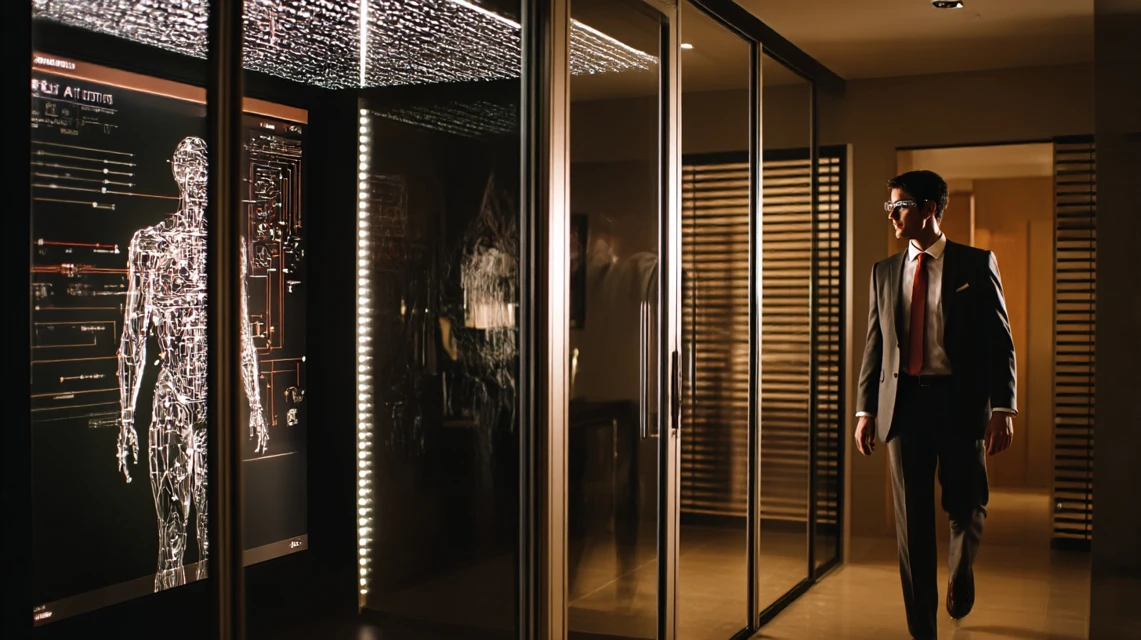
I’m proposing we will build exactly this: The Reality Forge—a device that doesn’t just simulate reality but forges it directly in your brain, making your mind the ultimate experience engine. And once we build it, nothing about human civilization will be the same.
How Real Is Real?
The foundational question: if your mind thinks something is real, is it?
The answer is unequivocally yes—at least from a neurological perspective. Your brain doesn’t experience “reality” directly. It experiences electrochemical signals interpreted as reality. When you taste chocolate, you’re not experiencing the chocolate—you’re experiencing your brain’s interpretation of signals from taste receptors.
This means if we can generate those same signals artificially, your brain can’t tell the difference. The experience is real to you, even if the source is entirely fabricated.
We’re already seeing early versions: VR creates visual and audio immersion. Haptic suits provide touch sensation. Taste and smell interfaces are emerging. But these are crude—like comparing a telegraph to the internet.
The Reality Forge will bypass external sensory organs entirely, interfacing directly with the brain regions that process experience. It won’t show you a pie—it will make your brain experience eating a pie with perfect fidelity. You’ll taste it. Feel the texture. Experience it traveling down your throat. Your brain will be convinced you ate the pie, triggering the same satisfaction responses as actually eating it.
And that’s just the beginning.
Dialing Intensity: The 0-10 Scale
Here’s where it gets extreme: what if you could dial any sensation from 0 (nothing) to 10 (maximum possible human experience)?
Pain at Level 10: Not just severe pain—the absolute limit of what human nervous systems can experience. Childbirth, kidney stones, cluster headaches—all pale compared to what becomes possible when you remove biological safeguards. This isn’t torture that damages tissue. It’s pure neurological agony without physical harm. You could experience pain that would normally cause unconsciousness or death—except the device keeps you conscious and aware throughout.
Pleasure at Level 10: Similarly, pleasure unbound by biological limits. Not just orgasm or drug highs, but pleasure so intense it becomes almost painful—except it’s not. It’s pure euphoria beyond what natural reward systems can provide. The kind of pleasure that makes normal life feel gray and dull by comparison.
Smell at Level 10: Experiencing odors at intensities impossible in nature. Imagine smelling a single rose with such clarity and intensity that every molecular component is distinct and overwhelming. Or smelling something pleasant—fresh bread, rain, coffee—amplified to the point where the experience becomes almost transcendent.
Hearing at Level 10: Not just loud—but hearing sounds beyond human frequency range, or with such clarity you can hear a heartbeat a mile away, distinguish individual conversations in a crowd of thousands, or experience music with every harmonic and overtone perfectly resolved.
The ability to dial intensity means experiences can be calibrated precisely—or pushed to extremes that no natural experience could match.
The Healing Potential
Here’s where it gets genuinely revolutionary: what if the mind-body connection could be weaponized for healing?
We know placebo effects are real. Your brain believing you’re getting effective treatment can produce measurable physical improvements. But placebos are weak—limited by your brain’s skepticism and natural conservatism.
What if the Reality Forge could convince your brain, completely and utterly, that healing is occurring? Not just belief—absolute neurological certainty, dialed to Level 10?
Cancer treatment: Your brain becomes convinced that your immune system is attacking cancer cells with overwhelming force. The Reality Forge generates the neurological experience of cells being identified, targeted, and destroyed. Your actual immune system, receiving these signals, might respond accordingly.
Neurological diseases: Alzheimer’s, Parkinson’s, MS—all involve brain structures degrading or malfunctioning. If the Reality Forge can make your brain believe those structures are regenerating and healing at Level 10 intensity, does the brain respond by actually attempting those repairs?
Wound healing: Experience your wound closing, tissue regenerating, inflammation resolving—all at 10x normal speed. If your brain is convinced this is happening, does it allocate resources accordingly, actually accelerating healing?
Chronic pain elimination: If pain is neurological interpretation, can the Reality Forge simply convince your brain the pain doesn’t exist—or better yet, that the underlying condition has healed?
This isn’t proven yet. But we know the mind affects the body profoundly. The question is whether we can amplify that effect from subtle influence to dominant control. If we can, the Reality Forge becomes the most powerful medical device ever created—curing diseases by convincing the brain to cure itself.
The Vividians: Addiction to Ultra-Reality
But here’s the dark side we need to confront: once people experience Level 10 pleasure, Level 10 satisfaction, Level 10 love and connection with simulated partners who are perfect in every way—why would they ever choose reality?
I’m calling them The Vividians—people who become addicted to ultra-vivid experiences impossible in baseline reality. They’ll spend increasing time in the Reality Forge, experiencing:
Perfect romance: Partners who are physically ideal, emotionally attuned, intellectually compatible, and completely devoted. Why date flawed real humans when you can experience perfect love?
Transcendent sex: Physical pleasure dialed to 10, with perfect partners, infinite stamina, and no consequences. Once you’ve experienced this, normal intimacy feels disappointing.
Achievement without effort: Experience writing the great novel, climbing Everest, winning Olympic gold—all the satisfaction with none of the work. Your brain believes you accomplished it. Why bother with actual achievement?
Social connection without vulnerability: Experience deep friendship, community, belonging—all with simulated people who can’t actually hurt you or require real emotional labor.
The Vividians won’t be obviously dysfunctional. They’ll pay their bills. Maintain minimal social obligations. But their real life will be in the Forge, experiencing things reality can’t provide.
This becomes a civilizational crisis when significant percentages of the population choose Forged experiences over reality. Why have children when you can experience perfect parenthood without responsibility? Why build relationships when simulated ones are better? Why work toward goals when you can experience the satisfaction of achievement without the effort?
The Torture Potential
We need to confront the horrific potential: The Reality Forge as torture device.
Imagine being subjected to Level 10 pain continuously. Not for minutes—for subjective years. The device can manipulate your perception of time, making minutes feel like months. You could experience centuries of agony in hours of real time.
And because there’s no physical damage, the torture is renewable indefinitely. You can’t die from it. You can’t go into shock or unconsciousness—the device prevents that. You just experience maximum pain for as long as your torturer desires.
Worse: you could be tortured by experiencing things beyond physical pain. Watching loved ones die repeatedly. Experiencing psychological horror beyond imagination. Emotional agony at Level 10.
The question that keeps me awake: can you actually die in the Reality Forge? If your brain is utterly convinced you’re dying—heart stopping, breath ceasing, consciousness fading—does your actual body respond? Can belief become so powerful it overcomes biological reality?
If the answer is yes, the Reality Forge becomes a murder weapon. Torture so effective the victim dies from the experience itself, despite no physical harm.
Safety Protocols and Ethical Constraints
Given these extreme possibilities, should there be settings that protect people from the worst potential?
Maximum intensity limits: Should Level 10 experiences be available, or should we cap at Level 7-8 to prevent addiction and psychological damage?
Pain safeguards: Should the device refuse to generate extreme pain except in specific medical or therapeutic contexts with oversight?
Time dilation limits: Should we prevent the perception-of-time manipulation that enables years of subjective torture in hours?
Consent verification: Should the device require continuous consent verification, ensuring users aren’t trapped or tortured against their will?
Medical oversight: Should access to healing functions require medical supervision to prevent placebo medicine replacing actual treatment?
Addiction intervention: Should the device detect and intervene when usage patterns suggest dangerous addiction?
The problem: any safety protocol can potentially be bypassed. And legitimate therapeutic uses of extreme settings might require capabilities that could be abused. Where do you draw the line between preventing torture and enabling medical miracles?
When This Arrives
The technology required isn’t as distant as you’d think:
Brain-computer interfaces: Neuralink and competitors are already demonstrating direct neural interfaces. By 2035, resolution and bandwidth will be sufficient for basic sensory override.
Neural mapping: We’re rapidly mapping which brain regions process which experiences. By 2040, we’ll understand enough to generate targeted experiences reliably.
AI optimization: AI systems will learn to generate neural patterns that produce specific experiences, refining through feedback until simulation becomes indistinguishable from reality.
My prediction: proof-of-concept Reality Forge capabilities by 2035. Medical applications available by 2040. Consumer devices by 2045. Widespread adoption by 2050.
Within our lifetimes, this won’t be science fiction. It will be the most consequential technology humanity has ever created—dwarfing AI, genetic engineering, or any previous invention.
Final Thoughts
The Reality Forge represents the ultimate expression of technological power: control over subjective experience itself. It could cure disease, eliminate suffering, provide boundless joy, and expand human consciousness beyond current limits.
It could also enable torture beyond imagination, create addiction that makes opioids look harmless, allow people to die from believed experiences, and cause civilization to retreat into simulated perfection while reality crumbles.
The technology will be built. The potential benefits are too significant and the scientific curiosity too strong to prevent it. The question isn’t whether—it’s what safeguards we implement and whether they’ll be sufficient.
Once we can dial pleasure to 10, pain to 10, and healing to 10, we cross a threshold from which there’s no return. Reality itself becomes optional. Experience becomes fully engineered. And humanity will split between those who choose the vividness of the Forge and those who insist on the authenticity of unmediated experience.
The Vividians are coming. And they’ll experience things we can’t imagine—for better and for worse.
Welcome to the Reality Forge. Your mind will never be the same.
Related Stories:
https://www.nature.com/articles/d41586-024-00119-4
https://www.technologyreview.com/2024/04/15/brain-computer-interfaces/
