

By Futurist Thomas Frey
The World Where Criminals Can’t Hide
Imagine this scenario: A crime is committed. Within minutes, AI systems have already reconstructed what happened from seventeen different camera angles. The victim’s smartwatch recorded the attack. Their phone’s accelerometer captured the fall. Dashcams from passing cars documented the perpetrator’s arrival and escape. Facial recognition tracked their journey home. DNA databases connected the physical evidence before investigators even arrive at the scene.
The entire crime is solved before the investigation begins.
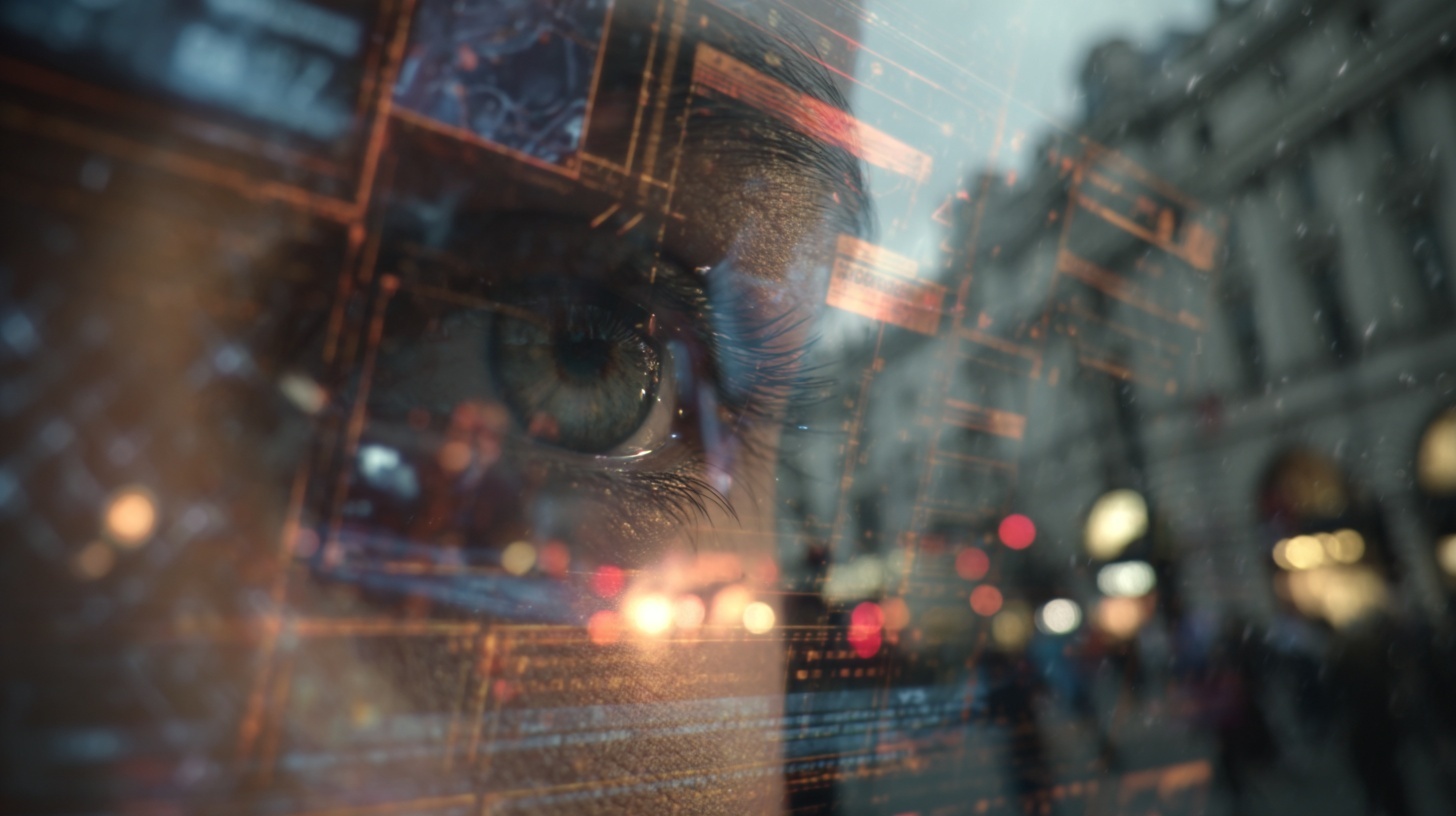
This isn’t science fiction set decades in the future. The technology exists today. We’re simply negotiating how much of it we’re willing to deploy and how tightly we’re willing to integrate it. Every smartphone is a recording device. Every doorbell can be a camera. Every transaction leaves a digital trail. Every movement can be tracked. The infrastructure for total surveillance is already being built, one Ring doorbell and Tesla dashcam at a time.
What happens when that infrastructure becomes complete? When every surface has cameras, every device records, every transaction is logged, and AI systems weave it all into a seamless, searchable record of human activity?
The answer is both seductive and terrifying: crime becomes functionally impossible. And we need to think very carefully about whether that’s actually what we want.
How Total Transparency Would End Crime
Let’s walk through what crime looks like in a world of total surveillance:
Murder becomes nearly impossible. The victim’s wearable devices record their final moments. Nearby cameras capture the event from multiple angles. The perpetrator’s own phone tracks their location before and after. Their vehicle’s GPS creates a precise timeline. Facial recognition systems trace their movements backward and forward from the crime scene. DNA evidence is matched against databases within minutes. There’s no mystery to solve—just a digital reconstruction to compile.
Theft becomes pointless. Every object worth stealing has a digital signature—RFID tags, serial numbers logged in blockchain registries, GPS trackers embedded in high-value items. The moment something is taken, it starts broadcasting its location. The thief’s biometrics are captured by cameras at the scene. Their financial transactions are monitored for unexplained acquisitions. The stolen item becomes a homing beacon leading directly to them.
White-collar crime becomes transparent. Every email creates a permanent record. Every database query is logged. Every financial transaction is tracked across institutions and borders. AI systems trained on millions of fraud cases spot anomalies the moment they occur. Shell companies, creative accounting, wire transfers to offshore accounts—all visible, all traceable, all prosecutable within hours instead of years.
Drug crimes become self-reporting. Widespread sensors detect chemical signatures. Traffic patterns reveal distribution networks. Financial flows expose money laundering. Communications metadata maps entire organizations. Social network analysis identifies relationships between participants. The entire supply chain from production to street-level sales becomes visible.
In this world, crime doesn’t disappear because humans become more moral. It disappears because the risk-reward calculation shifts dramatically. Why attempt a crime when there’s a 95% chance you’ll be identified within hours? When the digital evidence is overwhelming and undeniable? When even if you succeed, the record of your crime follows you forever, waiting to be discovered?
The Case for Total Transparency
Before we recoil in horror, let’s acknowledge the genuine benefits of this scenario:
Crime rates would plummet. If we assume even modest deterrent effects from near-certain identification, murder rates could drop by 90% or more. Violent crime, property crime, fraud—all would decline dramatically. The reduction in human suffering would be extraordinary.
Justice would become swift and certain. No more cold cases. No more innocent people convicted on circumstantial evidence. No more guilty parties escaping on technicalities. The record shows what happened. The AI reconstructs the timeline. The evidence is overwhelming. Justice is served quickly and accurately.
Vulnerable populations would be safer. Children could be tracked continuously, making kidnapping nearly impossible. Women could walk alone at night without fear, knowing every street is monitored and help is always seconds away. The elderly couldn’t be exploited without leaving digital evidence.
Corruption would wither. Politicians and officials couldn’t accept bribes or abuse power when every communication and transaction is permanently recorded. Bribery requires secrecy. Embezzlement requires hiding transactions. Abuse of authority requires destroying evidence. Total transparency eliminates all three.
False accusations would be quickly disproven. You can’t be wrongly convicted when the record clearly shows you were somewhere else. Alibis become verifiable. Witness misidentification becomes impossible. The innocent are protected by the same surveillance that catches the guilty.
This is the seductive promise of total transparency: a world where crime is rare, justice is certain, and the vulnerable are protected. Who could argue against safer streets, fewer victims, and swift accountability for wrongdoing?
The Price We’d Pay
Here’s what that same system looks like from a different angle:
Every private moment becomes public record. That embarrassing thing you said when you were angry? Recorded and searchable. The medical diagnosis you wanted to keep private? In the database. The relationship that ended badly? Documented from seventeen angles with full audio. There’s no such thing as a private conversation, a confidential confession, or a moment you’d rather forget.
Teenage mistakes follow you forever. Did something stupid at 16? It’s in the permanent record. Made bad choices in college? The AI can retrieve and analyze those incidents decades later. Rehabilitation becomes meaningless when your past is always present and searchable.
Oppressive governments get the same tools. The surveillance infrastructure that prevents crime also enables totalitarian control. Peaceful protests become instantly identifiable. Dissidents can be tracked continuously. Opposition organizing becomes impossible when every communication is monitored. The same transparency that protects you from criminals makes you visible to authoritarian regimes.
Corporations exploit perfect information. Insurance companies adjust rates based on real-time behavior monitoring. Employers screen candidates by examining their entire life history. Advertisers manipulate you by knowing your psychological weaknesses better than you do. Price discrimination becomes perfect because vendors know exactly what you’ll pay.
Conformity becomes mandatory. When everything is monitored and permanently recorded, the only safe choice is to never deviate from acceptable behavior. Experimentation is risky. Unconventional thinking leaves traces. Social innovation requires people willing to challenge norms, but who will challenge norms when every challenge is documented forever?
The definition of “crime” becomes weaponized. Total surveillance doesn’t just enforce existing laws—it makes enforcing any law possible. Jaywalking, speeding, loitering, noise violations, public intoxication, marijuana use in states where it remains illegal, protest without permits—all become perfectly enforceable. The question becomes: what do we want to make impossible? Because whatever we criminalize, we can eliminate.
We’re Already On This Path
The uncomfortable reality is that we’re not debating whether to build this infrastructure. We’re building it right now, one device at a time, and debating how tightly to integrate it.
Consider what already exists:
Billions of cameras continuously recording public and semi-public spaces. Doorbell cameras, dashcams, traffic cameras, security cameras, smartphone cameras. Estimates suggest over 1 billion surveillance cameras worldwide, with that number growing rapidly.
Ubiquitous tracking through smartphones, vehicle GPS, transit cards, credit card transactions, social media check-ins. Your location history already exists and is already being bought and sold by data brokers.
Biometric databases for facial recognition, fingerprints, DNA, voice prints, gait analysis. Systems that can identify individuals in crowds, track them across camera networks, and match them to existing records.
Financial surveillance that tracks transactions across institutions, flags suspicious patterns, and creates detailed profiles of spending behavior. Your financial life is already transparent to institutions—we’re just debating who else gets access.
Communication metadata that reveals who you talk to, when, for how long, and from where. Even if the content is encrypted, the pattern of communication reveals enormous amounts of information.
AI systems getting exponentially better at analyzing all this data, finding patterns, making predictions, and reconstructing events from fragmentary evidence.
We already have the components. We’re just deciding how much to integrate them, who gets access, and what controls to impose. Each individual technology seems reasonable in isolation. Doorbell cameras protect homes. Dashcams document accidents. GPS helps navigation. Credit card fraud detection prevents theft.
But the cumulative effect is a surveillance infrastructure that would make total transparency technically feasible within a decade. We’re not building this deliberately—we’re stumbling into it through millions of individual decisions that each seem sensible on their own.
The Impossible Question
This brings us to the question that has no comfortable answer: Is a crime-free world worth the price of a secret-free life?
Your answer likely depends on whose secrets you’re thinking about.
If you imagine a transparent society catching murderers and rapists, the trade-off seems obviously worthwhile. If you imagine it exposing your private medical information or embarrassing personal moments, the trade-off feels dystopian.
If you picture authoritarian governments using these tools, you recoil in horror. If you picture them protecting your children, you’re tempted to accept them.
If you consider how corporations would exploit perfect information about your behavior, you want to smash every camera. If you think about how many crimes go unsolved today, how many victims don’t get justice, you want more surveillance, not less.
The truth is that transparency is a tool. The same infrastructure that prevents crime enables oppression. The same systems that protect the vulnerable expose everyone. The same transparency that ensures justice eliminates privacy.
We can’t have the benefits without the costs. Total transparency is all or nothing. Either everything is recorded and searchable, or gaps exist where crime can hide. Either we accept that privacy is dead and crime becomes nearly impossible, or we preserve privacy and accept that some crimes will remain unsolved, some criminals will escape justice, and some victims won’t be protected.
What We Should Be Asking
Instead of debating whether this future is good or bad—it’s clearly both—we should be asking different questions:
Who controls the record? Is the surveillance infrastructure operated by governments, corporations, or distributed across individual devices? Who decides what gets recorded, stored, and accessed? This might be more important than whether surveillance exists at all.
What protections exist against abuse? If total surveillance is inevitable, what safeguards prevent misuse? Strong encryption of stored data? Strict access controls? Severe penalties for unauthorized surveillance? Constitutional protections against certain uses?
What crimes are we trying to prevent? Are we building this infrastructure to stop murder and violent crime? Or to enforce every minor violation? The technology enables both, but the social acceptance should differ dramatically.
How do we preserve space for dissent? Every healthy society needs people willing to challenge norms, question authority, and propose alternatives. How do we maintain that space when everything is monitored? How do we distinguish between protecting against crime and suppressing opposition?
What gets deleted and when? If everything is recorded, what’s the retention policy? Is your entire life preserved forever, or does information age out after some period? Who decides?
Can we build transparency with asymmetry? Could we create systems where officials are highly transparent while ordinary citizens retain privacy? Where the powerful are monitored more strictly than the powerless? Most surveillance works in reverse—the powerful watch the weak. Could we invert that?
The Choice We’re Not Making Deliberately
Here’s what concerns me most: we’re going to make this choice. We’re making it right now. But we’re not making it through democratic deliberation, cost-benefit analysis, and careful consideration of trade-offs.
We’re making it through market forces, technological momentum, and accumulated individual decisions. Each person who buys a doorbell camera or dashcam is voting for more surveillance. Each company that deploys facial recognition is building the infrastructure. Each jurisdiction that requires businesses to retain records is expanding the digital trail.
There’s no master plan. No moment where society decides: “Yes, we’ll trade privacy for security at this specific ratio.” We’re collectively sleepwalking into a surveillance society while debating whether Ring doorbells are useful and whether Tesla’s cameras are a privacy concern.
By the time we realize we’ve built the infrastructure for total transparency, it will be deployed, normalized, and extraordinarily difficult to dismantle. And we’ll have made the choice without ever really choosing.
My prediction: Within 20 years, we’ll have the technical capability for the crime-free, secret-free world I’ve described. The question won’t be whether it’s possible—it will be whether we’re willing to limit its deployment even when that means accepting more crime.
I don’t know if we’ll have the wisdom to choose wisely. But I know we should be having this conversation now, before the choice gets made for us.
Related Articles:
Ethics of Surveillance Technologies: Balancing Privacy and Security in a Digital Age – Premier Science
Police Surveillance and Facial Recognition: Why Data Privacy is Imperative for Communities of Color – Brookings Institution
The Ethics of Trading Privacy for Security – ScienceDirect
