Have We Entered the Singularity? (We’re Already Inside It)

By Futurist Thomas Frey

Why Everyone’s Asking the Wrong Question
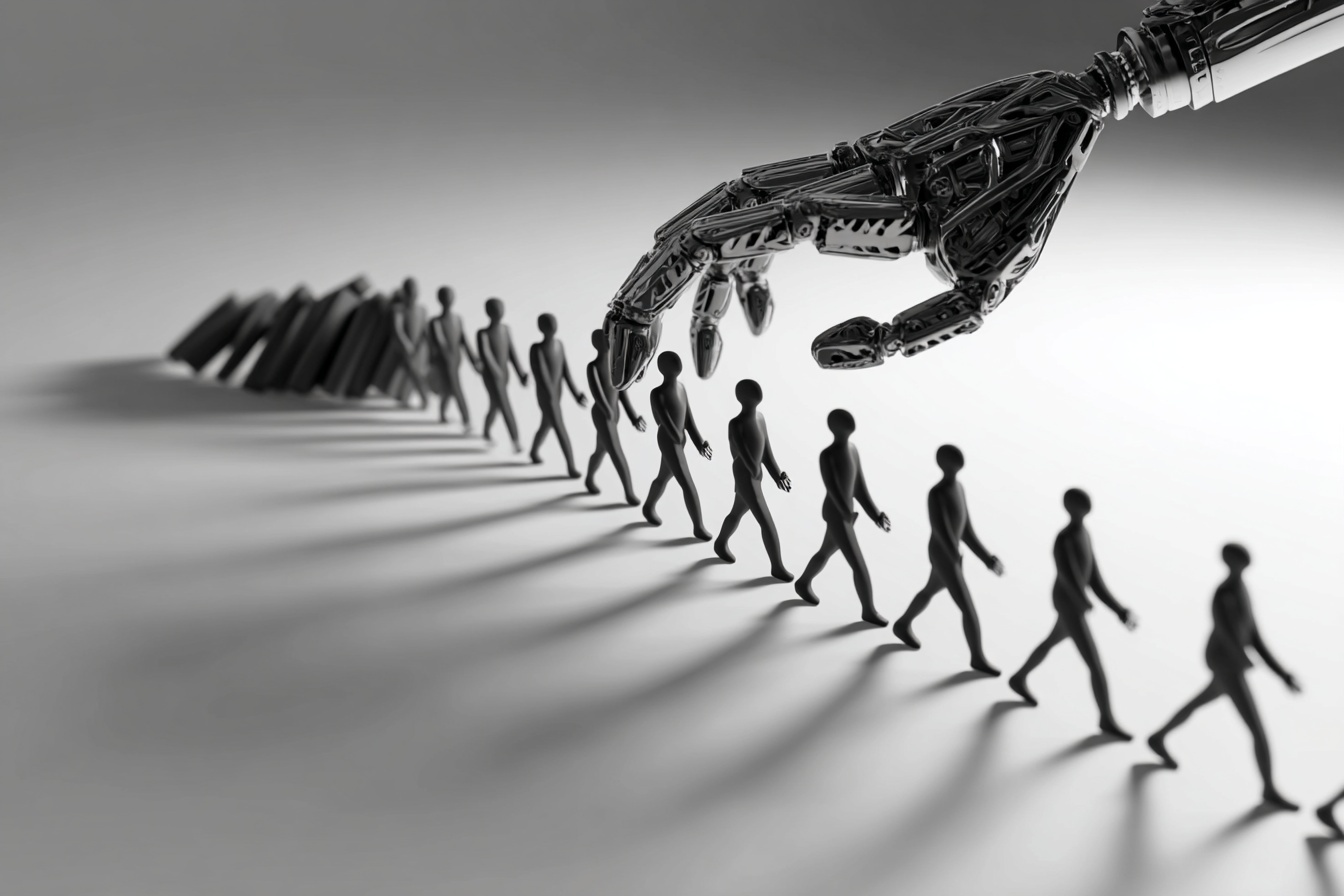
Most people are still asking, “When will the Singularity happen?”—as if it’s a scheduled event on a cosmic calendar. They’re waiting for a singular moment when AI becomes smarter than humans, sparks an intelligence explosion, and everything changes overnight. But what if that’s the wrong framing entirely? What if the Singularity isn’t a single event—but a gradient, a slow-motion revolution we’ve already entered without realizing it? I believe that somewhere between 2022 and 2024, we quietly crossed the threshold. The Singularity didn’t arrive with fireworks—it slipped in unnoticed, woven into our tools, our workflows, and our daily decisions.


Continue reading… “Have We Entered the Singularity? (We’re Already Inside It)”

Quantum Archaeology: Resurrecting the Dead Through Information

By Futurist Thomas Frey

The Most Audacious Idea in Human History
Imagine a world where death is not final—where every human being who has ever lived can one day be restored. Not as ghosts or memories, but as living, thinking, feeling individuals reconstructed through data. This is the vision behind quantum archaeology, a provocative new field that proposes to resurrect the dead using future advances in artificial intelligence, quantum computing, and nanotechnology. It’s not mysticism. It’s information science taken to its ultimate conclusion: if every particle interaction leaves a trace, then—at least in theory—no life is ever truly lost.

Continue reading… “Quantum Archaeology: Resurrecting the Dead Through Information”

The Rise of the One-Person Unicorn: How Solo Founders Will Redefine Billion-Dollar Companies

By Futurist Thomas Frey

For most of modern history, billion-dollar companies were built by armies—teams of engineers, executives, marketers, and investors. But by 2040, a new species of business will dominate the global economy: the one-person unicorn. These are ventures so tightly integrated with AI and automation that a single individual can run what looks—on paper—like a massive organization. These solo founders won’t manage teams; they’ll manage algorithms. They’ll scale without hiring, automate without overhead, and personalize without effort. Their only real competition will be others who think faster, adapt sooner, and train their AIs better.

Continue reading… “The Rise of the One-Person Unicorn: How Solo Founders Will Redefine Billion-Dollar Companies”

The New Royalty: Who Rules in 2040

By Futurist Thomas Frey
A new aristocracy is coalescing in plain sight, and it isn’t wearing crowns—it’s wielding capabilities. Titles, legacy wealth, and celebrity clout still sparkle, but they no longer confer decisive power. By 2040, status flows to those who can direct fleets of autonomous systems, convene global networks on demand, and turn intent into outcomes at machine speed. Ownership mattered in the industrial era. In the agent era, orchestration wins. The highest-return literacy across society is capability amplification—the ability to speak fluently to software that does. Below is the emerging order, ranked not by inheritance, but by how effectively each cohort converts vision into reality.

Continue reading… “The New Royalty: Who Rules in 2040”

The Irreplaceable Human: What AI Can Never Replicate

By Futurist Thomas Frey

For centuries, every wave of automation has promised to free humans from labor. But artificial intelligence doesn’t just threaten to automate work—it challenges our understanding of what it means to be human. AI can already outperform us in memory, pattern recognition, optimization, translation, and reasoning under uncertainty. It learns faster, scales infinitely, and never tires. Yet beneath all that capability lies an unbridgeable chasm—AI’s fundamental lack of consciousness, embodiment, mortality, and meaning. These are not design flaws. They are what separate intelligence from existence.

The next two decades will not be defined by whether AI can replace us, but by how we define what it cannot. We stand at the threshold of a civilization where machines think, but do not feel. Where algorithms can simulate love, empathy, or fear, but never experience them. In a world dominated by synthetic intelligence, the rarest resource will not be more processing power—it will be genuine humanity.

Continue reading… “The Irreplaceable Human: What AI Can Never Replicate”

The Instant Expert Network: When Knowledge Becomes Liquid

By Futurist Thomas Frey

In 2025, accessing expertise still feels like climbing a wall built out of money, geography, and time. Need an expert? You can hire one—expensive, slow, and layered with management overhead. You can try to learn it yourself—time-consuming, full of dead ends. Or you can go without—limiting what’s possible. The global economy runs on the friction of these constraints. Expertise clusters in cities, corporations, and institutions because coordination costs are too high for everyone else. Collaboration is trapped within the boundaries of payrolls and departments. But that barrier doesn’t survive the next decade.

By 2040, expertise is no longer a scarce commodity you have to chase. It’s an instant, liquid resource—available on demand, globally distributed, and orchestrated by AI systems that handle the coordination humans once found impossible.

Continue reading… “The Instant Expert Network: When Knowledge Becomes Liquid”

The First Five Jobs to Vanish: 2025–2040

By Futurist Thomas Frey

The Silent Extinction Event Nobody’s Preparing For

We are on the brink of the fastest occupational extinction in human history. Not a slow decline. Not a gradual transformation. A sharp, irreversible collapse of entire job categories—millions of livelihoods gone within a single generation. The trigger has already been pulled. The automation is deployed. The economics are unforgiving. By 2040, five major professions that once defined the working class will no longer exist—not diminished or reshaped, but fully extinct. Governments know it’s coming. Schools know it’s coming. But preparation? None. What we’re facing isn’t a labor shift—it’s a labor collapse.

Continue reading… “The First Five Jobs to Vanish: 2025–2040”

Growing Number of People Who’ve Never Owned a Car

By Futurist Thomas Frey

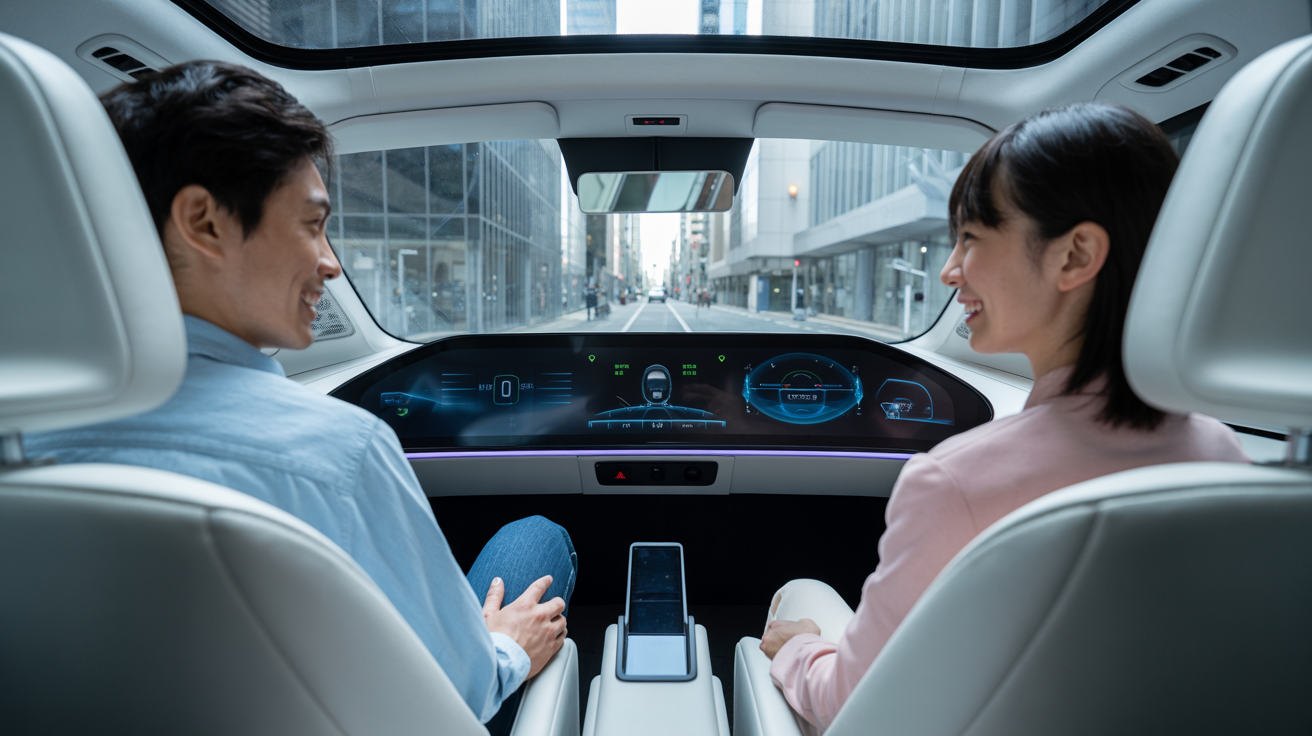
In 2025, a curious pattern began emerging in cities like Seoul, Amsterdam, and San Francisco. About 1–2% of adults under 35 had quietly achieved full independence without ever owning a car—not because they couldn’t afford one, but because they realized car ownership simply didn’t make sense anymore. Between ride-sharing, car-sharing, short-term rentals, and public transit, they discovered they could live comfortably, move freely, and save money without the burdens of maintenance, parking, or insurance.

Economically, their transportation costs were 60–75% lower than owning a personal vehicle. Psychologically, they were freer. They no longer thought about oil changes, parking tickets, or whether they should trade in for a newer model. In the language of economists, car ownership had gone from asset to liability. In the language of culture, it had gone from dream to inconvenience.

By 2040, this small fringe had become the mainstream. In major metropolitan regions, car ownership among adults had fallen to 22%—mostly hobbyists, suburban families, and older drivers nostalgic for the freedom they once associated with the open road.

Continue reading… “Growing Number of People Who’ve Never Owned a Car”

The End of Prescription Eyeglasses

By Futurist Thomas Frey

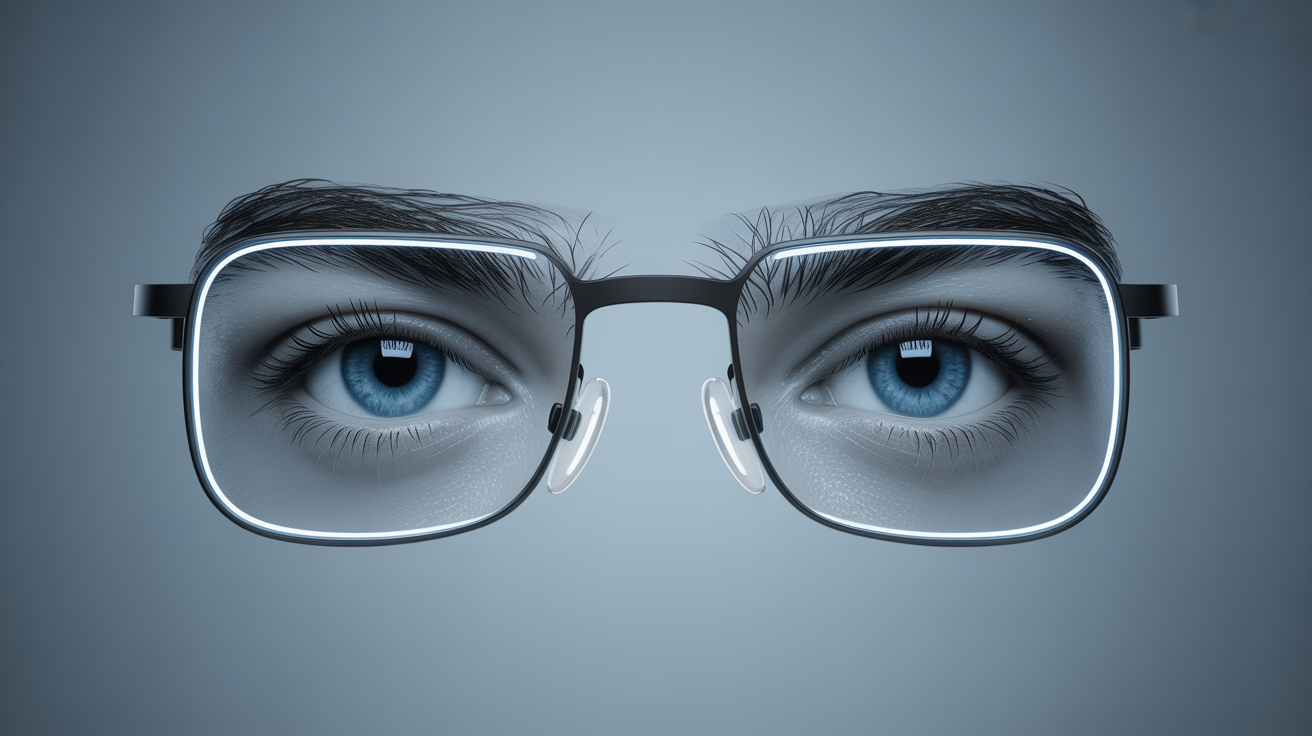
In 2025, a quiet revolution began among the 1%—not the financial elite, but the optical pioneers. Around one percent of people with vision problems stopped wearing prescription glasses. Not because of surgery, not because of LASIK, but because of something entirely new: AI-powered adaptive eyewear. These early adopters wore glasses with electrochromic lenses—microscopic layers that change their optical properties in milliseconds, dynamically adjusting focus based on what the wearer is looking at. Screen text two feet away? Instantly crisp. A road sign a hundred meters down the highway? Instantly refocused. No bifocals. No progressive lenses. No need to swap glasses. The experience was seamless, automatic, and profoundly liberating. Most early adopters described it the same way: “I forgot I even had vision problems.”

By 2040, the technology has matured—and prescription glasses as we once knew them are gone. The optical industry has shifted from static correction to dynamic enhancement. Instead of lenses that passively bend light, we now have adaptive optics—intelligent systems that actively optimize vision in real time.

Continue reading… “The End of Prescription Eyeglasses”

The Restaurant Reservation Collapse

By Futurist Thomas Frey

In 2025, the first hints of a culinary revolution appeared in a few elite dining rooms in New York and Tokyo. About 1% of restaurants—mostly Michelin-starred or concept-driven establishments—quietly abandoned the centuries-old ritual of reservations. Instead, they embraced what became known as “dynamic dining.” Guests no longer booked tables weeks in advance or endured hold music to secure a spot. Instead, they arrived whenever they pleased, and AI systems handled the rest. Predictive algorithms assessed arrival patterns, optimized seating, and projected wait times to the exact minute. Diners could shop, stroll, or grab a cocktail nearby, receiving real-time updates as the system orchestrated the flow of guests like air traffic controllers manage incoming planes. When your table was ready, your phone buzzed. You walked in without friction. The results were staggering—no-shows dropped from 20% to less than 0.3%, table turnover jumped by 35%, and overall satisfaction reached record highs. The earliest adopters realized something profound: the reservation wasn’t a customer service—it was a bottleneck.

By 2040, that insight has rewritten global dining culture. The reservation system, once a symbol of order and prestige, is dead. “Continuous flow dining” is now standard across developed nations.

Continue reading… “The Restaurant Reservation Collapse”

Children Who’ve Never Owned Toys

By Futurist Thomas Frey

In 2025, a small but striking cultural signal emerged from the wealthiest neighborhoods of San Francisco and Singapore: about 1% of families stopped buying toys altogether. Instead, they subscribed to “toy libraries”—services that deliver rotating collections of educational play objects every two weeks, then retrieve them for cleaning, sorting, and redistribution. Parents described the change as liberating. The clutter vanished. The guilt of overconsumption disappeared. Most surprisingly, the kids played more. With each new rotation came novelty, curiosity, and renewed engagement. It was the first hint that permanent ownership—a core feature of 20th-century childhood—might be on its way out.

By 2040, that fringe experiment has become the norm. Only about 12% of households now own toys outright, and those that do are mostly collectors, nostalgists, or families in remote regions beyond logistics networks.

Continue reading… “Children Who’ve Never Owned Toys”

The Death of Job Interviews

By Futurist Thomas Frey

In 2025, less than 1% of companies quietly abandoned one of the most sacred rituals in modern business—the job interview. Instead of forcing candidates to rehearse canned answers and fake confidence, they gave them something radical: real work. Each applicant completed a three-day paid project using the company’s actual tools, collaborating with the real team. The results were astonishing—an 89% success rate in predicting strong hires, compared to the industry’s 56% average for traditional interviews. In those companies, charisma stopped masquerading as competence.

By 2040, this tiny experiment had transformed into a global mandate. Job interviews as we know them are now banned in 23 U.S. states after courts ruled they were inherently biased—favoring confidence over capability, extroversion over execution.

Continue reading… “The Death of Job Interviews”
Discover the Hidden Patterns of Tomorrow with Futurist Thomas Frey
Unlock Your Potential, Ignite Your Success.

By delving into the futuring techniques of Futurist Thomas Frey, you’ll embark on an enlightening journey.

Learn More about this exciting program.