
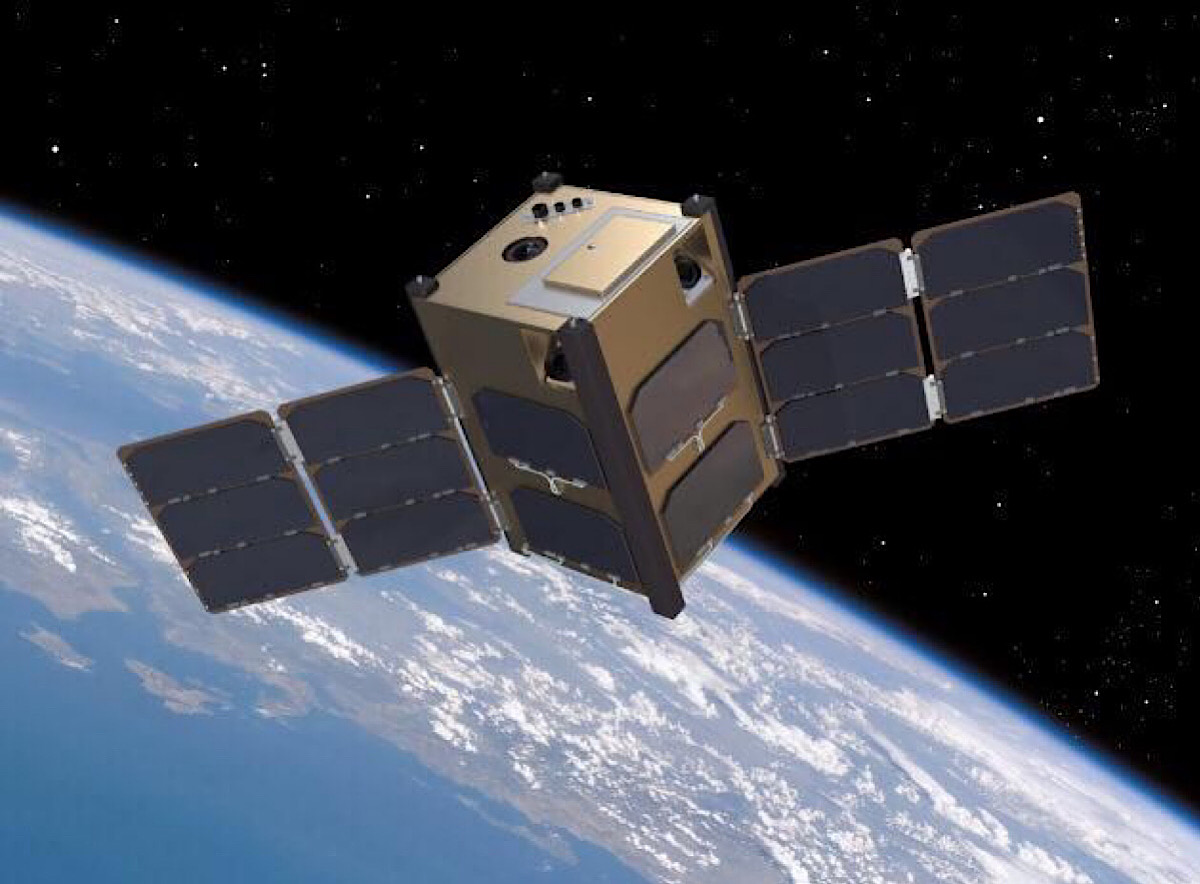
An artist’s conception shows one of NASA’s LLITED satellites in orbit. (Illustration by The Aerospace Corp.)
By Alan Boyle
Seattle-based Spaceflight Inc. says it’s won a contract to handle the launch logistics for a pair of NASA satellites that will study the factors behind atmospheric drag.
The twin CubeSats for a mission known as Low-Latitude Ionosphere / Thermosphere Enhancements in Density, or LLITED, are to be lofted into orbit by a SpaceX Falcon 9 rocket around the end of this year. That launch that will mark the first use of Spaceflight’s Sherpa-LTC orbital transfer vehicle, also known as an OTV or space tug.
In January, a different type of Spaceflight space tug, the Sherpa-FX, successfully deployed more than a dozen spacecraft after a Falcon 9 launch. The Sherpa-LTC represents a step above the FX because it has its own in-orbit propulsion system.
The chemical-based thruster system, built for Spaceflight by Benchmark Space Systems, makes it possible for the Sherpa-LTC to shift between different orbital locations. Spaceflight’s mission plan calls for an initial round of satellite deployments, followed by a maneuver that will set the Sherpa up for deploying the LLITED satellites in a different orbit.
“Spaceflight’s full-service offering with our portfolio of Sherpa OTV vehicles greatly increases the scientific opportunities for NASA, universities, and other organizations that require deployments to non-traditional orbital destinations,” Valerie Skarupa, director of government business development for Spaceflight Inc., said in a news release.
Yet another type of OTV, the Sherpa-LTE, will soon make its debut with an electric propulsion system.
Continue reading… “Atmosphere-monitoring satellites will ride on Spaceflight’s new breed of space tug”


