Rocket Lab Plans to Use a Helicopter to Catch a Rocket Mid-Air as It Returns from Space

by Florina Spînu

Rocket Lab announced plans to make its Electron rocket the first reusable orbital launch vehicle dedicated to small satellites. Towards that goal, a helicopter will monitor the rocket’s descent during the company’s next launch in preparation for future missions that seek to catch returning rocket boosters mid-air as they return to Earth. 7 photos

Rocket Lab’s next mission, dubbed ‘Love At First Insight,’ is set to take off from the company’s Launch Complex 1 in New Zealand during a 14-day launch window that will open on November 11th. This will be Rocket Lab’s fifth mission of this year and the third ocean recovery of an Electron stage. 

But, this time, things will go down differently. The ‘Love At First Insight’mission will carry two Earth-observation satellites for global monitoring company BlackSky to Earth’s low orbit and will serve as a testbed for future aerial capture efforts.

Continue reading… “Rocket Lab Plans to Use a Helicopter to Catch a Rocket Mid-Air as It Returns from Space”
A 3D-printed Rocket is Heading to Space in 2022, May Help Humans in Their Quest to Mars

Once its 3D printing technology is perfected, the startup intends to make it available for the bases and colonies that could one day be established on the planet Mars. (Credits: Relativity Space©, Relativity Space Terran 1 Terran R)

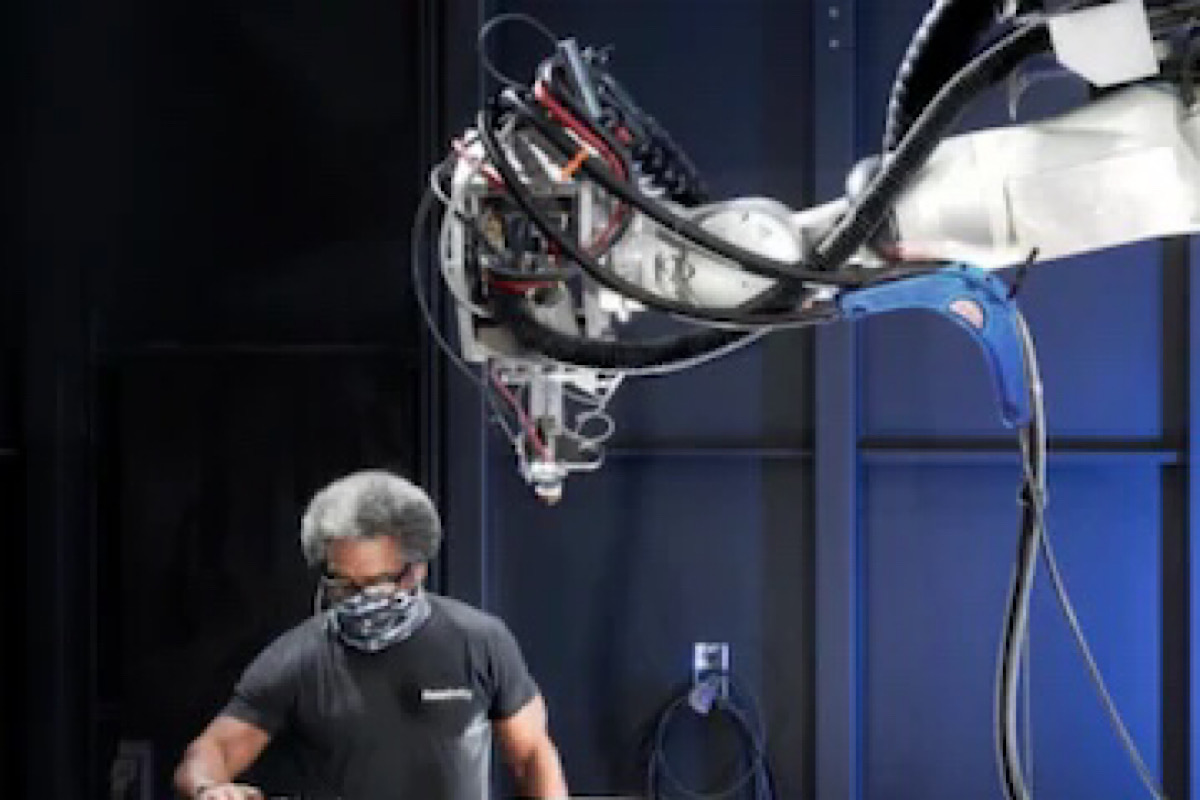
The 3D printing platform can print metal parts up to three meters in diameter and seven meters high. The 3D printer in question is equipped with an impressive robotic arm capable of printing these huge parts in a few days. 

In a major first, American startup Relativity Space is working on two different models of entirely 3D-printed rockets! Currently in the testing phase, Terran 1 is scheduled to be launched into space in early 2022. Relativity Space’s ambition is to set up a fast and autonomous 3D production system that could one day even help humans in their missions on Mars. Faced with tough, established competitors such as SpaceX (a NASA partner) and Blue Origin, Relativity Space plans to set itself apart with its ability to build fully 3D-printed modules. The startup is betting on a radically simplified production chain, capable of building a rocket with 100 times fewer parts than the competition, and in just 60 days.

Continue reading… “A 3D-printed Rocket is Heading to Space in 2022, May Help Humans in Their Quest to Mars”

Space Perspective raises $40 million for stratospheric ballooning system

With its new $40 million Series A round, Space Perspective says it is fully funded through the start of commercial operations of its stratospheric ballooning system, currently projected to be in late 2024.

by Jeff Foust

HUNTSVILLE, Ala. — Space Perspective, a company developing a stratospheric ballooning system intended to give people views like those from space, has raised $40 million to fund the company through the start of commercial operations.

Space Perspective announced Oct. 14 the Series A round, led by Prime Movers Lab, a “deep technology” venture capital fund. Several existing investors joined the round, along with new investors LightShed Ventures, a consumer and media VC fund, and Explorer 1 Fund, a new commercial space VC fund.

“We firmly believe that Space Perspective is the best-positioned company to democratize space tourism,” Anton Brevde, partner at Prime Movers Lab and a member of the board of Space Perspective, said in statement. “It’s clear that there is massive consumer demand to explore this final frontier, and we believe Space Perspective will provide the most accessible way for travelers to experience space.”

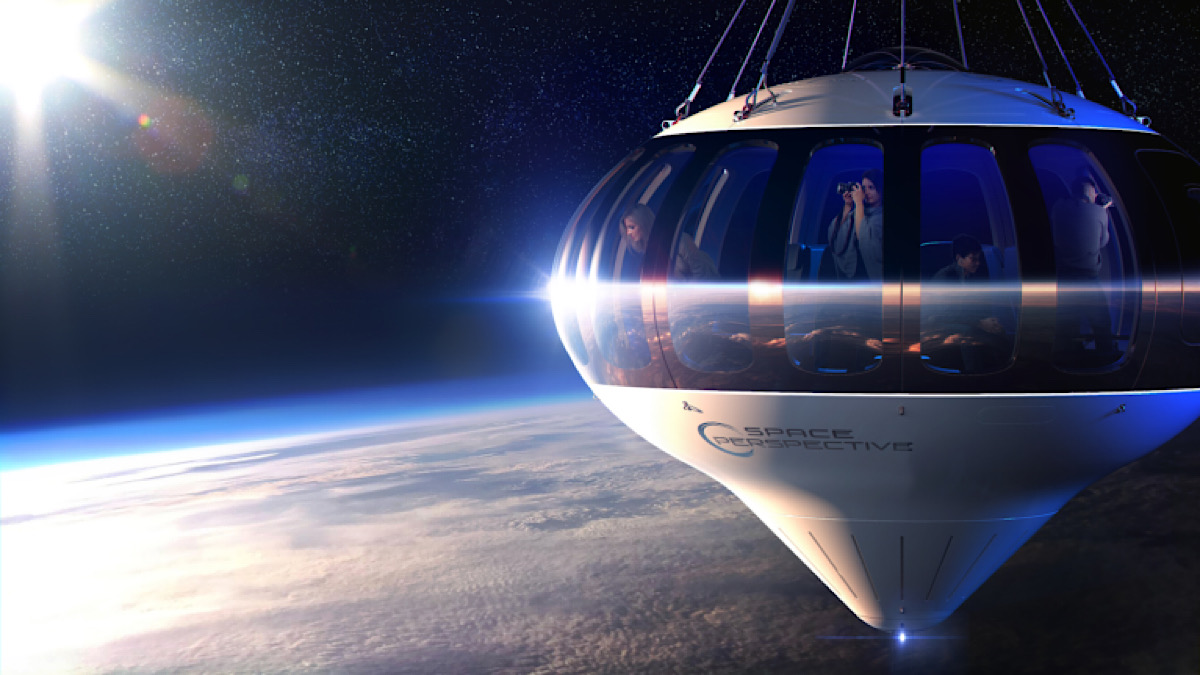
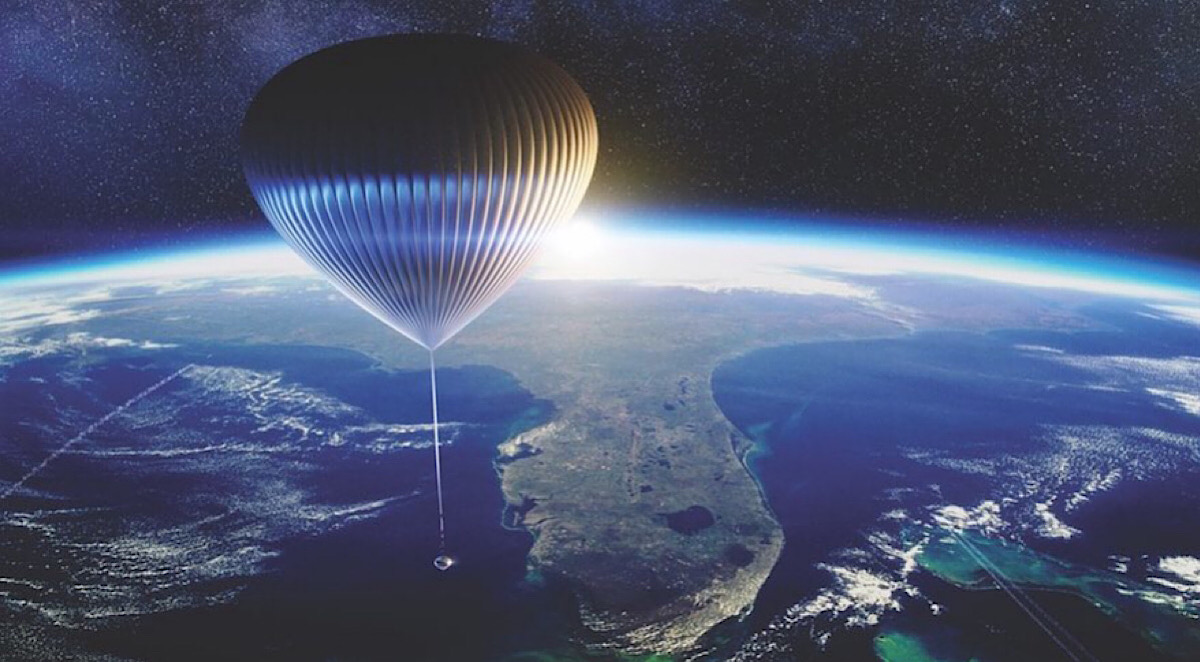
Space Perspective will use the funding to complete development of its Spaceship Neptune stratospheric balloon system, featuring a capsule designed to carry eight passengers and a pilot to an altitude of 30 kilometers. The capsule will spend two hours at that altitude before slowly descending to an ocean splashdown.

Continue reading… “Space Perspective raises $40 million for stratospheric ballooning system”

Graphene in Space: Wonder Material Strengthens New Space Habitat Prototype

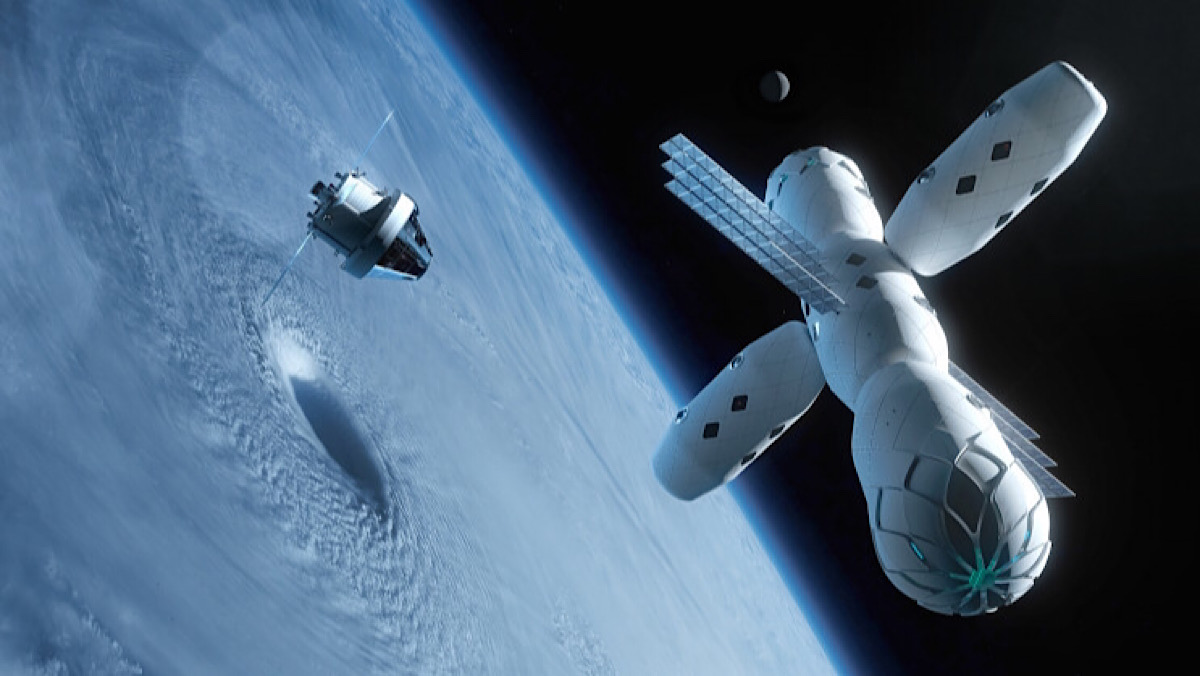
An artist’s impression of the space habitat.

By  Chris Young

The material can protect against micrometeorites and space junk.An artist’s impression of the space habitat.

Since it was first isolated in 2004 at The University of Manchester, graphene has been touted as a wonder material that can massively improve the strength of buildings and machines across the globe. Now, the robust carbon allotrope is set to go to space to strengthen future astronaut habitats.

An international team led by Dr. Vivek Koncherry at The University of Manchester is developing a prototype for the graphene-enhanced space habitat. According to Koncherry, who we reached out to by email, the material will help balance the massively contrasting temperatures to which a space structure is subjected, making it safer for its future inhabitants.

Continue reading… “Graphene in Space: Wonder Material Strengthens New Space Habitat Prototype”

Humans Could Reach Mars In One Month In This 200,000 Kmph Nuclear Rocket

Ad Astra Rocket Company

By Bharat Sharma

Every journey in space is extremely dangerous. Longer journeys have higher scope of mechanical failures and encountering other space hazardsThe pilot step towards minimising risks to human lives is by minimising the travel time and that’s exactly what this company is trying to doCalled “Ad Astra Rocket Company”, this Costra Rica-based rocket maker completed a record 88-hour long test of its Vasimr VX-200SS plasma rocket. Conducted at a facility near Houston in Texas, the test set a world record in terms of high-power endurance in

Planning to move to Mars when it’s feasible? Worry not, a rocket company is currently testing nuclear rockets that will cut down travel time to Mars to just one month. Current rockets take about seven months to reach Mars after covering 480 million kilometres (300 million

miles). 

Continue reading… “Humans Could Reach Mars In One Month In This 200,000 Kmph Nuclear Rocket”

Futuristic Solar Electric Thrusters Makes NASA’s Psyche Spacecraft Go

Futuristic electric thrusters emitting a cool blue glow will guide the Psyche spacecraft through deep space to a metal-rich asteroid.

By JET PROPULSION LABORATORY

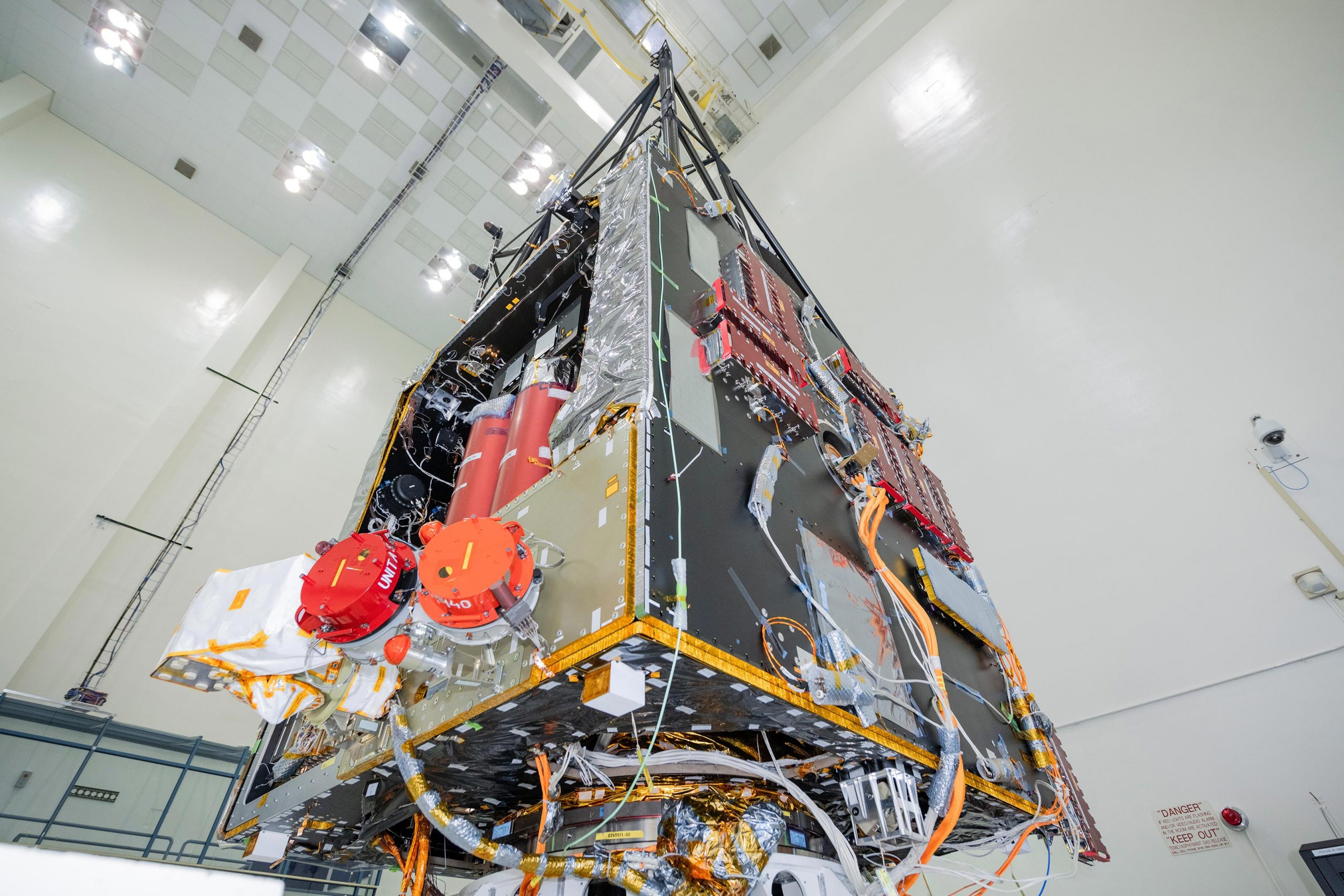
Engineers at NASA’s Jet Propulsion Laboratory work to integrate Hall thrusters into the agency’s Psyche spacecraft in July 2021. One of the thrusters is visible on the side of the spacecraft underneath a red protective cover. Credit: NASA/JPL-Caltech

When it comes time for NASA’s Psyche spacecraft to power itself through deep space, it’ll be more brain than brawn that does the work. Once the stuff of science fiction, the efficient and quiet power of electric propulsion will provide the force that propels the Psyche spacecraft all the way to the main asteroid belt between Mars and Jupiter. The orbiter’s target: a metal-rich asteroid also called Psyche.

The spacecraft will launch in August 2022 and travel about 1.5 billion miles (2.4 billion kilometers) over three and a half years to get to the asteroid, which scientists believe may be part of the core of a planetesimal, the building block of an early rocky planet. Once in orbit, the mission team will use the payload of science instruments to investigate what this unique target can reveal about the formation of rocky planets like Earth.

Continue reading… “Futuristic Solar Electric Thrusters Makes NASA’s Psyche Spacecraft Go”

NASA will pay $400m to private companies planning to build their own space stations as they prepare to retire the aging ISS by the end of the decade

By CHRIS CIACCIA

  • NASA is looking to private companies for a replacement to the International Space Station and hopes to award $400 million in contracts 
  • Phil McAlister, NASA’s commercial-spaceflight director, said the agency has received ‘roughly a dozen proposals’ to replace the ISS
  • Axiom Space is already constructing ‘the world’s first private space station’

As NASA gets set to retire the International Space Station by the end of the decade, the U.S. space agency is looking to private companies for a replacement and hopes to award $400 million in contracts to do so.

Phil McAlister, NASA’s commercial-spaceflight director, told CNBC that the agency has received ‘roughly a dozen proposals’ to replace the ISS, which launched into orbit in November 1998.

‘We got an incredibly strong response from industry to our announcement for proposals for commercial, free fliers that go directly to orbit,’ McAlister told the news outlet.Dailymail.co.uk: News, Sport, Showbiz, Celebrities from Daily MailPauseNext video0:33 / 2:10SettingsFull-screenRead More

‘I can’t remember the last time we got that many proposals [in response] to a [human spaceflight] contract announcement.’

Continue reading… “NASA will pay $400m to private companies planning to build their own space stations as they prepare to retire the aging ISS by the end of the decade”

SPACE MACHINES TO DEPLOY FLEET SPACE NANOSATELLITES

Australian in-space transportation provider, Space Machines Company (SMC) has announced two deals, linking with an Italian satellite services provider and committing to deploy Fleet Space nanosatellites in orbit next year.

Space Machines linked up with Italian satellite services provider Leaf Space to support its Optimus-1 satellite launch timed for next year.

Optimus-1, the largest commercial satellite under construction in Australia, is an orbital transfer vehicle providing cost-effective insertion of small satellites into low Earth orbit.

Today Space Machines confirmed a memorandum of understanding (MoU) to test the deployment of nanosatellites from Fleet Space Technologies, the Adelaide nanosatellite manufacturer for the Internet of Things (IoT). 

The first mission will analyse the suitability of Optimus to deliver Fleet’s satellites into orbit. 

Continue reading… “SPACE MACHINES TO DEPLOY FLEET SPACE NANOSATELLITES”

This Luxury Space Balloon Lets You Glide 100,000 Feet Above the Earth With a Cocktail in Hand

By Michael Verdon

“If you’re looking for the fury and vibration of a rocket, you’ve come to the wrong place,” says Jane Poynter, cofounder of Space Perspective. “Our Spaceship Neptune offers a gentle ride into space that lets clients absorb the astronaut experience.” 

The football-field-sized space balloon carrying the bulbous cabin into the sky at 12 mph (picture the pace of a leisurely bike ride) is in market contrast to the thunderous Flash Gordon blastoffs of Virgin Galactic and Blue Origin. Spaceship Neptune’s swanky, pressurized lounge is a panopticon of windows and includes a bar and bathroom. There’s even Wi-Fi. Instead of g forces gluing fliers to their seats, eight passengers and one pilot will sit in recliners, chatting and sipping cocktails as they gradually zoom out on Kennedy Space Center—Spaceship Neptune’s home port—until it becomes the Florida peninsula, then the East Coast and, eventually, a grand view of Earth itself. 

“Some people would love to go pre-dawn,” says Poynter, “so you can really experience the extraordinary sky and see the iconic blue line that separates the Earth below and space. There’s almost a crazy rainbow effect.”

Continue reading… “This Luxury Space Balloon Lets You Glide 100,000 Feet Above the Earth With a Cocktail in Hand”

US-based Space Travel Company Space Perspective Raises US$ 7M

By Komal Pattanayak

Florida, US-based company Space Perspective, a space travel company that was established so that humans would explore space for the betterment of all, raised US$ 7 million in seed financing on 3rdDecember 2020.

The financing round was led by Prime Movers Lab and Base Ventures who is a leading Silicon Valley tech fund. Other participants in the round include world-renowned entrepreneur, author and business strategist Tony Robbins and venture capital firms Kirenaga Partners’ Central Florida Tech Fund, 1517 Fund, Schox, E2MC Ventures and SpaceFund Venture Capital. Anton Brevde of Prime Movers and Kirby Harris of Base Ventures will join the Space Perspective Board of Directors.

The funds raised will be used for the development and early flights of Spaceship Neptune, a space balloon capable of carrying passengers to the edge of space. The infusion of capital advances the human space flight company another step closer to fundamentally changing the way people have access to space for research and tourism.

Continue reading… “US-based Space Travel Company Space Perspective Raises US$ 7M”

University of Zurich and Airbus grow miniature human tissue on the International Space Station ISS

Kennedy Space Center, Florida, 26 August 2021 – With the next supply flight to the International Space Station (ISS), the Space Hub of the University of Zurich (UZH) and Airbus Defence and Space are bringing an experiment into space, which is intended to further advance the industrial production of human tissue in zero-gravity conditions. With this step, space could become a workshop for producing miniature human tissue for terrestrial use in research and medicine. Initial preparatory tests on the ISS 18 months ago were successful.

The process for the joint “3D Organoids in Space” project comes from Zurich scientists Oliver Ullrich and Cora Thiel, pioneers in research on how gravity influences human cells. Together with Airbus, they have developed the process to project maturity. The Airbus Innovations team led by project manager Julian Raatschen is developing the hardware and providing access to the ISS. From the idea to the first production test in space it took the project partners only three years to complete various test phases and highly competitive internal selection procedures. “We are the first to show that the path to production in space is feasible, not in theory, but in practice,” says Oliver Ullrich.

Continue reading… “University of Zurich and Airbus grow miniature human tissue on the International Space Station ISS”

Silicon Valley’s most successful incubator is doubling down on space tugs

TransAstra CEO Joel Sercel with a prototype of a solar thermal engine.

By Tim Fernholz

TransAstra was founded in 2015 with the goal of mining asteroids. Yet harvesting resources out in the solar system, for all its appeal, is still far from feasible. Moving orbiting spacecraft around Earth? That is a service companies are willing to pay for, right now.

The trick of space business might be developing a lucrative path to a far-off vision. Elon Musk may want to retire on Mars and SpaceX may enable him to do so, but what’s significant about the firm is that it earns money providing space services in demand right now.

TransAstra founder and CEO Joel Sercel will, in theory, perform a similar sleight of hand: When its first spacecraft, dubbed Worker Bee, reaches orbit in 2023, it will show off a novel thruster technology called solar thermal propulsion, and earn money by precisely positioning satellites launched on larger rockets. And if that succeeds, it will launch a fleet of solar-powered spacecraft into orbit—and perhaps realize a larger vision of harvesting commodities from asteroids.

Continue reading… “Silicon Valley’s most successful incubator is doubling down on space tugs”
Discover the Hidden Patterns of Tomorrow with Futurist Thomas Frey
Unlock Your Potential, Ignite Your Success.

By delving into the futuring techniques of Futurist Thomas Frey, you’ll embark on an enlightening journey.

Learn More about this exciting program.