
The Awakening Series: Final Thoughts—The Awakening and What Comes Next

By Futurist Thomas Frey

Seventeen columns. Seventeen sectors. One unmistakable pattern.

From graft and corruption to healthcare, education, financial services, insurance, defense contracting, supply chains, utilities, real estate, media, pharmaceuticals, nonprofits, taxation, homelessness, criminal justice, and student loans—we documented how systems designed to serve the public evolved to serve themselves. How complexity became camouflage. How information asymmetry became a business model. How extraction disguised itself as service.

AI is ending this era. Not through revolution but through persistent illumination—making visible what was always present but impossible to quantify at scale. And once these patterns become undeniable, the systems built on opacity become indefensible.

But revelation alone doesn’t create change. It creates possibility. What determines whether The Awakening becomes genuine transformation or merely more sophisticated extraction is what we do next.

Continue reading… “The Awakening Series: Final Thoughts—The Awakening and What Comes Next”
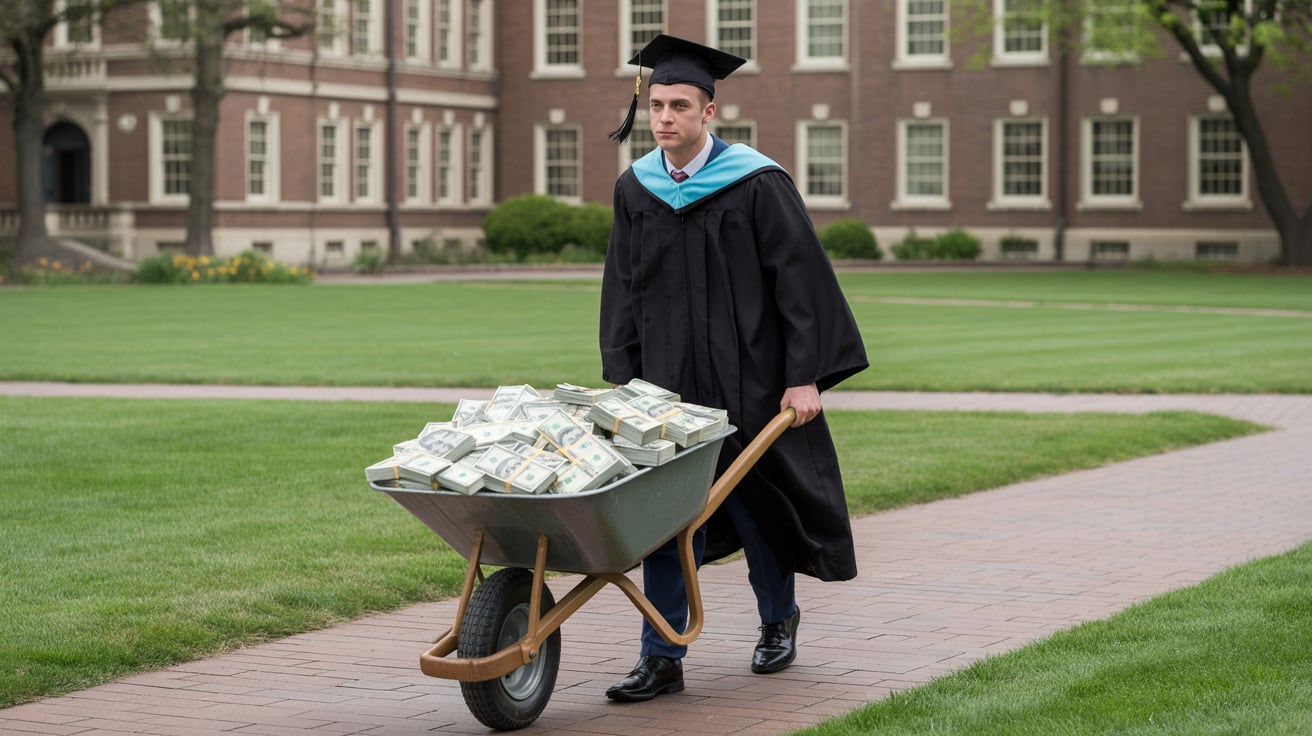
The Awakening Series Part 17: Student Loans—The Debt Trap Design

By Futurist Thomas Frey

Americans owe approximately $1.7 trillion in student loan debt—more than credit card debt, more than auto loans, second only to mortgages. Over 43 million borrowers carry an average debt of $37,000. Many have been paying for 10, 15, 20+ years and still owe more than they originally borrowed. Some will die with student debt still outstanding.

AI analysis of student loan origination, servicing, repayment, and outcomes is revealing something deeply troubling: a system deliberately designed to be confusing, to maximize fees and interest payments, and to keep borrowers in debt as long as possible. Where loan servicers profit from keeping people in default. Where schools raise tuition knowing students can borrow unlimited amounts. Where forgiveness programs reject 99% of applicants through technicalities. Where income-driven repayment plans are nearly impossible to navigate correctly.

The awakening in student loans isn’t about whether education has value—it obviously does. It’s about revealing that the student loan system has evolved into a debt trap that extracts wealth from borrowers while enriching servicers, schools, and investors, with minimal accountability for educational outcomes or employment prospects that would justify the debt burden.

Continue reading… “The Awakening Series Part 17: Student Loans—The Debt Trap Design”

Financial hits pile up for colleges as some fight to survive

6495A631-6ED6-4A4A-B73D-9A2D3580FEDC

Colleges across the nation are scrambling to close deep budget holes and some have been pushed to the brink of collapse after the coronavirus outbreak triggered financial losses that could total more than $100 million at some institutions.

Scores of colleges say they’re taking heavy hits as they refund money to students for housing, dining and parking after campuses closed last month. Many schools are losing millions more in ticket sales after athletic seasons were cut short, and some say huge shares of their reserves have been wiped out amid wild swings in the stock market.

Yet college leaders say that’s only the start of their troubles: Even if campuses reopen this fall, many worry large numbers of students won’t return. There’s widespread fear that an economic downturn will leave many Americans unable to afford tuition, and universities are forecasting steep drop-offs among international students who may think twice about studying abroad so soon after a pandemic.

Continue reading… “Financial hits pile up for colleges as some fight to survive”

How An Unlimited Supply Of Borrowed Cash Is Destroying Higher Education

92A2EDF7-FF29-48A9-9107-5BE2009A285E

Both of us grew up poor. College was our way out of poverty. Now, we see too many young people locked into poverty by a college education.

“You have to go to college” was an article of faith when we were growing up in poor families. Now we wonder if our ticket out of poverty still has the same value. Far too many of this generation are leaving college with substantial debt and few meaningful job opportunities.

Put a little differently, what is the value of a bachelor’s degree in women’s studies or sociology or any other fields that are not science, technology, engineering, mathematics, or business? Ask some of the young people working at your local coffee shop or favorite restaurant. They will probably tell you, “not much.”

Continue reading… “How An Unlimited Supply Of Borrowed Cash Is Destroying Higher Education”

Here’s how higher education dies

CHINA-EDUCATION-POLITICS

A futurist says the industry may have nowhere to go but down. What does the slide look like?

Maybe higher education has reached its peak. Not the Harvards and Yales of the world, but the institutions that make up the rest of the industry—the regional public schools who saw decades of growth and are now facing major budget cuts and the smaller, less-selective private colleges that have exorbitant sticker prices while the number of students enrolling in them declines.

Continue reading… “Here’s how higher education dies”

This generation has a huge and growing student debt burden. It’s not who you think

IMG_6700

A recent analysis of American debt revealed a startling shift: Borrowers between the ages of 45 and 74 now owe more money in education-related debt, on average, than do younger college graduates.

People under age 35 with student debt owe $32,900 on average, according to data from the Fed’s 2016 Survey of Consumer Finances. That debt number is higher for every other 10-year age bracket up to age 75: It peaks at $37,000 for 45- to 54-year-olds, but even 65- to 74-year-old borrowers owe an average $35,400.

Continue reading… “This generation has a huge and growing student debt burden. It’s not who you think”

Why college tuition really costs so much

7658219802_47c3c12d9d_z

It used to be that baby boomers paid for college with the money they made from their summer jobs, but then, over the course of the next few decades, public funding for higher education was slashed.  Forcing the millennial generation to take on crushing educational debt loads, because these radical cuts forced universities to raise tuition year after year.   Continue reading… “Why college tuition really costs so much”

The number-one state with the highest public-college tuition is…

Where do students have it worst?

Student debt is a national problem that affects all 50 states (51, if you count D.C.). The amount and frequency with which undergraduates borrow varies vastly from state to state, some of which are far better at providing an affordable education than others.


Continue reading… “The number-one state with the highest public-college tuition is…”

It all comes down to money when picking a college and major

Nearly half of adults are limiting their child’s college choices based on price.

Families are cost-cutting before their kids even apply to schools because of the financial burden of paying for college. According to a new survey by Discover Student Loans, And it’s affecting students’ decisions about not only where to go, but what to study.


Continue reading… “It all comes down to money when picking a college and major”

Discover the Hidden Patterns of Tomorrow with Futurist Thomas Frey
Unlock Your Potential, Ignite Your Success.

By delving into the futuring techniques of Futurist Thomas Frey, you’ll embark on an enlightening journey.

Learn More about this exciting program.