The strongest teams might be temporary

The best teams might be temporary, but their company’s success is enduring.

We often think of high-performance teans as long-term allies—a band of brothers in the organizational world. It takes a while for teams to move through the traditional phases of storming and norming before they start to really perform. It’s easy to assume that the longer a team is together, the better they’ll be at performing. But research into the inner workings of teams, particularly creative teams, suggests a different conclusion, one supported by experience from many of the most innovative companies: The best teams might temporary, with members forming around a given project and then going their separate ways to work on new projects.


Continue reading… “The strongest teams might be temporary”

Study finds great fathers have smaller testicles

Study finds evolutionary trade-off between mating prowess and parenting involvement.

Fathers who are more involved in child care have smaller testes, and their brains are also more responsive when looking at photos of their own children, according to research published online today in the Proceedings of the National Academy of Sciences1.


Continue reading… “Study finds great fathers have smaller testicles”

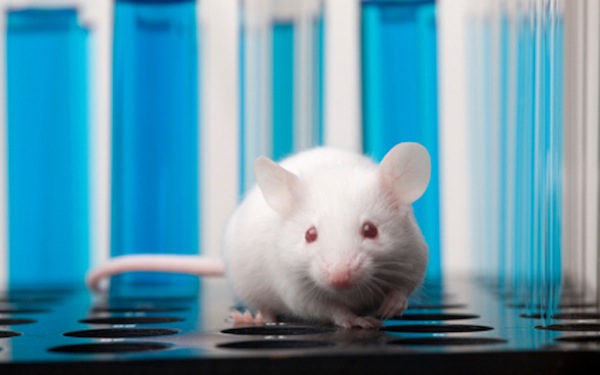
New drug cures mice of Down Syndrome in a single dose

With one dose, the brains of the mice grew normally and those mice showed learning abilities like that of their un-affected peers.

There has been good news in medicine recently. Not only is there a vaccine to prevent HIV/AIDS in the works, but scientists at John Hopkins University and the National Institutes of Health have also recently used a new drug to cure Down Syndrome in baby mice with just one dose. And although the drug has not yet been tested on humans, it still qualifies as an amazing achievement.


Continue reading… “New drug cures mice of Down Syndrome in a single dose”

Fewer young people getting their driver’s licenses: Study

Young people are not in the traditional rush to get their driver’s license.

A new study by Michael Sivak and Brandon Schoettle of the University of Michigan’s Transportation Research Institute confirms that year after year, fewer 16 to 24 year-olds are getting driver’s licenses.


Continue reading… “Fewer young people getting their driver’s licenses: Study”

E-cigarette use doubles among middle and high school students

More than 1.78 million middle and high school students nationwide had tried e-cigarettes in 2012.

Electronic cigarettes use among middle and high school students has been rising rapidly, a trend that public health officials worry could undermine decades of efforts to reduce youth smoking and put a growing number of teenagers on a path toward conventional cigarettes.


Continue reading… “E-cigarette use doubles among middle and high school students”

Change to a single gene increases mouse lifespan 20%

Scientists also discovered individual organ and body parts reacted differently to the process in the engineered mice.

Most Americans aren’t entirely fond of the idea of immortality as shown by recent studies. But it’s probably a good bet that they still wouldn’t mind extending their lifespans by 10-15 years. If researchers at the National Heart, Lung and Blood Institute (NHLBI) have their way, that wish could become a reality. These scientists have successfully extended the lives of mice by changing a single gene.


Continue reading… “Change to a single gene increases mouse lifespan 20%”

20% of scientists considering leaving the U.S.

Federal research funding is down.

The U.S. arguably needs its scientists more than ever, but federal research funding is way down. According to data collected by a coalition of top scientific and medical research groups, the majority are spending more time writing grants for less payoff than just three years ago. Nearly 20 percent report they’re considering more supportive climes overseas. From The Huffington Post:


Continue reading… “20% of scientists considering leaving the U.S.”

There is more depression among clergy than the general population: Study

Clergy members are at a higher risk of depression.

Using phone surveys and written questionnaires, researchers from the Clergy Health Initiative at Duke Divinity School decided to look into the mental health of members of the clergy.  They interviewed over 1,700 United Methodist pastors, and found that depression is about 1.6 times higher in that group compared to the general population (8.7% versus 5.5%).


Continue reading… “There is more depression among clergy than the general population: Study”

56% of Americans not interested in immortality: Study

Scene from “Elysium”

In Elysium, a recently released sci-fi film, we’re presented with a new kind of machine-assisted healthcare that can cure cancer and reconstruct body parts. It’s a development that could make many humans virtually immortal. But as medical science and technology converge, we’re increasingly finding ourselves asking the question as a species: Do we really want to be immortal?


Continue reading… “56% of Americans not interested in immortality: Study”

20% of adults in the U.S. don’t use the internet

Around 20% of American adults who do not use the Internet at home, work and school, or by mobile device.

There has been a $7 billion effort by the Obama administration to increase internet access throughout the country. Perhaps most staggering, though, is that almost 20 percent of American adults still don’t use the internet at home, work, school, or through a mobile device — a statistic that has generally remained the same since 2009.


Continue reading… “20% of adults in the U.S. don’t use the internet”

Discover the Hidden Patterns of Tomorrow with Futurist Thomas Frey
Unlock Your Potential, Ignite Your Success.

By delving into the futuring techniques of Futurist Thomas Frey, you’ll embark on an enlightening journey.

Learn More about this exciting program.