
A new breakthrough in energy storage technology could transform how we power transportation systems that are hard to decarbonize. Researchers have developed a sodium metal fuel cell capable of delivering three times the energy densityof conventional lithium-ion batteries—offering a safer, faster-refueling, and more sustainable alternative for powering aircraft, trains, and ships.
While metals like lithium and sodium have long been recognized for their high energy potential, their use in practical energy systems has been hindered by the limitations of traditional battery designs. Metal-air batteries, although promising in theory, have struggled with reliability and rechargeability. Now, researchers are sidestepping those challenges by adapting the electrochemical principles of metal-air reactions into a refuelable fuel cell system.
This novel fuel cell uses liquid sodium—a lightweight, abundant, and low-cost material—as its primary fuel. It operates by drawing in oxygen from ordinary air on one side, while sodium metal flows on the other. These two are separated by a solid ceramic electrolyte, allowing sodium ions to move through while preventing direct contact.
A porous air electrode facilitates the reaction between sodium and oxygen, generating electricity. Because it functions as a fuel cell, the system doesn’t need to be recharged like a battery. Instead, it can be quickly refueled, allowing for extended operation and rapid energy replenishment, especially important in transportation applications.
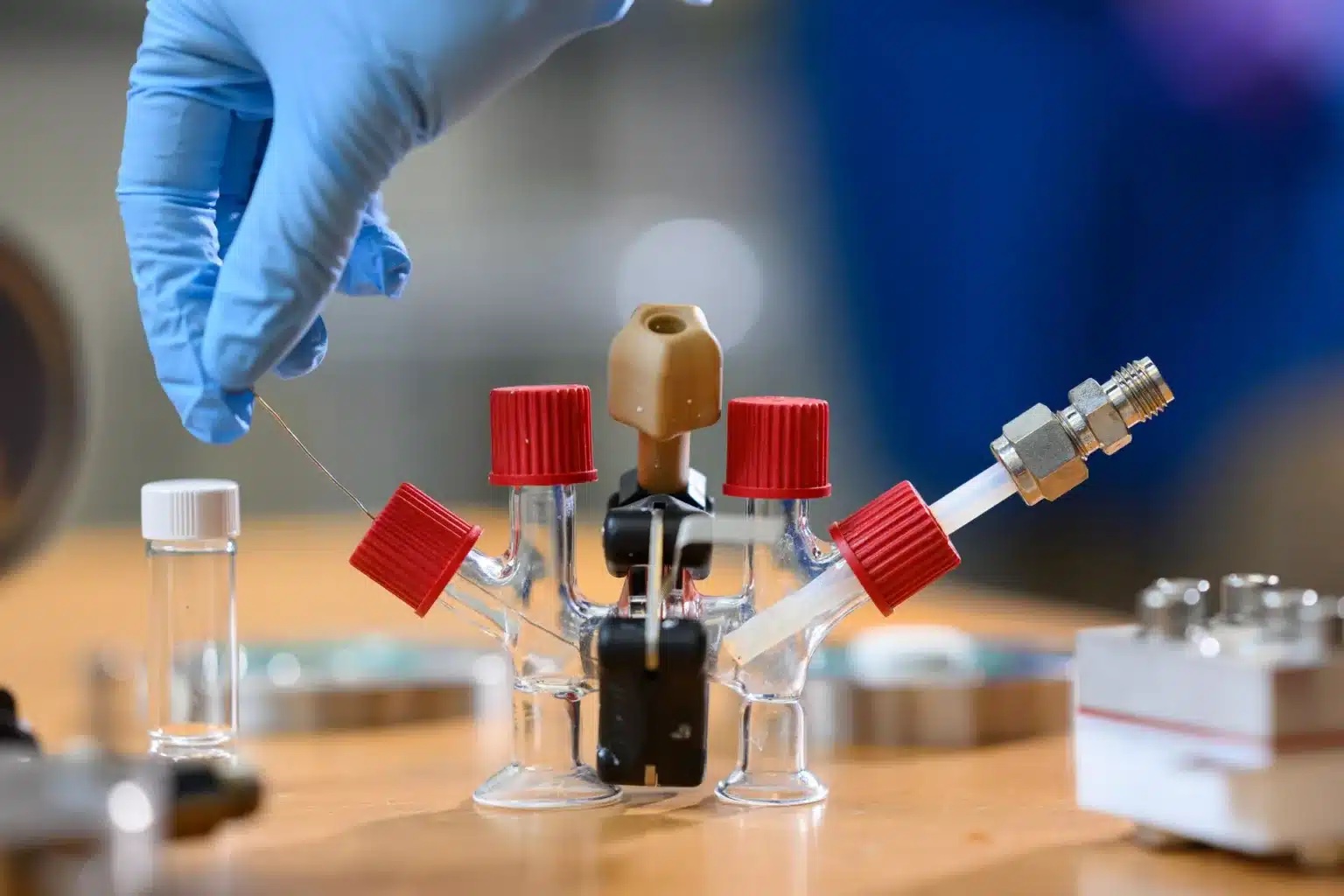
Two working prototype designs have been developed:
- The vertical H-cell, featuring two upright glass tubes and a central ceramic electrolyte.
- A horizontal tray-based system, where sodium and air interact across a flat surface.
Both prototypes demonstrated impressive performance in lab tests. The system generated over 1,500 watt-hours per kilogram in controlled conditions and maintained more than 1,000 watt-hours per kilogram in full-scale simulations. These figures significantly exceed the energy density of current lithium-ion batteries used in electric vehicles.
The fuel cell’s only byproduct is sodium oxide, which doesn’t emit carbon dioxide. Instead, it captures CO₂ from the air, converting it into sodium carbonate and baking soda, both stable solid compounds. If these end up in oceans, they could even help reduce ocean acidification, offering a rare example of a propulsion technology that mitigates environmental impact rather than adding to it.
Safety is another advantage. Unlike high-density batteries that carry the risk of thermal runaway if damaged, this system uses air as one of its reactants, which lowers the chance of explosive reactions. While sodium metal is highly reactive, the fuel cell’s design keeps it well-contained and controlled.
To move the innovation from lab to market, the researchers have launched a startup called Propel Aero, aimed at developing scalable versions of the fuel cell. A brick-sized unit, capable of storing 1,000 watt-hours—enough to power a large drone—is expected to be demonstrated within a year.
Manufacturing sodium at the scale needed for these applications is seen as feasible. Historically, sodium was produced in large quantities for use in leaded gasoline, with U.S. production once reaching 200,000 tons per year.
One key finding during development was the role of humidity. When humid air was used in the system, the byproducts were released in liquid form rather than as solids, improving system efficiency and making waste removal easier—another practical advantage for real-world use.
This research draws on decades of progress in fuel cells, sodium-air batteries, and high-temperature battery science, combining insights from all three fields into a practical, high-performing system. As battery technology approaches its physical and chemical limits, sodium metal fuel cells may offer a crucial solution for electrifying sectors like aviation and shipping—areas where range, weight, and refueling speed are critical.
If successful, this innovation could play a central role in decarbonizing global transportation, while offering safer, cleaner, and more efficient energy systems for the future.
By Impact Lab
