
By Futurist Thomas Frey
When Bold Predictions Meet Stubborn Reality
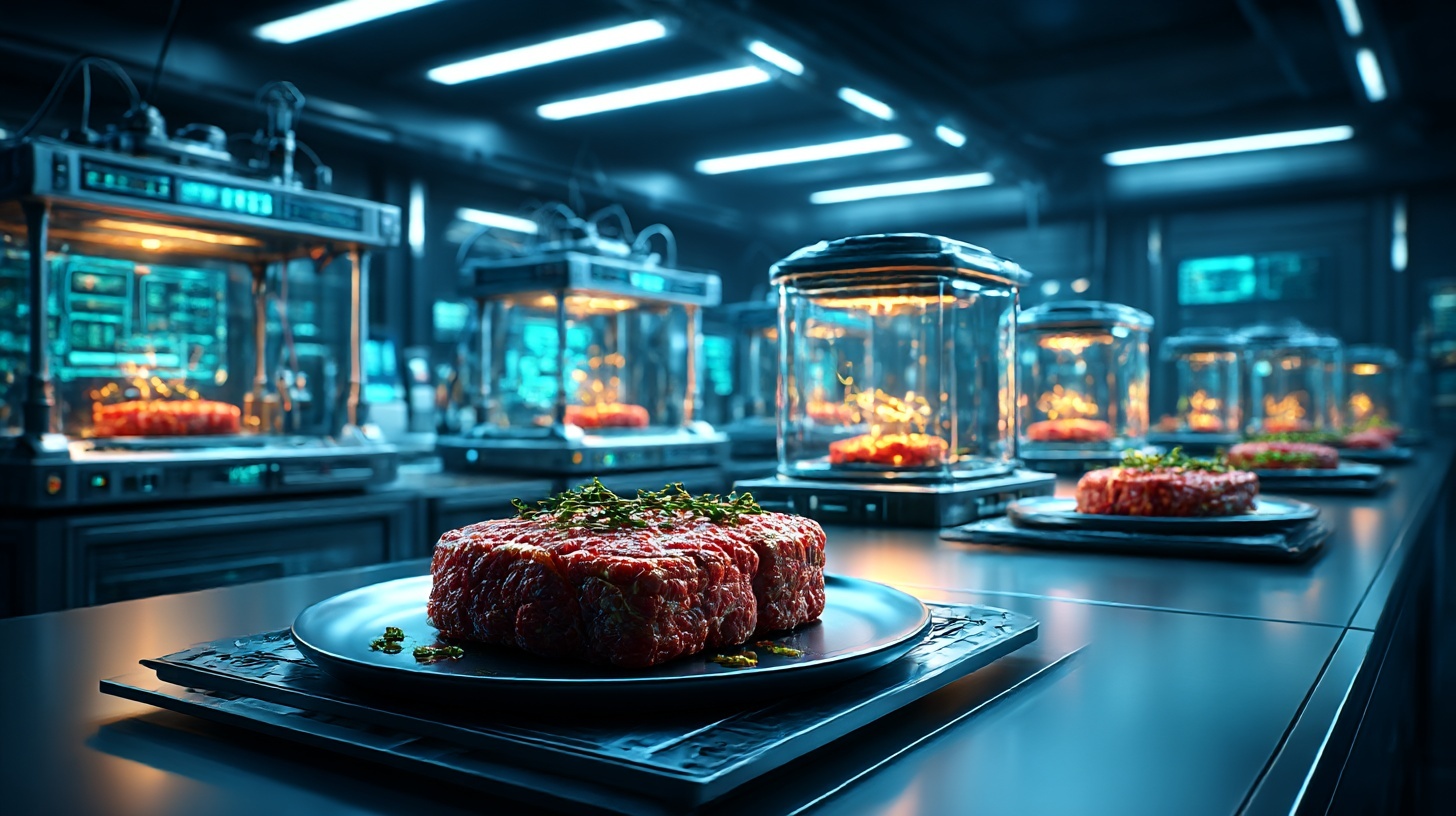
In 2017, I predicted cultured meat would transform the food industry by 2020-2030, with grocery stores stocking lab-grown beef, traditional ranchers going out of business, and exotic meats from extinct species becoming specialty products. I envisioned thousands of home cultivation farms, designer materials from celebrity cells, and cultured meat becoming the world’s cheapest food by 2025.
Eight years later, none of that happened. Lab-grown meat isn’t in your grocery store. It’s barely in any stores anywhere. The revolution I confidently predicted hasn’t materialized, and it’s worth examining why my optimism crashed into reality’s stubborn barriers.
But here’s the twist: while cultured meat failed to launch, the broader concept of lab-grown materials—what I later called “Our Lab-Grown Future”—is actually progressing in unexpected directions. Lab-grown wood, milk proteins through fermentation, diamonds, and medical materials are advancing while cultured meat stumbles. Understanding why some cellular agriculture succeeds while meat specifically fails reveals important lessons about predicting disruptive technologies.
What I Got Catastrophically Wrong About Meat
Prediction: Cultured meats in grocery stores by 2020 Reality: In 2025, only Singapore and the US have regulatory approval, with extremely limited availability in high-end restaurants. No major grocery chain stocks it.
Prediction: Industrial grown meats become world’s cheapest food by 2025 Reality: Cultured meat remains far more expensive than conventional meat. The cost reductions I assumed would be exponential have been incremental at best.
Prediction: By 2030, over 10% of ranchers out of business Reality: We’re halfway there and cultured meat hasn’t made a dent. Plant-based alternatives like Beyond and Impossible have had more impact, and even those haven’t caused significant displacement.
Prediction: Thousands of “grow your own” cultured meat farms Reality: The technology requires sophisticated bioreactors, sterile environments, and expensive growth media. Home cultivation is nowhere near feasible and probably never will be.
Prediction: Exotic meats from pandas, extinct species, human cells, celebrity cell materials Reality: The industry can barely make chicken nuggets economically viable. All the wild speculation about exotic applications was pure fantasy built on misunderstanding the actual challenges.
The Barriers I Completely Underestimated
Engineering Hell: Growing meat in bioreactors at scale requires solving problems that remain unsolved after eight years of intensive effort. The growth media (nutrient bath cells grow in) is expensive and difficult to produce at scale. Achieving the texture and structure of real meat—how muscle fibers align, how fat marbles through tissue—is extraordinarily difficult. You can grow protein blobs, but making them taste and feel like steak is another matter entirely.
The Texture Problem: This deserves special emphasis because I completely missed it. Meat isn’t just protein—it’s organized protein with specific structures. Muscle fibers run in directions. Fat distributes in patterns. Connective tissue provides texture. Growing cells in vats produces uniform protein mush, not the complex architecture that makes meat satisfying to eat. Solving this requires scaffolding, mechanical stimulation, or other techniques that add cost and complexity.
Regulatory Glaciers: Getting novel foods approved takes years of safety testing and review. Each jurisdiction requires separate approval. Singapore moved fast because they’re innovation-friendly and small. US approval took years. Europe remains skeptical. The regulatory timeline alone makes rapid adoption impossible.
Consumer Psychology Is Brutal: Calling it “lab-grown meat” triggers “frankenfood” reactions I underestimated. Rebranding to “cultivated meat” or “cell-based meat” doesn’t help much. Many consumers remain squeamish about eating meat grown in industrial facilities regardless of how you describe it.
Economics Don’t Scale Like Tech: I assumed cultured meat would follow tech industry cost curves—exponential reduction as production scales. But biotech doesn’t work like semiconductor manufacturing. Biological processes have minimum costs determined by the nutrients cells need, the sterile environments required, and the time growth takes. You can’t just shrink the node size and double throughput like you can with chips.
Plant-Based Meat Stole the Market: Beyond and Impossible captured the early adopter market I expected cultured meat to dominate. They’re not cellular agriculture—they’re engineered plant proteins—but they addressed the same concerns (animal welfare, environment) while being far easier to scale and cheaper to produce.
Where Lab-Grown Materials Are Actually Succeeding
Here’s the interesting twist: while cultured meat struggles, other lab-grown materials are progressing. My 2021 article “Our Lab-Grown Future” explored how cellular agriculture extends far beyond meat, and those predictions are holding up better.
Lab-Grown Wood: Researchers are producing lumber in labs—not growing trees but growing wood biomaterial that can be shaped without waste. Environmental benefits are real: leaves nature-grown trees standing while producing usable material. Still early but progressing faster than cultured meat because the texture requirements are less demanding.
Fermentation-Based Dairy: Labs manufacture dairy proteins through fermentation of microbes, then use those proteins to make cheese, milk, ice cream. This isn’t growing dairy tissue—it’s using biology to produce specific proteins. Companies like Perfect Day are actually commercializing these products because fermentation is more mature technology than tissue cultivation.
Lab-Grown Diamonds: Both HPHT (high pressure, high temperature) and CVD (chemical vapor deposition) processes produce real diamonds in weeks rather than geological timescales. These aren’t fake—they’re identical to mined diamonds chemically and physically. This market is growing because the value proposition is clear: same product, less environmental destruction, lower cost.
Medical Applications Are the Real Future: Lab-produced blood from stem cells, organ tissues for transplant, breast milk, and medical materials all progress faster than food applications because the economic equation is different. When lab-grown blood costs $500/unit but saves a life, people pay. When lab-grown chicken costs $20/pound versus $3 for conventional, they don’t.
The pattern is clear: lab-growing succeeds where conventional alternatives are expensive, ethically problematic, or environmentally destructive AND where texture requirements are manageable or irrelevant. Cultured meat fails all those tests simultaneously.
Where Cultured Meat Is Actually Heading (Revised Predictions)
Pet Food Comes First: Several companies target pet food as the initial market. Pet owners are less squeamish, price sensitivity is lower, regulatory hurdles are less stringent. This provides scaling experience before tackling human food.
Luxury Products, Not Staples: The near-term future (2025-2035) is cultured meat as $200/pound Wagyu, not everyday chicken. The economics work better for luxury goods where conventional production has ethical issues (foie gras) or where price sensitivity is minimal.
Hybrid Products Bridge the Gap: Mixing cultured cells with plant-based scaffolding reduces costs while improving texture. These might succeed where pure cultured meat fails.
Ingredient Applications Rather Than Whole Cuts: Cultured meat might work first as an ingredient—adding real meat flavor to plant-based products, for instance—rather than as standalone steaks or chicken breasts.
Timeline Pushed to 2040-2050: My 2030 predictions for widespread adoption should be pushed to 2045 or later. We’re looking at 20-25 more years before cultured meat achieves price parity and meaningful market share, if ever.
Traditional Ranching Survives: The displacement I predicted won’t happen. Conventional meat has advantages in cost, infrastructure, and consumer acceptance that decades won’t overcome. At best, cultured meat captures 5-10% market share by 2050.
The Broader Lab-Grown Future That Actually Arrives
While cultured meat stumbles, other cellular agriculture applications progress:
Medical Products Lead: Lab-produced blood, organs from stem cells, breast milk, pharmaceutical proteins all advance because the economics justify high costs.
Materials Before Food: Lab-grown leather, wood, silk proteins, and industrial materials succeed before food applications because texture requirements are less demanding and price sensitivity is lower.
Fermentation Outperforms Cultivation: Using microbes to produce proteins (like dairy) scales better than growing tissue. This becomes the dominant “lab-grown” approach for food ingredients.
Environmental Pressure Creates Opportunity: As conventional agriculture’s environmental costs become harder to ignore, lab processes gain advantage despite higher monetary costs. Carbon pricing could tilt economics favorably.
Final Thoughts
I was wrong about cultured meat in 2017—not about whether the technology works, but about timeline, adoption path, and which barriers matter most. The lesson isn’t that lab-grown materials won’t transform industries—it’s that biotech faces constraints that pure technological capability doesn’t quickly overcome.
Lab-grown diamonds work because growing them is easier than finding them. Lab-grown dairy proteins work because fermentation is mature technology. Lab-grown medical materials work because saving lives justifies high costs. Lab-grown meat fails because growing complex tissue is hard, consumers are squeamish, conventional meat is cheap, and texture matters enormously.
By 2045, we’ll have a lab-grown future—but probably not the one I predicted. Lab-produced materials, medical products, and specialty ingredients will be common. Cultured meat might exist as expensive novelty rather than staple food. The transformation will be real but different from my bold 2017 predictions.
Sometimes being right about the what but wrong about the when, why, and how is just being wrong. And acknowledging those errors honestly is how futurists improve rather than doubling down on predictions that reality keeps contradicting.
Related Articles:
The Coming Meat Wars: 17 Mind-Blowing Predictions
The Skinny Path to Skininess: How AI Ends the Obesity Crisis We Created
