
By Futurist Thomas Frey
The Three Contact Points That Determine Everything
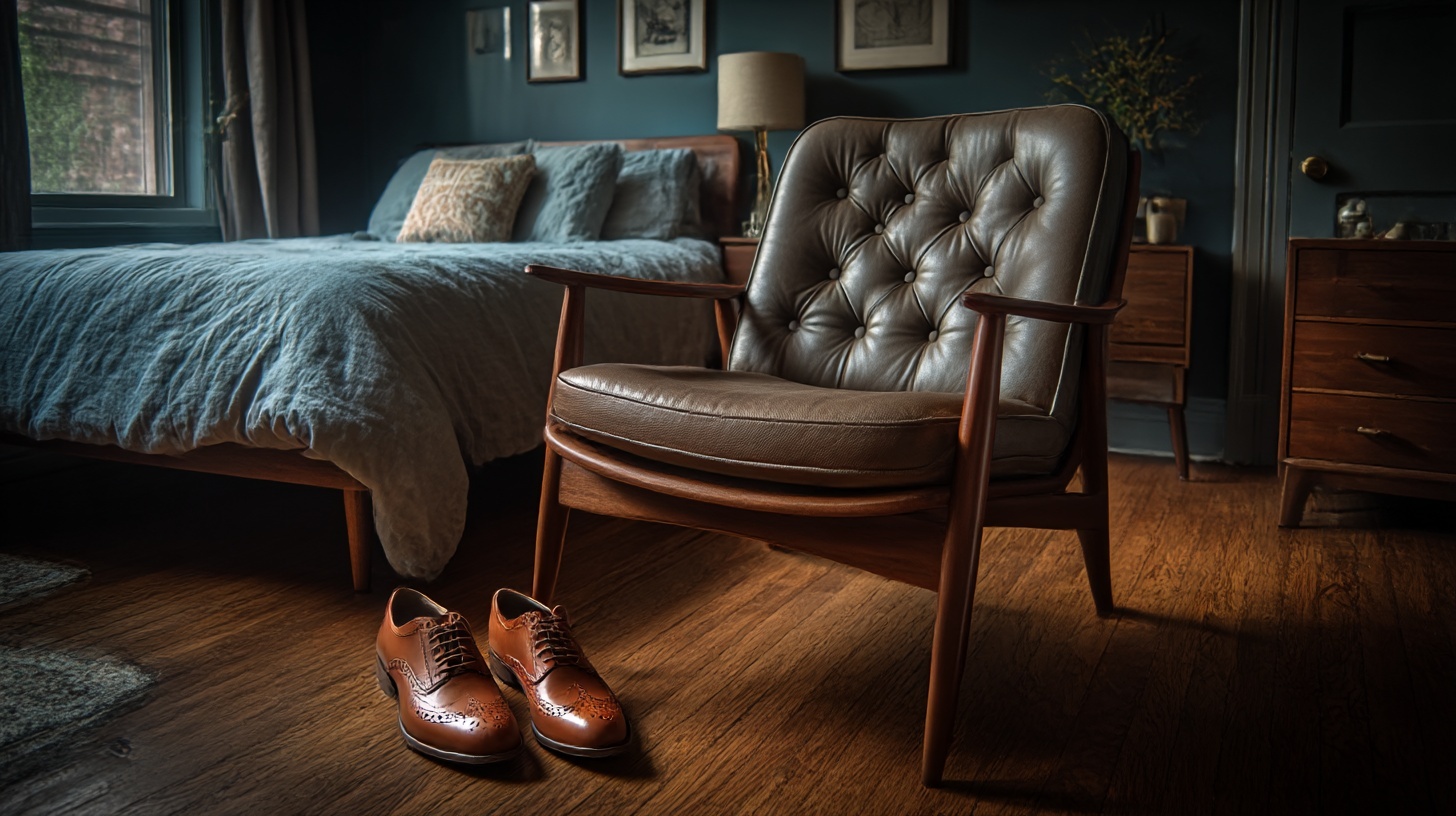
Humans interact with the physical world primarily through three interfaces: the chairs we sit in, the beds we sleep in, and the shoes we walk in. Together, these determine your spinal health, sleep quality, posture, joint stress, circulation, and fatigue levels. Get them right and you’re productive, healthy, energetic. Get them wrong and you’re fighting chronic pain, poor sleep, and accelerating physical deterioration.
We’ve been on a never-ending quest to find the perfect chair, the ideal mattress, the ultimate shoe. Billions spent annually by people searching for combinations that work for their unique bodies. Most fail because we’re trying to find mass-produced solutions for individually variable problems. The chair that’s perfect for someone six feet tall destroys the back of someone five-foot-two. The mattress ideal for a side sleeper tortures a stomach sleeper. The shoe great for high arches cripples flat feet.
By 2035, AI-driven body scanning, biomechanical analysis, and additive manufacturing will end this quest by creating perfectly customized chairs, beds, and shoes designed specifically for your body, your movement patterns, your weight distribution, and your usage. Not generic products adjusted slightly—completely individualized designs optimized for you alone.
The industries built on mass production and endless searching are about to be disrupted completely.
How AI Finds Your Perfect Form
Comprehensive Body Scanning: Walk into a scanning booth—or use your smartphone’s sensors—for a three-dimensional capture of your body. Not just measurements but weight distribution, skeletal alignment, muscle density, joint flexibility, posture patterns, and movement biomechanics. The AI analyzes how you actually sit, sleep, and walk, not how marketing materials suggest you should.
Behavioral Pattern Analysis: Wearable sensors track how you use furniture and footwear over weeks. How long you sit before shifting position. Whether you’re a side, back, or stomach sleeper. How your gait changes throughout the day as fatigue sets in. Your actual usage patterns, not idealized assumptions.
Health Integration: The AI incorporates medical data—existing back problems, arthritis, circulation issues, previous injuries. It accounts for how your body compensates for problems and designs around those compensations.
Generative Design: AI doesn’t select from existing chair, bed, and shoe designs—it generates completely novel forms optimized for your specific body and needs. The chair might have asymmetric armrests because your left shoulder sits differently than your right. The bed might have varying firmness zones matching your unique pressure points. The shoes might have custom arch support reflecting your actual foot mechanics rather than generic categories.
Rapid Prototyping: Additive manufacturing produces the designed items quickly. You test the prototype, provide feedback, and AI adjusts the design iteratively until it’s perfect. Usually takes 2-3 iterations rather than years of trial-and-error shopping.
What This Looks Like in Practice
Your Custom Chair: Designed around how you actually sit, accounting for your spine curvature, weight distribution, arm length, and how long you typically sit before standing. The seat depth matches your thigh length. The lumbar support hits exactly where your spine needs it. The armrest height prevents shoulder tension specific to your build. It’s not adjustable—it doesn’t need to be because it’s built for you alone.
Your Custom Bed: Variable firmness zones matching your body’s pressure points. Support calibrated to your weight and sleeping position. Temperature regulation targeted to your core body temperature and how you sleep—warmer zones for cold sleepers, cooling for hot sleepers. The mattress literally conforms to your body’s specific needs rather than trying to be everything to everyone.
Your Custom Shoes: Built around 3D scans of your actual feet—not generic size categories. Arch support matching your precise foot mechanics. Cushioning distributed based on your gait analysis and weight distribution. Materials chosen based on whether you pronate, supinate, or have neutral stride. Fit so precise you don’t break them in—they work perfectly from day one.
What Happens to These Industries
Mass Production Collapses: Why buy generic furniture and footwear when custom-designed alternatives cost marginally more and work infinitely better? The entire business model of mass-producing standardized products and hoping customers find adequate fits becomes obsolete.
Showrooms Disappear: You don’t need to test 47 mattresses in a store when AI designs one specifically for you. Retail spaces dedicated to furniture and footwear shopping largely vanish, replaced by scanning booths and delivery of manufactured items.
The Subscription Model Emerges: Your body changes—you gain weight, develop injuries, age. Your perfect chair from 2035 won’t be perfect in 2040. The business model shifts to subscriptions where you get periodic redesigns as your body and needs evolve. You don’t own furniture—you subscribe to perfectly fitting furniture that updates as you change.
Expertise Shifts from Product to Process: Companies stop competing on product design and start competing on scanning accuracy, AI optimization algorithms, manufacturing speed, and material quality. The winners will be companies with the best biomechanical analysis and fastest iteration cycles, not the best generic designs.
Secondhand Markets Evaporate: Your custom chair is worthless to anyone else—it’s designed for your specific body. Resale becomes impossible. When you’re done with furniture or shoes, they get recycled for materials rather than resold.
Health Outcomes Drive Demand: Insurance companies incentivize custom furniture and footwear because the health benefits are measurable—reduced back problems, better sleep, fewer joint issues. What starts as luxury becomes standard as health data proves the value.
The Problems Nobody’s Talking About
Privacy Invasion: Comprehensive body scanning and behavioral tracking create detailed databases about your physical form, health issues, and movement patterns. That data is valuable to insurance companies, employers, and marketers. Who controls it? Who profits from it? Can you prevent its use?
Economic Inequality Accelerates: Custom optimization costs more initially. Wealthy people get perfectly fitted furniture and footwear immediately. Poor people continue using generic mass-produced items that damage their bodies. The physical toll of poverty becomes more severe when rich people have optimized contact points and poor people don’t.
Learned Helplessness: When AI designs everything perfectly, you stop learning what works for your body. You become dependent on algorithmic optimization and lose the body awareness that comes from trial-and-error. If the system fails or you can’t access it, you don’t know how to choose for yourself.
Aesthetic Uniformity: AI optimizes for function, not style. Your perfect chair might be objectively best for your body but ugly. Do we sacrifice aesthetics for optimization? Or do we constrain AI design within aesthetic parameters, accepting suboptimal function for appearance?
The Waste Problem: When furniture and shoes become personalized and unsellable, disposal accelerates. You can’t donate your old chair when it’s custom-fit to you. The environmental cost of replacing rather than reusing becomes significant unless recycling infrastructure scales dramatically.
Final Thoughts
The quest for the perfect chair, bed, and shoe is ending not because we found universal solutions but because AI can design individual solutions for each person. By 2035, comprehensive scanning, biomechanical analysis, and additive manufacturing will create furniture and footwear optimized specifically for your body, transforming industries built on mass production into personalized manufacturing systems.
The health benefits are substantial—better posture, improved sleep, reduced joint stress, longer productive years. The economic disruption is equally substantial—retail collapses, mass production dies, subscription models replace ownership, and inequality accelerates as optimization becomes another advantage wealth can buy.
We’re moving from a world where you search endlessly for furniture and shoes that kind of work to a world where AI designs items that work perfectly for you alone. Whether that’s progress or just another technology that solves problems while creating new ones we haven’t anticipated depends on whether we build the frameworks that make optimization accessible rather than another privilege concentrated among those who can afford it.
After all, when the three primary ways you contact the physical world get optimized individually, you’re not just more comfortable—you’re fundamentally more capable. The question is whether that capability becomes universally available or just another way the wealthy separate themselves from everyone else, one custom chair, perfect mattress, and ideal shoe at a time.
Related Articles:
Building a More Valuable Human: Why Your Life Is Worth $2 Billion (And Rising)
When Your Body Learns to Regrow What Was Lost: The End of Permanent Replacement Parts
The Skinny Path to Skininess: How AI Ends the Obesity Crisis We Created
