
By Futurist Thomas Frey
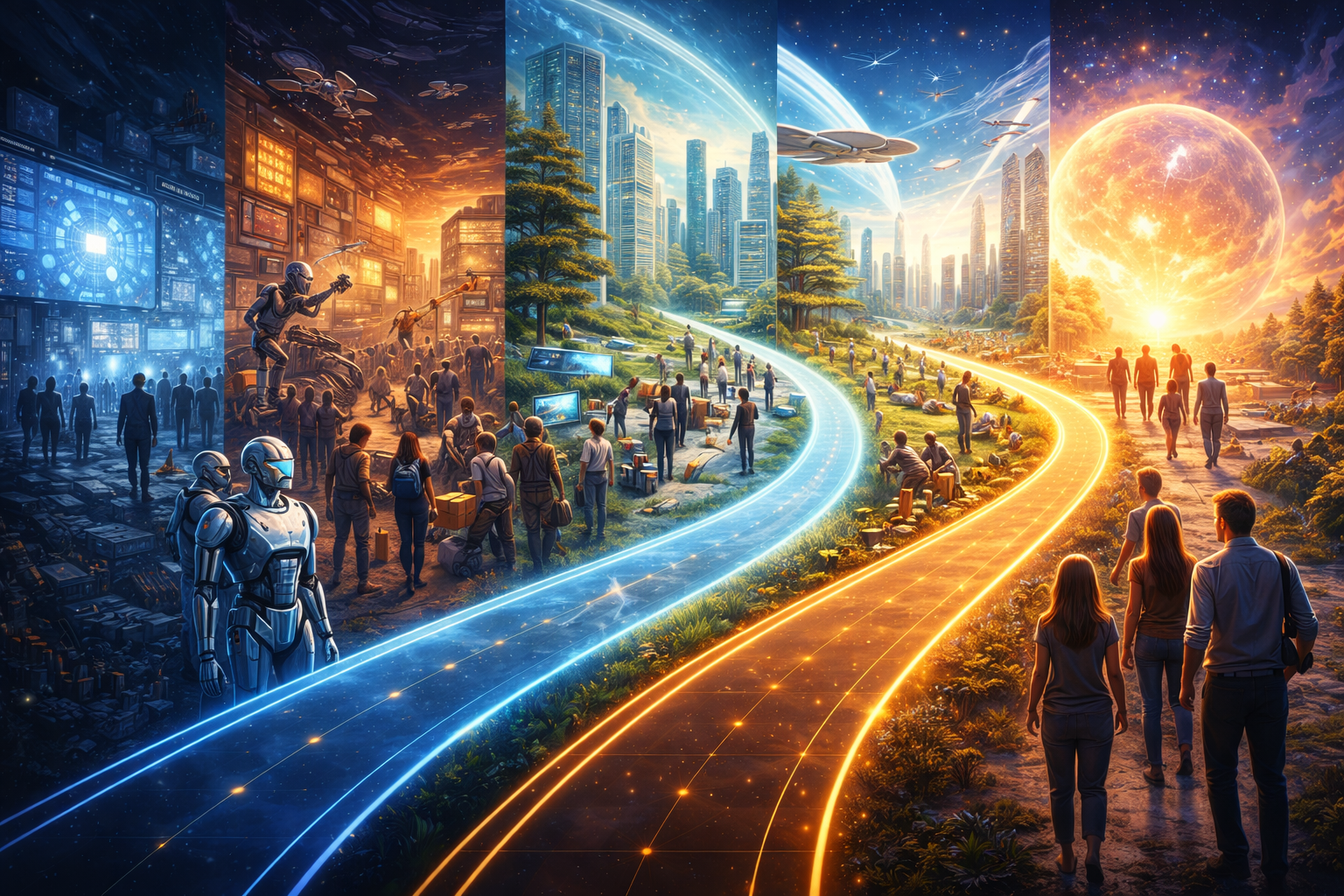
We’re not just facing another economic cycle or technological wave. We’re entering a civilizational inflection point that will unfold across distinct phases over the next three decades. Understanding these phases isn’t about prediction—it’s about preparation. The communities, organizations, and individuals who recognize which phase they’re in will navigate this transformation far more successfully than those caught off-guard.
What makes this transformation different from previous technological disruptions is its scope and simultaneity. The Industrial Revolution unfolded over roughly a century, giving societies time to adapt incrementally. This time, AI, robotics, drones, and automation are converging at once, across all sectors, in all regions. There’s no “later” geography that can learn from “earlier” adopters. We’re all early adopters now, whether we’re ready or not.
The phases I’m describing aren’t rigid boundaries but overlapping waves. By the time one phase becomes dominant, seeds of the next are already visible. Smart organizations and forward-thinking communities are already positioning themselves for Phase Three while most are still denying Phase One. That gap—between those who see what’s coming and those who don’t—will be the defining factor in who thrives and who struggles over the next generation.
Phase One: The Awakening (2025–2029)
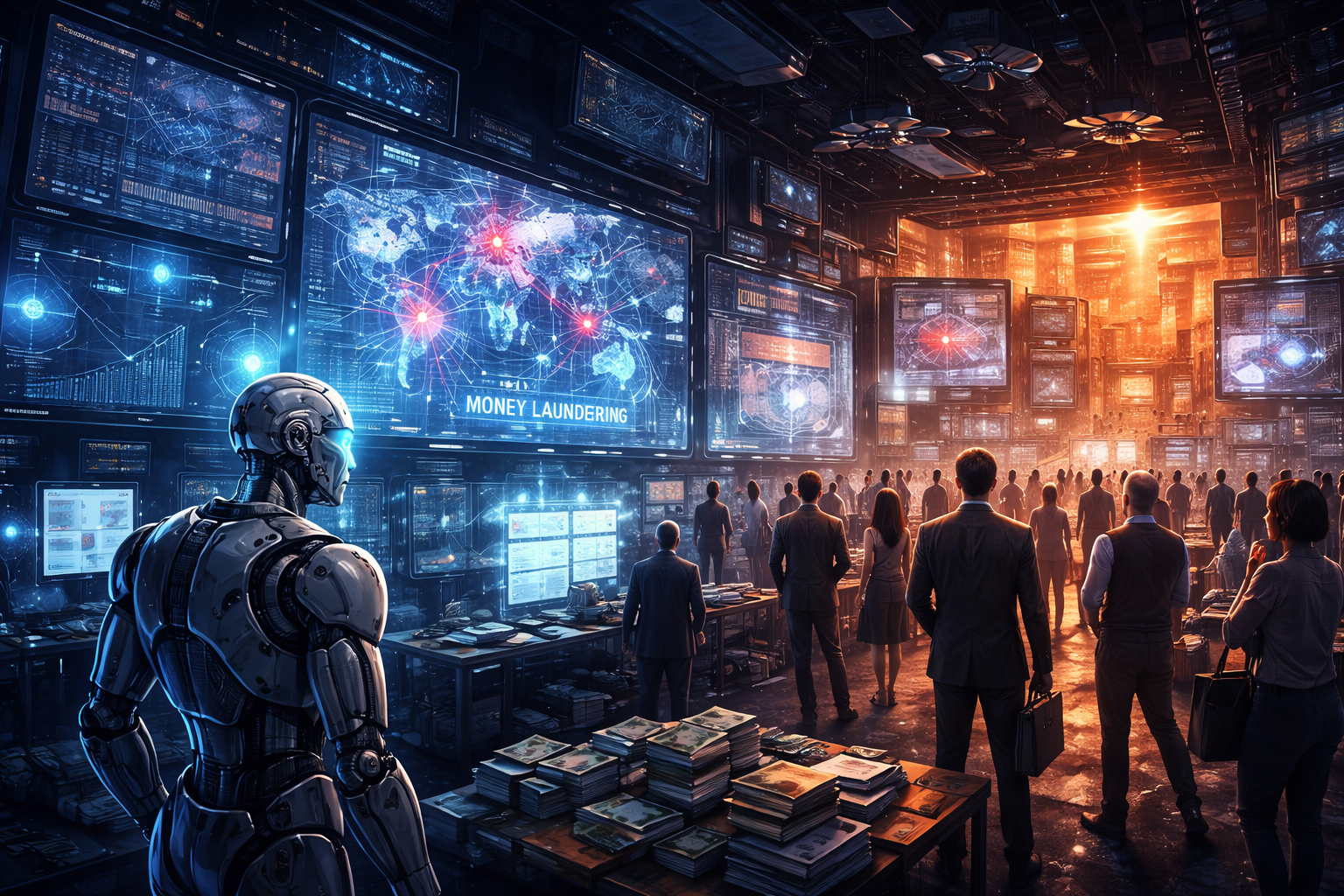
We’re living through the opening act right now, though most people haven’t yet recognized the script. The first profound impact of AI isn’t mass unemployment—it’s mass exposure.
Artificial intelligence excels at pattern recognition, and it’s now being turned loose on systems that have operated for decades on institutional inertia, insider knowledge, and deliberate opacity. Government procurement processes, healthcare billing systems, corporate supply chains, educational credentialing—all are being subjected to algorithmic scrutiny that reveals what insiders have long known but outsiders couldn’t prove.
The whistleblower is no longer a person risking their career. It’s a system generating reports that can’t be ignored. Cost overruns that once disappeared into complexity now appear in dashboards. Inefficiencies that survived because “nobody has time to look into that” get flagged automatically. Discrimination that hid behind plausible deniability shows up in the data patterns.
This phase feels destabilizing because it is. “We’ve always done it this way” transforms from explanation to admission. Public trust doesn’t just erode—it evaporates in specific, documented instances. Institutions find themselves simultaneously defending their relevance while trying to explain why they didn’t fix known problems sooner.
But here’s what most miss: this phase is fundamentally diagnostic, not destructive. It’s the full-body scan that reveals problems before treatment can begin. Societies that embrace this transparency and act on it will move through this phase quickly. Those that deny, delay, and defend will remain stuck here far longer than necessary.
Phase Two: The Realignment (2029–2035)
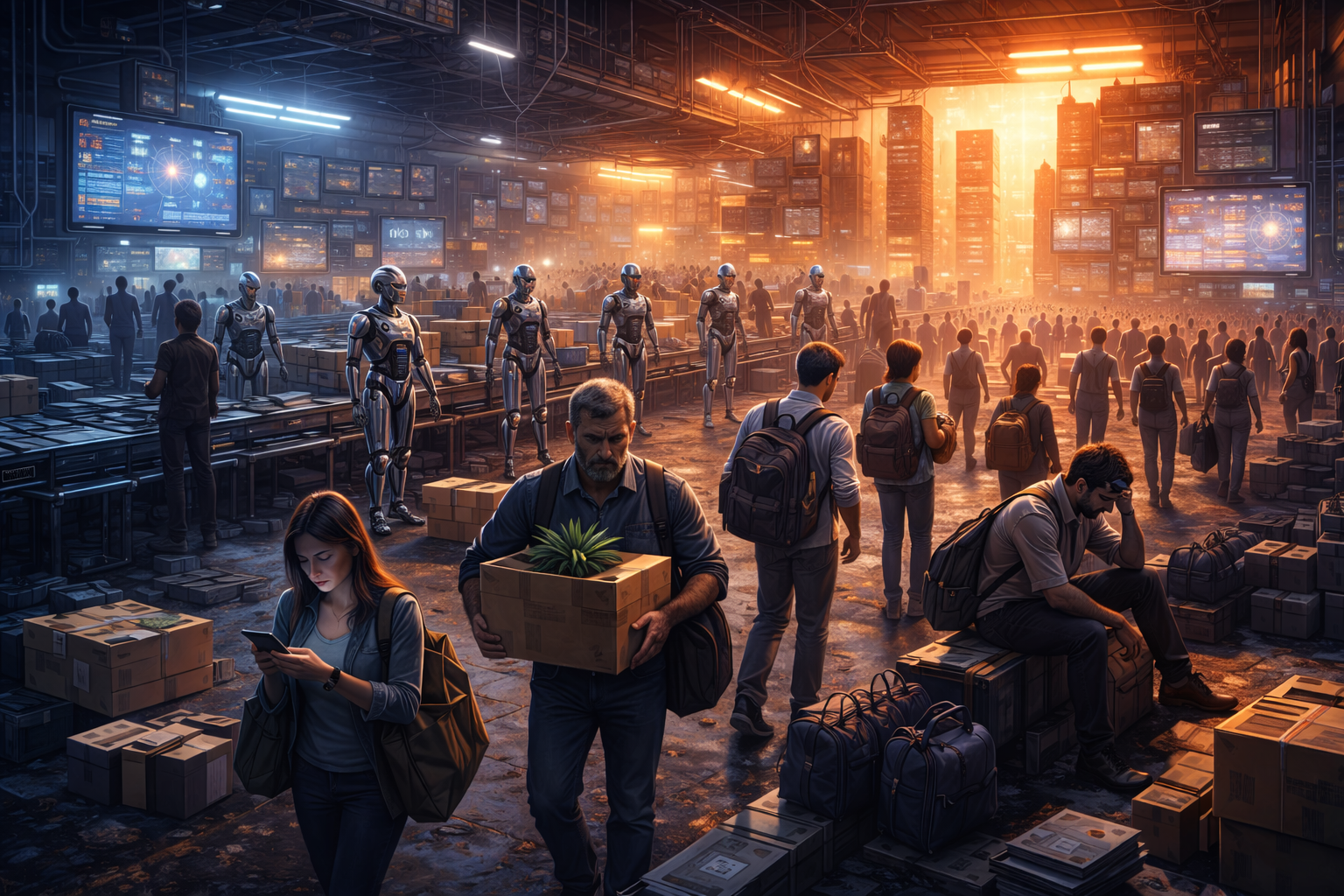
Once the diagnosis is complete, the treatment begins—and it’s more disruptive than anyone wants to admit. This is when automation and AI move from exposing inefficiency to eliminating it, and the job losses become impossible to ignore.
What makes this phase particularly difficult is that it doesn’t look like traditional unemployment. Many people remain technically “employed” while being economically hollowed out. Their job still exists, but half their tasks have been automated, their hours cut, their advancement prospects eliminated, and their specialized knowledge suddenly obsolete.
The credential crisis hits hardest here. People who spent years and significant money on specific degrees and certifications discover that AI systems now perform those specialized tasks better, faster, and cheaper. The economic returns on educational investment collapse for entire categories of professional work.
Governments will try everything: massive reskilling programs, expanded safety nets, redefined employment categories, tax incentives for human labor. Most of these efforts will be too little, too slow, or aimed at the last war rather than the next one. The fundamental tension isn’t economic—it’s psychological. Millions of people simultaneously realize that the future they prepared for has been canceled without consultation.
The communities that fare best in this phase will be those that started experimenting with alternatives early: portable benefits not tied to employers, lifelong learning systems that don’t require returning to formal schooling, and local economic models that value human contribution beyond traditional employment.
This is the great realignment—not just of jobs and skills, but of expectations, identities, and the fundamental social contract between work and worth.

Phase Three: The Reconstruction (2035–2042)
This is where things get interesting. By the mid-2030s, enough institutions have failed or adapted that entirely new patterns begin to emerge and stabilize.
Work doesn’t disappear—it transforms. The most valuable human contribution becomes orchestration: defining what problems matter, setting priorities among competing goods, managing the handoffs between AI systems and human judgment. We’ll see the rise of what I call “human-in-the-loop” professions—roles where AI provides capabilities but humans provide direction, context, and ultimately accountability.
Education undergoes its most significant transformation since the industrial revolution. The front-loaded model—spend your first 25 years learning, then spend 40 years working—breaks completely. Instead, we shift to continuous, modular, just-in-time learning throughout life. Credentials become more like software subscriptions: constantly updated, immediately applicable, and quickly obsolete if not maintained.
Cities and infrastructure get redesigned around automation-first assumptions. Autonomous logistics, drone delivery, and local AI-assisted manufacturing reduce the economic advantages of centralization. We’ll see a partial reversal of urbanization as remote work, local production, and distributed economic opportunity make smaller communities more viable.
The value creators of this era won’t be the people who can do specialized tasks—AI will handle that. They’ll be the people who can ask better questions, build trust across communities, care for what can’t be automated, and steward resources for long-term flourishing rather than short-term extraction.
This reconstruction phase is fundamentally optimistic. It’s when we stop defending what was and start building what could be.
Phase Four: The Abundance Paradox (2042–2050)
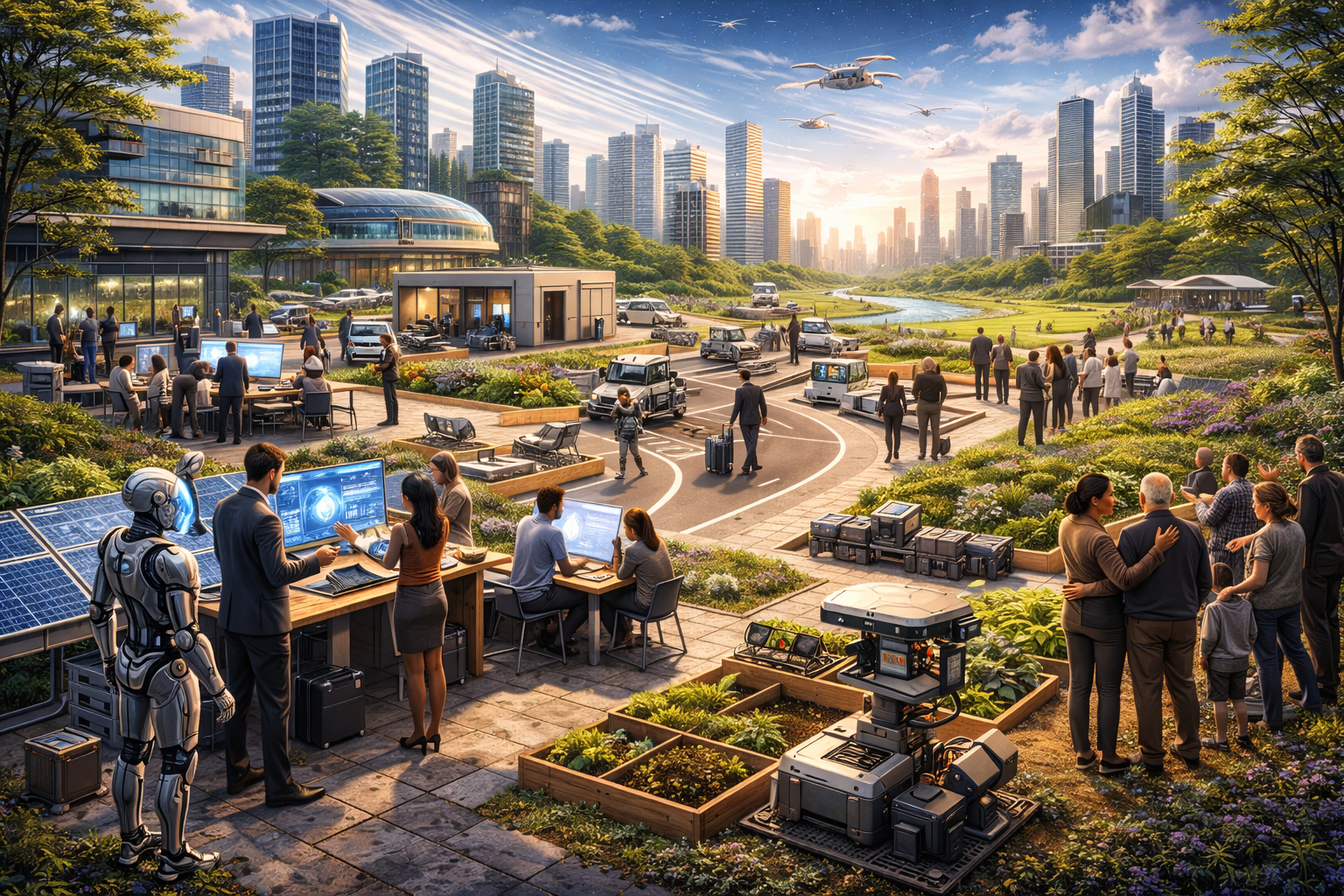
By the 2040s, we face a problem our ancestors would have considered a fever dream: we can produce nearly everything we need with a fraction of the human labor we once required. The challenge is no longer scarcity—it’s distribution, purpose, and meaning in a world of material abundance.
This is where societies will diverge dramatically. Some will figure out how to distribute abundance broadly, create meaningful contribution pathways outside traditional employment, and help people build identity beyond their occupation. Others will see inequality explode as abundance accrues to asset owners while the majority faces economic irrelevance.
The central tension isn’t about jobs—it’s about status, identity, and social worth. How do we maintain social cohesion when traditional markers of contribution no longer apply to most people? What replaces the dignity of employment when employment becomes optional? How do we prevent abundance from becoming socially corrosive rather than liberating?
The answers won’t be primarily technological. They’ll be cultural, political, and deeply philosophical. The societies that navigate this paradox successfully will be those that started asking these questions decades earlier, not those scrambling for answers when the crisis arrives.

Phase Five: The New Dawn (2050 and Beyond)
If humanity navigates the previous phases successfully, we enter genuinely new territory. For the first time in human history, survival doesn’t demand that most people spend most of their time on economic production.
The fundamental question of human life shifts from “What do you do?” to “What do you care for?” Work becomes something you choose rather than something you must do to survive. Contribution becomes intentional rather than compulsory.
This isn’t utopia—it’s complexity of a different sort. People will still struggle with meaning, purpose, and direction. But they’ll struggle in the way artists and philosophers struggle, not in the way people desperate for basic resources struggle.
Some societies will flourish in this environment, creating new forms of culture, community, and human flourishing that we can barely imagine today. Others will fragment, unable to move beyond industrial-era assumptions about value, contribution, and human worth.
The new dawn isn’t about the absence of challenge—it’s about the nature of challenge shifting from survival to significance, from scarcity to stewardship, from individual competition to collective flourishing.
Final Thoughts
The crucial insight isn’t the specific timeline—it’s the phase structure itself. These transitions won’t be clean or uniform. Different communities, industries, and regions will be in different phases simultaneously. The key is recognizing which phase you’re in and preparing for the next one rather than defending against the last one.
The communities that thrive won’t be those that resist these changes. They’ll be those that recognize the phases early, experiment with new approaches when the stakes are still low, and build the social infrastructure needed for each transition before crisis forces their hand.
We’re not facing the end of human relevance. We’re facing the end of a particular way of organizing human life around economic production. What comes next depends entirely on whether we can recognize the transformation for what it is—not a disaster to be prevented, but a transition to be navigated with wisdom, foresight, and genuine concern for human flourishing.
The great transformation is underway. The question isn’t whether it will happen, but which phase finds you prepared and which finds you surprised.
Related Articles:
McKinsey Global Institute – Jobs Lost, Jobs Gained: Workforce Transitions in a Time of Automation
World Economic Forum – The Future of Jobs Report 2025
MIT Technology Review – AI Is About to Completely Change How You Use Computers
