
By Futurist Thomas Frey
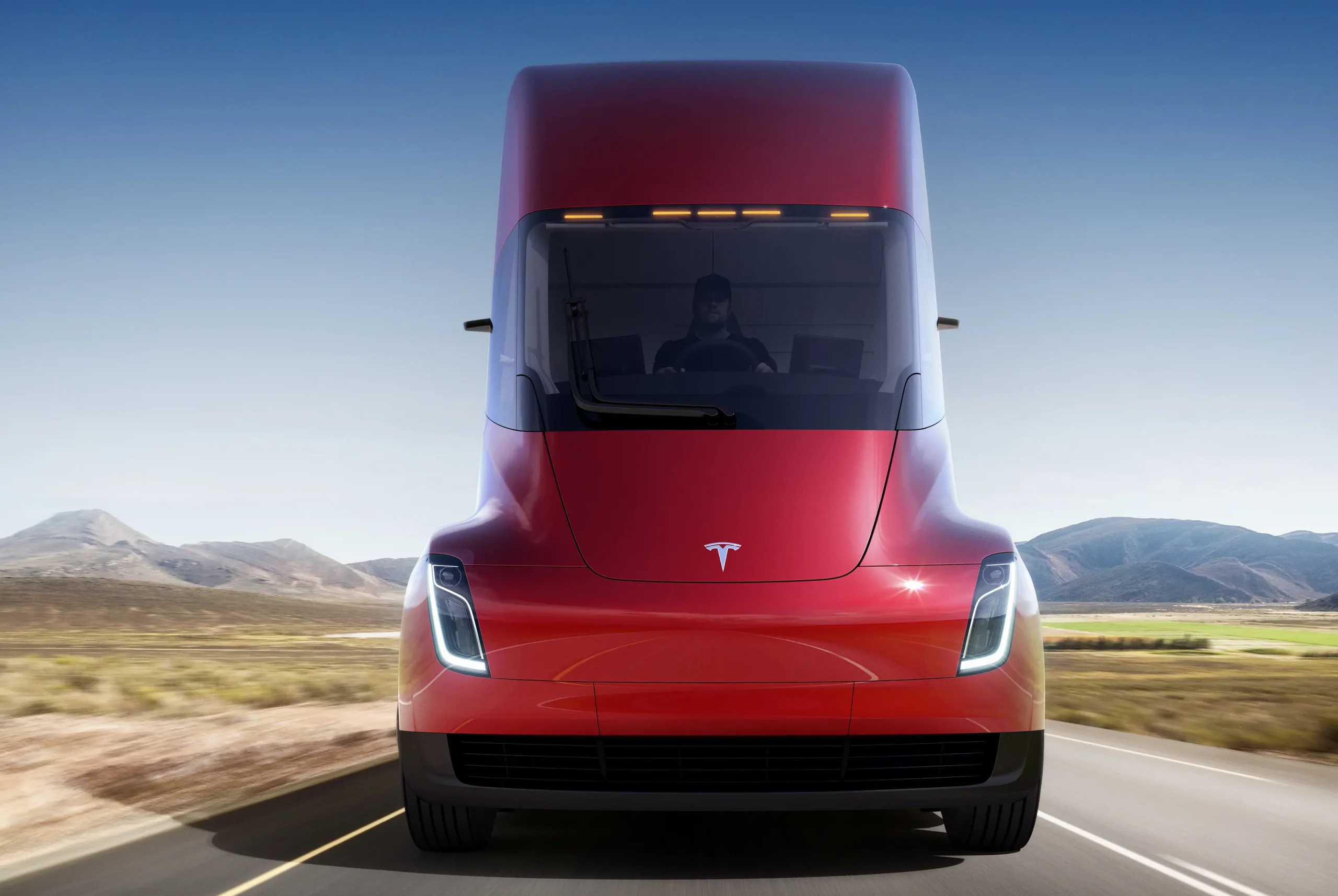
Nine years ago, Elon Musk stood on a stage in Hawthorne, California, and unveiled a truck that looked like it had driven out of a science fiction film. Sleek, silent, aerodynamically radical, capable of 500 miles on a single charge and 0-60 in 20 seconds hauling 80,000 pounds. The audience went wild. The trucking industry mostly shrugged.
Now the trucks are real. The factory in Sparks, Nevada — 1.7 million square feet sitting on Electric Avenue, right next to Gigafactory Nevada — is coming to life. First assemblies are rolling off the line. Production targets 50,000 units a year at full ramp. Elon Musk posted a video tour this week and captioned it simply: “Tesla Semi.”
After nine years of delays, skepticism, and more delays, the electric semi-truck era has officially started. And the questions that matter now are not whether it can be done. It can. The questions are what happens next — to the trucking industry, to the diesel economy that powers it, and to every fleet manager, driver, and logistics company that has to decide what to do about it.
What the Truck Actually Does
Start with the basics, because they’re more impressive than most people realize.
The Tesla Semi comes in two versions. The standard-range model covers 325 miles at full gross weight — 82,000 pounds — and starts around $260,000. The long-range version does 500 miles and costs approximately $290,000. Both use a three-motor powertrain delivering 800 kilowatts of drive power. Both support 1.2-megawatt fast charging. Both consume about 1.7 kilowatt-hours per mile.
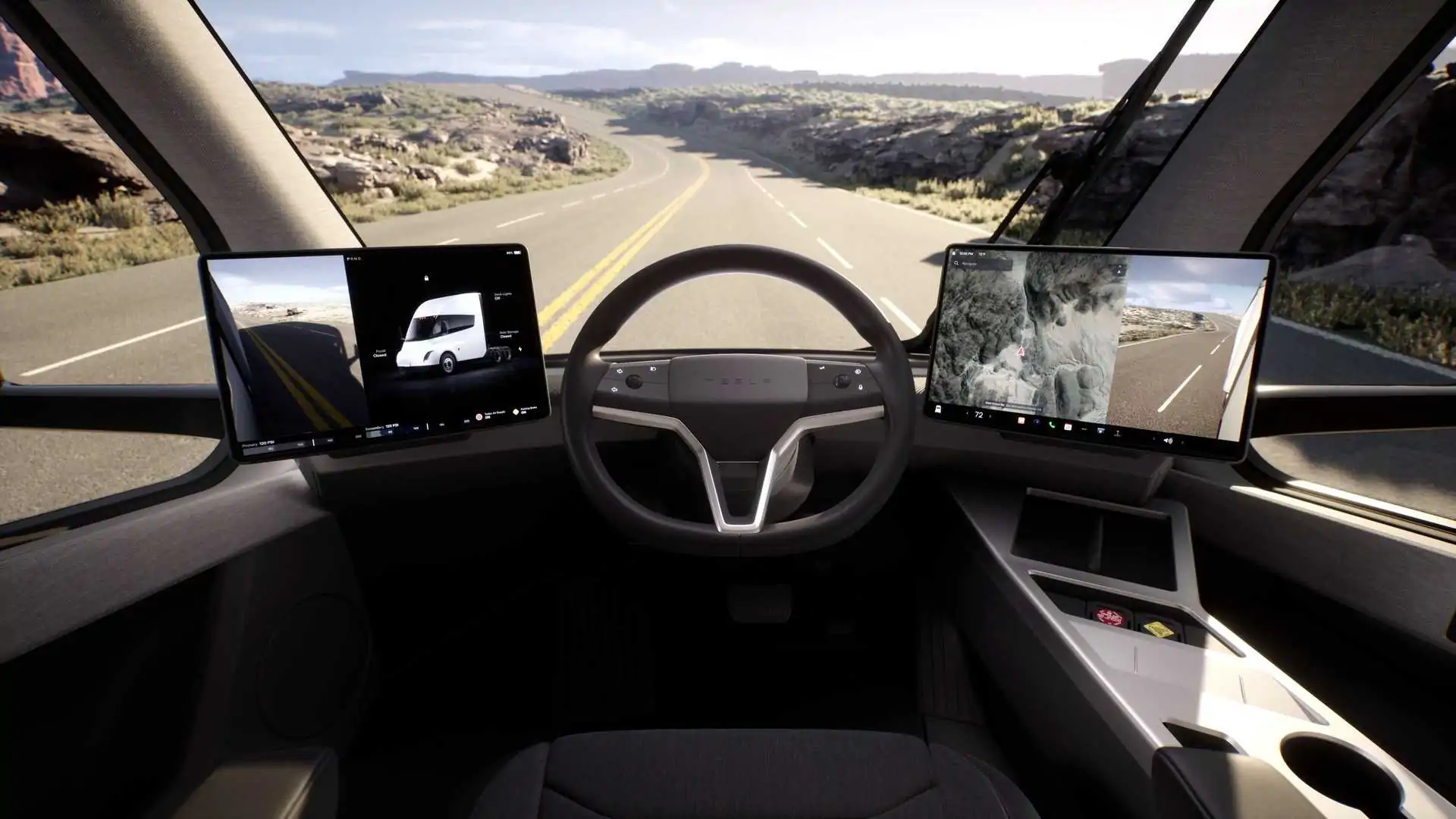
That last number is what the economics hang on. At California electricity rates, operating the Semi costs roughly 50% less per mile than diesel. Nationally, the total cost of ownership is about 20% cheaper. One fleet operator reported needing one mechanic for their electric trucks versus five for forty equivalent diesel trucks. No engine oil. No transmission fluid. No DEF. No multi-speed gearbox to master. Drivers who’ve spent time behind the wheel describe the experience as effortless — torque available instantly, the cab quiet enough to have a conversation, visibility dramatically improved by the forward-center seating position and ten exterior cameras.
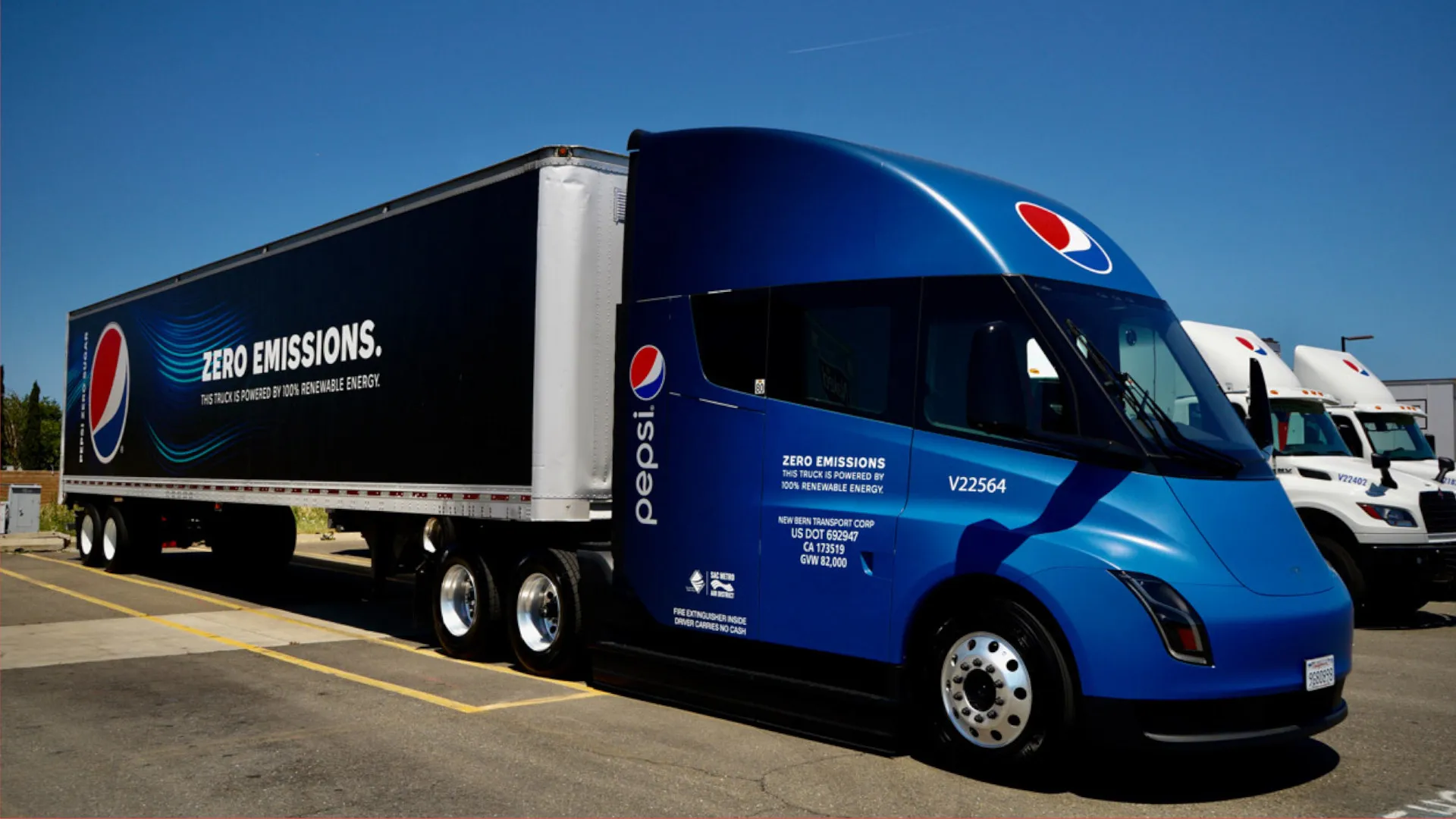
PepsiCo has been running pilot units for three years. In one documented real-world test, a Tesla Semi covered 460 miles in a single day shift hauling freight — then continued on a second shift with a different driver. Fleet uptime in the pilot program has run at 95%. The busiest truck in the prototype fleet has logged 440,000 miles.
The product works. That debate is over.
The Infrastructure Problem Nobody Has Fully Solved
Here’s where it gets complicated.
The Tesla Semi supports 1.2-megawatt charging — a rate so fast it can add roughly 60% range in 30 minutes. That’s genuinely transformative for long-haul economics. The problem is that almost nowhere outside Tesla’s own Megacharger network can actually deliver that power.
A standard commercial building draws maybe 200 kilowatts. A 1.2-megawatt charger requires the kind of grid connection that most truck stops, distribution centers, and highway rest areas simply don’t have. Tesla is building dedicated Semi charging corridors — the first launched in Carson, California — but coverage remains concentrated in California and sparse everywhere else. A truck that can do 500 miles but can only charge at a handful of locations along that route is, in practice, a regional vehicle.
This is the honest constraint. Tesla is spending up to $100 million on Semi-specific charging infrastructure in the southwestern US alone, and the buildout is accelerating. But the pace of infrastructure deployment is the actual variable that determines how fast the trucking industry can electrify — not the truck’s range, not its economics, not its reliability. The grid connection at the truck stop in Amarillo, Texas, is the bottleneck.
Fleet operators who are serious about the Semi right now are largely solving this themselves — installing dedicated Megachargers at their own depots and running routes designed around those fixed charging points. That works for hub-and-spoke operations, regional distribution, and port drayage. It doesn’t yet work for the cross-country long-haul driver who needs to charge wherever the route takes them.
No sleeper cab doesn’t help either. The current Semi is a day cab, which limits it structurally to regional freight. A driver who needs to sleep in the truck can’t, not yet. Tesla has acknowledged this and a sleeper variant is expected, but it isn’t here today.
The Competition Picture
The competitive landscape has shifted dramatically in Tesla’s favor over the past two years, largely because the competition imploded.
Nikola, which raised billions promising hydrogen-electric trucks, went bankrupt. That’s a significant chapter in the story of electric trucking that deserves more attention than it gets — a cautionary tale about the gap between ambitious promises and physical infrastructure reality.
The traditional truck manufacturers — Freightliner, Volvo, Mack, Peterbilt — have all launched or are launching electric Class 8 trucks. The Freightliner eCascadia and Volvo VNR Electric are in the market today. Mack’s Pioneer EV is coming. These are serious vehicles from companies with deep dealer networks, established service infrastructure, and decades of fleet customer relationships.
But none of them come close to the Tesla Semi’s charging speed or range. The Freightliner eCascadia tops out at 230 miles and charges at a fraction of the Semi’s rate. The Volvo VNR Electric offers up to 373 miles. Real-world comparison tests have consistently shown the Tesla Semi covering more miles per day and charging faster than any competitor.
The most interesting new entrant is Windrose, a Chinese manufacturer that has begun delivering its Global E700 in the US — a truck that looks strikingly similar to the Tesla Semi, priced at $300,000 before a $120,000 California subsidy, with 416 miles of range and 870-kilowatt charging capability. It won’t dominate the market overnight. But it signals that the competitive pressure on Tesla in commercial trucking will eventually come from the same direction it has in passenger EVs: Chinese manufacturers willing to price aggressively and move fast.
What Changes, and for Whom
Diesel trucks are 1% of vehicles on American roads. They consume 16 to 18% of transportation fuel. That ratio tells you everything about why this transition matters. The fuel savings, the emissions reductions, and the maintenance cost improvements compound at a scale that makes the numbers genuinely significant for the overall economy — not just for individual fleet operators.
For the trucking companies making fleet decisions right now, the economics are increasingly clear on the routes where charging infrastructure exists. The question is no longer whether electric makes sense. It’s whether the infrastructure is there yet on the specific corridors they run. For most companies operating in California and the southwest, it’s getting close. For everyone else, the honest answer is still: not quite yet, but soon.
For truck drivers, the transition is more nuanced. The driving experience is genuinely better by most accounts. The mechanical skill set required is different — there is no transmission to master, no engine to diagnose in the traditional sense. The service and maintenance ecosystem for electric trucks is still thin outside of Tesla’s own network, which creates real vulnerability when something goes wrong on a remote stretch of highway.
For diesel infrastructure — the fuel stops, the oil change shops, the truck mechanics with decades of diesel expertise — the clock has started. Not ticking urgently yet. But started.
The Tesla Semi was promised in 2019. It’s rolling off the line in 2026. That’s a seven-year gap between promise and reality, which is long enough that many people stopped believing it would happen.
It’s happening. And the trucking industry — one of the most consequential, most overlooked, and most diesel-dependent industries in the American economy — is about to find out what that means.
Related Reading
Run on Less 2026: What Real-World Electric Truck Data Actually Shows
North American Council for Freight Efficiency — The most detailed independent real-world comparison of electric, diesel, hydrogen, and natural gas Class 8 trucks yet conducted — 73,000 miles of actual freight hauling across 14 vehicles
The Charging Problem Nobody Wants to Talk About
FreightWaves — A hard look at the grid infrastructure gap between what electric Class 8 trucks need and what the highway network currently delivers, and what it will actually take to close it
Who Wins and Who Loses When Trucking Goes Electric
Brookings Institution — An economic analysis of the electrification of freight — which regions, workers, and industries benefit from the transition, and which face the most disruption
