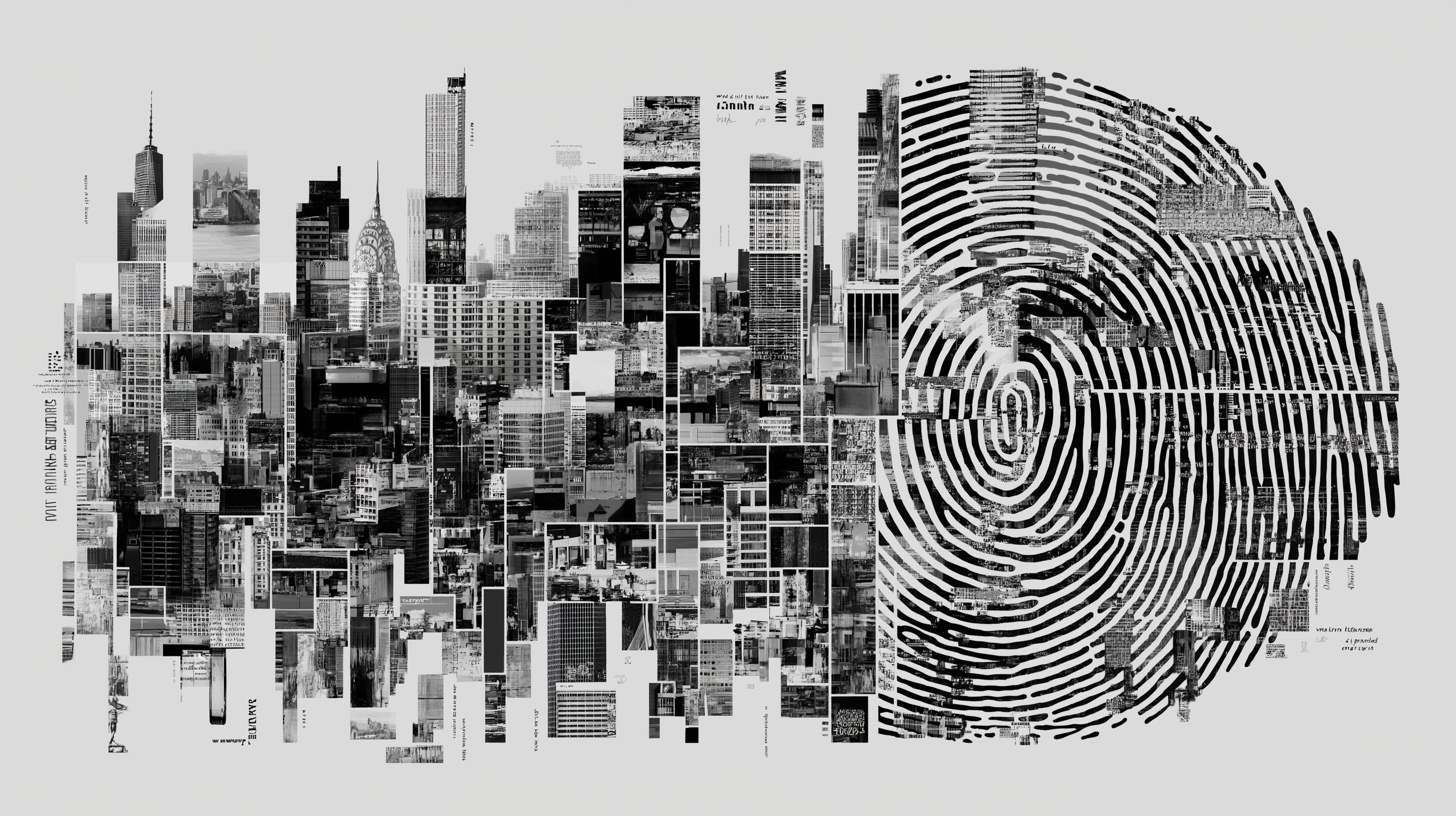
By Futurist Thomas Frey
A quiet revolution is brewing in identity—and it’s about to make passwords, cards, and tokens look archaic. Researchers have developed what’s being called a “fingerprint matrix,” a breakthrough biometric technology that promises to embed your identity into everything you do. This isn’t just an incremental upgrade in security—it’s a foundational shift in how we prove who we are.
Imagine every surface, every interaction, every digital entry point recognizing you without a password or key. That’s where the fingerprint matrix is headed—and it will remake security, privacy, economies, and trust in ways few people yet grasp.
What Is a Fingerprint Matrix?
Though sources are still limited, the idea behind the fingerprint matrix is deceptively simple: use ultra-precise biometric scans—including microstructure, sweat pore patterns, skin elasticity, and perhaps subdermal features—to create an identity “matrix.” This isn’t just your fingerprint. It’s a layered, multidimensional digital signature derived from your biological uniqueness.
When paired with sensors and scanning surfaces, the fingerprint matrix can verify identity passively and continuously—without having you stop, swipe, or log in. Doors unlock. Devices activate. Transactions authenticate—all based on who you are, not what you carry.
The Rise of Invisible Identity
If this technology matures, tomorrow’s world might recognize you before you announce your presence. No PINs. No tokens. No passwords. Your existence, your body, your presence is the credential.
Retail doors open for you. Cars adjust seats and settings as you approach. Locks disengage. Your workspace authorized instantly. Credit given without prompting. The seamless choreography of identity becomes invisible.
But the leap is more than convenience. It restructures power. Identity flows not from what we own or memorize, but from our biology—the most intrinsic marker of individuality.
The Applications Already Emerging
Early research suggests multiple domains where the fingerprint matrix could transform real-world systems:
- Physical Security & Access: Replace keys, badges, and smart cards with biometric surfaces.
- Digital Authentication: Replace passwords across bank apps, health systems, and government portals.
- Wearable Integration: Glasses, rings, or AR slices that continuously authenticate you when worn.
- IoT & Smart Environments: Devices, appliances, and systems that only respond to your biometric signature.
At first, these use cases will be limited to high-security environments—data centers, financial institutions, governmental installations. But as the costs drop, consumer adoption will slowly follow, just as fingerprint sensors moved from flagships into every phone.
The Power Shift in Identity
The fingerprint matrix changes the grammar of identity. We move away from possession-based identity (which you carry: cards, tokens, keys) to embodied identity (which you are).
This has implications for:
- Security industries: Many players in token and authentication markets may become obsolete.
- Privacy legislation: Laws will need to evolve to protect how biometric signatures can be collected, stored, and shared.
- Identity theft: The stakes go up. If your fingerprint matrix is compromised, you can’t just “change your password.” How do you revoke or rotate a biometric identity?
- Access equity: Who gets certified first? Will this deepen inequality—some people always being “recognized” while others are locked out?
Risks, Trade-offs, and Ethical Frontiers
With great power comes equally significant peril. A few of the most pressing concerns:
- Biometric surveillance: The matrix could enable near-total surveillance, as people are identified in every camera frame.
- Irrevocability: Loss or theft of biometric identity is graver than a password leak—you can’t reset your skin.
- Bias & error: Imperfections in scanning, skin conditions, or technology failures could lead to misrecognition or exclusion.
- Consent & coercion: Will people be forced to adopt fingerprint matrices by employers or governments?
Designing backup systems, rotation schemes, anonymization protocols, and legal protections will be as crucial as perfecting the underlying technology.
The Road Ahead
In the next decade, we’ll see phased rollout:
- 2025–2027: Pilot deployments in high security, healthcare, and enterprise settings.
- 2028–2032: Early consumer adoption in smartphones, front-door access, payments.
- 2033–2040: Scale to everyday public spaces—transportation, retail, public buildings—where biometric identity becomes as common as a face.
During that transition, we’ll grapple with trade-offs: security vs. privacy, convenience vs. autonomy, control vs. trust.
Final Thoughts
The fingerprint matrix isn’t just a new biometric tool. It’s a blueprint for the next generation of identity—where the line between person and credential blurs. Its arrival will disrupt entire systems built on passwords, tokens, and background checks.
We’re not merely inventing a new lock. We’re inventing a world where you become the key. The builders of that world—how they structure privacy, control, and equal access—will define who belongs and who is left outside.
This technology doesn’t just change how we log in. It changes who we are.
Read more on related topics:
- The Printer-Mortgage Trap: Indentured Servitude Disguised as Homeownership
- Robots Programmed to Act Like Children: The Next Frontier of Emotional Support