
By Futurist Thomas Frey
What Happened Between Woodstock and Now
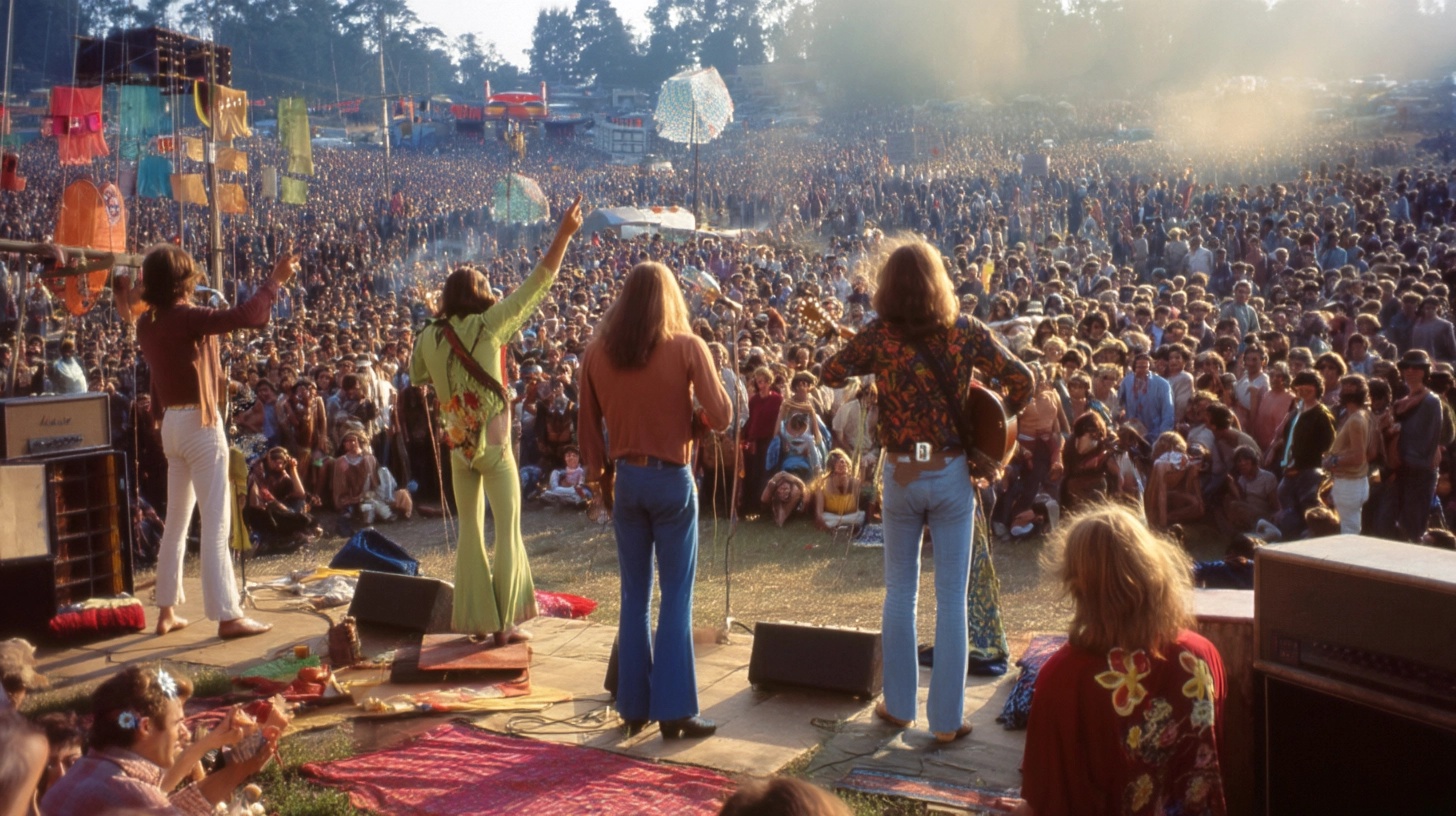
Look at photographs from Woodstock in 1969. Thousands of people captured in countless images, and you won’t find a single fat person. Not one. Scroll through those iconic photos of half a million young people gathered in the mud, and what strikes you isn’t just the fashion or the hair—it’s that everyone is thin. Not fitness-model thin, just normal thin, the way humans looked for thousands of years before something went catastrophically wrong.
Fast forward fifty-five years, and nearly three-quarters of American adults are overweight or obese. We went from a society where being fat was rare to one where being thin is unusual. What changed wasn’t human genetics or willpower—we didn’t suddenly become lazy or undisciplined. What changed was the environment. We engineered a maze of wrong choices and placed them front and center at every storefront, every restaurant, every convenience store. We supersized portions, hyper-processed food to trigger addiction responses, and built a food system optimized for profit rather than health.
The Woodstock generation didn’t have more discipline. They had a food environment that hadn’t yet been weaponized against human biology. Now we’re drowning in engineered calories designed to override satiety signals, and we blame individuals for failing to navigate a system designed to make them fail.
The Maze We Built and Can’t Escape
Between 1969 and now, we transformed food from sustenance into entertainment, from nutrition into engineering. Food scientists learned to combine sugar, fat, and salt in ratios that hijack reward pathways. Portion sizes doubled, then tripled. High-fructose corn syrup infiltrated everything. Ultra-processed foods that didn’t exist at Woodstock now constitute 60% of American diets.
We didn’t just change what we eat—we changed the entire food environment. Fast food restaurants on every corner. Vending machines in schools. Convenience stores selling candy bars bigger than meals used to be. Advertising budgets worth billions convincing us that supersized value meals represent smart choices. Every economic incentive points toward selling more food regardless of whether people need it.
The kid in 1969 walked past grocery stores selling actual food. The kid today walks past engineered calorie delivery systems marketed by psychological experts who studied exactly how to make healthy choices nearly impossible. We built a maze where virtually every path leads to obesity, then wonder why everyone’s getting lost.
How AI Dismantles the Maze by 2045
AI won’t fix obesity through information or willpower—it will fix it by creating personalized intervention systems so sophisticated that bad choices become nearly impossible to make consistently. Your AI health companion will monitor everything: blood glucose through continuous sensors, metabolic rate through wearables, caloric intake through image recognition identifying every bite. Hormone levels, gut biome composition, sleep quality, stress markers—comprehensive data feeding algorithms that understand your body better than you do.
When you reach for the supersized meal, your AI doesn’t lecture—it intervenes. Payment declined at checkout: “This exceeds your glycemic budget. Alternatives available nearby.” Your phone suggests restaurants serving what your body actually needs. Your car’s navigation automatically routes to the healthier choice. You can override it, but overriding requires conscious effort. The AI makes healthy choices automatic and unhealthy choices something you have to fight for.
That reversal—making bad choices require willpower instead of good ones—is what finally returns us to Woodstock-level health.
When Stores Stop Profiting from Your Poor Health
By 2040, AI managing your health will negotiate directly with retailers. Your personal AI informs the grocery store’s AI which products you shouldn’t buy based on metabolic profile, genetics, and current health metrics. When you approach the cookie aisle, your shopping app simply doesn’t display them. They’re algorithmically filtered from your reality before you face temptation.
Stores cooperate because insurance companies, healthcare systems, and government programs create incentives for retailers helping customers make better choices. Stores persistently selling harmful food to vulnerable customers face penalties. Stores promoting healthier options get rewards.
The food environment that created the obesity crisis gets dismantled by the same force that created it—economic incentives. Except now the incentives align with health rather than overconsumption.
Personalized Metabolism vs. Generic Dietary Advice
The breakthrough isn’t just preventing bad choices—it’s optimizing metabolism so your body processes food efficiently. AI analyzes your gut microbiome and prescribes probiotics improving nutrient extraction and appetite regulation. It monitors hormone responses and recommends interventions restoring proper leptin and ghrelin signaling.
Your AI identifies exactly which foods cause inflammation, blood sugar spikes, or metabolic dysfunction in your specific body. Not the generic dietary pyramid—personalized nutrition based on how your unique biology responds. The pasta fine for others triggers problems in you, so your AI systematically removes it from your options.
This is the opposite of the one-size-fits-all approach that failed for fifty years. It’s precision intervention calibrated to your metabolism, not generic advice applied to populations.
The Social Shift Back to Normal
By 2045, having an AI health companion becomes socially expected. Social pressure that once normalized overeating will normalize algorithmic health management. Restaurants display real-time health scores for menu items based on who’s ordering. The burger fine for your friend shows up red-flagged for you. Social dining becomes transparently health-managed, with everyone’s AI negotiating meal selection to optimize group health.
The environment shifts back toward what existed at Woodstock—not through culture change but through algorithmic intervention. Being thin becomes normal again not because people try harder but because the system stops actively making them fat.
What Victory Looks Like
Obesity rates drop from 42% to under 10% by 2045. Not through willpower or education, but through AI systems making healthy eating automatic, unhealthy eating difficult, and metabolism optimization personalized. The storefront maze promoting bad choices gets replaced by algorithmic filtering removing temptation before you encounter it.
We return to Woodstock body types not by going backward but by going forward—using technology to dismantle the engineered food environment that never should have been built. The photographs from 2045 will look like the photographs from 1969, but the path there runs through comprehensive AI intervention rather than cultural change.
Final Thoughts
Between Woodstock and now, we built a food system that makes obesity nearly inevitable. AI will build a system that makes health nearly automatic. The cost is autonomy—you’re not choosing what to eat based on preference but accepting algorithmic recommendations based on health optimization. The benefit is that we return to a world where virtually everyone is a healthy weight, the way humans looked for millennia before we engineered our own obesity crisis.
After all, those Woodstock photographs show what humans look like when the food environment isn’t actively trying to make them fat. AI will return us there by making the environment actively work to keep us healthy, whether we consciously choose it or not.
Related Articles:
When Your Body Learns to Regrow What Was Lost: The End of Permanent Replacement Parts
When Your House Becomes Your Therapist: The Emotional Architecture of 2035
Building a More Valuable Human: Why Your Life Is Worth $2 Billion (And Rising)