New AI Model Enhances Understanding of Human Decision-Making

Human beings often behave irrationally—or as an artificially intelligent robot might say, “sub-optimally.” Data, the emotionless yet affable android from Star Trek: The Next Generation, frequently struggled to understand humans’ flawed decision-making processes. If he had been programmed with a new model developed by researchers at MIT and the University of Washington, he might have had an easier time.

In a paper published last month, Athul Paul Jacob, a Ph.D. student in AI at MIT, Dr. Jacob Andreas, his academic advisor, and Abhishek Gupta, an assistant professor in computer science and engineering at the University of Washington, described a novel approach to modeling an agent’s behavior. They employed their method to predict human goals and actions.

Continue reading… “New AI Model Enhances Understanding of Human Decision-Making”

AI-Powered Smartphone Tool from RMIT University Enhances Early Stroke Detection

Biomedical engineers at RMIT University have unveiled a groundbreaking smartphone tool equipped with AI capabilities that could revolutionize the early detection of strokes. This innovative technology uses AI to analyze facial expressions, assisting paramedics in quickly identifying stroke symptoms, which could save lives and prevent long-term disability.

Strokes occur when blood flow to the brain is obstructed, depriving brain cells of oxygen and nutrients. As a leading cause of disability and death worldwide, timely intervention during a stroke is critical. Every minute counts and can significantly influence a patient’s recovery.

Continue reading… “AI-Powered Smartphone Tool from RMIT University Enhances Early Stroke Detection”

University of Bonn Develops AI Software to Predict Crop Growth

Researchers at the University of Bonn have developed innovative software that simulates the growth of field crops using artificial intelligence. By feeding thousands of photos from field experiments into a learning algorithm, the software can predict the future development of cultivated plants based on a single initial image. This technology allows for accurate estimation of parameters such as leaf area and yield.

This breakthrough offers significant benefits for farmers, helping them determine optimal plant combinations and fertilizer choices to maximize yield. In the future, farmers will increasingly rely on computer support to answer critical questions about crop management.

Continue reading… “University of Bonn Develops AI Software to Predict Crop Growth”

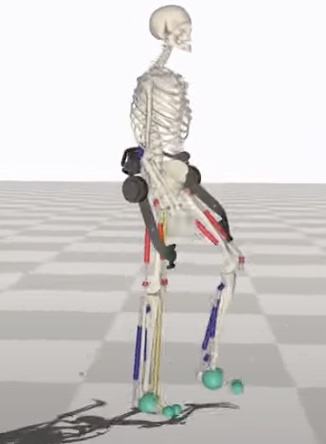
New AI Framework Revolutionizes Wearable Exoskeletons for Enhanced Human Mobility

“This work proposes and demonstrates a new machine-learning framework that bridges the gap between simulation and reality to autonomously control wearable robots to improve mobility and health of humans,” says Hao Su, an associate professor of mechanical and aerospace engineering at North Carolina State University.

“Exoskeletons have enormous potential to improve human locomotive performance,” Su, the corresponding author of a new study published in Nature, explains. “However, their development and broad dissemination are limited by the requirement for lengthy human tests and handcrafted control laws.”

Continue reading… “New AI Framework Revolutionizes Wearable Exoskeletons for Enhanced Human Mobility”

AI Breakthrough: UK Company Develops Rare-Earth-Free Magnet

As the demand for rare earth materials continues to grow, innovative solutions are emerging to address this need. UK deep-tech company Materials Nexus has announced the development of a new rare-earth-free permanent magnet, created using its advanced AI platform. This AI-driven process was 200 times faster than traditional methods, offering a promising alternative in a world increasingly reliant on powerful magnets.

With the shift from internal combustion engines to electric mobility, the need for compact, high-power motors is skyrocketing. Currently, permanent magnet motors are the dominant choice in the automotive industry, powering over 80% of modern electric vehicles (EVs). Materials Nexus projects that the demand for permanent magnets in the EV sector alone will increase tenfold by 2030. Beyond automotive applications, these magnets are essential in robotics, drones, wind turbines, and HVAC systems.

Continue reading… “AI Breakthrough: UK Company Develops Rare-Earth-Free Magnet”

AI-Powered Superconducting Magnet Breakthrough Promises Affordable MRIs and Future Electric Transport

In a potential game-changer for affordable magnetic resonance imaging (MRI) machines and future electrified transport systems, scientists have developed the world’s strongest iron-based superconducting magnet using artificial intelligence (AI).

Superconducting magnets are highly valued for their ability to produce strong and stable magnetic fields without significant power consumption. This capability is crucial for technologies such as MRIs, which rely on magnetic fields to generate clear, three-dimensional images of soft tissue.

Continue reading… “AI-Powered Superconducting Magnet Breakthrough Promises Affordable MRIs and Future Electric Transport”

AI Reduces Radiologists’ Workload and Improves Breast Cancer Screening Efficiency

Researchers at the University of Copenhagen have demonstrated that using a commercially available AI system can reduce the workload of radiologists by over 33% while enhancing the overall performance of breast cancer screenings.

Mammography exams are routinely used for early detection of breast cancer, significantly reducing mortality rates. However, these exams create a substantial workload for radiologists, who must read numerous mammograms, most of which do not warrant patient recall. “The reading workload is further compounded when screening programs employ double reading to improve cancer detection and decrease false-positive recalls,” said Andreas D. Lauritzen, PhD, a researcher at the University of Copenhagen and Gentofte Hospital in Denmark. Recalling women for further tests also increases the workload, a challenge exacerbated by the shortage of specialized breast radiologists.

Continue reading… “AI Reduces Radiologists’ Workload and Improves Breast Cancer Screening Efficiency”

Innovative AI Technique Revolutionizes Data Reconstruction Across Various Fields

An innovative approach to artificial intelligence (AI) now enables the reconstruction of extensive datasets, such as overall ocean temperature, from a small number of field-deployable sensors using low-powered edge computing. This method holds broad applications across industry, science, and medicine.

“We developed a neural network that allows us to represent a large system in a very compact way,” said Javier Santos, a researcher at Los Alamos National Laboratory. “That compactness means it requires fewer computing resources compared to state-of-the-art convolutional neural network architectures, making it well-suited to field deployment on drones, sensor arrays, and other edge-computing applications that put computation closer to its end use.”

Continue reading… “Innovative AI Technique Revolutionizes Data Reconstruction Across Various Fields”

AI-Powered Headphones Revolutionize Noise Isolation and Transparency

When considering a pair of premium headphones or earbuds, two critical factors often come to mind: noise isolation and transparency. Active Noise Cancellation (ANC) blocks all external noise, allowing you to hear only the audio from your device. Transparency mode lets some ambient sound through while still playing your music. Apple and Sony have excelled in these technologies, but no current audio gear can focus on a single external sound source.

Imagine wanting to hear only one person’s voice in a crowded room. Researchers at the University of Washington have developed an AI-driven headphone kit that allows you to focus on a specific person’s speech. This technology, called “Target Speech Hearing,” uses a brief visual cue—looking at the person for three to five seconds—to isolate their voice. Remarkably, it works even if you’re moving around and not directly facing the speaker.

Continue reading… “AI-Powered Headphones Revolutionize Noise Isolation and Transparency”

The New Contenders in AI Hardware: Challenging Nvidia’s Dominance

In recent years, Nvidia has achieved significant success by pivoting to artificial intelligence (AI), with large language models and GPU-accelerated “premium AI PC” experiences becoming the hot trend in 2024. However, newer and smaller companies are now vying for market share, and they are not the usual suspects.

As reported by The Economist, there are noteworthy developments in the GPU field beyond Nvidia and AMD, driven by the demands of AI computing. Today’s large language models often run on setups featuring interconnected GPUs and memory, exemplified by Cerebras Systems’ innovative hardware.

Continue reading… “The New Contenders in AI Hardware: Challenging Nvidia’s Dominance”

Expedia Unveils AI Assistant “Romie” for Enhanced Travel Planning

In a strategic move to outpace its competitors, online travel agency Expedia announced the upcoming launch of an AI assistant designed to enhance features like search, itinerary building, trip planning, and real-time updates, including flight delays.

Expedia, which operates a variety of online travel aggregators and metasearch engines, is introducing a bot named Romie. This bot, trained on a combination of in-house and OpenAI models, will assist users in searching for hotels, building trip itineraries, and making minor adjustments. Romie can be integrated into iMessage chat groups or used one-on-one on WhatsApp, functioning behind a phone number and leveraging ChatGPT.

Continue reading… “Expedia Unveils AI Assistant “Romie” for Enhanced Travel Planning”

Nike Unveils AI-Driven Product Design Using Athlete Data

Sportswear giant Nike is developing a generative AI model to design products using its extensive athlete performance data, Dezeen reports.

According to Nike’s chief innovation officer John Hoke, the company aims to leverage its exclusive athlete performance data with a custom-built large language model (LLM). LLMs are a text-based form of artificial intelligence trained to recognize language patterns, with OpenAI’s ChatGPT being a prominent example.

Continue reading… “Nike Unveils AI-Driven Product Design Using Athlete Data”
Discover the Hidden Patterns of Tomorrow with Futurist Thomas Frey
Unlock Your Potential, Ignite Your Success.

By delving into the futuring techniques of Futurist Thomas Frey, you’ll embark on an enlightening journey.

Learn More about this exciting program.