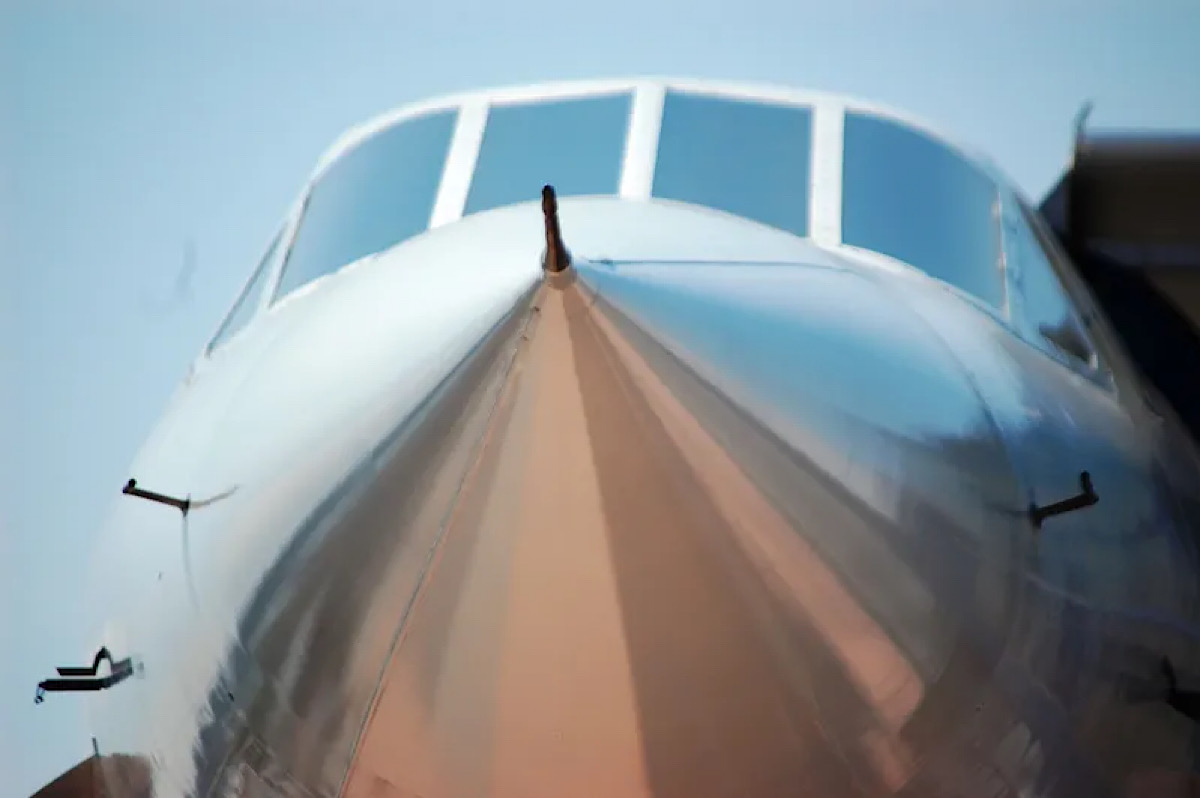
Spaceplane company announces aircraft that will fly from Los Angeles to Tokyo in an hour

HOUSTON — An aerospace company has announced a plane they claim will fly passengers around the world and still get them back home in time for dinner!

Houston start-up Venus Aerospace says the Mach 9 hypersonic aircraft will be capable of “one-hour global travel.” The firm introduced their first conceptual vehicle design, the “Stargazer,” at the UP.Summit in Bentonville, Arkansas.

They explained the Venus Vehicle Engineering Team has been working on this iteration since the company’s founding in 2020.

Continue reading… “Spaceplane company announces aircraft that will fly from Los Angeles to Tokyo in an hour”

“Three-way race set for Korea’s flying car commercialization in 2025” – Korea Herald

The Korea Herald reports on the “race for leadership of South Korea’s flying car market, with SK Telecom, Hyundai Motor Group and Kakao Mobility announcing their bids by forging consortiums with local companies and submitting their business proposals to join the K-UAM Grand Challenge, a government-led program to select an urban air mobility business operator.”

The newspaper reports:

“They are vying for the lucrative sector that is expected to surpass 1,800 trillion won (USD1.4 trillion) in value by 2040. They aim to work with the government on UAM demonstration tests and to launch their own respective commercial services in 2025” says Mr Da-sol.

Continue reading… ““Three-way race set for Korea’s flying car commercialization in 2025” – Korea Herald”

Inside the Government Fiasco That Nearly Closed the U.S. Air System

THE UPGRADE TO 5G WAS SUPPOSED TO BRING A PARADISE OF SPEEDY WIRELESS. BUT A CHAOTIC PROCESS UNDER THE TRUMP ADMINISTRATION, ALLOWED TO FESTER BY THE BIDEN ADMINISTRATION, TURNED IT INTO AN EPIC DISASTER. THE PROBLEMS HAVEN’T BEEN SOLVED.

by Peter Elkind

The prospect sounded terrifying. A nationwide rollout of new wireless technology was set for January, but the aviation industry was warning it would cause mass calamity: 5G signals over new C-band networks could interfere with aircraft safety equipment, causing jetliners to tumble from the sky or speed off the end of runways. Aviation experts warned of “catastrophic failures leading to multiple fatalities.”

To stave off potential disaster, the Federal Aviation Administration prepared drastic preventive measures that would cancel thousands of flights, stranding passengers from coast to coast and grounding cargo shipments. “The nation’s commerce will grind to a halt,” the airlines’ trade group predicted.

On Jan. 18, following nail-biting negotiations involving CEOs, a Cabinet secretary and White House aides, an eleventh-hour agreement averted these threats of aviation armageddon. Verizon and AT&T agreed not to turn on more than 600 5G transmission towers near the runways of 87 airports and to reduce the power of others.

Disaster was averted. But the fact that it was such a close call was shocking nonetheless. How did a long-planned technology upgrade result in a standoff that seemed to threaten public safety and one of the nation’s largest industries? The reasons are numerous, but it’s undeniable that the new 5G deployment represents an epic debacle by multiple federal agencies, the regulatory equivalent of a series of 300-pound football players awkwardly fumbling the ball as it bounces crazily into and out of their arms.

More than anything, a deep examination of the fiasco reveals profound failures in two federal agencies — the Federal Communications Commission and the FAA — that are supposed to serve the public. In the case of the FCC, the agency not only advocated for the interests of the telecommunications industry but adopted its worldview, scorning evidence of risk and making cooperation and compromise nearly impossible. In the case of the FAA, the agency inexplicably stayed silent and passively watched preparations for 5G proceed over a period of years even as the aviation industry sounded ever more dire warnings that the new networks could put air safety at risk.

Continue reading… “Inside the Government Fiasco That Nearly Closed the U.S. Air System”

The First Electric Airplane That You Can Fast-Charge Like Your Tesla Is Coming Soon

Diamond Aircraft’s eDA40 can be recharged in about 20 minutes. You just can’t do it at your local Walmart. 

By J. GEORGE GORANT

Diamond Aircraft’s eDA40 is the result of several years’ worth of experimentation and testing of both hybrid and pure electric systems. The Austrian manufacturer is now poised to move forward with an electrified version of its DA40, a single-engine trainer aircraft that’s already certified. The eDA40’s twist is simple but practical: It plugs into DC fast-charging systems.

The charging apparatus is supplied by Electric Power systems, which develops certified systems for Aerospace, Defense, Automotive and Marine. The eDA40 will be the first electric plane that is Part 23 certified by the FAA and Europe’s aviation safety agency, EASA, with this charging option. That doesn’t mean you can land in the parking lot of your nearest big-box store and plug into one of the auto chargers. But in theory, you could.

Continue reading… “The First Electric Airplane That You Can Fast-Charge Like Your Tesla Is Coming Soon”

Maker of $1 million flying motorbike prepares for IPO in Japan

The US$777,000 (S$1.1 million) single-person transporter can hit a max speed of 80kmh and travel up to 40 minutes per charge. 

TOKYO (BLOOMBERG) – A former Merrill Lynch derivatives trader with a passion for Star Wars is preparing to take his flying motorbike start-up public in Japan.

Tokyo-based ALI Technologies was founded by Mr Shuhei Komatsu as a drone maker in 2016 before moving on to more ambitious ventures, opening sales of its Xturismo Limited bike in October. The US$777,000 (S$1.1 million) single-person transporter can hit a maximum speed of 80kmh and travel up to 40 minutes per charge, according to the company.

The motorbike has so far largely figured as a curio at public events such as a recent baseball game, but ALI president Daisuke Katano said there is strong interest in it from Middle Eastern nations.

“The need for these bikes will be higher in places with desert or other difficult terrain,” Mr Katano said in an interview. “The vehicle will enable people to travel where roads are bad and inaccessible to cars, as well as across bodies of water.”

The company has selected lead underwriters for an initial public offering (IPO) on Tokyo’s Mothers market for start-ups in what will be the country’s first debut of its kind. It is presently engaged in discussions with the Tokyo Stock Exchange, Mr Katano said, declining to specify an estimated valuation or a timeline for the offering.

Flying personal vehicles have been the stuff of science fiction for decades before Star Wars, which featured a famous racing scene with pods zooming along close to ground level.

Continue reading… “Maker of $1 million flying motorbike prepares for IPO in Japan”

Concorde has nothing on a plane being developed in Houston

By Barbara Schwarz

Venus Aerospace is a team of literal rocket scientists and they are developing a hypersonic aircraft that enables one hour travel anywhere in the world. It takes off and lands like a regular jet. But once it’s over water and is at 35,000 feet, the rockets kick in.

Venus CEO and co-founder Sassie Duggleby says; “It boosts to the edge of the atmosphere where you are traveling at 170,000 feet at Mach 9 and cruise across the world, coming down on the other side. Los Angeles to Tokyo in one hour.”

Duggleby says you cannot fire off the rocket attached to the aircraft right off the bat because rockets are incredibly loud.

“If you’ve ever been around a rocket that takes off, it makes an incredible amount of noise,” Duggleby said. “They break windows five miles away. There are issues with sonic booms over land so initially, we would have to be out over water.”

Any big body would do, including the Gulf of Mexico close to the company’s hometown of Houston.

Continue reading… “Concorde has nothing on a plane being developed in Houston”

How a jetpack design helped create a flying motorbike

The Speeder is powered by four small jet engines

By Ben Morris

At around the age of 12, David Mayman tried to build a helicopter out of fence posts and an old lawn mower.

Needless to say, it did not go well. His contraption didn’t fly and he was made to fix the fence.

“I was brought up in a way that I guess challenged me scientifically… I was always told that nothing’s impossible,” he says.

Perhaps he got a bit ahead of himself during his childhood in Sydney, but as an adult Mr Mayman, has built innovative machines that really do fly.

After selling his online listings business Mr Mayman developed a jetpack, which in 2015 he flew around the Statue of Liberty.

Continue reading… “How a jetpack design helped create a flying motorbike”

The technology behind ZEVA’s plan to put an eVTOL in every garage

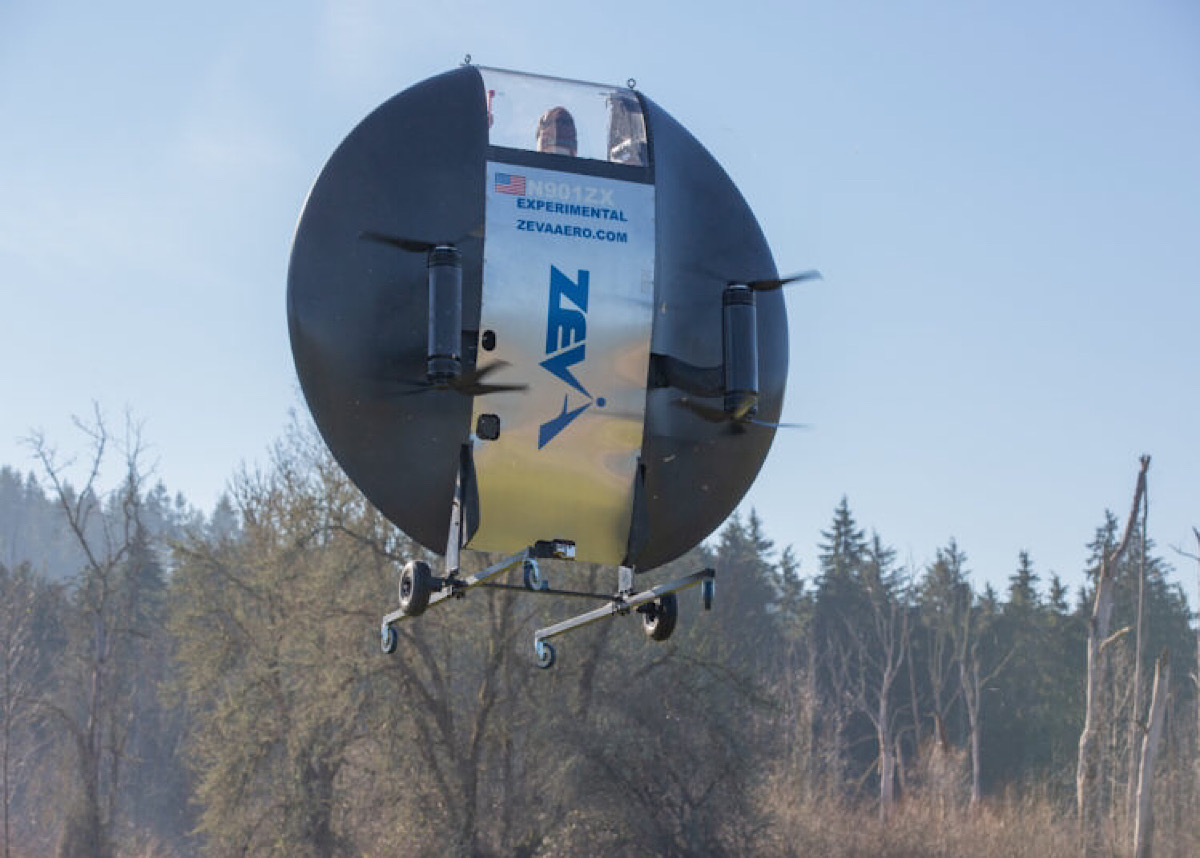
ZEVA plans to certify the Zero eVTOL as an experimental-class aircraft with the U.S. Federal Aviation Administration (FAA) within the next six months, placing it in the same company as kit planes. 

Stephen Tibbitts comes across as the antithesis of a maverick Silicon Valley CEO. The mild-mannered, soft-spoken chief executive of ZEVA has the even keel of a college professor as he explains his plans for the ZEVA Zero, a disc-shaped eVTOL his tech startup is developing in Tacoma, Washington.

He is not brash or bombastic. There is no hint of Elon Musk or Steve Ballmer-style showmanship. But his ambitions for the Zero are not small.

“I think eVTOL represents the largest opportunity of our lifetimes,” said Tibbitts, speaking over Zoom. “Bill Gates [predicted] a computer on every desk. We’re saying a ZEVA in every garage. That’s our goal.”

After about four years of development, that goal appears to have taken a leap forward. In early January, a full-sized prototype of the ZEVA Zero achieved its first untethered, powered, test flight.

Its eight zero-emission, electric-motor-driven propellers lifted the disc — 8.5 feet in diameter — into a steady hover, then smoothly maneuvered forward several meters before launching high over a grassy field in Washington’s rural Pierce County.

“I feel ecstatic, super proud of the team and our accomplishment,” Tibbitts said. “And hopefully, that’ll help us really get out of the starting blocks. We need to raise a significant amount of money to get through transition flight and certification and get it into production.”

Continue reading… “The technology behind ZEVA’s plan to put an eVTOL in every garage”

China unveils new 7,000mph ‘winged rocket’ hypersonic plane that could fly from New York to Beijing in ONE HOUR

By Tariq Tahir

PLANS for hypersonic plane capable of flying between Beijing and New York in an hour have been unveiled by a Chinese company.

The “rocket with wings” is being designed to fly at an astonishing 7,000mph and tests are reportedly due to begin next year.

Scientists hope it will be ready to take to the air by 2024.

The futuristic plane is being developed by Space Transportation, which hopes to conduct a full point-to-point flight by the end of the decade, reports Space.com.

A video released by the company shows the plane detaching from the wing powered by rockets after take-off, before continuing to its destination.

Meanwhile, the wing and boosters then land back on the launch pad.

When it arrives, the plane will land using three legs that unfold from the rear.

The company boasts it will be able to link New York with the capital of China in just an hour.

“We are developing a winged rocket for high-speed, point-to-point transportation, which is lower in cost than rockets that carry satellites and faster than traditional aircraft,” the firm told Chinese media.

Continue reading… “China unveils new 7,000mph ‘winged rocket’ hypersonic plane that could fly from New York to Beijing in ONE HOUR”

This drone flies using da Vinci’s 530-year-old helicopter design

Leonardo’s aerial screws actually can work when built with modern materials, University of Maryland engineers find with a drone called Crimson Spin.

By Stephen Shankland

In the late 1480s, Leonardo da Vinci sketched out a clever design for a one-person helicopter propelled by an “aerial screw.” You may have seen his drawings and wondered whether one of the choppers could ever take flight. 

Now we know the answer. The Italian genius was right. 

Starting in 2019, a University of Maryland engineering team designed and tested the underlying technology as part of a design contest. Then over the last year and a half, team member Austin Prete built Crimson Spin, an unmanned quadcopter drone using da Vinci’s screwlike design, and flew it on several brief journeys.

Continue reading… “This drone flies using da Vinci’s 530-year-old helicopter design”

Elroy Air unveils autonomous, hybrid-electric VTOL cargo aircraft – Chapparal

The craft’s USP is its end-to-end autonomous vertical take-off and landing (VTOL) aerial cargo system.

San Francisco-based Elroy Air, on Wednesday, unveiled its pre-production aircraft model – the Chapparal – fitted with the autonomous aerial cargo system. The craft’s USP is its end-to-end autonomous vertical take-off and landing (VTOL) aerial cargo system.

With this system in place, the Chaparral can autonomously pick up cargo in the weight range of 300-500 lbs and deliver it by air up to a distance of 300 miles. Also Read – Wingcopter and UAV LATAM team up for drone delivery operations in Peru David Merrill, Elroy Air co-founder and CEO, said, “The Chaparral is a first-of-kind autonomous air cargo system that builds on more than 100 years of American aviation and aircraft development history.”

Explaining how the Chaparral can transform the future of express logistics, Merril said, “It is built for full end-to-end automation, and will efficiently enable express shipping in thousands of new areas. Essentially, it is a delivery drone that’s faster than ground transport and lower cost than conventional aircraft.” Also Read – Volatus secures first production delivery slot for the Natilus Large Remotely Piloted Cargo Drone Clint Cope, co-founder and president of Elroy Air, said, “We have designed an aircraft that behaves like a hybrid between a rough-and-ready helicopter and a battle-hardened bush plane. It can pick up cargo anywhere with a 50 square foot landing area. The Chaparral will be a vital logistics link for people around the world with unreliable roadways and in remote and rural areas that take longer to reach today.”

Continue reading… “Elroy Air unveils autonomous, hybrid-electric VTOL cargo aircraft – Chapparal”

World’s First Commuter Electric Plane Is Preparing for Maiden Flight

The prototype e-plane, named Alice, can accommodate nine passengers and two crew members.

By Sissi Cao 

The world’s first all-electric “commuter” plane, Alice, made by Israeli company Eviation, is preparing for its first test flight at an airport near Seattle.

A prototype of Alice was spotted on Monday at Arlington Municipal Airport north of Seattle, Washington, where it performed engine tests in preparation for a high-speed taxi test.

Alice made its first public appearance at the Paris Air Show in 2019. Eviation claimed the electric aircraft could reduce maintenance and operating costs by up to 70 percent compared with commercial jets. The latest iteration of Alice features a fly-by-wire system made by Honeywell and boasts a range of 440 nautical miles and a maximum cruise speed of 250 knots.

Alice’s “commuter” configuration can accommodate nine passengers and a crew of two. The plane can also be transformed into an “executive” configuration, designed for fewer people in business class-like seating, and a “cargo” configuration that offers a 450-cubic-foot, temperature-controlled cargo bay.

Eviation CEO Omer Bar-Yohay told FLYING magazine on Monday that Alice was only “five to six [nice weather] testing days away from starting the flight campaign.”

Eviation took Alice for a low-speed taxi test on December 17, the same date 118 years ago when the Wright Brothers test flew their first airplane. Bar-Yohay posted a video of the test on Twitter the next day and wrote, “December 17th, 1903 was a historic day as the Wright Brothers changed the world forever with the first powered flight. We just taxied Alice yesterday…no big deal.”

Continue reading… “World’s First Commuter Electric Plane Is Preparing for Maiden Flight”
Discover the Hidden Patterns of Tomorrow with Futurist Thomas Frey
Unlock Your Potential, Ignite Your Success.

By delving into the futuring techniques of Futurist Thomas Frey, you’ll embark on an enlightening journey.

Learn More about this exciting program.