Stroke victims could have more time to seek treatment that could reduce harmful effects on the brain, thanks to tiny blobs of gelatin that could deliver the medication to the brain non-invasively.
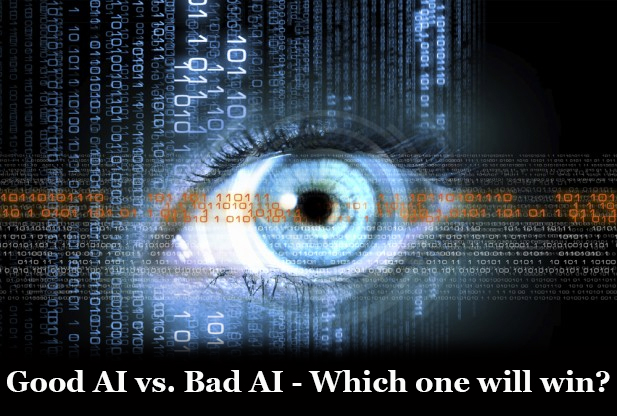
What will intelligent machines mean for society and the economy in 30, 50 or even 100 years from now?
That’s the question that Stanford University scientists are hoping to take on with a new project, the One Hundred Year Study on Artificial Intelligence (AI100).
Ray Kurzweil: Stephen Hawking, the pre-eminent physicist, recently warned that artificial intelligence (AI), once it surpasses human intelligence, could pose a threat to the existence of human civilization. Elon Musk, the pioneer of digital money, private spaceflight and electric cars, has voiced similar concerns.
The goal of the research was to focus on the target frequencies while ignoring the distractor frequencies.
As we get older, we have an increasingly harder time ignoring distractions. According to new research in the Cell Press journal Neuron, by learning to discriminate a sound amidst progressively more disruptive distractions, we can diminish our distractibility.
Futurist Thomas Frey: I’ve been closely watching the debate on artificial intelligence with people like Rodney Brooks saying it’s only a tool, and others like Elon Musk and Stephen Hawking giving bone chilling warnings of how it could lead to the destruction of all humanity.
“Transcranial direct current stimulation” (tDCS) involves passing electricity through your head. The current is relatively weak, so it’s not like the electro-convulsive therapy (ECT) used to treat extreme depression in mental institutions; sometimes called “deep brain stimulation.”
It is difficult reliably to distinguish different “disorders.”
By Peter Kinderman: The idea that our more distressing emotions such as grief and anger can best be understood as symptoms of physical illnesses is pervasive and seductive. But in my view it is also a myth, and a harmful one. Our present approach to helping vulnerable people in acute emotional distress is severely hampered by old-fashioned, inhumane and fundamentally unscientific ideas about the nature and origins of mental health problems. We need wholesale and radical change, not only in how we understand mental health problems, but also in how we design and commission mental health services.
Exposure to a component of air pollution increases the chances of children developing ADHD by five times.
A link between rising air pollution in urban areas and the rapid increase in diagnosis in ADHD (Attention Deficit Hyperactivity Disorder) has been discovered in a new study.
Futurists started predicting that in just a few decades machines would be as smart as humans soon after computers evolved in the 1940’s. Every year, the prediction seems to get pushed back another year. The consensus now is that it’s going to happen in … you guessed it, just a few more decades.
Paul J. Zak: It is quiet and dark. The theater is hushed. James Bond skirts along the edge of a building as his enemy takes aim. Here in the audience, heart rates increase and palms sweat. I know this to be true because instead of enjoying the movie myself, I am measuring the brain activity of a dozen viewers. For me, excitement has a different source: I am watching an amazing neural ballet in which a story line changes the activity of people’s brains.
Brainform is New Zealand-based company that will print a high quality 3D model of your brain. The company’s mission is simply stated on its website: “We 3D print brains.”
Tweaking our genomes we could make humans drastically smarter.
Scientist Stephen Hsu’s theory is that genetically engineered human beings could have IQs of 1000 or higher. Hsu is something of a scientific polymath, who has done work pertaining to quantum physics, dark energy, finance, and information security, as well as genomics and bioinformatics, or the application of computer science and statistics to biological data. He officially holds the title of Vice-President for Research and Graduate Studies at Michigan State, where he is also a professor of Theoretical Physics.