Light-Activated Molecular Machines Revolutionize Cellular Communication for Improved Disease Treatments

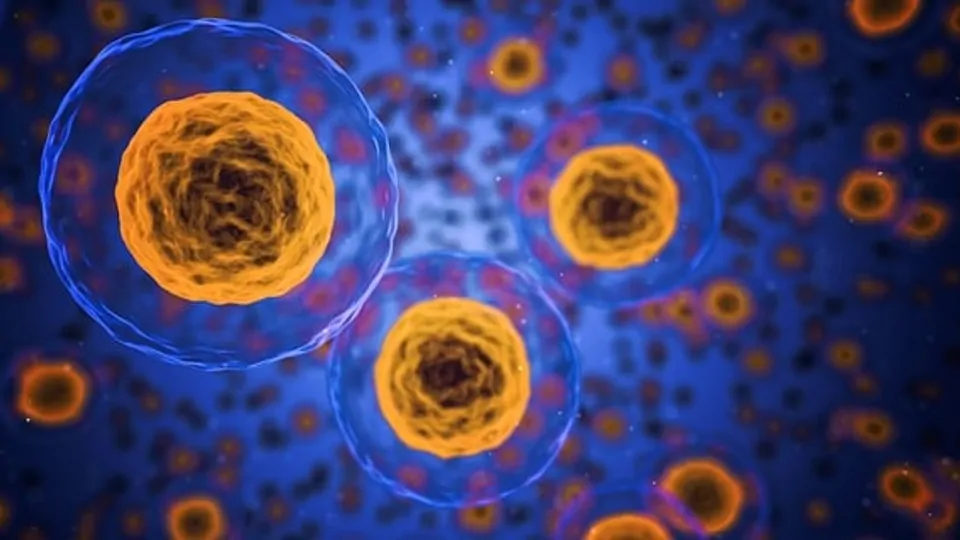
Scientists from Rice University have made a groundbreaking discovery in cellular communication by utilizing light-activated molecular machines to trigger intercellular calcium wave signals. This novel approach offers a powerful strategy for controlling cellular activity and opens up new possibilities for treating heart problems, digestive issues, and more, as reported in Nature Nanotechnology.

Traditionally, drugs have relied on chemical binding forces to initiate specific signaling cascades in the body. However, this pioneering study, led by chemistry graduate student Jacob Beckham, demonstrates the innovative use of mechanical force generated by single-molecule nanomachines to achieve similar results, heralding a new era in drug design.

Continue reading… “Light-Activated Molecular Machines Revolutionize Cellular Communication for Improved Disease Treatments”
LIONESS: Breakthrough Imaging Technology Unravels the Complex Brain Tissue

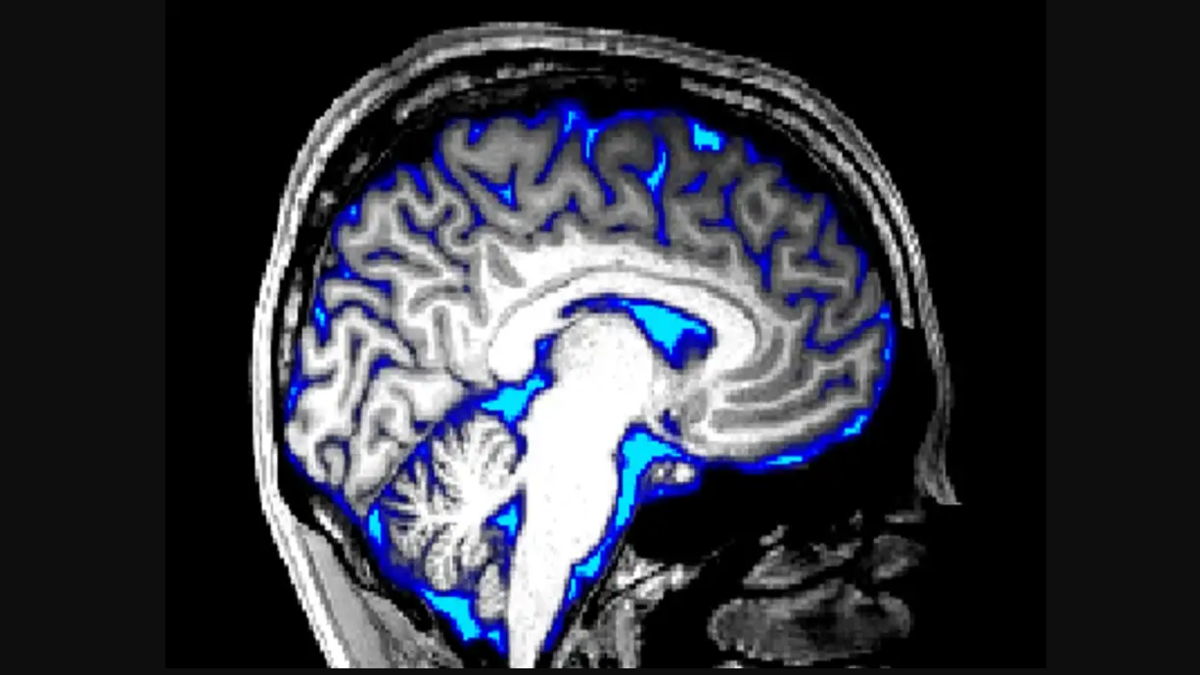
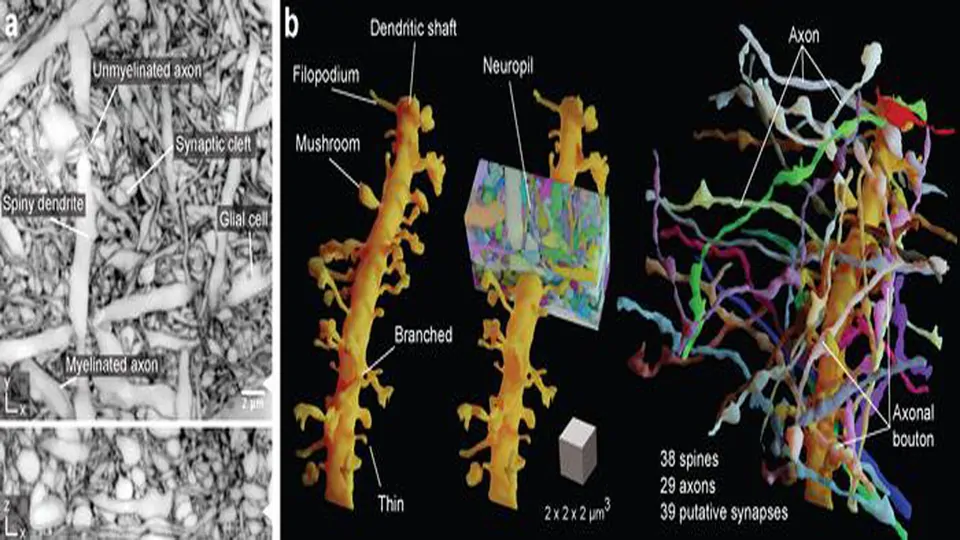
Scientists at MIT have achieved a remarkable breakthrough in neuroscience with the development of LIONESS (Live Information Optimized Nanoscopy Enabling Saturated Segmentation). This cutting-edge imaging and virtual reconstruction technology have the potential to revolutionize brain research, allowing scientists to comprehend the intricate interactions within the human brain at microscopic scales.

Brain tissue, with its intricate web of around 86 billion neurons, is an incredibly complex specimen. LIONESS aims to unravel this complexity, providing a comprehensive, dense reconstruction of living brain tissue with unprecedented spatial resolution. The technology’s unique ability lies in its refined optics and two levels of deep learning, enhancing image quality and identifying different cellular structures in the dense neuronal environment.

Continue reading… “LIONESS: Breakthrough Imaging Technology Unravels the Complex Brain Tissue”

MIT Researchers Develop Cucumber-Inspired Soft Robot for Precise Maneuvering in Tight Spaces

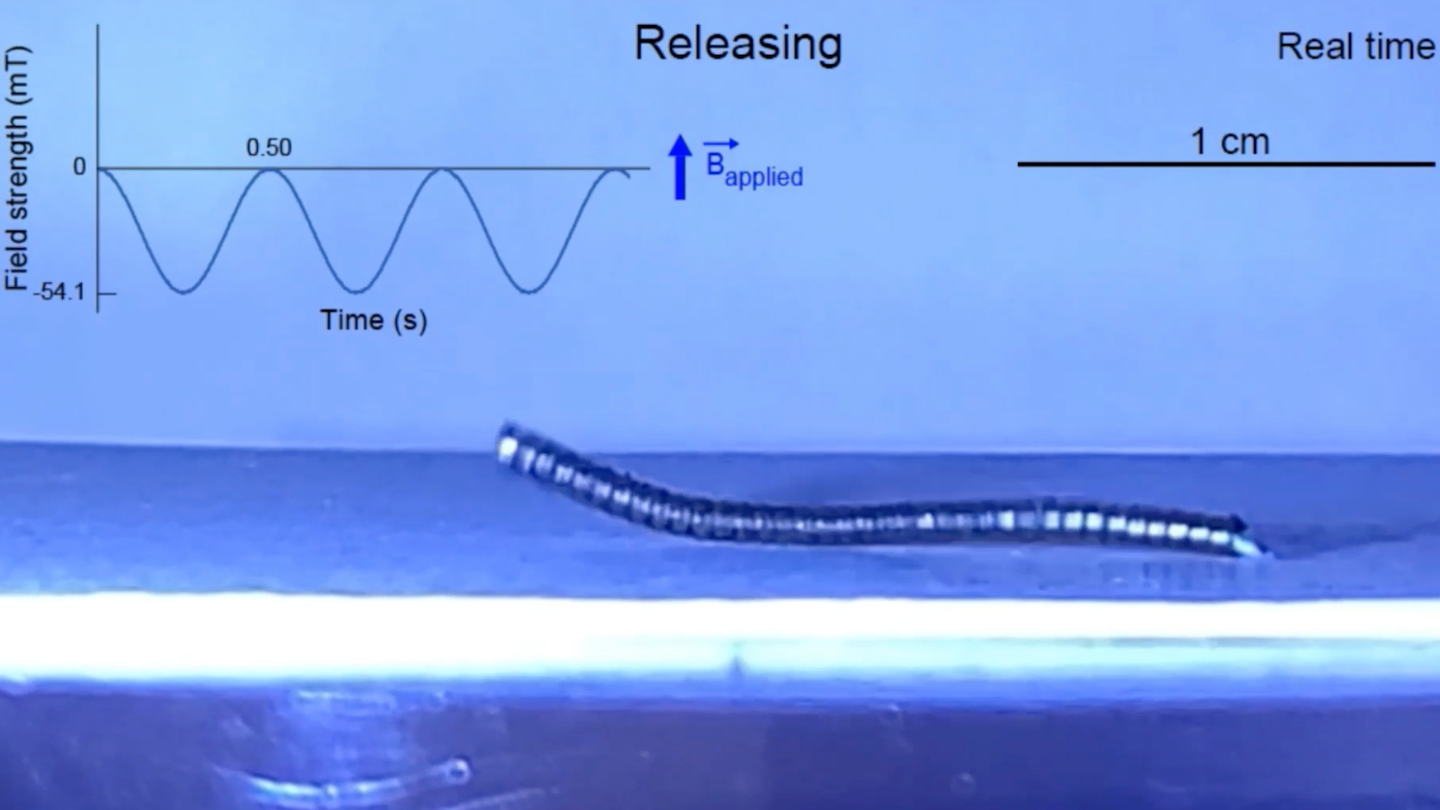
Scientists at MIT have achieved a groundbreaking feat by creating a miniature soft robot, taking inspiration from cucumber vines, which can navigate through hard-to-reach, three-dimensional environments using a single, weak magnetic field. This inchworm-like robot, constructed from magnetized rubber polymer spirals, shows immense potential in maneuvering through tiny spaces, such as human blood vessels.

Traditional locomotive soft robots relied on moving magnetic fields to control their movements. However, MIT’s innovative approach avoids the need for a moving magnet, which may not be suitable for operating in constrained environments. Instead, the researchers designed a stationary instrument that applies a magnetic field to the entire sample, making it safer and more efficient.

Continue reading… “MIT Researchers Develop Cucumber-Inspired Soft Robot for Precise Maneuvering in Tight Spaces”

EPFL Researchers Unveil Groundbreaking Four-Arm Laparoscopic Surgery System with Haptic Foot Interfaces

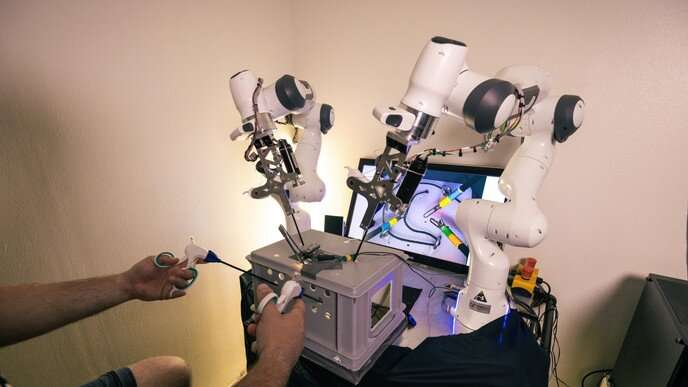
A team of researchers at the École polytechnique fédérale de Lausanne (EPFL) has achieved a remarkable milestone in the realm of laparoscopic surgery by developing the world’s first system that enables surgeons to control four robotic arms. The breakthrough was accomplished through the use of haptic foot interfaces, allowing for enhanced precision, reduced workload, and improved safety during surgical procedures. The remarkable results of this innovative system have been published in The International Journal of Robotics Research, marking a significant advancement in medical technology.

The collaborative effort between EPFL’s research group REHAssist and the Learning Algorithms and Systems Laboratory (LASA) led to the creation of a cutting-edge system that grants surgeons the ability to control two additional robotic arms alongside their natural limbs. The sophisticated haptic foot interfaces offer five degrees of freedom, enabling the surgeon to control a manipulative instrument with each hand, while one foot manages an endoscope/camera, and the other foot operates an actuated gripper.

Continue reading… “EPFL Researchers Unveil Groundbreaking Four-Arm Laparoscopic Surgery System with Haptic Foot Interfaces”

CHARM: Revolutionizing Brain Tumor Surgery with Real-Time AI Molecular Diagnostics

Harvard Medical School (HMS) researchers have unveiled a groundbreaking AI tool, named CHARM (Cryosection Histopathology Assessment and Review Machine), designed to revolutionize the treatment of aggressive brain tumors. This cutting-edge tool can aid doctors during surgery by rapidly identifying genetic traits that guide surgical procedures.

Previously, the process of decoding the DNA of brain tumors, particularly gliomas, required days or even weeks. However, the CHARM tool swiftly studies images to extract the genetic profile of these tumors, providing detailed diagnoses to surgeons in real-time as they operate. Kun-Hsing Yu, the senior author of the research report published in the journal Med, highlights the potential benefits of this AI-driven assistance in improving patient outcomes and reducing the need for multiple surgeries.

Continue reading… “CHARM: Revolutionizing Brain Tumor Surgery with Real-Time AI Molecular Diagnostics”

Researchers Develop Non-Invasive Photonic Radar System for Precise Vital Sign Monitoring

Constant monitoring of vital health signs is essential in various clinical settings, such as intensive care units, aged care facilities, and safety monitoring situations. However, existing wired or invasive contact systems can be inconvenient or unsuitable for certain patients. To address this, scientists from the University of Sydney Nano Institute and the NSW Smart Sensing Network have created a photonic radar system that enables highly precise and non-invasive monitoring. Their research, published in Nature Photonics, demonstrates the potential for remote vital-sign monitoring and multiple patient tracking from a centralized station.

The newly developed radar system was tested on cane toads and devices simulating human breathing, successfully detecting pauses in breathing patterns. The advantage of this approach is its ability to monitor vital signs without physical contact, ensuring patient comfort and reducing the risk of cross-contamination, particularly in infection control settings. The photonic radar system utilizes a light-based, photonics approach instead of traditional electronics, generating and processing radar signals with wideband radio frequency (RF) capabilities. Lead author Ziqian Zhang explains that the system combines photonics with LiDAR (light detection and ranging), resulting in a vital sign detection system with high resolution and accuracy suitable for clinical environments.

Continue reading… “Researchers Develop Non-Invasive Photonic Radar System for Precise Vital Sign Monitoring”

Probing the Brain-Gut Connection: Engineers Develop Fiber Technology for Neural Circuit Control

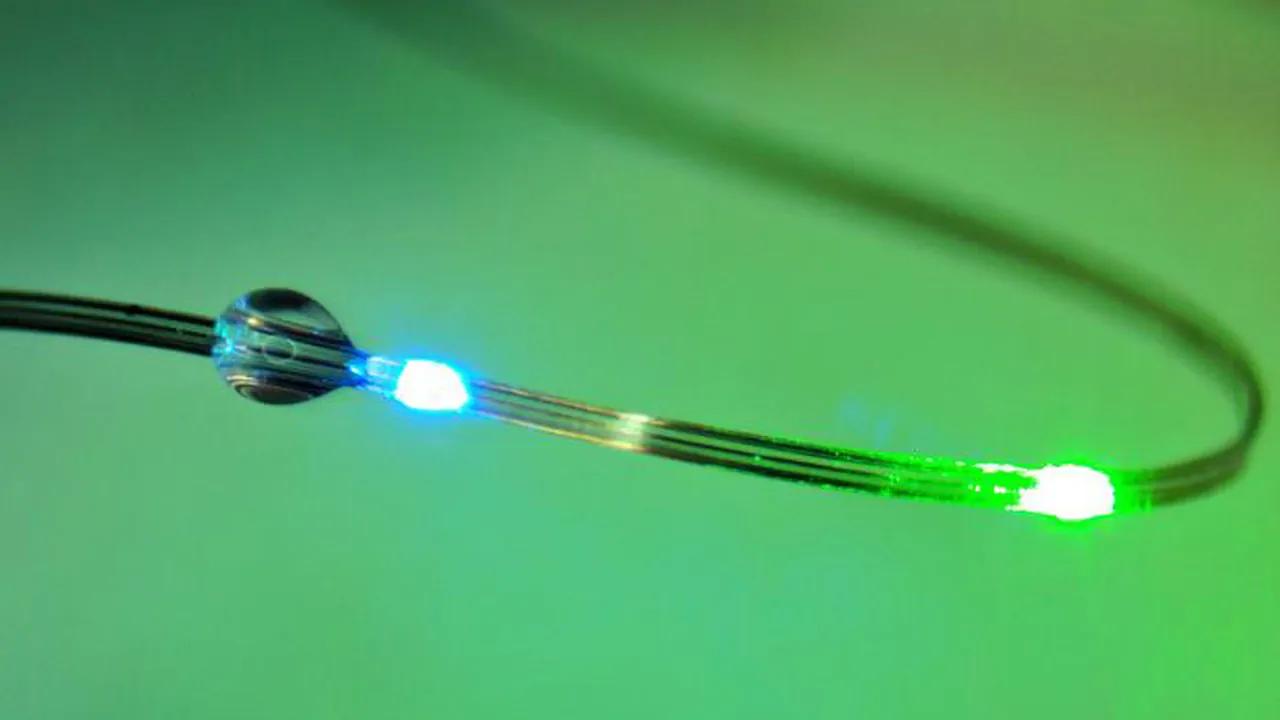
The intricate communication network between the brain and the digestive tract plays a vital role in regulating feeding behaviors and mental states. Recent research has suggested its involvement in various neurological disorders. To explore these connections, engineers at MIT have introduced a novel technology that enables the manipulation of neural circuits linking the gut and the brain in mice. By utilizing specially designed fibers embedded with sensors and light sources for optogenetic stimulation, the researchers demonstrated their ability to induce sensations of fullness or reward-seeking behavior by manipulating intestinal cells.

The study, published in Nature Biotechnology, represents a significant advancement in understanding the interplay between the brain and other organs in the body. The researchers are particularly interested in exploring the correlations observed between digestive health and neurological conditions such as autism and Parkinson’s disease. Their breakthrough lies in the millisecond precision of optogenetics, allowing for the investigation of gut-brain interactions in behaving animals.

Continue reading… “Probing the Brain-Gut Connection: Engineers Develop Fiber Technology for Neural Circuit Control”

Nanozyme Microrobots: A Promising Approach for Targeted Antifungal Therapy

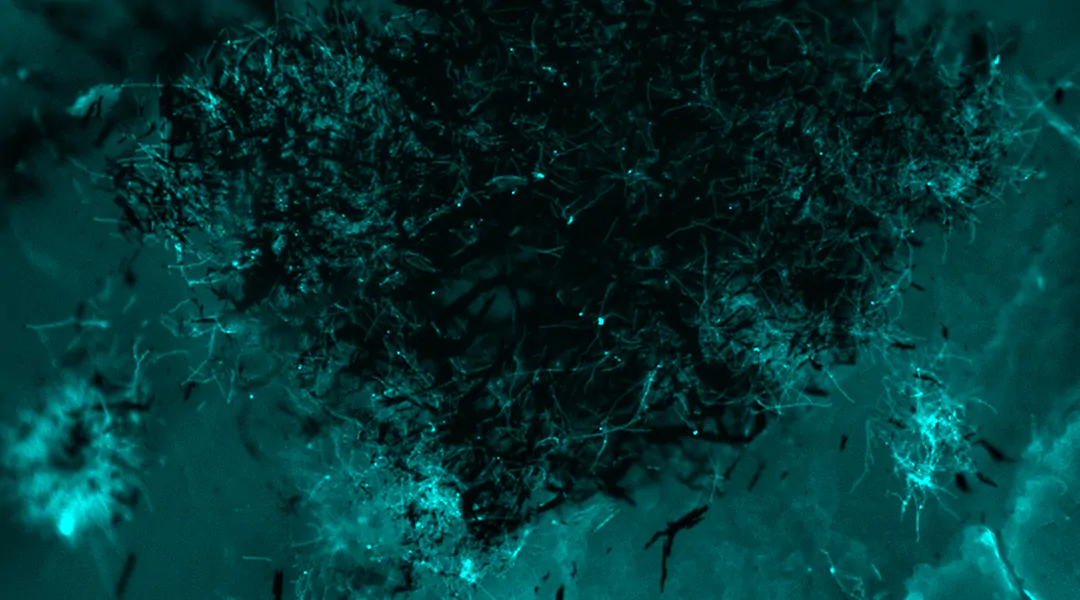
Fungal pathogens continue to pose a significant threat to public health, prompting the World Health Organization (WHO) to highlight their severity. The limitations of current antifungal treatments, such as slow action and the emergence of drug resistance, necessitate the development of innovative solutions. Researchers Hyun (Michel) Koo and Edward Steager from the University of Pennsylvania have joined forces to explore the use of microrobots in combating fungal infections. Their collaborative efforts have led to the development of nanozyme microbots, capable of precisely targeting and swiftly eliminating fungal pathogens, specifically Candida albicans.

Harnessing the Power of Nanozymes: Nanozymes, which are nanoscale particles possessing catalytic and magnetic properties, offer a promising avenue for treating infections. Koo and Steager leveraged iron oxide particles to create nanozyme microrobots that can be manipulated by magnetism. Similar to the enzyme peroxidase found in the human body, these iron oxide nanoparticles initiate a reaction that breaks down hydrogen peroxide into reactive oxygen species. These oxygen species are highly destructive to fungal cells, facilitating their elimination. By employing different motion patterns, such as vibration, rolling, gliding, or dabbing, the researchers directed the nanozymes to target specific infection sites.

Continue reading… “Nanozyme Microrobots: A Promising Approach for Targeted Antifungal Therapy”

Enhancing Bioprinting: Merging Techniques with Granular Biogels for Improved Cell Density and Functionality

Bioprinting, the process of printing living cells into functional tissues, presents a complex set of challenges. In a remarkable achievement, the Levato lab of UMC Utrecht, in collaboration with colleagues, has successfully combined two promising printing techniques to enhance cell density, cell survival, and specialization in bioprinted constructs. The key lies in the utilization of granular biogels or resins, as described in their publication in the journal Advanced Materials.

While bioprinting holds promise for creating functional tissues using stem cells, the integration of this intricate technology with delicate cells poses significant challenges. To ensure cell survival and tissue functionality, printed cells must receive optimal conditions for growth, mobility, and intercellular communication.

Continue reading… “Enhancing Bioprinting: Merging Techniques with Granular Biogels for Improved Cell Density and Functionality”

Groundbreaking Study Combines Volumetric Bioprinting and Melt Electrowriting to Create Functional Blood Vessels

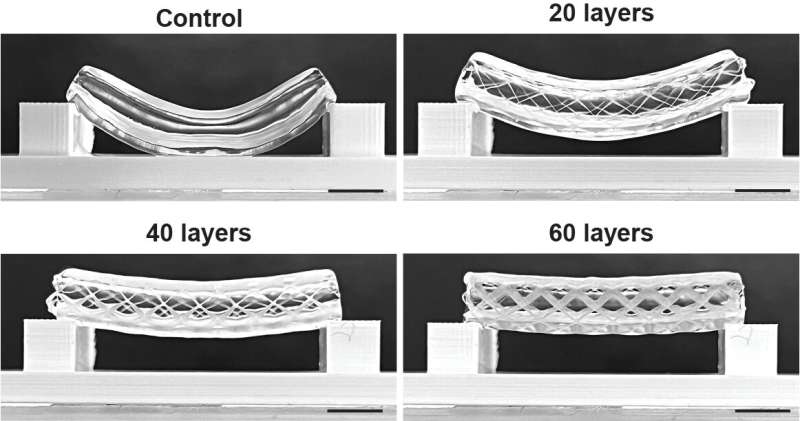
In a significant breakthrough, researchers have successfully combined volumetric bioprinting with melt electrowriting for the first time, as revealed in a study published in Advanced Materials. Led by the biofabrication lab of Regenerative Medicine Center Utrecht (RMCU), this innovative approach merges the speed and cell-friendly nature of volumetric printing with the structural strength required for the creation of functional blood vessels.

Volumetric printing, a technique pioneered by the RMCU biofabrication lab in 2019, offers rapid printing while enabling cells to survive the process. However, the resulting prints lack structural integrity due to the use of cell-friendly gels. This poses a challenge for blood vessels, which must endure high pressures and bending. To overcome this limitation, researchers aimed to combine volumetric bioprinting with melt electrowriting.

Continue reading… “Groundbreaking Study Combines Volumetric Bioprinting and Melt Electrowriting to Create Functional Blood Vessels”

Accelerating Wound Healing: 3D-Printed Ink Unleashes Immune System Vesicles

Researchers have made a significant breakthrough in wound healing by developing a specialized ink that actively promotes the body’s healing process. Published in ACS Applied Materials & Interfaces, the study introduces a wound-healing ink that exposes cuts to immune-system vesicles, stimulating the body’s natural healing response. Using a 3D-printing pen, the ink can be applied to wounds of any shape, and in experiments on mice, it demonstrated the ability to nearly completely repair wounds in just 12 days.

When the skin is injured, the body initiates its natural healing mechanisms, involving the clearance of bacteria, regeneration of blood vessels, and eventual formation of a scar. While various techniques support the body’s healing process, they typically complement its inherent abilities. Bandages and stitches control bleeding, while antibiotics prevent infections. However, by incorporating elements that actively aid the body’s construction crew in wound healing, the process could be accelerated.

Continue reading… “Accelerating Wound Healing: 3D-Printed Ink Unleashes Immune System Vesicles”

Managing the Transition: Balancing Risks and Returns in Personalized Medicine

Personalized medicine has emerged as a significant breakthrough in medical research, offering tailored treatments based on an individual’s genetic information. This approach has gained immense importance for patients, doctors, and pharmaceutical firms alike. However, a recent study by Professor Saurabh Mishra from George Mason University School of Business raises concerns about the potential diminishing returns for companies heavily invested in personalized medicine.

Analyzing data from 149 firms between 2007 and 2017, Mishra’s research found that the optimal representation of personalized medicine within a pharmaceutical company’s portfolio was around 30%. Companies with a significantly higher or lower proportion faced penalties in the financial markets, experiencing lower returns and higher risks on their investments.

Continue reading… “Managing the Transition: Balancing Risks and Returns in Personalized Medicine”
Discover the Hidden Patterns of Tomorrow with Futurist Thomas Frey
Unlock Your Potential, Ignite Your Success.

By delving into the futuring techniques of Futurist Thomas Frey, you’ll embark on an enlightening journey.

Learn More about this exciting program.