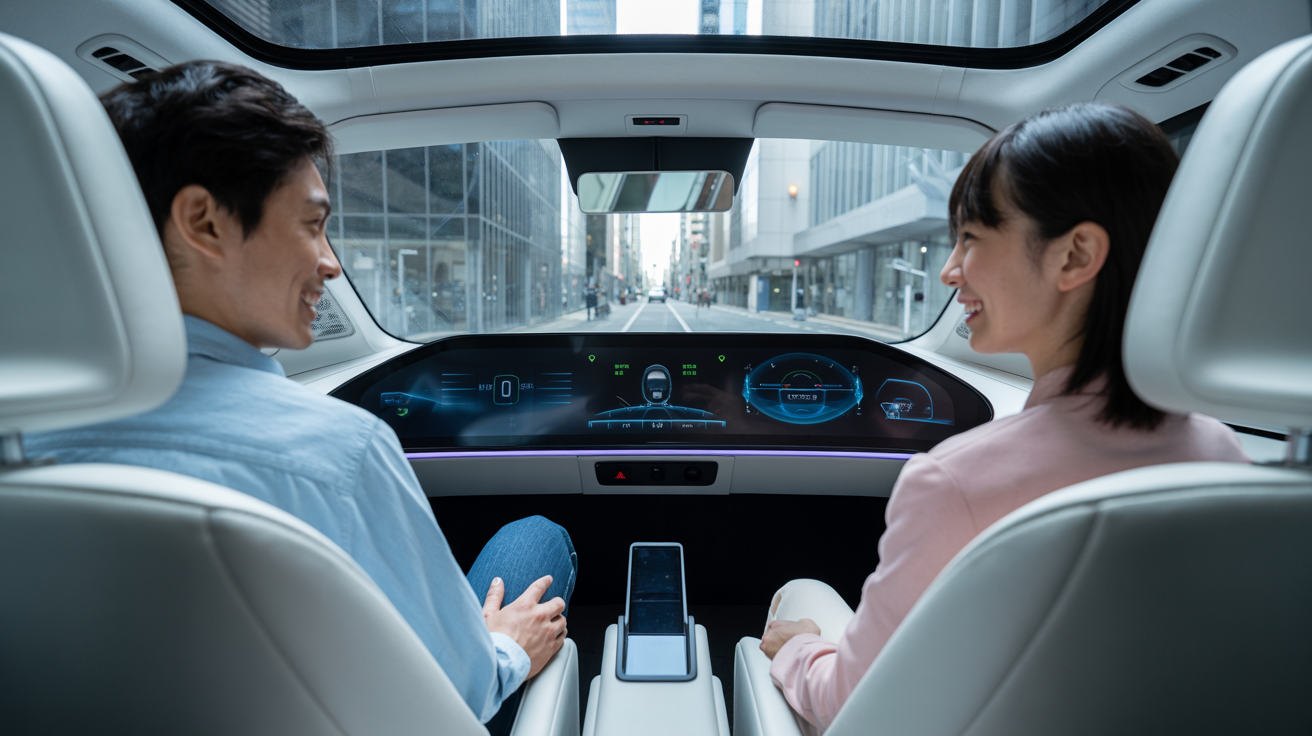
Growing Number of People Who’ve Never Owned a Car

By Futurist Thomas Frey

In 2025, a curious pattern began emerging in cities like Seoul, Amsterdam, and San Francisco. About 1–2% of adults under 35 had quietly achieved full independence without ever owning a car—not because they couldn’t afford one, but because they realized car ownership simply didn’t make sense anymore. Between ride-sharing, car-sharing, short-term rentals, and public transit, they discovered they could live comfortably, move freely, and save money without the burdens of maintenance, parking, or insurance.

Economically, their transportation costs were 60–75% lower than owning a personal vehicle. Psychologically, they were freer. They no longer thought about oil changes, parking tickets, or whether they should trade in for a newer model. In the language of economists, car ownership had gone from asset to liability. In the language of culture, it had gone from dream to inconvenience.

By 2040, this small fringe had become the mainstream. In major metropolitan regions, car ownership among adults had fallen to 22%—mostly hobbyists, suburban families, and older drivers nostalgic for the freedom they once associated with the open road.

Continue reading… “Growing Number of People Who’ve Never Owned a Car”
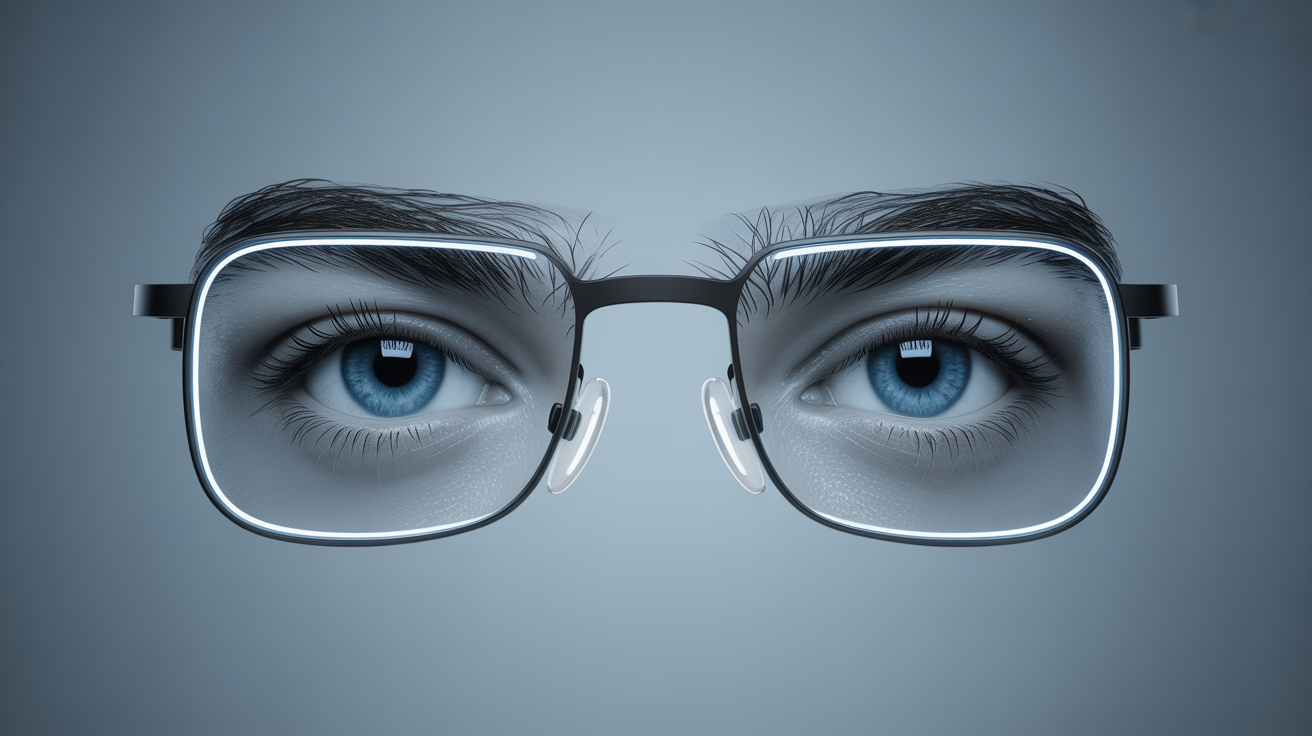
The End of Prescription Eyeglasses

By Futurist Thomas Frey

In 2025, a quiet revolution began among the 1%—not the financial elite, but the optical pioneers. Around one percent of people with vision problems stopped wearing prescription glasses. Not because of surgery, not because of LASIK, but because of something entirely new: AI-powered adaptive eyewear. These early adopters wore glasses with electrochromic lenses—microscopic layers that change their optical properties in milliseconds, dynamically adjusting focus based on what the wearer is looking at. Screen text two feet away? Instantly crisp. A road sign a hundred meters down the highway? Instantly refocused. No bifocals. No progressive lenses. No need to swap glasses. The experience was seamless, automatic, and profoundly liberating. Most early adopters described it the same way: “I forgot I even had vision problems.”

By 2040, the technology has matured—and prescription glasses as we once knew them are gone. The optical industry has shifted from static correction to dynamic enhancement. Instead of lenses that passively bend light, we now have adaptive optics—intelligent systems that actively optimize vision in real time.

Continue reading… “The End of Prescription Eyeglasses”

The Restaurant Reservation Collapse

By Futurist Thomas Frey

In 2025, the first hints of a culinary revolution appeared in a few elite dining rooms in New York and Tokyo. About 1% of restaurants—mostly Michelin-starred or concept-driven establishments—quietly abandoned the centuries-old ritual of reservations. Instead, they embraced what became known as “dynamic dining.” Guests no longer booked tables weeks in advance or endured hold music to secure a spot. Instead, they arrived whenever they pleased, and AI systems handled the rest. Predictive algorithms assessed arrival patterns, optimized seating, and projected wait times to the exact minute. Diners could shop, stroll, or grab a cocktail nearby, receiving real-time updates as the system orchestrated the flow of guests like air traffic controllers manage incoming planes. When your table was ready, your phone buzzed. You walked in without friction. The results were staggering—no-shows dropped from 20% to less than 0.3%, table turnover jumped by 35%, and overall satisfaction reached record highs. The earliest adopters realized something profound: the reservation wasn’t a customer service—it was a bottleneck.

By 2040, that insight has rewritten global dining culture. The reservation system, once a symbol of order and prestige, is dead. “Continuous flow dining” is now standard across developed nations.

Continue reading… “The Restaurant Reservation Collapse”

Children Who’ve Never Owned Toys

By Futurist Thomas Frey

In 2025, a small but striking cultural signal emerged from the wealthiest neighborhoods of San Francisco and Singapore: about 1% of families stopped buying toys altogether. Instead, they subscribed to “toy libraries”—services that deliver rotating collections of educational play objects every two weeks, then retrieve them for cleaning, sorting, and redistribution. Parents described the change as liberating. The clutter vanished. The guilt of overconsumption disappeared. Most surprisingly, the kids played more. With each new rotation came novelty, curiosity, and renewed engagement. It was the first hint that permanent ownership—a core feature of 20th-century childhood—might be on its way out.

By 2040, that fringe experiment has become the norm. Only about 12% of households now own toys outright, and those that do are mostly collectors, nostalgists, or families in remote regions beyond logistics networks.

Continue reading… “Children Who’ve Never Owned Toys”

The Death of Job Interviews

By Futurist Thomas Frey

In 2025, less than 1% of companies quietly abandoned one of the most sacred rituals in modern business—the job interview. Instead of forcing candidates to rehearse canned answers and fake confidence, they gave them something radical: real work. Each applicant completed a three-day paid project using the company’s actual tools, collaborating with the real team. The results were astonishing—an 89% success rate in predicting strong hires, compared to the industry’s 56% average for traditional interviews. In those companies, charisma stopped masquerading as competence.

By 2040, this tiny experiment had transformed into a global mandate. Job interviews as we know them are now banned in 23 U.S. states after courts ruled they were inherently biased—favoring confidence over capability, extroversion over execution.

Continue reading… “The Death of Job Interviews”
Discover the Hidden Patterns of Tomorrow with Futurist Thomas Frey
Unlock Your Potential, Ignite Your Success.

By delving into the futuring techniques of Futurist Thomas Frey, you’ll embark on an enlightening journey.

Learn More about this exciting program.