CES 2026: The Year Robots Finally Leave the Lab and Enter Your Kitchen

By Futurist Thomas Frey

The Conversation Everyone Will Be Having

Walk the CES 2026 floor in Las Vegas this January and you’ll witness something remarkable: robots that actually do your laundry. Displays running at 720Hz—faster than human eyes can perceive. AI so deeply embedded in everyday devices it becomes invisible infrastructure rather than feature to market. But one exhibit will dominate every conversation, every social media feed, every “you have to see this” moment: LG’s CLOiD robot with human-like articulated arms performing actual household chores.

This isn’t another cute rolling assistant that plays music and tells jokes. This is a machine that folds your clothes, loads your dishwasher, and handles the mundane physical tasks that consume hours of your life. And it represents something bigger than one company’s product—it’s the moment home robotics crosses from novelty to necessity.

Let me walk you through the standout technologies that will define CES 2026 and why this year marks the inflection point where consumer tech stops being about screens and starts being about systems that think, see, and act autonomously in physical space.

Continue reading… “CES 2026: The Year Robots Finally Leave the Lab and Enter Your Kitchen”

The Rainbow Chip: How One Laser Becomes Many Colors Without Trying

By Futurist Thomas Frey

Researchers at the University of Maryland’s Joint Quantum Institute just solved one of photonics’ most frustrating problems: they’ve designed and tested new chips that reliably convert one color of light into a trio of hues, and remarkably, the chips all work without any active inputs or painstaking optimization.

This might sound like an incremental improvement—better lasers, more colors, so what? But it’s actually revolutionary. These chips take a single invisible telecom laser and passively transform it into red, green, and blue light automatically, with no tuning, no adjustment, and no delicate calibration. And that changes everything about how we build quantum computers, ultra-precise atomic clocks, optical communication systems, and photonic processors.

Continue reading… “The Rainbow Chip: How One Laser Becomes Many Colors Without Trying”

Beyond Human: When Robot Eyes See Better and Bodies Become Upgradeable

By Futurist Thomas Frey

Scientists at Georgia Institute of Technology have created a robotic eye that sees better than human eyes. Not just “pretty good” or “comparable”—actually superior. It can detect details as small as hair on an ant’s leg, focus instantly without mechanical parts, and operates without external power. It’s made from squishy hydrogel, requires no batteries, and changes focus by responding directly to light.

This isn’t incremental improvement. It’s a fundamental demonstration that biological human components can be exceeded by engineered alternatives. And once you’ve proven that principle with eyes, a profound question emerges: What other parts of our body can be radically improved?

The answer is: almost everything. We’re approaching an era where “human” becomes the baseline, not the ceiling. Where biological limitations become choices rather than constraints. Where upgrading your body becomes as normal as upgrading your phone.

And it’s coming faster than most people realize.

Continue reading… “Beyond Human: When Robot Eyes See Better and Bodies Become Upgradeable”

Submarine Medicine: Steering Microscopic Robots Through Your Bloodstream to Fight Disease

By Futurist Thomas Frey

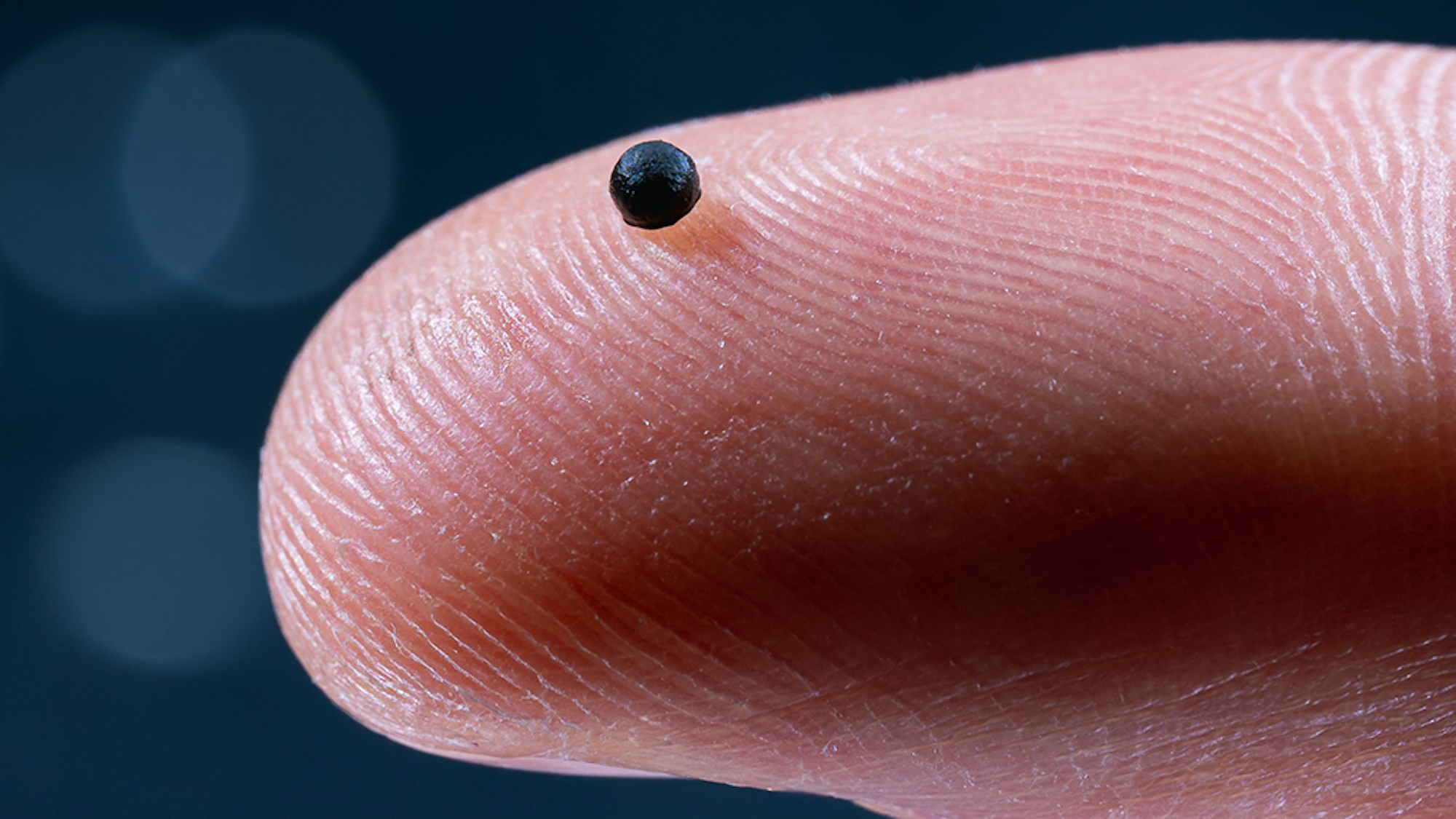
Imagine this: You’re having a stroke. Instead of flooding your entire body with massive doses of clot-busting drugs—which could cause dangerous internal bleeding—doctors inject a microscopic robot smaller than a grain of sand into your bloodstream. Using external magnets, they steer it through your arteries like a tiny submarine, navigating precisely to the blood clot blocking oxygen to your brain. Once there, it releases its medication payload directly at the blockage, dissolving the clot with minimal side effects.

This isn’t science fiction. It’s happening now. Researchers at Switzerland’s ETH Zurich have developed magnetically-guided microrobots that successfully navigate through blood vessels, delivering medication with unprecedented precision. In 95% of test scenarios using pigs, these tiny devices reached their intended destinations, demonstrating that the era of medical microrobots has arrived.

This represents a fundamental shift in how we think about medicine—from systemic treatments affecting the entire body to targeted interventions at cellular and molecular scales. And stroke treatment is just the beginning.

Continue reading… “Submarine Medicine: Steering Microscopic Robots Through Your Bloodstream to Fight Disease”

America’s Secret Weapon: Permissionless Innovation

By Futurist Thomas Frey

There’s a reason Silicon Valley happened in America and not Brussels. A reason SpaceX launches rockets while European equivalents remain grounded in regulatory review. A reason generative AI emerged from American garages and labs rather than through government-planned initiatives elsewhere.

The secret isn’t better universities, more capital, or smarter people. It’s a principle so deeply embedded in American culture that we barely notice it: permissionless innovation. The radical idea that you don’t need anyone’s approval to try something new.

This isn’t just policy—it’s America’s civilizational advantage. And in an era where AI, biotechnology, and space exploration are reshaping human capability, the nations that embrace permissionless innovation will lead, while those demanding permission before progress will fall hopelessly behind.

Continue reading… “America’s Secret Weapon: Permissionless Innovation”

The Tournament Center: Reimagining Public Recreation for the Competition Age

By Futurist Thomas Frey

On the edge of a midsize American city, a massive new building gleams under the morning sun—half sports complex, half digital command center. Inside, you can hear sneakers squeaking on hardwood, drone motors whirring overhead, and the steady hum of gaming PCs running tournaments livestreamed to audiences worldwide. The crowd is wonderfully diverse: teenagers adjusting VR headsets, seniors playing pickleball, parents cheering from bleachers. This isn’t your grandfather’s rec center. It’s the prototype for something entirely new: the Municipal Tournament Center.

Continue reading… “The Tournament Center: Reimagining Public Recreation for the Competition Age”

The Dream of SABRE: The Engine That Could Fly to Space

By Futurist Thomas Frey

In the late 20th century, a bold dream took hold of aerospace engineers—a single engine that could take off like a jet, soar through the atmosphere, and then ignite itself into orbit like a rocket. That dream had a name: SABRE, short for Synergetic Air-Breathing Rocket Engine. For a time, it seemed destined to change everything we thought we knew about flight. SABRE promised to merge two entirely different propulsion systems into one seamless process, creating a new class of vehicle that could turn the impossible into the inevitable.

Continue reading… “The Dream of SABRE: The Engine That Could Fly to Space”

10 AI Businesses You Can Start This Week

By Futurist Thomas Frey

The window of opportunity for artificial intelligence entrepreneurship is wide open. While most people are waiting for the right time, others are already turning simple ideas into six- and seven-figure ventures using off-the-shelf tools that cost less than a monthly phone bill. These businesses don’t require coding, venture capital, or a large team—just initiative, curiosity, and consistent execution.

Continue reading… “10 AI Businesses You Can Start This Week”

8 Game-Changing Technologies That Just Dropped — and Why They Matter

By Futurist Thomas Frey

Every few weeks, the frontier of innovation moves forward — sometimes in tiny steps, sometimes in seismic leaps. In the past month, we’ve witnessed several breakthroughs that could quietly redefine industries, rewrite economics, and reshape our relationship with technology itself. From atom-thin chips to AI that invents new cancer therapies, here are eight developments that will have ripple effects far beyond their immediate headlines.

Continue reading… “8 Game-Changing Technologies That Just Dropped — and Why They Matter”

The Wetware Frontier: When Our Computers Are Literally Alive

By Futurist Thomas Frey

When we thought computers were reaching their limit, nature quietly handed us the next leap. In the Swiss town of Vevey, researchers at the startup FinalSpark are cultivating human brain organoids—mini-brains grown from stem cells—and plugging them into electrode arrays to act as living processors. These clumps, each measuring just a few millimetres, are no longer just models for neuroscience—they’re becoming the underlying architecture of tomorrow’s computing infrastructure.

Biological neurons already out-strip silicon on raw metrics: they’re approximately one million times more energy efficient than current artificial neurons, and they self-organize, self-repair and rewire. What we once simulated, we’re now assimilating. Rather than mimic the brain with chips, we’re tapping the brain’s hardware itself. The implication: “wetware” computing is no longer science fiction—it’s system design.

Continue reading… “The Wetware Frontier: When Our Computers Are Literally Alive”

When Metals Learn to Withstand Fire: The New Age of Ultra-Alloys

By Futurist Thomas Frey

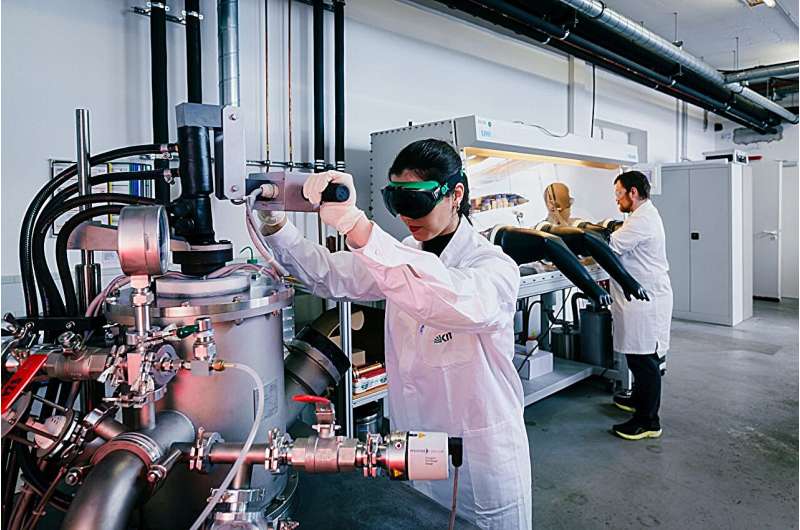
Imagine a world where the engines pushing us across continents, into rockets, or through power plants don’t shriek in heat—they glide in silence, riding on craft so temperature-resilient they seem almost mythic. That’s the future unlocked by a newly discovered alloy developed at Karlsruhe Institute of Technology: a chromium-molybdenum-silicon blend so ductile at room temperature, so resistant to oxidation at 1,100 °C, it shames the limitations of today’s superalloys. It’s not just an incremental upgrade—it’s a leap into materials once thought impossible.

Today’s gas turbines, jet engines, and combustion machines demand materials that survive heat, stress, and corrosion. Today’s nickel-based superalloys are pushed near their edge—usable up to ~1,100 °C in many real-world applications—but above that, they soften, oxidize, or fail. The new alloy redefines that ceiling. It combines high melting points, mechanical ductility, and oxidation resistance in a balance no prior refractory alloy achieved. The upshot? Machines that can run hotter, lighter, longer, and more efficiently.

Continue reading… “When Metals Learn to Withstand Fire: The New Age of Ultra-Alloys”

BANANAZ & the Rise of AI Design Agents: When Every Engineer Can Be an Architect

By Futurist Thomas Frey

Meet BANANAZ, a design agent built to act as your AI-powered mechanical engineering expert—able to take specifications, iterate designs, simulate stresses, and optimize performance—all faster than any human engineer ever could. It’s not just a productivity tool; it’s a glimpse of the next wave in engineering: autonomous design as a service, where every creator gains a personal AI engineer as co-pilot.

BANANAZ doesn’t replace engineers; it multiplies them. Hand it constraints (load, material, geometry), and it rapidly generates candidate designs. Run simulations, and it filters those options. Want to optimize for weight, cost, or manufacturability? The AI filters again—all in minutes. What used to take teams of mechanical engineers weeks of CAD modeling, iteration, and simulation now happens in seconds. For startups and makers, that compresses invention cycles from quarters to hours.

Continue reading… “BANANAZ & the Rise of AI Design Agents: When Every Engineer Can Be an Architect”
Discover the Hidden Patterns of Tomorrow with Futurist Thomas Frey
Unlock Your Potential, Ignite Your Success.

By delving into the futuring techniques of Futurist Thomas Frey, you’ll embark on an enlightening journey.

Learn More about this exciting program.