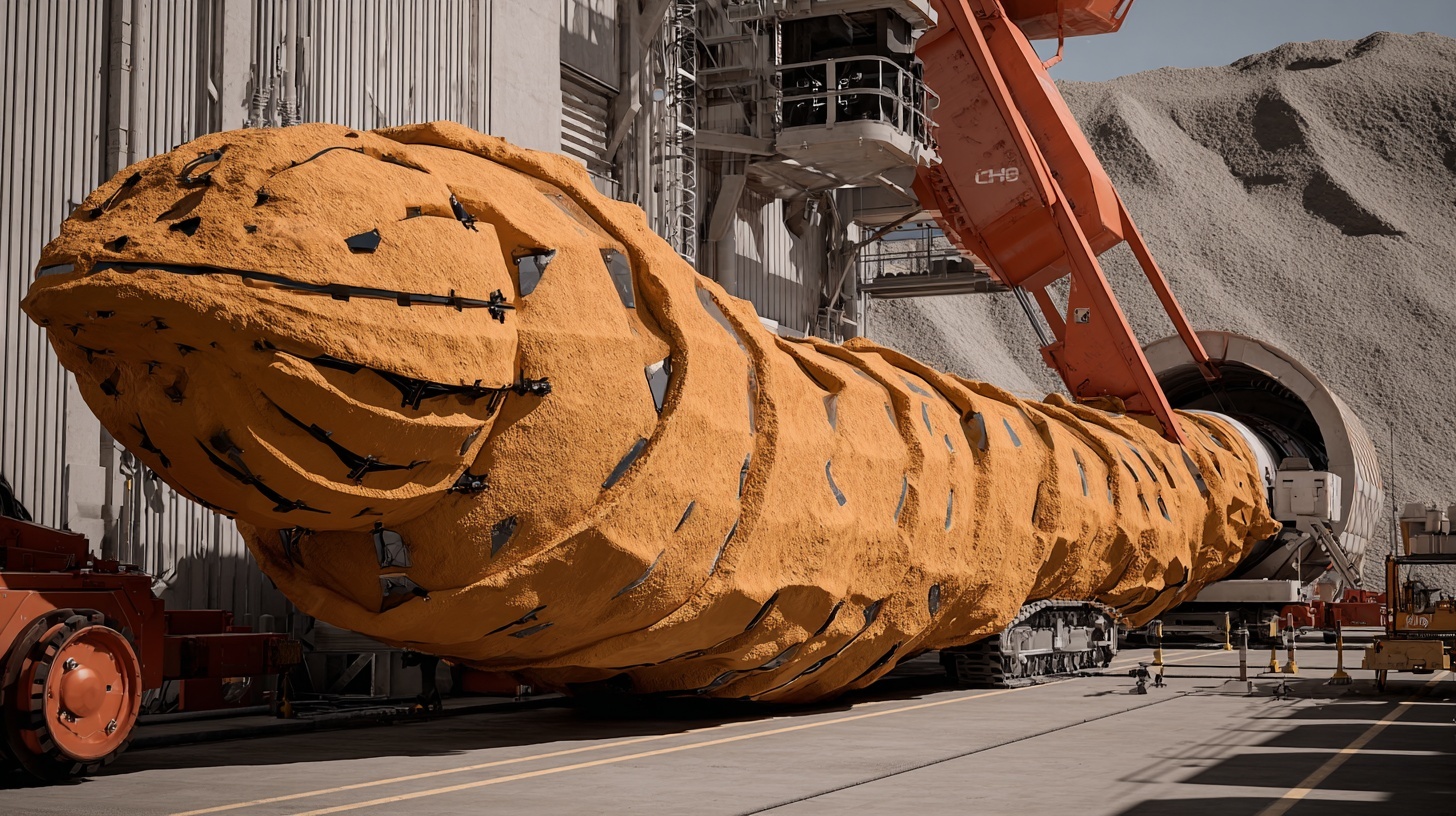
The Thousand-Year Question: What Separates Science Fiction From Physical Impossibility?

By Futurist Thomas Frey

Why Kip Thorne’s Thought Experiment Changes Everything

Nobel laureate Kip S. Thorne once posed a deceptively simple question that haunts futurists and physicists alike: “A thousand years from now, what things will be possible and what things will not?”

It’s a fascinating framework for separating the merely difficult from the genuinely impossible, the achievable from the fantasy, the problems we’ll eventually engineer our way past from the constraints that physics itself enforces. Most people conflate “we can’t do it now” with “it can’t be done.” Thorne’s question forces us to think harder.

A thousand years is long enough that almost any engineering challenge becomes solvable if physics permits it. It’s short enough that the fundamental laws of the universe won’t change. The question strips away our current technological limitations and asks: what does physics itself allow, regardless of how difficult the engineering might be?

The answers are both more liberating and more constraining than most people imagine. We’re building our future based on assumptions about what’s possible that may be completely wrong—either wildly optimistic about things physics forbids, or tragically pessimistic about things physics permits but we haven’t figured out yet.

Getting this distinction right matters enormously, because we invest resources, make policy decisions, and shape civilization around beliefs about what tomorrow can and cannot hold.

Continue reading… “The Thousand-Year Question: What Separates Science Fiction From Physical Impossibility?”

The Day We Finally Crack Gravity: Why Controlling the Universe’s Most Mysterious Force Changes Everything

By Futurist Thomas Frey

The Last Great Physics Frontier We’re Still Losing To

We’ve split the atom, mapped the human genome, landed robots on Mars, and taught machines to think. But gravity—the force that shapes galaxies, bends spacetime, and keeps your coffee in your cup—remains stubbornly beyond our control. We can describe it mathematically, predict its effects with extraordinary precision, and build our entire civilization around its constraints. What we cannot do is manipulate it, harness it, or turn it off when it’s inconvenient.

That may be about to change. Scattered across physics labs worldwide, researchers are closing in on gravitational control not as science fiction fantasy but as engineering challenge with plausible solution paths. When—not if—we crack gravity’s fundamental mechanisms and gain the ability to manipulate gravitational fields locally, we won’t just revolutionize transportation or construction. We’ll fundamentally restructure human civilization around physics that currently exists only in theoretical equations and speculative papers.

The implications are so vast that most people simply dismiss them as impossible rather than confronting what becomes possible when the universe’s most pervasive force finally submits to human control. That’s a dangerous form of denial, because the race to control gravity is already underway, and whoever achieves it first will possess technological advantage so overwhelming it makes nuclear weapons look like a incremental upgrade.

Continue reading… “The Day We Finally Crack Gravity: Why Controlling the Universe’s Most Mysterious Force Changes Everything”

When Immortality Becomes a Consumer Product, Who Gets to Live Forever?

By Futurist Thomas Frey

The 2050 Timeline Nobody’s Taking Seriously Enough

Futurists are now openly discussing “practical immortality” by 2050—not as science fiction speculation, but as engineering challenges with plausible solution paths. We’re talking about radical life extension through human-machine merging, biological rejuvenation, and technologies that don’t just slow aging but potentially reverse or eliminate it entirely. And most people are treating this like distant fantasy rather than imminent disruption that will fracture society in ways we’re catastrophically unprepared for.

The timeline matters. 2050 is twenty-five years away—closer than the iPhone launch is to us now. Many people reading this could plausibly reach these technologies if early versions arrive on schedule. That transforms radical longevity from philosophical thought experiment to personal decision with stakes most of us haven’t begun to contemplate. When immortality shifts from mythology to medical option, everything we’ve built around the assumption of mortality—inheritance, retirement, career arcs, marriage, reproduction, resource allocation—collapses into incoherence.

Keep in mind this isn’t about everyone living slightly longer, healthier lives. We’re discussing technologies that could enable centuries of life, potentially indefinitely. That’s not incremental improvement—it’s a phase transition in human existence that makes every previous medical revolution look quaint by comparison.

Continue reading… “When Immortality Becomes a Consumer Product, Who Gets to Live Forever?”

The Real AI Revolution Isn’t Happening in the Cloud—It’s Happening Right in Front of You

By Futurist Thomas Frey

Why Edge Intelligence Changes Everything We Thought We Knew About Smart Machines

While everyone obsesses over large language models and cloud-based AI systems, something far more consequential is happening at the physical edges of the network. Robots and devices are gaining the ability to sense, process, and act on information locally—without waiting for instructions from distant data centers. This shift from cloud-dependent to edge-capable intelligence represents a transformation we’re not remotely prepared for.

The latest robotics trends highlight sensor fusion and edge AI as the critical breakthroughs finally making embodied intelligence practical. That dry technical language masks a profound shift: we’re moving from AI that thinks in the cloud to AI that thinks where it acts. And that changes everything about how intelligent machines will integrate into our physical world.

By 2030, the smartest AI systems won’t be the ones with access to the most powerful cloud computing—they’ll be the ones that can perceive their environment through multiple sensors simultaneously, process that information locally in milliseconds, and act decisively without asking permission from distant servers. Welcome to the age of embodied intelligence, where the physical manifestation of AI matters far more than theoretical capabilities.

Continue reading… “The Real AI Revolution Isn’t Happening in the Cloud—It’s Happening Right in Front of You”

When AI-Generated Artists Start Topping the Charts, Who Gets the Royalties?

By Futurist Thomas Frey

The Billboard Revolution Nobody Planned For

For four consecutive weeks, at least one AI-generated “artist” has appeared on the Billboard charts. Not AI-assisted human musicians. Not producers using AI as a tool. Actual AI-generated entities creating music that millions of people are choosing to stream, download, and add to their playlists.

Let that sink in for a moment. We’ve crossed a threshold most people didn’t even know existed. Generative AI has moved from impressive parlor trick to commercial reality so quickly that our legal systems, credentialing frameworks, and fundamental assumptions about creativity haven’t caught up. And the implications stretch far beyond the music industry into questions about education, expertise, intellectual property, and what it means to be an artist in 2030.

Continue reading… “When AI-Generated Artists Start Topping the Charts, Who Gets the Royalties?”

The Dangerous Illusion That Robots Will Just “Work With Us”

By Futurist Thomas Frey

Why Everything You’ve Been Told About Human-Robot Collaboration is Probably Wrong

We’ve been sold a comforting fantasy about our robotic future: humans and machines working together in perfect harmony, each doing what they do best, complementing rather than competing. It’s a lovely vision. It’s also dangerously incomplete.

The academic researchers diving into “human-centered AI and autonomy in robotics” have stumbled onto something most of us would rather ignore: there is no natural equilibrium between human control and machine autonomy. Every choice about how much freedom we give intelligent machines is simultaneously a choice about how much agency we’re willing to surrender—and we’re making these choices right now, mostly by accident, with almost no public debate about what we’re trading away.

By 2035, when humanoid robots staff retail stores and AI agents run businesses almost entirely on their own, the question won’t be whether humans and machines can collaborate. It will be whether humans still have any meaningful role in decisions that matter, or whether we’ve accidentally designed ourselves into comfortable irrelevance.

Continue reading… “The Dangerous Illusion That Robots Will Just “Work With Us””

When Machines Wake Up: The Coming Debate Over Digital Consciousness

By Futurist Thomas Frey

There’s a question lurking in the background of our AI revolution that most people aren’t quite ready to face: What happens when machines become conscious?

Not “smart.” Not “capable.” Not even “intelligent” in the narrow sense we use today. I’m talking about actually aware – experiencing something that feels like something from the inside.

Recent survey research among experts reveals something striking. When asked about “digital minds” – computers capable of genuine subjective experience – a substantial number assigned non-trivial probability to their emergence this century. Not in some distant Star Trek future. This century. Possibly within the lifetimes of people reading this column.

That’s not a fringe position anymore.

Continue reading… “When Machines Wake Up: The Coming Debate Over Digital Consciousness”

When Autonomous AI Agents Became the New Small Business Revolution

By Futurist Thomas Frey

The Quiet Transformation Nobody Saw Coming

We spend so much time debating whether artificial intelligence will steal jobs that we’ve missed something far more interesting: AI is creating an entirely new class of entrepreneurs who don’t manage employees—they conduct symphonies of autonomous agents.

By 2033, when HyperCycle‘s decentralized mesh network finally connects every major American city, we won’t be asking whether AI replaces workers. We’ll be watching millions of people launch businesses that would have been impossible just a decade earlier, operated almost entirely by intelligent agents negotiating with each other across a vast computational fabric.

The transformation won’t announce itself with fanfare. It will arrive in suburban Columbus when a drone hobbyist realizes he can coordinate an entire fleet through decentralized intelligence. It will materialize in Phoenix when a former paralegal discovers she can bottle her talent for creating order and sell it to 312 small businesses without hiring a single employee. It will emerge in Austin when a caregiver who navigated her mother’s final years decides nobody else should walk that maze alone.

Continue reading… “When Autonomous AI Agents Became the New Small Business Revolution”

What Replaces College Degrees? The Future of Credentials by 2040

By Futurist Thomas Frey

College degrees are dying. Not because education doesn’t matter, but because the credential itself—a piece of paper certifying you sat in classrooms for four years—has become nearly worthless as a signal of actual capability.

Employers know this. Students drowning in debt know this. The only people pretending otherwise are universities protecting a $600 billion industry built on credentialing monopoly.

By 2040, degrees will be what they were in 1900—nice but optional. What replaces them is far more interesting: a constellation of new credentialing systems that actually prove you can do what you claim.

The big shift moves the center of gravity from “college = gatekeeper of opportunity” to “AI = validator of competence.”

Here’s what that actually looks like, and invariably Cogniate will play a key role in this transformation.

Continue reading… “What Replaces College Degrees? The Future of Credentials by 2040”

The Global Checks-and-Balance Project: Mapping Power Against Its Counterweights

By Futurist Thomas Frey

Too many of the vital systems used to govern our world are left unchecked. Abuse of power is rampant in countries throughout the globe.

We talk about democracy, rule of law, and accountability. But in practice, most governmental, corporate, and institutional power operates with minimal oversight. Leaders make decisions affecting millions with no meaningful counterweight. Agencies regulate industries they’re supposed to oversee while being captured by those same industries. Courts enforce laws while being immune from the consequences of their errors.

Power accumulates. Checks erode. Balance disappears.

In a project that would propose to map systems against their associated checks-and-balance counterweights, we will begin to find a very revealing way of restructuring some of the world’s more egregious problem areas.

This isn’t abstract political theory. It’s practical systems analysis applied to governance: identify where power concentrates, measure what constrains it, and expose the gaps where abuse becomes inevitable.

Continue reading… “The Global Checks-and-Balance Project: Mapping Power Against Its Counterweights”

Why Does Anything Exist? The Question That Humbles Everyone

By Futurist Thomas Frey

“Why does anything exist?”

This is one of life’s greatest unanswerable questions. Not only is it unanswerable—it’s unknowable. If you’re a person of faith, it will likely bolster your faith. If you’re a person of science, it will likely bolster your need for more evidence. No matter your background, sooner or later you are bound to question one “what if…” after another after another.

I’ve spent decades thinking about the future—what’s coming, what’s possible, what technologies will transform society. But occasionally I step back and face this fundamental question that makes all futurism seem trivial:

Why is there something rather than nothing?

Not how did things begin—but why does existence itself exist? Why is there a stage for any of this to happen on at all?

The question breaks every framework we have for understanding reality.

Continue reading… “Why Does Anything Exist? The Question That Humbles Everyone”

Mapping Every Atom in a Kernel of Wheat: The Next Impossible Project

By Futurist Thomas Frey

We are still a long ways away from being able to do this, but over time we will begin to understand the entire data set inside a single kernel of wheat. What role does every molecule play? What role do external forces play on its development?

This will be a project exponentially more complicated than the Human Genome Project, and it may be too complicated to start with wheat, but eventually we will get there. Once we can successfully map wheat, we can work on far more complicated organisms including animals and humans.

The Every-Atom Mapping Project sounds absurd—documenting the position, state, and interactions of every single atom in a kernel of wheat. But so did sequencing the human genome in 1990. That project took 13 years and $3 billion to map 3 billion base pairs. Today, you can sequence a genome in hours for under $1,000.

The every-atom map is vastly more ambitious. A kernel of wheat contains approximately 10^23 atoms—that’s 100,000,000,000,000,000,000,000 atoms. Each one has position, velocity, bonding state, and electromagnetic properties that change constantly. Documenting this makes the genome project look trivial.

But impossible projects become possible when technology advances exponentially. And the payoff for understanding matter at atomic resolution would be transformative beyond anything we’ve achieved.

Continue reading… “Mapping Every Atom in a Kernel of Wheat: The Next Impossible Project”
Discover the Hidden Patterns of Tomorrow with Futurist Thomas Frey
Unlock Your Potential, Ignite Your Success.

By delving into the futuring techniques of Futurist Thomas Frey, you’ll embark on an enlightening journey.

Learn More about this exciting program.