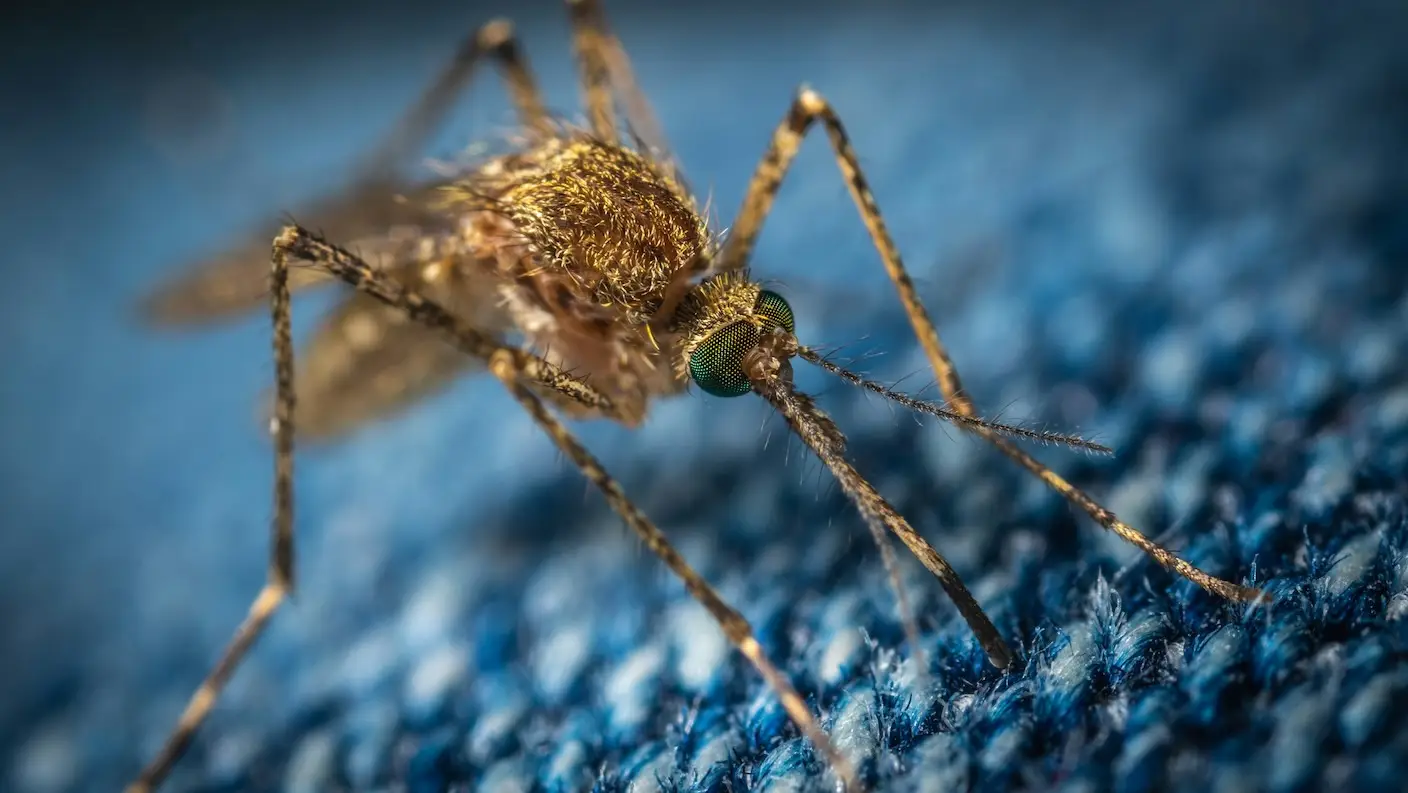
The deadliest animal on Earth isn’t a lion or a shark. It’s the mosquito.
These tiny, winged parasites are responsible for more deaths throughout human history than all wars combined. Every year, malaria alone kills over half a million people—most of them children. But now, scientists have unveiled a radical twist in the fight against these flying disease factories: don’t kill the mosquitoes. Reprogram them.
In a breakthrough that could change global health forever, researchers have genetically engineered mosquitoes to become immune to malaria—and then passed that immunity down through generations using a gene drive that rewrites the rules of evolution itself.
Welcome to the age of biological counterinsurgency.
They slaughtered our ancestors and derailed our history. And they’re not finished with us yet.
The insects are estimated to have killed more people than any other single cause.
In 1698, five ships set sail from Scotland, carrying a cargo of fine trade goods, including wigs, woollen socks and blankets, mother-of-pearl combs, Bibles, and twenty-five thousand pairs of leather shoes. There was even a printing press, with which the twelve hundred colonists aboard planned to manage a future busy with contracts and treaties. To make space for the luxuries, the usual rations for food and farming were reduced by half. But farming wasn’t the point. The ships’ destination was the Darien region of Panama, where the Company of Scotland hoped to create a trading hub that would bridge the isthmus and unite the world’s great oceans, while raising the economic prospects of a stubbornly independent kingdom that had just struggled through years of famine. The scheme was wildly popular in the desperate country, attracting a wide range of investors, from members of the national Parliament down to poor farmers; it has been estimated that between one-quarter and one-half of all the money in circulation in Scotland at the time followed the trade winds to Panama.
The expedition met with ruin. Colonists, sickened by yellow fever and strains of malaria for which their bodies were not prepared, began to die at the rate of a dozen a day. “The words that are repeated to the point of nausea in the diaries, letters, and accounts of the Scottish settlers are mosquitoes, fever, ague, and death,” the historian Timothy C. Winegard writes in his sprawling new book, “The Mosquito: A Human History of Our Deadliest Predator” (Dutton). After six months, with nearly half their number gone, the survivors—except those too weak to move, who were left behind on the shore—returned to their ships and fled north. Still, they kept dying in droves, their bodies thrown overboard. When a relief mission arrived in Darien, they found, of all the wigs and combs and shoes and ambition that had left Scotland, only a deserted printing press on an empty beach.
The genetic-engineering tool could help combat malaria and invasive species. But should we use it?
Charles Darwin had no idea what a gene was. If we dropped the father of evolution into 2019, the idea that humans can willfully alter the genes of an entire species would surely seem like wizardry to him.
But CRISPR gene drives — a new, inconceivably powerful technique that forces genes to spread through a population — have the ability to do just that. Gene drives allow us to hone the blunt edges of natural selection for our own purposes, potentially preventing the spread of disease or eradicating invasive pests.
Yet as with any science performed at the frontier of our knowledge, we are still coming to terms with how powerful CRISPR gene drives might be. Playing the game of genomes means we may, in the future, choose which species live and which die — a near-unbelievable capability that scientists and ethicists agree presents us with unique moral, social and ethical challenges.
Today, more people are living healthy, productive lives than ever before. This good news may come as a surprise, but there is plenty of evidence for it. Since the early 1990s, global child mortality has been cut in half. There have been massive reductions in cases of tuberculosis, malaria, and HIV/AIDS. The incidence of polio has decreased by 99 percent, bringing the world to the verge of eradicating a major infectious disease, a feat humanity has accomplished only once before, with smallpox. The proportion of the world’s population in extreme poverty, defined by the World Bank as living on less than $1.90 per day, has fallen from 35 percent to about 11 percent.
The mosquito is a delicate insect, with spindly legs and a graceful proboscis. The parasitic, single-celled organisms that spread malaria are even smaller and more fragile, and scientists are trying their hardest to remove them from the planet. More than 400,000 lives every year are at stake—that’s more people than die of international terrorist attacks, lightening strikes and shark attacks combined.
SporoBot would increase the speed of production 20 – 30 times over.
What if you had developed a vaccine for malaria that, in early trials, was 100% effective. But you couldn’t get the funding you needed to produce enough of the vaccine to market it because of political wrangling over the budget. What would you do? (Video)
IBM scientists are collaborating with Johns Hopkins University and University of California, San Francisco to combat illness and infectious diseases in real-time with smarter data tools for public health. The focus is to help contain global outbreaks of dengue fever and malaria by applying the latest analytic models, computing technology and mathematical skills on an open-source framework.
In 2011 some great medical feats were accomplished. Dallas Wiens became the first recipient of a full-face transplant in the United States, Arizona congresswoman Gabrielle Giffords survived a gunshot to her brain, and HIV researchers found a way to lower an infected person’s chance of transmitting the virus to sexual partners by 96 percent.