Automate or perish – has it come to this?

bi.work

Robots made by Kiva Systems move product shelves on a warehouse floor.

Author and entrepreneur Christopher Steiner tells the story of stockbroker Thomas Peterffy, the creator of the first automated Wall Street trading system in the new book due next month, Automate This. Using a computer to execute trades, without humans entering them manually on a keyboard, was controversial in 1987—so controversial that Nasdaq pressured him to unplug from its network. Then, with a wink, Peterffy built an automated machine that could tap out the trades on a traditional keyboard—technically obeying Nasdaq rules. Peterffy made $25 million in 1987 and is now a billionaire.

Continue reading… “Automate or perish – has it come to this?”

The downfall of Microsoft

Steve Ballmer

Microsoft C.E.O. Steve Ballmer

Two-time George Polk Award winner Kurt Eichenwald analyzes one of American corporate history’s greatest mysteries—the lost decade of Microsoft— traces the “astonishingly foolish management decisions” at the company that “could serve as a business-school case study on the pitfalls of success.” Relying on dozens of interviews and internal corporate records—including e-mails between executives at the company’s highest ranks—Eichenwald offers an unprecedented view of life inside Microsoft during the reign of its , in the August issue. Today, a single Apple product—the iPhone—generates more revenue than all of Microsoft’s wares combined.

Continue reading… “The downfall of Microsoft”

Mind-reading speller allows vegetative-state patients to communicate

[youtube]http://www.youtube.com/watch?v=r0I7h6Uucnc[/youtube]

The first real-time brain-scanning speller will allow people in an apparent vegetative state (unable to speak or move) to communicate, according to Maastricht University scientists. (video)

Continue reading… “Mind-reading speller allows vegetative-state patients to communicate”

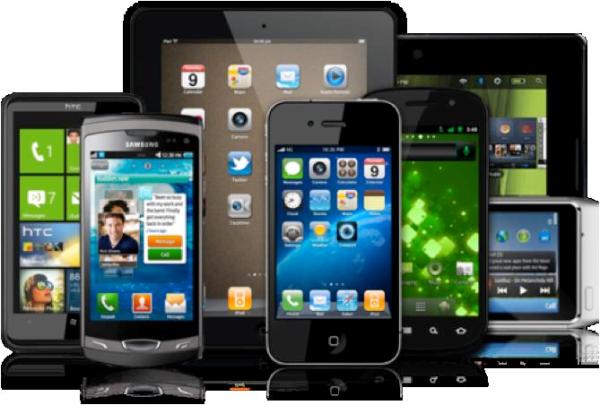
Integrated approach to mobile devices is winning

FileDisruptivetechnology

Chistensen illustrates the difference between mobile devices today with this famous graph.

Microsoft had taken the same approach to mobile devices that they had with PCs until last week’s announcement of the new Surface tablet: build the software themselves and let partners build the hardware. Google took a similar strategy with Android but then reversed course when they acquired Motorola. Apple’s integrated strategy was once widely ridiculed as a repeat of their losing 1990′s desktop computer strategy, but is now being copied throughout the industry.

Continue reading… “Integrated approach to mobile devices is winning”

‘Local’ will be biggest of Social-Mobile-Local

smartphones

“Social-Mobile-Local” is an overused buzz phrase and most of the attention has been placed on the “social” and “mobile” parts of the phrase. In social, the spectacular rise of Facebook and Twitter is clearly a disruptive and critical trend. In mobile, the adoption of the smartphone (led by Apple’s iPhone and now catapulted forward by Android) is also a fundamentally important platform transition. Much less attention has been paid to the third concept, “local,” which is ironic since it may be a much larger real business opportunity than either social media or Smartphone application revenue. Over the next five years, this massive opportunity will come into focus as local businesses embrace the Internet and adopt new interactive technologies that increasingly automate the connections between their customers and themselves.

Continue reading… “‘Local’ will be biggest of Social-Mobile-Local”

Tek Robotic Mobilization Device: Next generation wheelchair lets users stand up

[youtube]http://www.youtube.com/watch?v=_gb5poTdUMg[/youtube]

The Tek Robotic Mobilization Device is a device that allows people to stand up is being hailed as a potential breakthrough for the disabled.  The machine allows paraplegics – those without the use of their legs – to perform everyday tasks far more easily from shopping in the supermarket to ironing.

Continue reading… “Tek Robotic Mobilization Device: Next generation wheelchair lets users stand up”

5 secrets every presenter should know about people

[youtube]http://www.youtube.com/watch?v=WJUblvGfW6w&hd=1[/youtube]

“The human brain starts working the moment you are born and never stops until you stand up to speak in public,” George Jessel famously quipped.  Dr. Susan Weinschenk unpacks the secrets of eliciting response from people — the core purpose of design, it’s been argued — through a combination of behavioral science, psychology, and practical examples to alleviate the misery and mystery of public speaking in 100 Things Every Designer Needs to Know About People.

Continue reading… “5 secrets every presenter should know about people”

Discover the Hidden Patterns of Tomorrow with Futurist Thomas Frey
Unlock Your Potential, Ignite Your Success.

By delving into the futuring techniques of Futurist Thomas Frey, you’ll embark on an enlightening journey.

Learn More about this exciting program.