
By Futurist Thomas Frey
A Record That Deserves More Attention Than It’s Getting
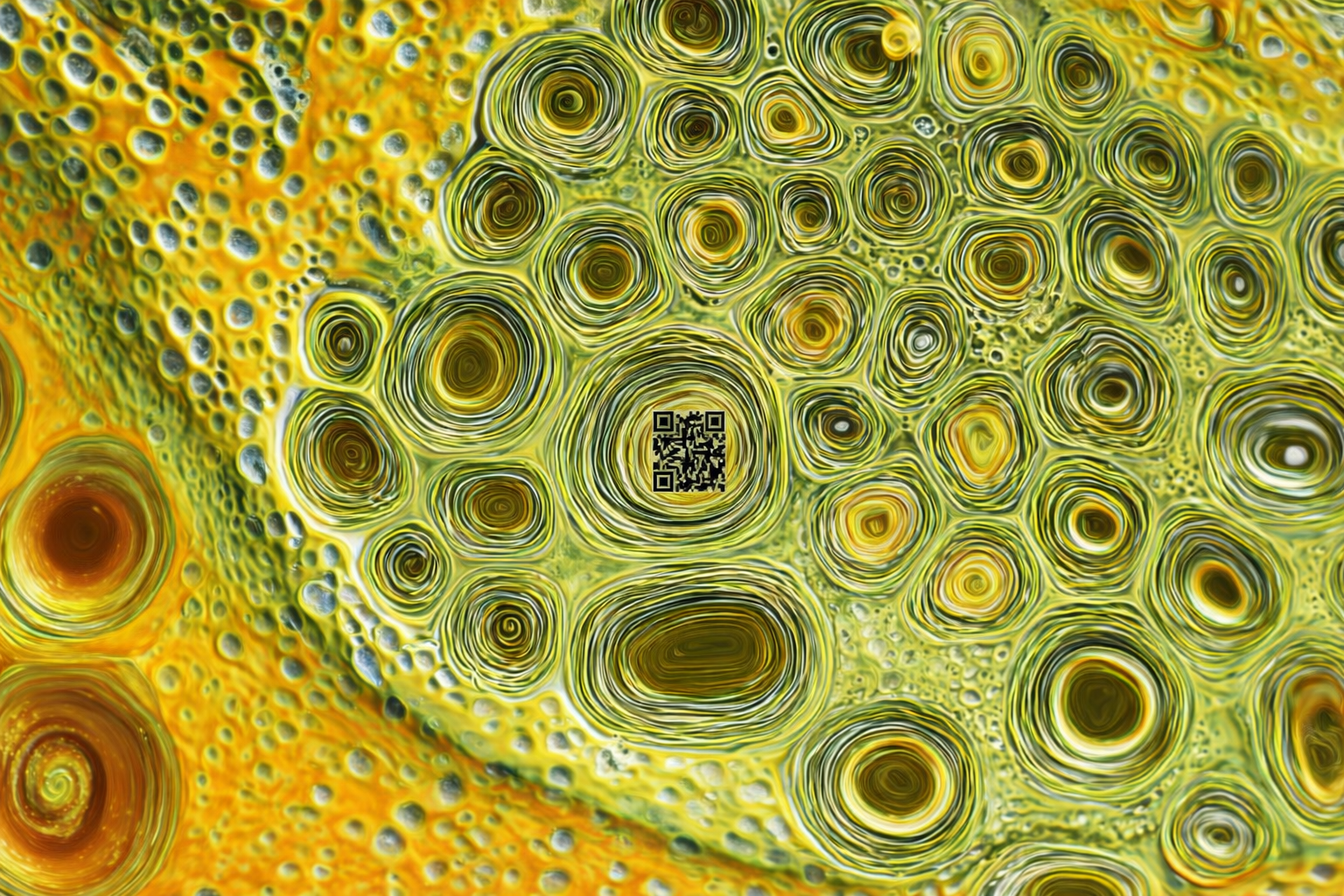
Last week, researchers at the Vienna University of Technology, working with data storage company Cerabyte, officially broke the Guinness World Record for the world’s smallest QR code. The new record-holder measures just 1.98 square micrometers — smaller than most bacteria. Each pixel in the code is 49 nanometers across, roughly ten times smaller than the wavelength of visible light. You cannot see it with an optical microscope. You cannot see it with the naked eye. You cannot see it at all without an electron microscope.
The code was engraved into a thin ceramic film using a focused ion beam — the same class of ultra-stable materials used to coat high-performance industrial cutting tools. The result is not just tiny. It is extraordinarily durable. Unlike magnetic drives that degrade within a decade, or flash memory that loses data without periodic power, or optical discs that scratch and fade, this ceramic-encoded QR code can survive for centuries — possibly millennia — without any energy input whatsoever. At the scale of an A4 sheet of paper, this approach could store more than two terabytes of data. Permanently. With no electricity required to maintain it.
This is a genuinely significant breakthrough. And like most genuinely significant breakthroughs, its importance has almost nothing to do with the headline and almost everything to do with the implications that follow from it. The record itself is a demonstration. What matters is what the demonstration opens up.
Continue reading… “The World’s Smallest QR Code Is Smaller Than a Bacterium. Here’s Why That Changes Everything”