Surgical robot developed by Nebraska company to be put to the test in space

By Chris Dunker

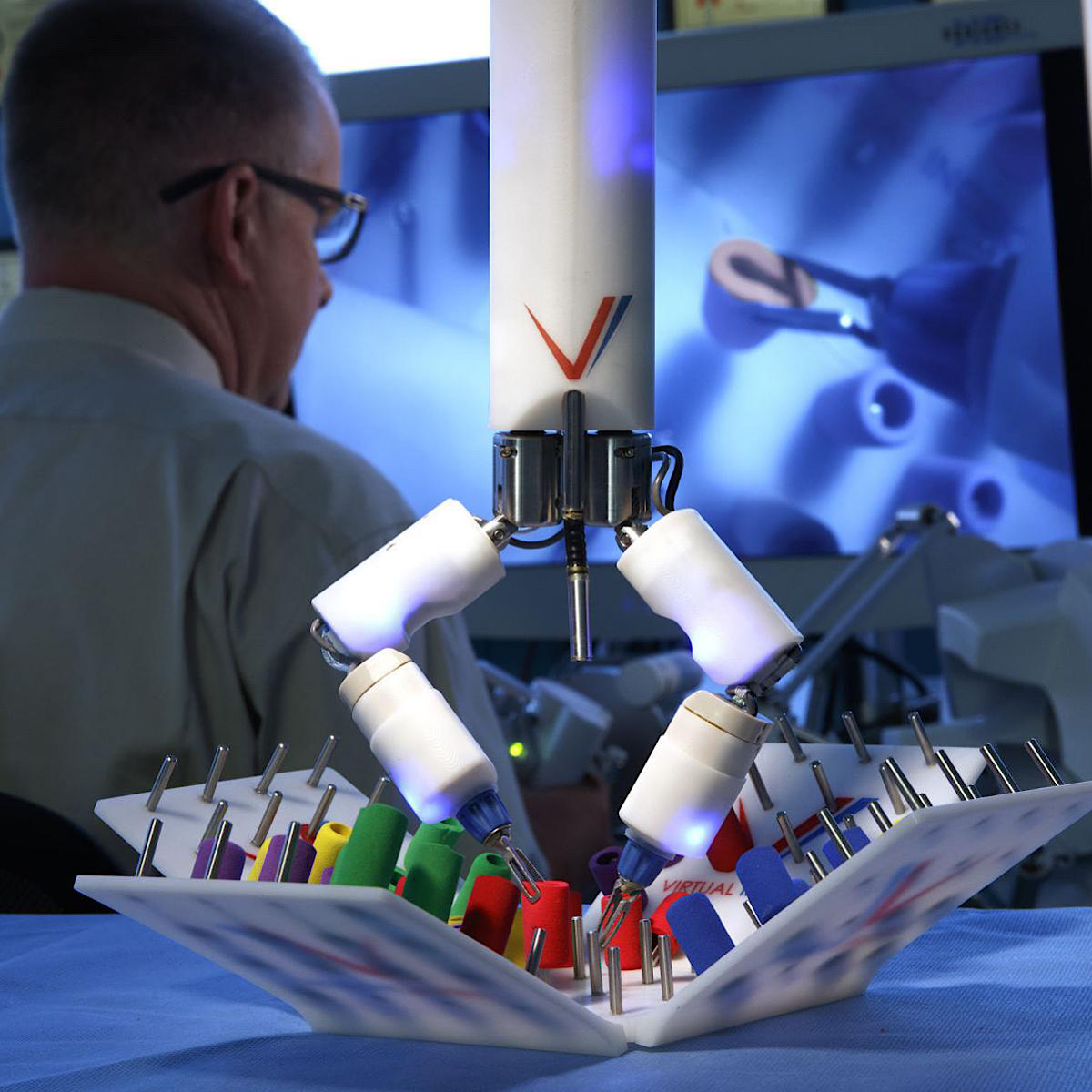
MIRA (“miniaturized in vivo robotic assistant”) is an investigational robot that will enable surgeons to perform minimally invasive surgeries in any hospital or surgery center, without the need for a dedicated space or for the infrastructure typically required for other “mainframe” robotic systems. Weighing only two pounds, the miniature single incision platform has full robotic capabilities, and can easily be moved from room to room.

A robot capable of autonomously operating on an ailing astronaut thousands, if not millions, of miles away from a modern surgical suite sounds like science fiction.

The surgical device — let’s call it the “miniaturized in vivo robotic assistant,” or MIRA for short — would simply be retrieved from a small locker, set up and turned on.

Continue reading… “Surgical robot developed by Nebraska company to be put to the test in space”

DNA Repair Kit Successfully Fixes Hereditary Disease in Cells

Image of patient derived podocyte kidney cells repaired with novel baculovirus-vectored approach pioneered by the Berger team. Podocin (coloured in green) is restored to the cell surface as in healthy podocytes. Credit: Dr Francesco Aulicino.Read time:  4 minutesDownload Article

Genetic mutations which cause a debilitating hereditary kidney disease affecting children and young adults have been fixed in patient-derived kidney cells using a potentially game-changing DNA repair-kit. The advance, developed by University of Bristol scientists, is published in Nucleic Acids Research.

In this new study, the international team describe how they created a DNA repair vehicle to genetically fix faulty podocin, a common genetic cause of inheritable Steroid Resistant Nephrotic Syndrome (SRNS).

Podocin is a protein normally located on the surface of specialised kidney cells and is essential for kidney function. Faulty podocin, however, remains stuck inside the cell and never makes it to the surface, terminally damaging the podocytes. Since the disease cannot be cured with medications, gene therapy which repairs the genetic mutations causing the faulty podocin offers hope for patients.

Continue reading… “DNA Repair Kit Successfully Fixes Hereditary Disease in Cells”

China’s new quantum satellite now operational

File illustration of the Chinese satellite Micius.

A Chinese micro-nano quantum satellite has entered its planned orbit and is now operational, the University of Science and Technology of China (USTC), one of its developers, said on Thursday.

The low-orbit satellite was designed to conduct real-time quantum key distribution experiments between the satellite and ground station, and to carry out technical verification. It was launched atop a Lijian-1 carrier rocket from the Jiuquan Satellite Launch Center in northwest China on Wednesday.

The new micro-nano satellite’s weight is about one-sixth the weight of the world’s first quantum satellite, the Chinese satellite Micius, which weighs more than 600 kilograms, according to the USTC.

The university said that, based on the quantum technology first seen in Micius, it is clear that more low-cost quantum satellites are needed to realize an efficient, practical and global quantum communication network that can meet the increasing user demand.

Continue reading… “China’s new quantum satellite now operational”

Self-Driving Cars Could Generate Billions in Revenue: Study

Self-driving cars could generate billions of dollars a year in revenue from mobile internet services and products, even if occupants spend only a fraction of their free time on the web, according to a new study by McKinsey & Company.

Self-driving cars could generate billions of dollars a year in revenue from mobile internet services and products, even if occupants spend only a fraction of their free time on the web, according to a new study by McKinsey & Company.

The study, released Thursday, also projects that widespread adoption of self-driving cars could lead to a 90 per cent reduction in US vehicle crashes, with a potential savings of nearly $200 billion a year from significantly fewer injuries and deaths.

In addition, the McKinsey study warns of several risks to established companies, including vehicle manufacturers, dealers and even insurance companies.

Continue reading… “Self-Driving Cars Could Generate Billions in Revenue: Study”

Scientists find robotic sensors may be able to improve prosthetics

A groundbreaking project to create advanced sensors for use in robotic systems has the potential to transform prosthetics and robotic limbs, according to a new study.

A groundbreaking project to create advanced sensors for use in robotic systems has the potential to transform prosthetics and robotic limbs, according to a new study. The research project, led by the University of the West of Scotland (UWS), Integrated Graphene Ltd, and supported by the Scottish Research Partnership in Engineering (SRPe) and the National Manufacturing Institute for Scotland (NMIS) Industry Doctorate Programme in Advanced Manufacturing, aims to develop sensors that improve robot dexterity and motor skills through the use of accurate pressure sensors that provide haptic feedback.

Professor Des Gibson, Director of the Institute of Thin Films, Sensors and Imaging at UWS and project principal investigator, said: “Over recent years, the advancements in the robotics industry have been remarkable, however, due to a lack of sensory capabilities, robotic systems often fail to execute certain tasks easily. For robots to reach their full potential, accurate pressure sensors, capable of providing greater tactile ability, are required. “Our collaboration with Integrated Graphene Ltd, has led to the development of advanced pressure sensor technology, which could help transform robotic systems.”

Continue reading… “Scientists find robotic sensors may be able to improve prosthetics”

Blockchain Will Coordinate Airspace so Delivery Drones Don’t Crash

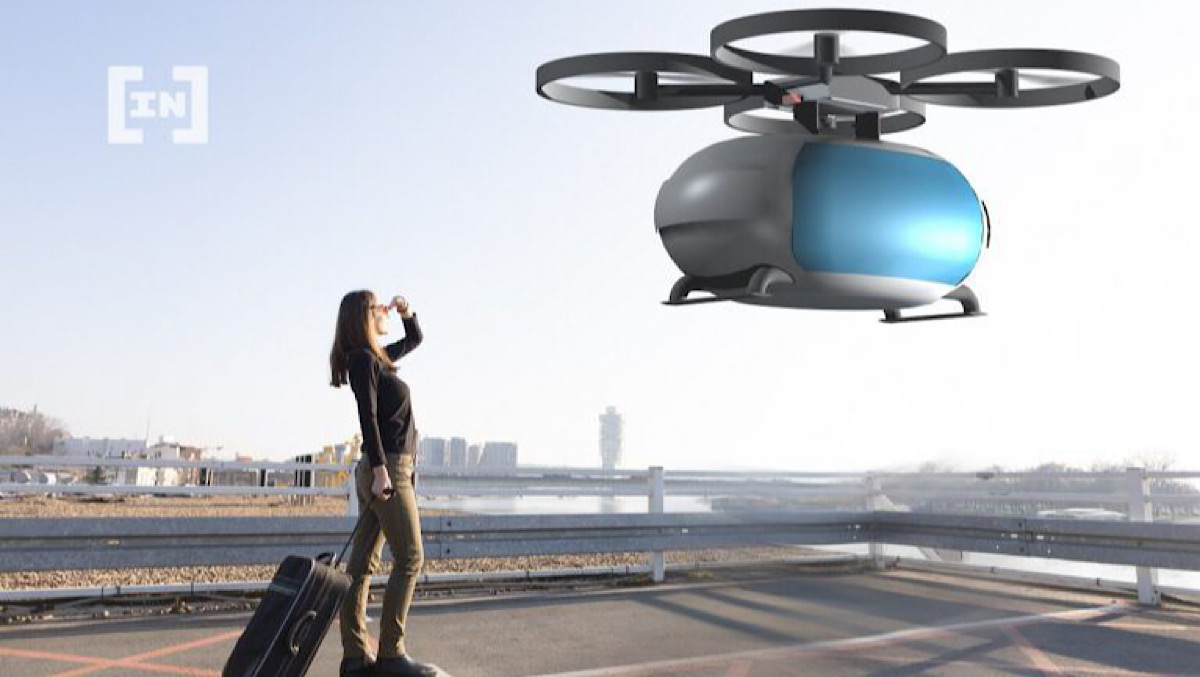
Blockchain and drones: How will we control the new highways of the skies above us as small aircraft fill the the space above our cities?

By Nicole Buckler

Blockchain is a new industry. And yet, there are systems being conceived around it that are even newer. And this concept is one of them. For those of us with kids, we are being told to prepare them for jobs that don’t exist yet. So read on.

It has been predicted that within a couple of years, drones will be above us all the time. They will operate in a sub-layer of the sky, below commercial flight paths and military jets. But their flight paths will need to be coordinated. This is so they don’t smash into each other while delivering cargo, ferrying people, and inspecting things like wind turbines and bridges. No one needs to be rained on by smashing drones, thanks.

A sub-layer of air traffic control has been conceived to address this. It will work using both distributed ledger tech (DLT), blockchain, and automation. Research around this new sub-layer in the aviation industry is already well underway. The idea is to improve safety, cybersecurity and interoperability.

Cranfield researchers are part of this project. They say the system will integrate an ecosystem of crewed and uncrewed aircraft in the UK’s skies.

Continue reading… “Blockchain Will Coordinate Airspace so Delivery Drones Don’t Crash”

How a Humanoid Robot Is Helping Scientists Explore Shipwrecks

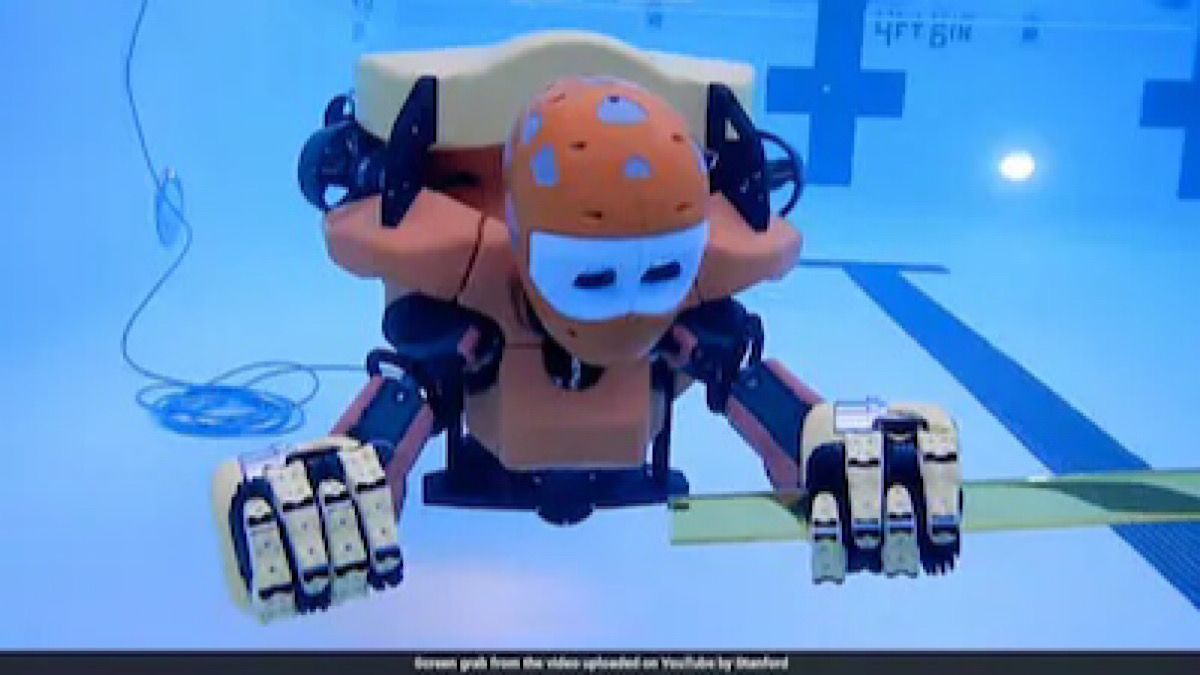
The robot resembles a human diver from the front, with arms, hands and eyes that have a 3D vision, capturing the underwater world in full colour. 

By Bhavya Sukheja

OceanOne made its debut in 2016.

A robot created at Standford University in the United States is diving down to shipwrecks and sunken planes and allowing its operators to feel like they’re underwater explorers too. 

The robot known as OceanOneK has humanoid top half, with eyes that have a 3D vision, capturing the underwater world in full colour. It resembles a human diver from the front, with arms and hands, and its back has computers and eight multidirectional thrusters that help it carefully manoeuvre the sites of fragile sunken ships. 

Continue reading… “How a Humanoid Robot Is Helping Scientists Explore Shipwrecks”

How 3D Printing Is Set to Revolutionize Personalized Healthcare

By Cathy Ma 

Additive manufacturing technology — commonly referred to as 3D printing — continues to make impressive inroads into a myriad of industries across the manufacturing spectrum. Maximizing what is known as factory physics, additive manufacturing has the capacity to transform digitally rendered designs into lighter, stronger, and safer products with reduced lead times and lower costs.

From cosmetics to rocket ships and nearly everything in between, these new technologies are redefining how things get made. According to Global News Wire, the global 3D market is revolutionizing nearly every facet of manufacturing today and is projected to grow from $18 billion in 2022 to $84 billion by 2029.  

Perhaps the most inspiring applications of these new technologies have been in the health and medical industry, where the individualized nature of patient care makes the customization capabilities of 3D printing an ideal fit.

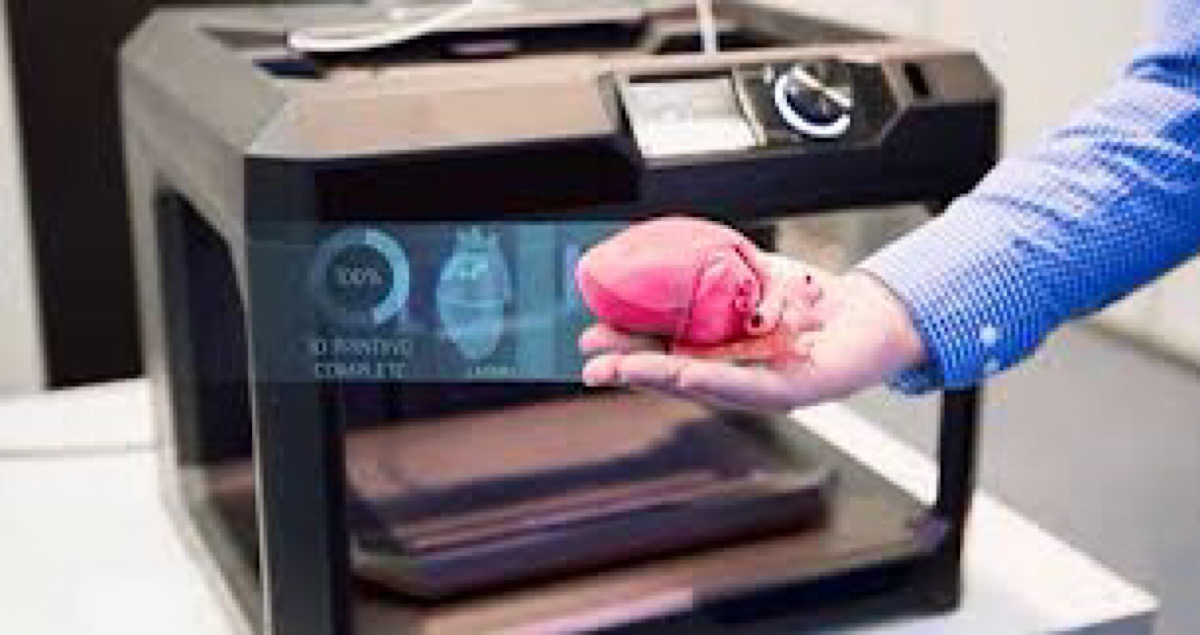
Researchers have discovered a way to bio-print living skin with functioning blood vessels, a crucial step toward creating artificial grafts that look and respond like natural skin. Scientists are also experimenting with the use of 3D technology to manufacture critical organs, including kidneys, heart, and liver.

Continue reading… “How 3D Printing Is Set to Revolutionize Personalized Healthcare”

From Boeing Starliner to Goodyear Tesla tire, 3-D printing is becoming manufacturing reality

A picture shows a non-pneumatic tire (NPT), an airless tires, during the presentation of the NPT tire of Goodyear in Colmar-Berg, Luxembourg, on May 17, 2022, where the tire manufacturer has a new plant where it is experimenting with 3-D printing.

By Rebecca Fannin

  • Goodyear opened a $77 million plant in Europe that uses 3-D printing in its tire manufacturing and recently tested new 3-D printed airless tires on a Tesla.
  • The use of 3-D printers by industrials, also known as additive manufacturing, has been rising and includes Boeing, GE, Caterpillar and Cummins.
  • But it’s still a relatively small part of manufacturing, just 2-3% of the $12 trillion production market, according to a McKinsey estimate, though it is expected to grow rapidly over the next decade.

Additive manufacturing is on the cusp of being adopted more widely by industry, as large corporates Goodyear Tire & Rubber Company and Boeing as well as small innovative start-ups prove it can work well at scale in manufacturing.

In May, Goodyear opened a $77 million plant in Luxembourg that centers on 3-D printing and can make tires four times faster in small batches than with conventional production. Goodyear also is testing its new 3-D printed airless tire technology on Tesla electric vehicles and Starship Technologies’ autonomous delivery robots. It has been working for the past several years on improved manufacturing techniques at an R&D center near Columbus, Ohio.

Continue reading… “From Boeing Starliner to Goodyear Tesla tire, 3-D printing is becoming manufacturing reality”

Ex-SpaceX Engineer Builds Martian Nuclear Reactor To Tackle Earth’s Power Crisis

by Razvan Calin

Elon Musk has already shaped our world in several different ways, and the debate of whether they’re all beneficial to humanity is ongoing. But apart from putting electric vehicles on top of the automotive world’s agenda and making us dream about outer space travel, there is one somewhat unintentional side effect of his frantic quest for broader horizons.

A former employee of SpaceX has set a very ambitious goal of building a working solution for humanity’s ever-growing need for electricity. No bigger than a regular container, his invention is a nuclear fission reactor generator. Portable, affordable, and economically feasible, the power plant can be deployed everywhere. In an interview for Interesting Engineering, the head of Radiant Nuclear (the company that builds the reactor) shed light on his work.

Doug Bernauer, CEO of Radiant Nuclear and ex-SpaceX engineer, got the idea from a project he worked on while at SpaceX: supplying power to a human colony on Mars. The challenge was that it had to sustain the facilities on the ground and refuel spaceships that could travel back and forth between Earth and the Red Planet. Since the Sun was not a good enough solution, nuclear energy came up. But, until humankind reaches that stage, we can successfully use that invention on our Blue Planet. With $10 in million funding from Union Square Ventures, Radiant Nuclear is on its way to building the world’s first portable, zero-emissions power source. The prototype could begin the testing stage in five years. 

Continue reading… “Ex-SpaceX Engineer Builds Martian Nuclear Reactor To Tackle Earth’s Power Crisis”

‘Helical Engine’ could reach 99% the speed of light, NASA scientists says

THE ‘HELICAL ENGINE’ WORKS BY EXPLOITING THE WAY MASS CAN CHANGE AT RELATIVISTIC SPEEDS. (CREDIT: NASA)

By Michelle Starr

When it comes to space, there’s a problem with our human drive to go all the places and see all the things. A big problem. It’s, well, space. It’s way too big. Even travelling at the maximum speed the Universe allows, it would take us years to reach our nearest neighbouring star.

But another human drive is finding solutions to big problems. And that’s what NASA engineer David Burns has been doing in his spare time. He’s produced an engine concept that, he says, could theoretically accelerate to 99 percent of the speed of light – all without using propellant.
He’s posted it to the NASA Technical Reports Server under the heading “Helical Engine“, and, on paper, it works by exploiting the way mass can change at relativistic speeds – those close to the speed of light in a vacuum. It has not yet been reviewed by an expert.

Understandably this paper has caused buzz approaching levels seen in the early days of the EM Drive. And yes, even some headlines claiming the engine could ‘violate the laws of physics’.

But while this concept is fascinating, it’s definitely not going to break physics anytime soon. 

Continue reading… “‘Helical Engine’ could reach 99% the speed of light, NASA scientists says”

NASA Will Inspire World When It Returns Mars Samples to Earth in 2033

NASA has finished the system requirements review for its Mars Sample Return Program, which is nearing completion of the conceptual design phase. During this phase, the program team evaluated and refined the architecture to return the scientifically selected samples, which are currently in the collection process by NASA’s Perseverance rover in the Red Planet’s Jezero Crater.

The architecture for the campaign, which includes contributions from the European Space Agency (ESA), is expected to reduce the complexity of future missions and increase probability of success.

“The conceptual design phase is when every facet of a mission plan gets put under a microscope,” said Thomas Zurbuchen, associate administrator for science at NASA Headquarters in Washington. “There are some significant and advantageous changes to the plan, which can be directly attributed to Perseverance’s recent successes at Jezero and the amazing performance of our Mars helicopter.”

This advanced mission architecture takes into consideration a recently updated analysis of Perseverance’s expected longevity. Perseverance will be the primary means of transporting samples to NASA’s Sample Retrieval Lander carrying the Mars Ascent Vehicle and ESA’s Sample Transfer Arm.

As such, the Mars Sample Return campaign will no longer include the Sample Fetch Rover or its associated second lander. The Sample Retrieval Lander will include two sample recovery helicopters, based on the design of the Ingenuity helicopter, which has performed 29 flights at Mars and survived over a year beyond its original planned lifetime. The helicopters will provide a secondary capability to retrieve samples cached on the surface of Mars.

Continue reading… “NASA Will Inspire World When It Returns Mars Samples to Earth in 2033”
Discover the Hidden Patterns of Tomorrow with Futurist Thomas Frey
Unlock Your Potential, Ignite Your Success.

By delving into the futuring techniques of Futurist Thomas Frey, you’ll embark on an enlightening journey.

Learn More about this exciting program.