
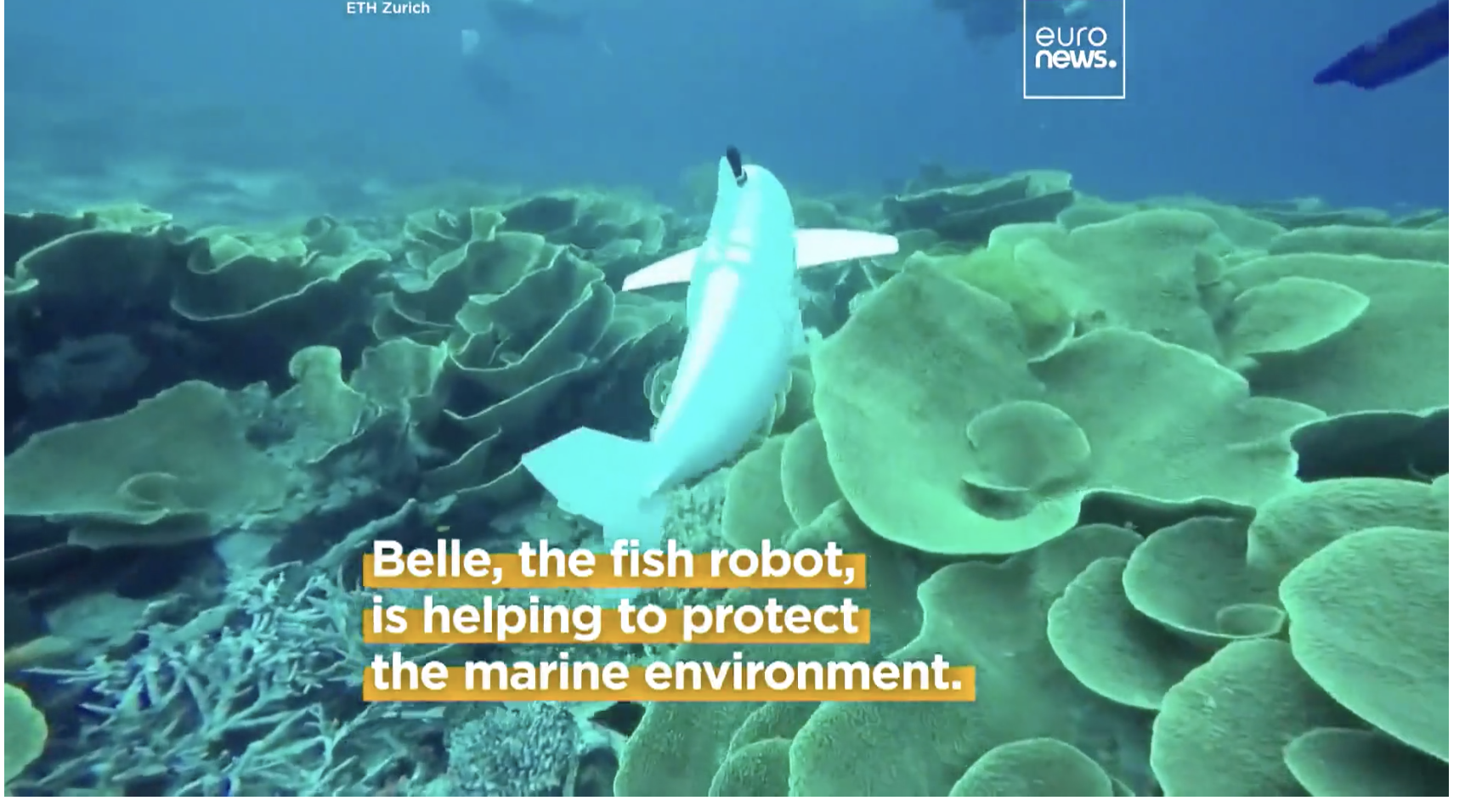
Researchers in Switzerland have developed an autonomous fish robot named “Belle” that enables conservationists to gain valuable insights into underwater ecosystems without disrupting marine life. Belle has been specifically designed to collect data in a minimally invasive manner, providing a clearer understanding of organisms inhabiting the sea.
Belle, developed by mechanical engineering students at ETH Zurich, the Swiss Federal Institute of Technology, moves silently and mimics the behavior of real fish, creating minimal disturbance as it navigates through the environment. This is particularly important in vulnerable areas such as coral reefs, where traditional propeller-based systems can harm coral and scare away marine life.
Using artificial intelligence (AI), Belle autonomously explores underwater environments, blending seamlessly into coral reef habitats. It can collect DNA samples and capture high-resolution videos, enabling detailed analysis. The robot measures less than a meter in length and weighs nearly 10 kg out of the water. Its propulsion system consists of a silicone fin with two cavities that pump water in cycles, allowing the fin to move back and forth.
Belle operates autonomously for approximately two hours before its environmental DNA (eDNA) filter needs replacement, requiring a battery change. Once it reaches the surface, the robot sends a GPS signal to researchers who retrieve it. While data transmission during the mission is not the primary focus, the collected samples and findings are manually retrieved and analyzed afterward.
The research team aims to utilize Belle to study the impact of overfishing, pollution, and climate change on the health and biodiversity of various reef ecosystems. By providing a non-disruptive means of data collection, Belle offers marine biologists valuable information for conservation efforts and ecological research in marine environments.
By Impact Lab
