Breakthrough in Solar-Powered Drones: The ColumbFly Achieves Unlimited Daytime Flight

Researchers at Beihang University in Beijing have developed an ultralightweight solar-powered drone, named ColumbFly, capable of unlimited flight during daylight hours. Weighing only 4 grams, ColumbFly utilizes a solar cell to generate electricity, creating an electric field between oppositely charged plates arranged in a circle. These opposing charges act like repelling magnets, producing enough force to turn the rotor blades and generate the torque needed to lift the robot off the ground.

The drone boasts a high lift efficiency of 30.7 grams per watt and a power system that requires just 0.568 watts. This allows it to fly continuously using solar power under natural sunlight, which provides 920 watts per square meter. The Beihang University team claims that each component of ColumbFly has been meticulously designed to balance efficiency and lightweight, enabling remote monitoring tasks for extended periods.

Continue reading… “Breakthrough in Solar-Powered Drones: The ColumbFly Achieves Unlimited Daytime Flight”

AI Breakthrough: Predicting Rogue Waves Up to Five Minutes in Advance

Rogue waves, those unexpectedly massive ridges of water that can ambush ships and beachgoers, are now more predictable thanks to a new artificial intelligence model. Mechanical engineers Thomas Breunung and Balakumar Balachandran from the University of Maryland in College Park report their findings in the July 18 issue of Scientific Reports.

These waves, which crest more than twice as high as surrounding swells, can form where converging waves amplify a single ridge or where ocean currents compress swells into powerful billows. Despite recognizing certain patterns preceding these surges, researchers had not yet developed an effective forecasting tool (SN: 6/8/15). Such a tool could be lifesaving, given that from 2011 to 2018, rogue waves were responsible for 386 deaths and the sinking of 24 ships.

Continue reading… “AI Breakthrough: Predicting Rogue Waves Up to Five Minutes in Advance”

ElevenLabs Partners with Estates of Legendary Stars for AI-Powered Voice Narration

AI audio firm ElevenLabs has inked agreements with the estates of iconic figures such as Judy Garland, James Dean, and other legendary stars to use their voices for reading books, articles, PDFs, and more through its new Reader App.

ElevenLabs envisions users enjoying Garland’s legendary voice reading the original L. Frank Baum novel “The Wonderful Wizard of Oz” or Laurence Olivier delivering a Sherlock Holmes story, among other works. The company emphasizes that it has secured license agreements for the authorized use of these iconic voices as part of the “Iconic Voices” feature of its app.

Continue reading… “ElevenLabs Partners with Estates of Legendary Stars for AI-Powered Voice Narration”

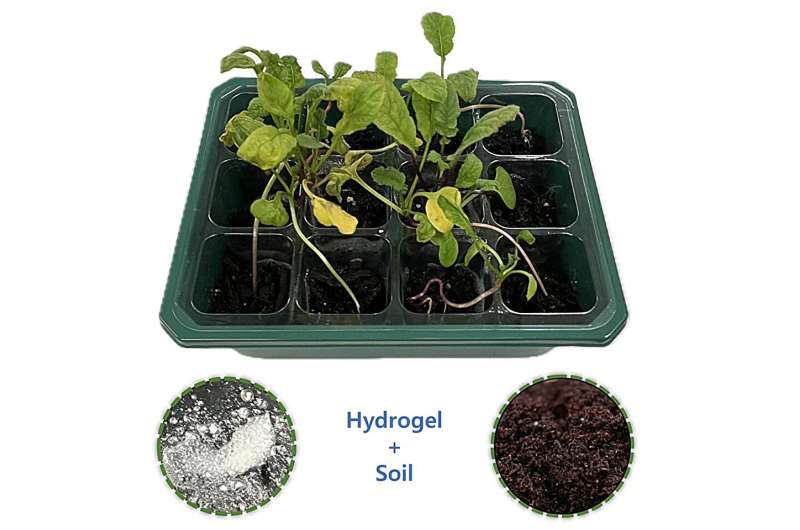
New Hydrogel-Infused Soil Captures Water from Air, Enhances Plant Growth, and Optimizes Fertilizer Use

Researchers at The University of Texas at Austin have engineered a new type of soil infused with a hydrogel material that can capture water from the air and provide a controlled release of fertilizer. This innovative “smart soil” significantly enhances plant growth and reduces water and fertilizer usage.

“This new gel technology can reduce the burden on farmers by decreasing the need for frequent irrigation and fertilization,” said Jungjoon Park, a graduate student in the Walker Department of Mechanical Engineering who led the research. “The technology is also versatile enough to be adopted across a wide range of climates, from arid regions to temperate areas.” The research was recently published in ACS Materials Letters.

Continue reading… “New Hydrogel-Infused Soil Captures Water from Air, Enhances Plant Growth, and Optimizes Fertilizer Use”

Researchers Develop Soft, Stretchable ‘Jelly Batteries’ for Wearable Devices and Biomedical Implants

Researchers at the University of Cambridge have developed innovative soft, stretchable “jelly batteries” with potential applications in wearable devices, soft robotics, and even brain implants for drug delivery or treating conditions like epilepsy. Inspired by electric eels, these jelly-like materials feature a layered structure, similar to sticky Lego, enabling them to deliver an electric current.

The jelly batteries, reported in the journal Science Advances, are made from hydrogels: 3D networks of polymers containing over 60% water. These polymers are held together by reversible interactions that control the jelly’s mechanical properties. The ability to precisely control these properties and mimic human tissue characteristics makes hydrogels ideal for soft robotics and bioelectronics. However, achieving both conductivity and stretchability in such materials has been challenging.

Continue reading… “Researchers Develop Soft, Stretchable ‘Jelly Batteries’ for Wearable Devices and Biomedical Implants”

Insect-Inspired Navigation Revolutionizes Tiny Autonomous Robots

Researchers at TU Delft have drawn inspiration from the natural world to develop an innovative autonomous navigation strategy for tiny, lightweight robots. Inspired by how ants visually recognize their environment and count their steps to find their way back home, this strategy could drastically improve the efficiency and application of small autonomous robots.

The TU Delft researchers designed an insect-inspired navigation system that allows tiny robots to return home after long journeys with minimal computation and memory requirements—just 0.65 kilobytes per 100 meters. This breakthrough has the potential to extend the use of small autonomous robots in various fields, such as warehouse inventory monitoring and detecting gas leaks at industrial sites.

Continue reading… “Insect-Inspired Navigation Revolutionizes Tiny Autonomous Robots”

Aston University Sets New Data Transmission Record of 402 Terabits Per Second

Researchers at Aston University, along with their international team, have set a new record by achieving a data transmission rate of 402 terabits per second using standard optical fiber. This groundbreaking accomplishment holds the potential to stabilize broadband costs amid rising demand for high-speed internet.

In collaboration with an international team, Aston University researchers transmitted data at a remarkable rate of 402 terabits per second through commercially available optical fiber. This new record surpasses their previous milestone set in March 2024, where they achieved a data rate of 301 terabits per second, or 301,000,000 megabits per second, using a single standard optical fiber.

Continue reading… “Aston University Sets New Data Transmission Record of 402 Terabits Per Second”

Future Cars May Detect Drunk Drivers by Monitoring Facial Features

The computers integrated into vehicles could soon determine if a driver is intoxicated simply by analyzing their facial features, according to researchers. This technology, by continuously monitoring the driver for typical signs of inebriation, holds the potential to significantly reduce drunk driving incidents.

The project, detailed in a paper published on April 9th during an Institute of Electrical and Electronics Engineers (IEEE) and Computer Vision Foundation (CVF) conference, empowers in-car computing systems to evaluate a driver’s intoxication level with 75% accuracy as soon as they enter the vehicle.

Continue reading… “Future Cars May Detect Drunk Drivers by Monitoring Facial Features”

Transforming Solar Panel Waste into High-Performance Lithium-Ion Batteries

Researchers at the Qingdao Institute of Bioenergy and Bioprocess Technology (QIBEBT) have developed a groundbreaking method to recycle silicon from solar panels and repurpose it to create superior-performance lithium-ion batteries. This innovative approach is not only sustainable and cost-effective but also sets a new precedent for reusing solar panel components at the end of their life cycle.

The recent surge in solar panel installations marks a significant shift away from fossil fuels, contributing to a cleaner environment. However, it also foreshadows a looming waste problem, as these panels will reach the end of their operational life in about three decades, generating a massive amount of waste. Consequently, researchers worldwide are exploring viable roles for individual solar panel components. While metals like copper and silver will likely remain in high demand, repurposing abundant silicon has been a challenge—until now.

Continue reading… “Transforming Solar Panel Waste into High-Performance Lithium-Ion Batteries”

MingYang Smart Energy Launches World’s Largest Floating Wind Turbine Platform

Chinese wind turbine manufacturer MingYang Smart Energy has officially launched the world’s largest single-capacity floating wind turbine platform, known as Ocean X. This innovative design, featuring a dual-turbine ‘V’ shape, boasts a total capacity of 16.6 MW and was unveiled in the southern Chinese port city of Guangzhou. The Ocean X platform is estimated to produce 54,000 MWh annually, enough to power approximately 30,000 Chinese households.

MingYang Smart Energy’s offshore wind solutions are designed to generate power in deep waters up to 62 miles (100 kilometers) from shore and at depths of 100 meters. These solutions include the MySE 5.5MW, MySE 7.25MW, and the new Ocean X 16.6MW double-rotor floating wind systems. In December 2023, MingYang introduced the world’s first typhoon-proof wind turbine with an 18 MW power rating.

Continue reading… “MingYang Smart Energy Launches World’s Largest Floating Wind Turbine Platform”

Advancing Autonomous Navigation: NC State Researchers Enhance 3D Mapping with AI

Researchers at North Carolina State University have developed an innovative technique that allows artificial intelligence (AI) programs to more accurately map three-dimensional (3D) spaces using two-dimensional (2D) images captured by multiple cameras. This advancement promises to significantly improve the navigation capabilities of autonomous vehicles while operating efficiently with limited computational resources.

“Most autonomous vehicles use powerful AI programs called vision transformers to take 2D images from multiple cameras and create a representation of the 3D space around the vehicle,” explained Tianfu Wu, Ph.D., Associate Professor of Electrical and Computer Engineering at North Carolina State University. “However, while each of these AI programs takes a different approach, there is still substantial room for improvement.”

Continue reading… “Advancing Autonomous Navigation: NC State Researchers Enhance 3D Mapping with AI”

Dubai Unveils World’s First 3D-Printed Electric Abra

In a groundbreaking initiative that marries ancient tradition with cutting-edge technology, Dubai’s Roads and Transport Authority (RTA) has launched the trial operation of the world’s first electric abra, a traditional wooden boat manufactured using 3D printing technology.

The 20-passenger vessel was created by Abu Dhabi’s Al Seer Marine, in collaboration with Tasneef Maritime, Japan’s Mitsubishi, and Germany’s Siemens and Torqeedo. According to a recent RTA press release, the abra retains its traditional design while supporting Dubai’s ambitious 3D printing strategy aimed at positioning the UAE as a global hub for 3D printing by 2030. This innovative approach is expected to reduce manufacturing time by 90%, lower costs by 30%, and cut operation and maintenance expenses by 30%.

Continue reading… “Dubai Unveils World’s First 3D-Printed Electric Abra”
Discover the Hidden Patterns of Tomorrow with Futurist Thomas Frey
Unlock Your Potential, Ignite Your Success.

By delving into the futuring techniques of Futurist Thomas Frey, you’ll embark on an enlightening journey.

Learn More about this exciting program.