

Ray Kurzweil, a renowned American computer scientist and techno-optimist, is a long-time authority on artificial intelligence (AI). His 2005 bestselling book, The Singularity Is Near, captivated audiences with its sci-fi-like predictions that computers would achieve human-level intelligence by 2029 and that humans would merge with computers to become superhuman by around 2045—a phenomenon he termed “the Singularity.” Now, nearly 20 years later, Kurzweil, 76, has released a sequel, The Singularity Is Nearer, and some of his predictions no longer seem so far-fetched. Kurzweil, currently a principal researcher and AI visionary at Google, shared his insights with the Observer in his personal capacity as an author, inventor, and futurist.
Continue reading… “Ray Kurzweil: The Singularity Is Nearer and AI’s Future”Breakthrough in Robotic Dexterity: Bristol University’s AnyRotate Hand

A team of researchers at Bristol University has developed a highly dexterous four-fingered robotic hand with artificial tactile fingertips, named AnyRotate. This innovative robotic hand can sense and rotate objects in any direction and orientation, even when the hand is upside down—a capability never achieved before.
Achieving this level of dexterity required the extraction and utilization of rich touch information for precise motor control. The researchers believe that enhancing the dexterity of robotic hands could significantly advance automated tasks such as handling supermarket goods or sorting recycling waste. The details of their research are available on GitHub.
Continue reading… “Breakthrough in Robotic Dexterity: Bristol University’s AnyRotate Hand”Expanding Horizons: Dogger Bank Wind Farm Set for Major Expansion

The Dogger Bank Wind Farm, already the world’s largest offshore wind farm with a capacity of 3.6 GW, is poised for a significant expansion. Developers SSE and Equinor have submitted a scoping report for phase D of the project, which could add over 2 GW of capacity, according to a recent press release.
As countries worldwide seek cleaner energy solutions, renewable sources like wind and solar are being adopted aggressively. For the UK, with limited land and inconsistent sunshine, offshore wind projects are a more viable option. The strong winds of the North Sea make offshore wind farms particularly effective, leading to the initial consent for the Dogger Bank Wind Farm in 2015. While the project is still under construction in its first three phases, developers are now seeking permission for a fourth phase to further boost its energy production capacity.
Continue reading… “Expanding Horizons: Dogger Bank Wind Farm Set for Major Expansion”Revolutionizing Concrete: New Method Sequesters CO2 and Enhances Strength

A Northwestern University-led team of engineers has discovered an innovative way to store carbon dioxide (CO2) in concrete by using a carbonated water-based solution during the manufacturing process. This new method not only helps sequester CO2 from the atmosphere but also produces concrete with uncompromised strength and durability.
In laboratory experiments, the process achieved a CO2 sequestration efficiency of up to 45%, meaning nearly half of the CO2 injected during concrete manufacturing was captured and stored. This breakthrough could significantly offset CO2 emissions from the cement and concrete industries, which are responsible for 8% of global greenhouse gas emissions.
Continue reading… “Revolutionizing Concrete: New Method Sequesters CO2 and Enhances Strength”Revolutionizing Wireless Communication: MIT’s Advanced Receiver Blocks Interference

The growing prevalence of high-speed wireless communication devices, from 5G mobile phones to sensors for autonomous vehicles, is leading to increasingly crowded airwaves. This makes the ability to block interfering signals that can hamper device performance an even more important and challenging problem.
To address these challenges, MIT researchers have demonstrated a new millimeter-wave multiple-input-multiple-output (MIMO) wireless receiver architecture. This innovative design can handle stronger spatial interference than previous models. MIMO systems, which have multiple antennas, can transmit and receive signals from different directions. The new wireless receiver senses and blocks spatial interference at the earliest opportunity, before unwanted signals are amplified, thus improving performance.
Continue reading… “Revolutionizing Wireless Communication: MIT’s Advanced Receiver Blocks Interference”Advanced AUVs: Revolutionizing Underwater Conservation with AI

Covering nearly 80% of the planet, the underwater environment is critical in maintaining ecological balance and supporting human well-being. Effective conservation relies on a thorough understanding of underwater species distribution and ecosystem dynamics, but this process can be time-consuming and costly.
A team of U.S. National Science Foundation-funded researchers at the Minnesota Interactive Robotics and Vision Laboratory is working to overcome these challenges. They are developing advanced autonomous underwater vehicles (AUVs) powered by artificial intelligence to collect vast amounts of data, provide detailed insights into species distribution, and create comprehensive habitat maps to understand environmental drivers.
Continue reading… “Advanced AUVs: Revolutionizing Underwater Conservation with AI”Revolutionary Water Harvesting from Air Using Adsorbent Fins

A collaboration of researchers from multiple universities in the US has successfully demonstrated the use of adsorbent fins to harvest water from the air. This innovative approach is more efficient than previous water harvesting technologies and could help secure water supplies in dry and arid regions, according to a press release.
As the planet warms and climatic conditions become more extreme, access to clean water is expected to trouble millions of people. Traditionally, our water supplies have been dependent on the availability of local water bodies. However, advances in technology now make it possible to extract water from the air.
Continue reading… “Revolutionary Water Harvesting from Air Using Adsorbent Fins”Revolutionizing Balance Assessment: AI and Wearable Sensors Lead the Way
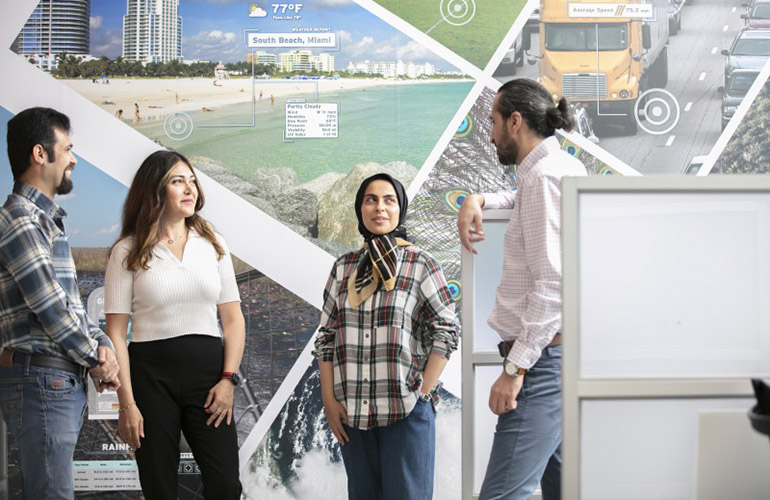
Traditionally, physicians have relied on subjective observations and specialized equipment to gauge balance in individuals with conditions such as Parkinson’s disease, neurological injuries, and age-related decline. These methods, especially the subjective ones, can lack precision, be difficult to administer remotely, and often prove inconsistent. Addressing these limitations, researchers from Florida Atlantic University have developed a novel approach using wearable sensors and advanced machine learning algorithms that could redefine balance assessment practices.
The researchers utilized wearable Inertial Measurement Unit (IMU) sensors placed on five body locations: ankle, lumbar, sternum, wrist, and arm. Data collection followed the Modified Clinical Test of Sensory Interaction on Balance (m-CTSIB) protocol, testing four sensory conditions: eyes open and closed on stable and foam surfaces. Each test lasted roughly 11 seconds, simulating continuous balance scenarios.
Continue reading… “Revolutionizing Balance Assessment: AI and Wearable Sensors Lead the Way”LignoSat: Pioneering Eco-Friendly Satellites with Wood

A groundbreaking satellite named LignoSat, developed by a team at Kyoto University in collaboration with logging company Sumitomo Forestry, is set to revolutionize space technology with its unique construction from magnolia wood. This 10-centimeter cube aims to pave the way for environmentally friendly satellites that completely burn up upon re-entering Earth’s atmosphere.
The LignoSat project began in April 2020, with researchers evaluating various types of wood for their durability in harsh space conditions. Magnolia emerged as the top choice due to its strength and workability. Using traditional Japanese joinery techniques, the satellite’s wooden panels are seamlessly joined without screws or glue.
Continue reading… “LignoSat: Pioneering Eco-Friendly Satellites with Wood”VEIR Unveils Revolutionary Power Transmission Technology
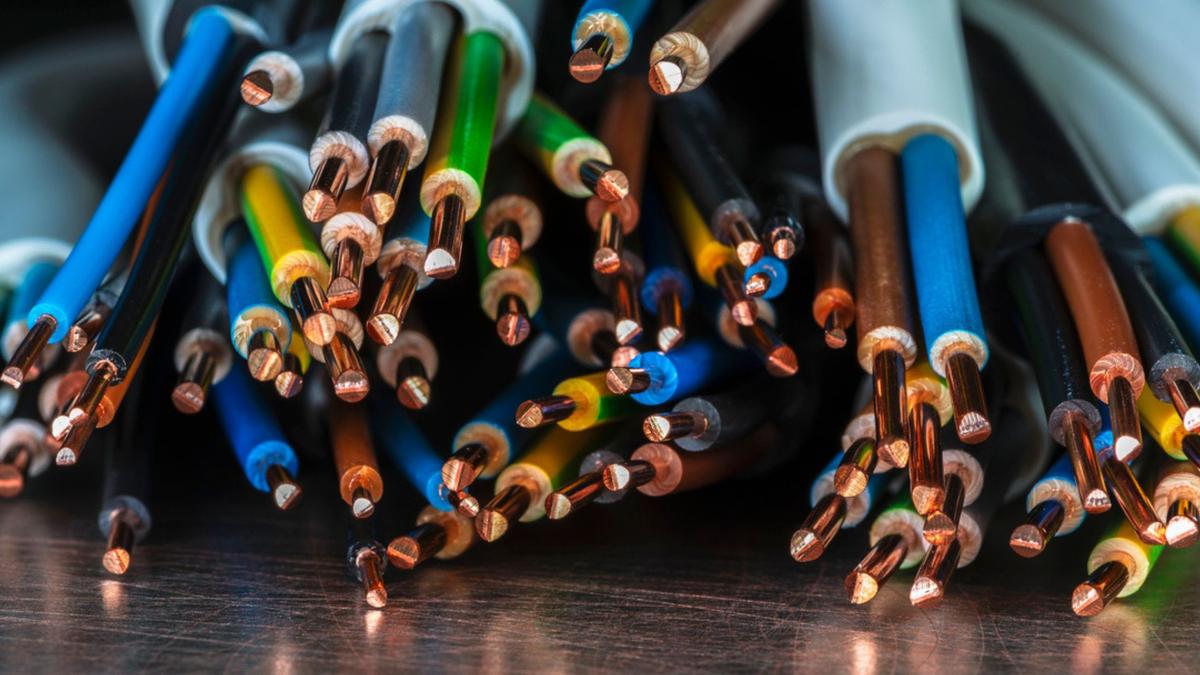
A groundbreaking power transmission technology has emerged in Woburn, Massachusetts, promising to redefine energy distribution efficiency while minimizing visual impact. VEIR, a startup co-founded by MIT alumnus Tim Heidel, has developed an innovative approach using superconducting cables and an advanced cooling system. This technology boosts transmission capacity, surpassing conventional lines by five to ten times, addressing the urgent global need for robust transmission infrastructure to support renewable energy integration and grid resilience.
VEIR’s technology relies on superconducting cables and an advanced cooling system, enabling their lines to initially carry up to 400 megawatts of power, with plans for even higher capacities in the future. “We can deploy much higher power levels at much lower voltage, and so we can deploy the same high power but with a footprint and visual impact that is far less intrusive,” said Heidel. This breakthrough not only increases capacity but also addresses regulatory and community opposition that have hindered many transmission projects.
Continue reading… “VEIR Unveils Revolutionary Power Transmission Technology”Texas Scientists Near Breakthrough in Vision Technology with Tiny Imager Chip

For more than 15 years, a group of scientists in Texas has been diligently working on creating devices that can “see” through barriers using medium-frequency electromagnetic waves. Now, they seem closer than ever to achieving their goal.
In an interview with Futurism, Kenneth O, an electrical engineering professor at the University of Texas, explained that the new tiny imager chip developed by his research team can detect the outlines of items through barriers like cardboard. This breakthrough is the result of continuous advances and innovations in microprocessor technology over the past two decades.
Continue reading… “Texas Scientists Near Breakthrough in Vision Technology with Tiny Imager Chip”Greece Introduces Six-Day Workweek Amid Economic Recovery

For most people, labor law can be boring. But when someone suggests working an extra day, people start to pay attention. In Greece, new regulations effective July 1 will make this possible for certain sectors.
Starting July 1, specific industrial and manufacturing facilities, along with businesses providing 24/7 services, can transition to a six-day workweek instead of the traditional five-day week, according to Emmanouil Savoidakis, head of the labor law practice at Politis & Partners, an Athens-based law firm specializing in business law. However, the tourism and food service industries are excluded from this new arrangement.
Continue reading… “Greece Introduces Six-Day Workweek Amid Economic Recovery”