Breakthrough Graphene-Based Sensor for Monitoring Lactic Acid

A new design for lactic acid sensors promises to be less expensive, have a longer shelf life, and be easier to miniaturize compared to traditional enzyme-based sensors. This innovative sensor can detect lactic acid, a byproduct produced when the body uses glucose or carbohydrates as fuel during activities such as exercise. Elevated lactic acid levels have been linked to an increased risk of catastrophic organ failure and unconsciousness or coma.

The sensor’s simplicity and portability make it ideal for use in remote settings, such as athletic tracks, without the need for electricity-powered detection equipment. Traditionally, lactic acid levels are measured using enzyme tests, which have a short shelf life and require battery-powered equipment. In contrast, the new chemosensor uses a chemical method with a graphene foam electrode surface to monitor lactic acid.

Continue reading… “Breakthrough Graphene-Based Sensor for Monitoring Lactic Acid”

Revolutionizing Construction: Carbon-Zero Cement from Recycled Concrete and Steel

Concrete and steel production are major contributors to CO2 emissions, but researchers from Cambridge University have developed a revolutionary solution that could recycle both materials simultaneously. By introducing old concrete into steel-processing furnaces, the process not only purifies iron but also produces “reactivated cement” as a byproduct. When powered by renewable energy, this method could potentially yield carbon-zero cement.

Scientists have long sought to make concrete more environmentally friendly. Efforts include altering the concrete mix to replace the most polluting ingredients, such as limestone, or designing concrete to absorb more CO2 from the atmosphere after being laid. In their new study, Cambridge researchers explored how waste concrete could be transformed back into clinker—the dry component of cement—ready for reuse.

Continue reading… “Revolutionizing Construction: Carbon-Zero Cement from Recycled Concrete and Steel”

Revolutionary Method for Diamond Synthesis at Atmospheric Pressure

Scientists have developed a groundbreaking technique to synthesize diamonds at normal atmospheric pressure without the need for a starter gem, potentially simplifying the production of these precious gemstones in the lab.

Traditionally, natural diamonds form in Earth’s mantle, the molten zone buried hundreds of miles beneath the planet’s surface. This natural process occurs under immense pressures of several gigapascals and scorching temperatures exceeding 2,700 degrees Fahrenheit (1,500 degrees Celsius).

Continue reading… “Revolutionary Method for Diamond Synthesis at Atmospheric Pressure”

Addressing South Korea’s Demographic Crisis: Strategies for Reversing the Decline in Birth Rates

South Korea’s total fertility rate, the number of children an average woman is expected to have over her lifetime, was just 0.72 in 2023. This figure is a mere third of the 2.1 minimum required for population maintenance and signals a significant demographic crisis. In the last three months of 2023, the rate further decreased to 0.65, with projections suggesting it may drop to around 0.6 for 2024.

At this pace, Statistics Korea forecasts that the population will fall to approximately 36 million in 50 years. This is a stark contrast to the population growth from 32 million in 1970 to 50 million in 2012, now rapidly reversing as if the population boom were a fleeting dream.

Continue reading… “Addressing South Korea’s Demographic Crisis: Strategies for Reversing the Decline in Birth Rates”

Pioneering Thermal Desalination: A Breakthrough in Water Security

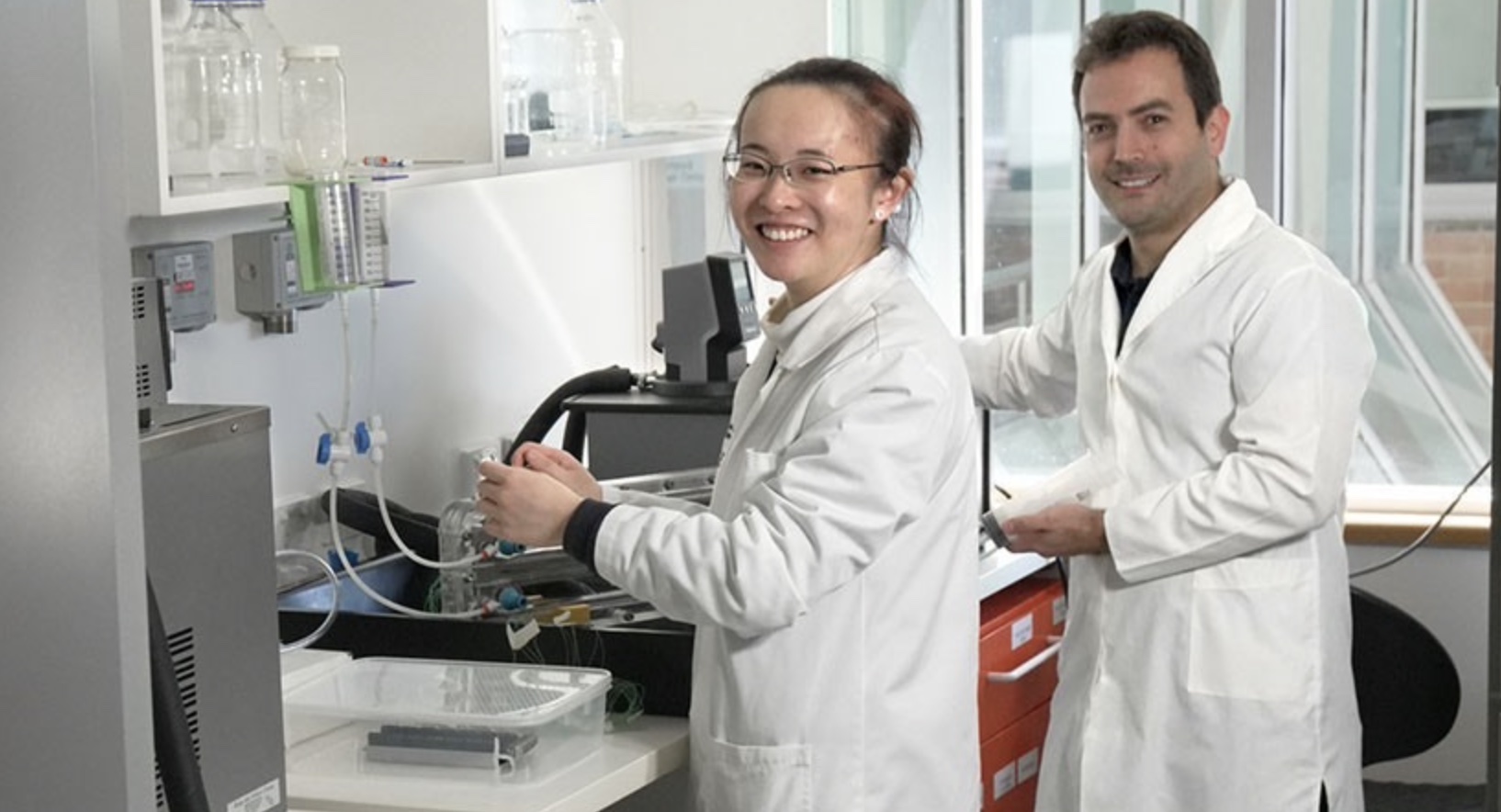
“It’s exciting to see a phenomenon that no one has seen before,” said Shuqi Xu, a PhD candidate at the Australian National University (ANU). “I don’t want people to think I am a workaholic, but I often come to the lab on Sundays. I can’t wait to find out the results of our experiments.”

Xu’s dedication has led to the world’s first thermal desalination method where water remains in the liquid phase throughout the process. This power-saving and potentially lifesaving approach is detailed in a new study published in Nature Communications.

Continue reading… “Pioneering Thermal Desalination: A Breakthrough in Water Security”

Revolutionizing Impact Absorption: Boston University’s Autonomous Robot Pushes the Limits

Inside a lab at Boston University’s College of Engineering, a robot arm meticulously drops small, plastic objects into a box on the floor. These feather-light, cylindrical pieces, no bigger than an inch tall, are the results of an ongoing experiment in robot autonomy. Independently learning and adapting, the robot is on a mission to create the most efficient energy-absorbing shape ever conceived.

The process begins with the robot 3D printing a small plastic structure, recording its shape and size, and then placing it on a flat metal surface. The robot then crushes the structure with pressure equivalent to the weight of an adult Arabian horse standing on a quarter. It measures the energy absorbed by the structure, analyzes its deformation, and logs every detail into a vast database. The crushed object is then dropped into the box, and the robot prepares to print and test the next iteration.

Continue reading… “Revolutionizing Impact Absorption: Boston University’s Autonomous Robot Pushes the Limits”

Unveiling the Symphony of Sensory Processes: Innovations in Neural and Vascular Imaging

Pain is no ordinary phenomenon—it’s a symphony of neural and vascular interactions orchestrated by the brain and spinal cord. Attempting to dissect this intricate process by focusing on a single region is like trying to understand a complex melody by listening to just one instrument. It’s incomplete, potentially misleading, and may result in erroneous conclusions.

Enter the Carney Institute’s team of visionaries. Their mission? To develop tools that allow unprecedented observation of neural and vascular activity within the brain and spinal cord. They tackled two critical fronts: imaging hardware and bioluminescent (BL) molecular tools.

Continue reading… “Unveiling the Symphony of Sensory Processes: Innovations in Neural and Vascular Imaging”

Pioneering Breakthrough: World’s First Human Mini-Brain with Functional Blood-Brain Barrier Developed

In a groundbreaking achievement, a research team led by experts at Cincinnati Children’s has developed the world’s first human mini-brain that incorporates a fully functional blood-brain barrier (BBB). This significant advancement, published on May 15, 2024, in Cell Stem Cell, promises to accelerate the understanding and treatment of various brain disorders, including stroke, cerebral vascular disorders, brain cancer, Alzheimer’s disease, Huntington’s disease, Parkinson’s disease, and other neurodegenerative conditions.

“Lack of an authentic human BBB model has been a major hurdle in studying neurological diseases,” says lead corresponding author Ziyuan Guo, PhD. “Our breakthrough involves generating human BBB organoids from human pluripotent stem cells, mimicking human neurovascular development to produce a faithful representation of the barrier in growing, functioning brain tissue. This is an important advance because animal models we currently use in research do not accurately reflect human brain development and BBB functionality.”

Continue reading… “Pioneering Breakthrough: World’s First Human Mini-Brain with Functional Blood-Brain Barrier Developed”

Harvard’s Quantum Leap: Toward an Unhackable Quantum Internet

A quantum internet, offering unhackable communication, promises to securely transmit sensitive information like financial and national security data, distinct from the memes and cat pictures of today’s traditional internet. Building and scaling such quantum communication systems is a complex task, but scientists are steadily progressing. A recent breakthrough by a Harvard team marks a significant step forward. In a study published in Nature, the researchers report sending entangled photons between two quantum memory nodes 22 miles (35 kilometers) apart using existing fiber optic infrastructure under Boston’s busy streets.

“Demonstrating that quantum network nodes can be entangled in the real-world environment of a very busy urban area is an important step toward practical networking between quantum computers,” said Mikhail Lukin, the project leader and a physics professor at Harvard, in a press release.

Continue reading… “Harvard’s Quantum Leap: Toward an Unhackable Quantum Internet”

The New Contenders in AI Hardware: Challenging Nvidia’s Dominance

In recent years, Nvidia has achieved significant success by pivoting to artificial intelligence (AI), with large language models and GPU-accelerated “premium AI PC” experiences becoming the hot trend in 2024. However, newer and smaller companies are now vying for market share, and they are not the usual suspects.

As reported by The Economist, there are noteworthy developments in the GPU field beyond Nvidia and AMD, driven by the demands of AI computing. Today’s large language models often run on setups featuring interconnected GPUs and memory, exemplified by Cerebras Systems’ innovative hardware.

Continue reading… “The New Contenders in AI Hardware: Challenging Nvidia’s Dominance”

Revolutionary Ferroelectric Diode Enables Computing in Extreme Heat

A groundbreaking development in computing storage, capable of operating at temperatures so high that rock begins to melt, promises to enable computers to function in the harshest environments on Earth and even on Venus for the first time.

Current non-volatile memory (NVM) devices, such as solid-state drives (SSDs), fail at temperatures of 572 degrees Fahrenheit (300 degrees Celsius). However, scientists have now developed a new ferroelectric diode—a semiconductor switching device—that remains functional for hours at a staggering 1,112 degrees Fahrenheit (600 degrees Celsius). This advancement means that sensors and computing devices using this diode can be used in extreme environments, such as nuclear plants, deep-field oil and gas exploration, and our solar system’s hottest planet, where previous devices would fail within seconds.

Continue reading… “Revolutionary Ferroelectric Diode Enables Computing in Extreme Heat”

Breakthrough in Eye Care: 3D-Printed Intraocular Lenses for Customized Vision Correction

An artificial intraocular lens (IOL) is essential for people with cataracts, a condition where the eye’s natural lens becomes cloudy, impairing vision. IOLs are also used to correct refractive errors such as myopia (near-sightedness), hyperopia (far-sightedness), and presbyopia (the gradual loss of the eye’s ability to focus on close objects, a normal part of aging).

“For the first time, we have developed a resin that can be used to print ocular devices directly,” said Dr. Aram Saeed, Associate Professor in Healthcare Technologies at UEA’s School of Pharmacy. “While still in the early stages, the ability to 3D print these lenses could significantly enhance eye care for patients by offering unprecedented levels of customization and design precision, potentially leading to better clinical outcomes.”

Continue reading… “Breakthrough in Eye Care: 3D-Printed Intraocular Lenses for Customized Vision Correction”
Discover the Hidden Patterns of Tomorrow with Futurist Thomas Frey
Unlock Your Potential, Ignite Your Success.

By delving into the futuring techniques of Futurist Thomas Frey, you’ll embark on an enlightening journey.

Learn More about this exciting program.